What the Bench Shrink Cutter Does on a Packing Line
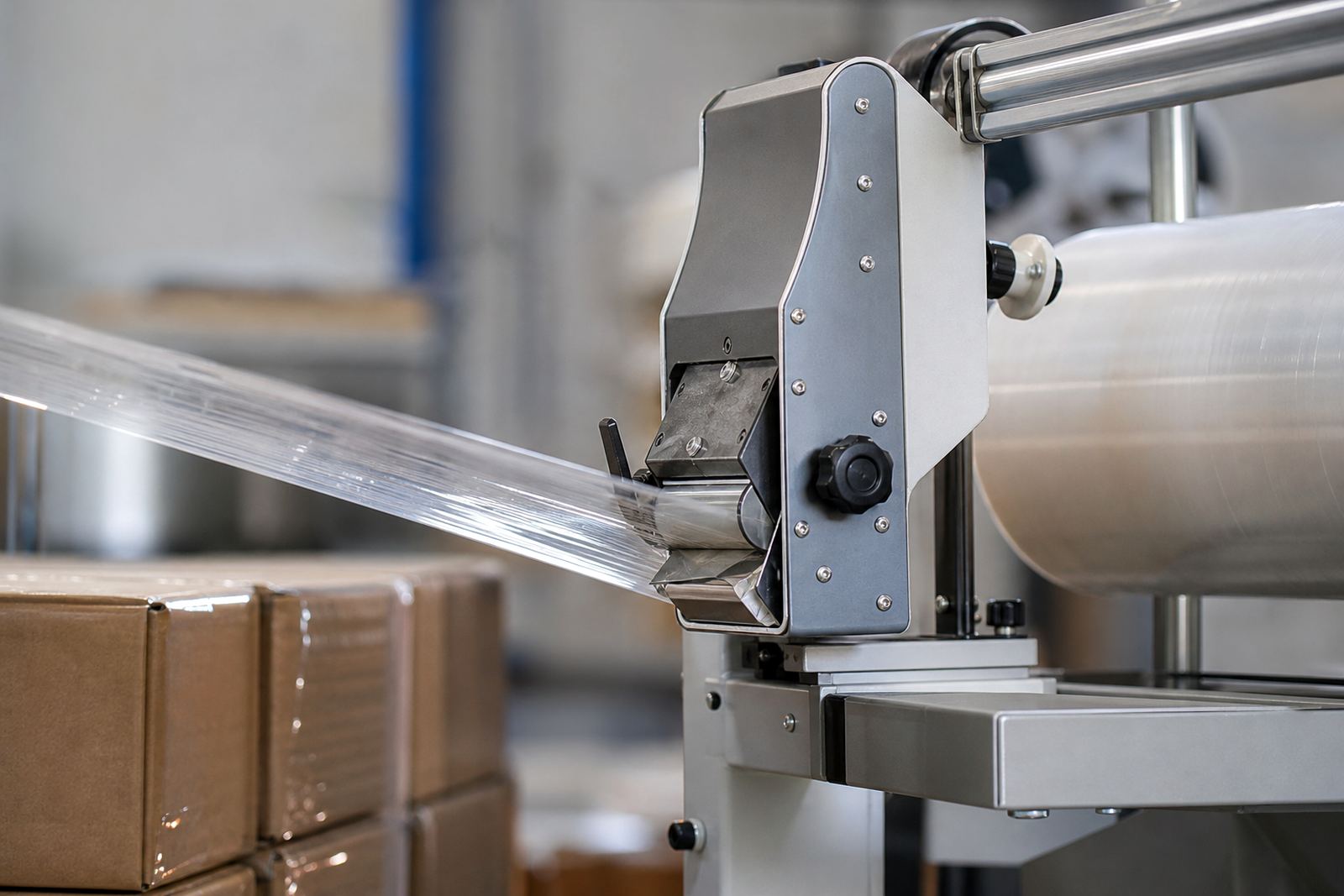
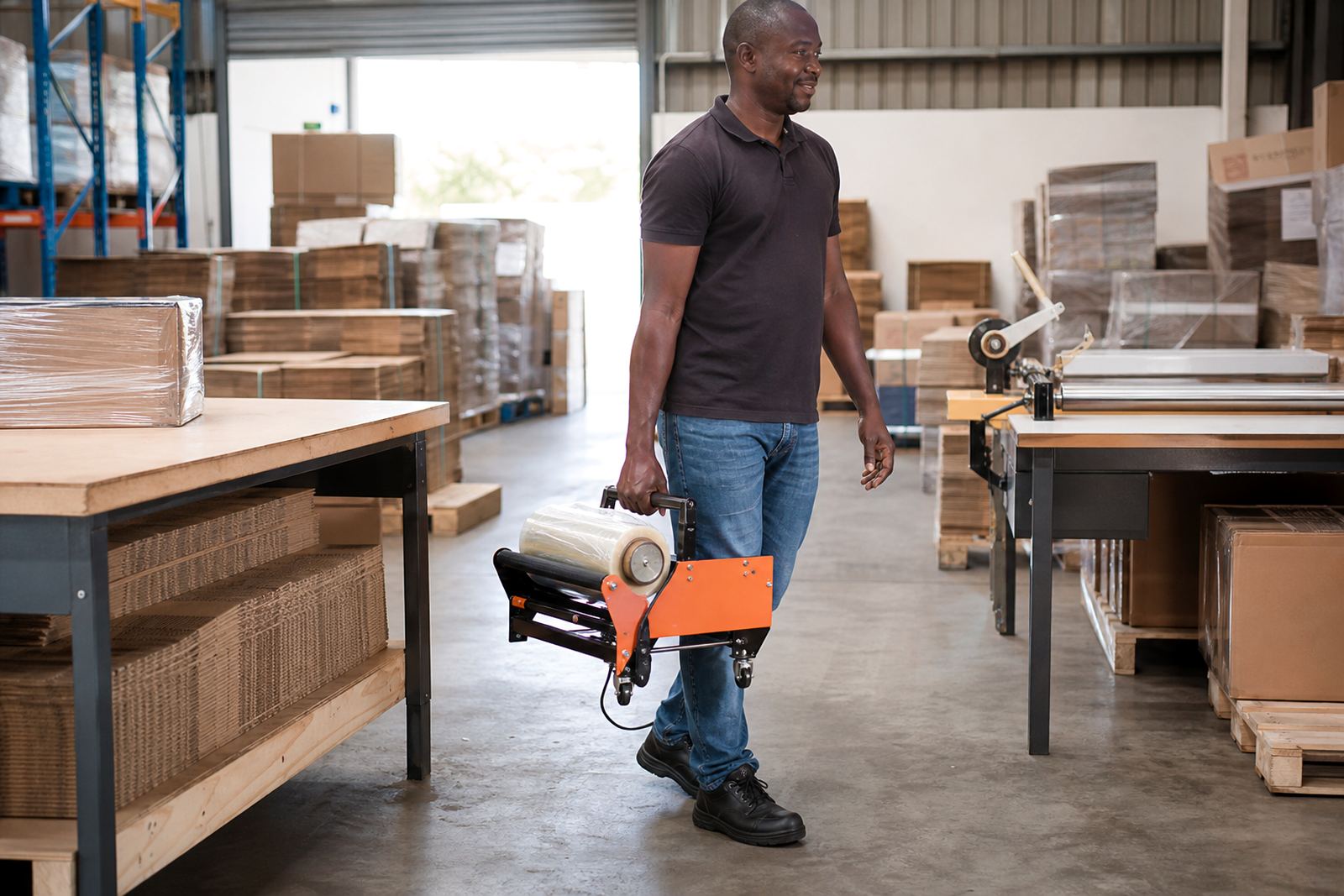
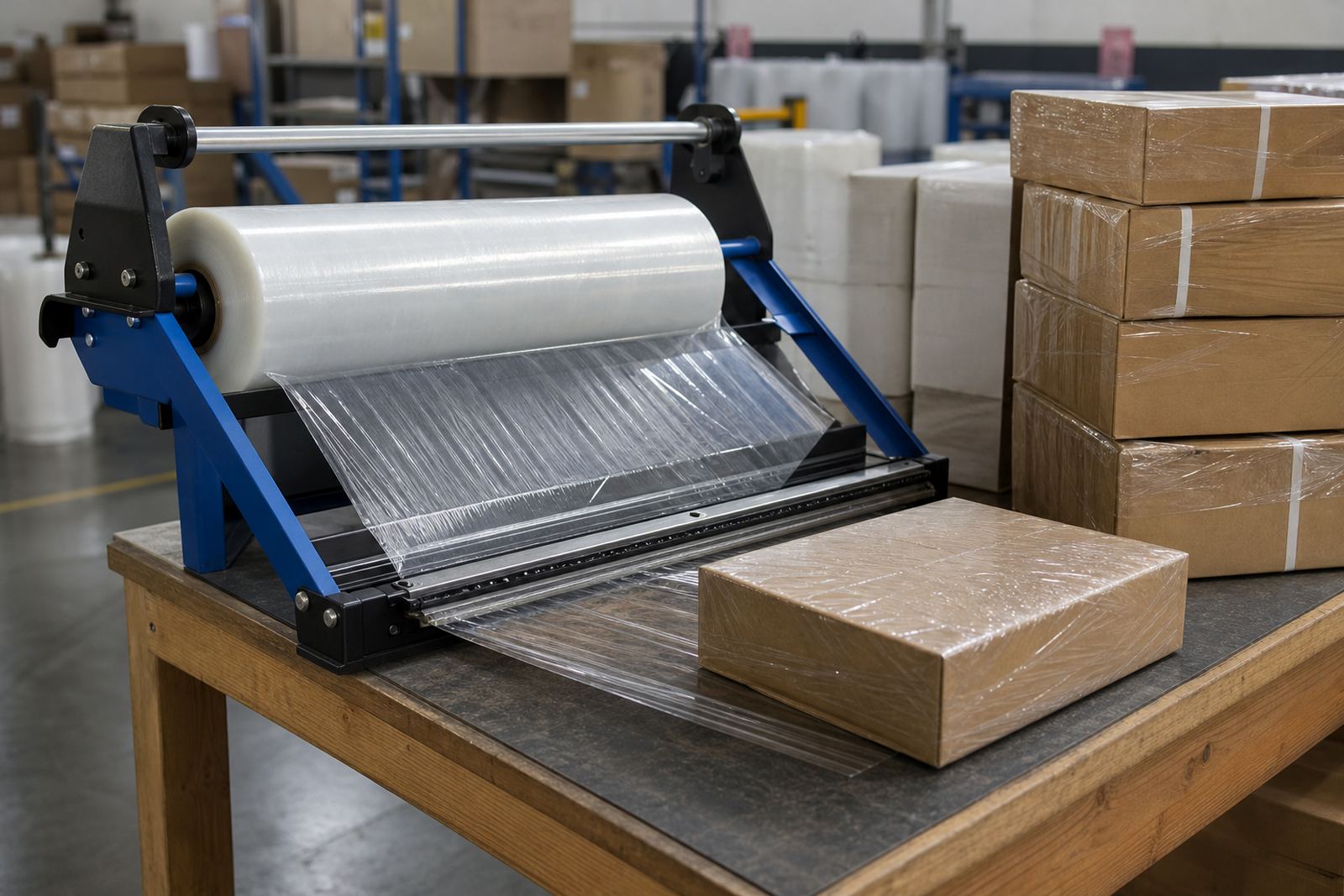
The Bench Shrink Cutter is a compact unit fixed to a work surface or packing station so the operator can cut shrink film in a controlled way. It is made for repeat work where the same cut line is needed again and again, especially where hand cutting leads to uneven edges, wasted film, or slow pack rates.
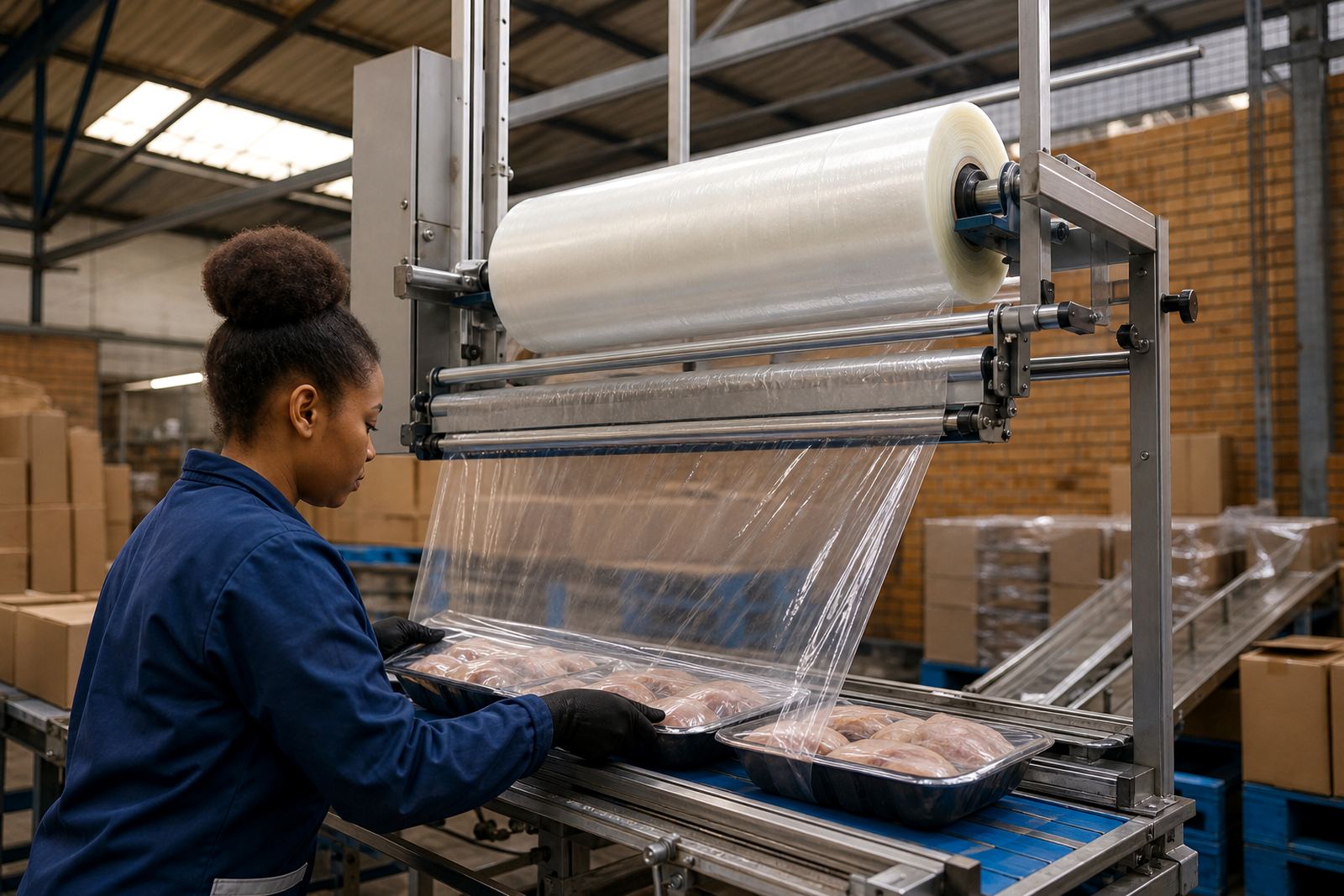
On a packing line, the cutter helps create a cleaner finish before sealing, shrinking or dispatch. It is a practical choice for food packs, hardware, printed goods, plastic-wrapped items and general cartons. In Germiston, Boksburg and Midrand we often see these units used where space is tight and the team needs a neat cut without moving the roll around too much.
- Compact bench-mounted format
- Controlled cut position for repeat work
- Suitable for shrink film rolls used on packing lines
- Helps reduce waste from uneven manual cuts
Sizes, Roll Options and Build Choices
Bench shrink cutters are usually selected to match the film width, roll diameter and the pace of the packing line. We supply options for light to medium duty use, as well as heavier use where operators work through long shifts. The unit should match the film you use most often, so the knife position and hold point are right for the roll size.
Common choices include wider cutting lengths for broad shrink film, and smaller bench units for narrower packs or slower hand-feed stations. If your site in Durban or Cape Town is close to the coast, the frame and fasteners should be checked for corrosion resistance, since humidity and salt air can affect exposed parts over time.
- Suitable for common shrink film widths used on packing lines
- Options for manual hold-down or guided film positioning
- Can be matched to standard bench heights and packing tables
- Materials can be selected for general factory use or more demanding environments
Where This Cutter Fits Best
This product suits sites that need a steady cutting point without a large floor-standing machine. It works well in distribution centres, small production rooms, contract packers, retail packing areas and light manufacturing sites. If your team packs in shifts and needs a dependable station that is easy to train on, this unit is often the better choice than a more complex system.
It is also useful where the line is broken into stages and one operator handles film preparation while another handles sealing or final packing. In Johannesburg, Pretoria and Polokwane we see demand from businesses that want better repeatability and less film waste, without changing the whole line layout.
- Best for workstations with repeated film cutting
- Useful where floor space is limited
- Suited to smaller pack teams and multi shift operations
- Helps standardise film handling across different operators
Installation, Power Needs and Site Readiness
Installation is usually straightforward because the cutter is bench mounted and does not need a large footprint. The key is to make sure the work surface is stable, level and strong enough for daily use. If the bench flexes or moves, the cut quality drops and the operator will feel it straight away.
Most bench shrink cutters are electrical units and need a suitable power point close to the station. On sites affected by load-shedding, it helps to plan around backup power or line sequencing so production does not stop mid-run. Before installation, check that the packing table height, cable routing and operator reach all work safely. No gas connection is normally needed for this type of unit.
- Needs a solid, level bench or packing table
- Electrical supply required at the workstation
- Plan for backup power where load-shedding affects output
- No gas supply is normally required
Care, Servicing and Daily Use
Good care keeps the cutter accurate and safe. The blade should be kept clean, and any film residue removed before it builds up. Operators should check that the film path is clear and that the unit is seated firmly on the bench. If the cutter starts pulling, snagging or leaving rough edges, it is time for a service check.
We recommend routine preventive servicing for sites that run daily, especially where the same station is used by several people. Blade replacement, safety checks and line setup can be done during planned downtime so production does not lose a full shift. In humid areas or on dusty industrial sites, a little extra attention goes a long way.
- Clean blade and contact points regularly
- Check fixings and bench stability
- Replace worn blades before cut quality drops
- Book preventive servicing to avoid breakdown callouts
What to Check Before You Order
Before ordering, it helps to confirm your film width, roll diameter and daily pack volume. You should also know whether the unit will be used by one operator or by a full shift team, because that affects the size and setup. If the line already has a fixed table or conveyor, check the bench height and available space around the station.
When you enquire, have the following details ready so the right cutter can be matched to your site. That saves time and helps avoid the wrong fit, which can cause delay once the stock arrives.
- Film type: shrink film and the width used most often
- Roll size: diameter and approximate weight
- Line speed: packs per hour or daily output
- Mounting space: bench size, height and clearance
- Power availability: nearby electrical point and backup supply
- Site location: Germiston, Johannesburg, Durban, Cape Town, Pretoria or elsewhere in South Africa
Key facts
| Product type | Bench-mounted shrink film cutter |
|---|---|
| Use | Controlled cutting for packing lines |
| Mounting | Fixed to a stable bench or packing table |
| Power | Electrical supply required, site dependent |
| Maintenance | Blade replacement, cleaning and preventive servicing |
| Typical application | Shrink film handling in packing, dispatch and light production |