What a manual shrink cutter does on the line
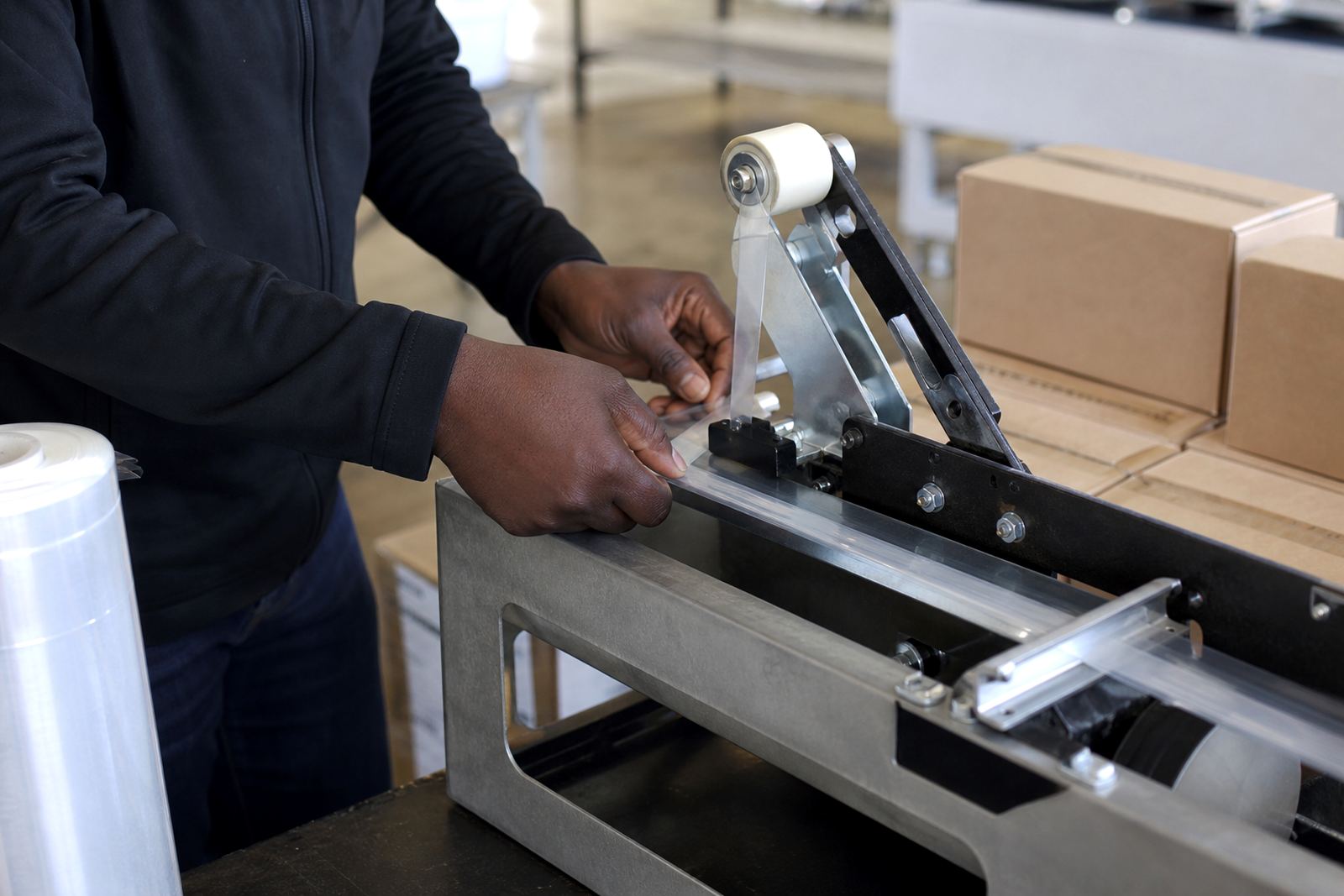
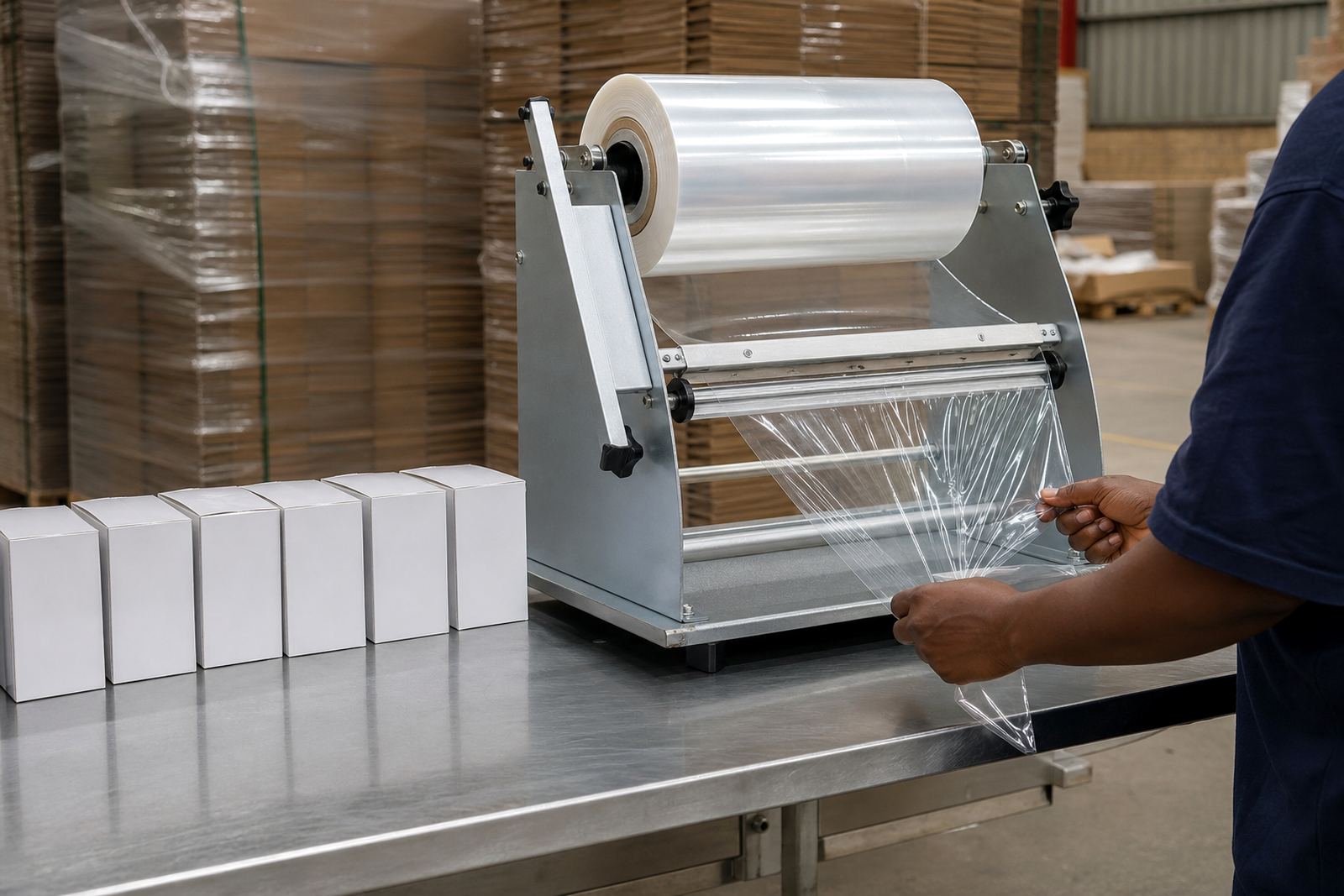
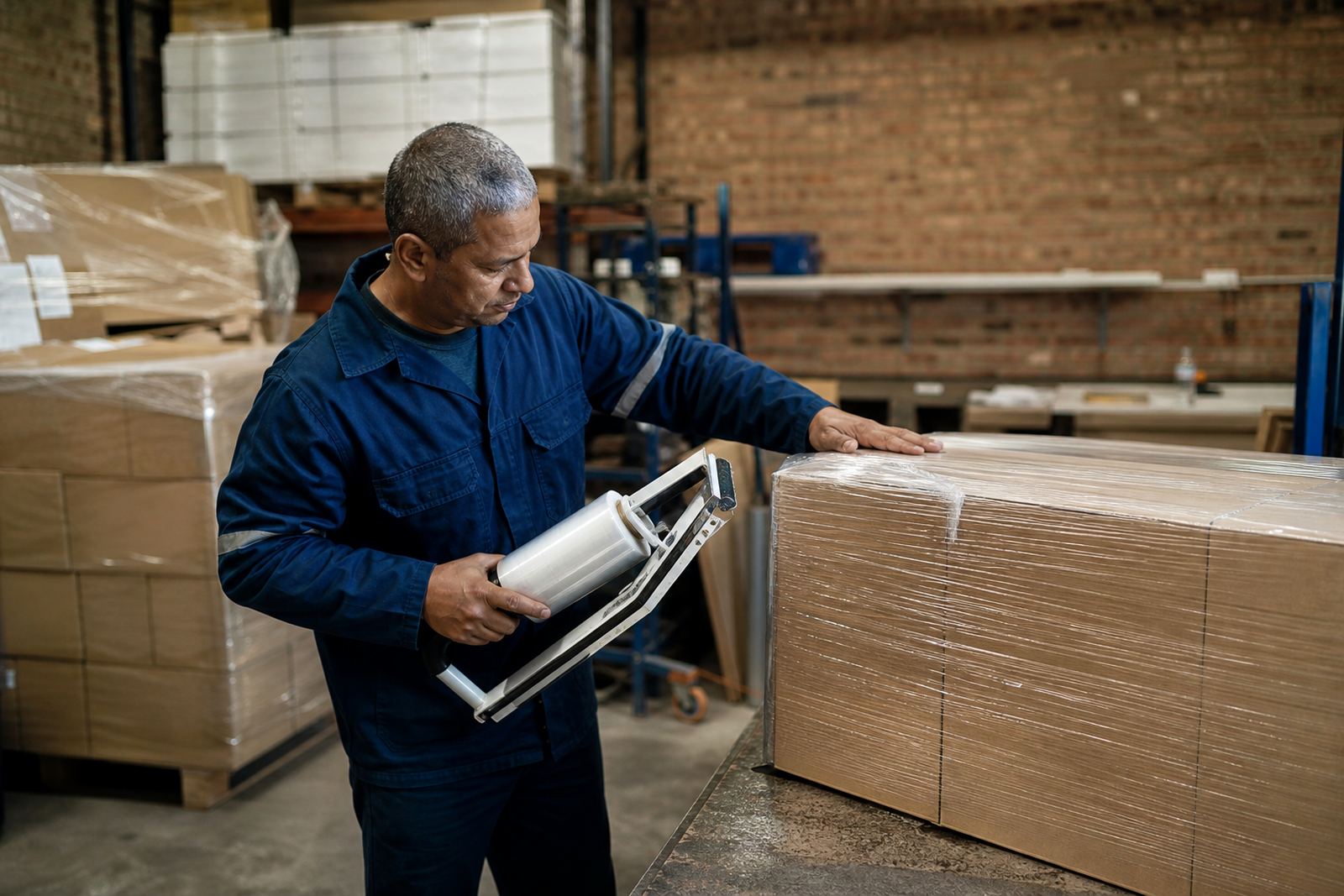
A manual shrink cutter is a hand-operated tool used to cut shrink film neatly during packing and wrapping work. It is commonly fitted at a packing table, a simple wrapping station, or beside a conveyor where operators need to cut film to length with less waste and less effort.
For businesses handling cartons, loose products, trays, or grouped packs, the cutter helps keep cuts straight and repeatable. That matters when the line is busy and operators are switching between different pack sizes through the day. It is a practical choice for sites that do not need a powered cutting system but still want better control over the film edge.
Because the unit is manual, it is well suited to plants where power points are limited, where load-shedding interruptions affect equipment planning, or where the wrap station must stay simple for small teams.
Typical sizes, holder styles and fitment options
Manual shrink cutters are normally selected to match the film width used on the line. The main choice is the working width of the cutter, plus the type of mounting or hand-held arrangement. Most sites choose a size that covers their widest film roll with a little allowance for easy loading.
- Working widths commonly suited to 300 mm, 450 mm, 600 mm and 1000 mm film rolls
- Light-duty handheld units for flexible use at different stations
- Fixed mounting options for a dedicated packing point
- Simple blade guard arrangements for safer handling
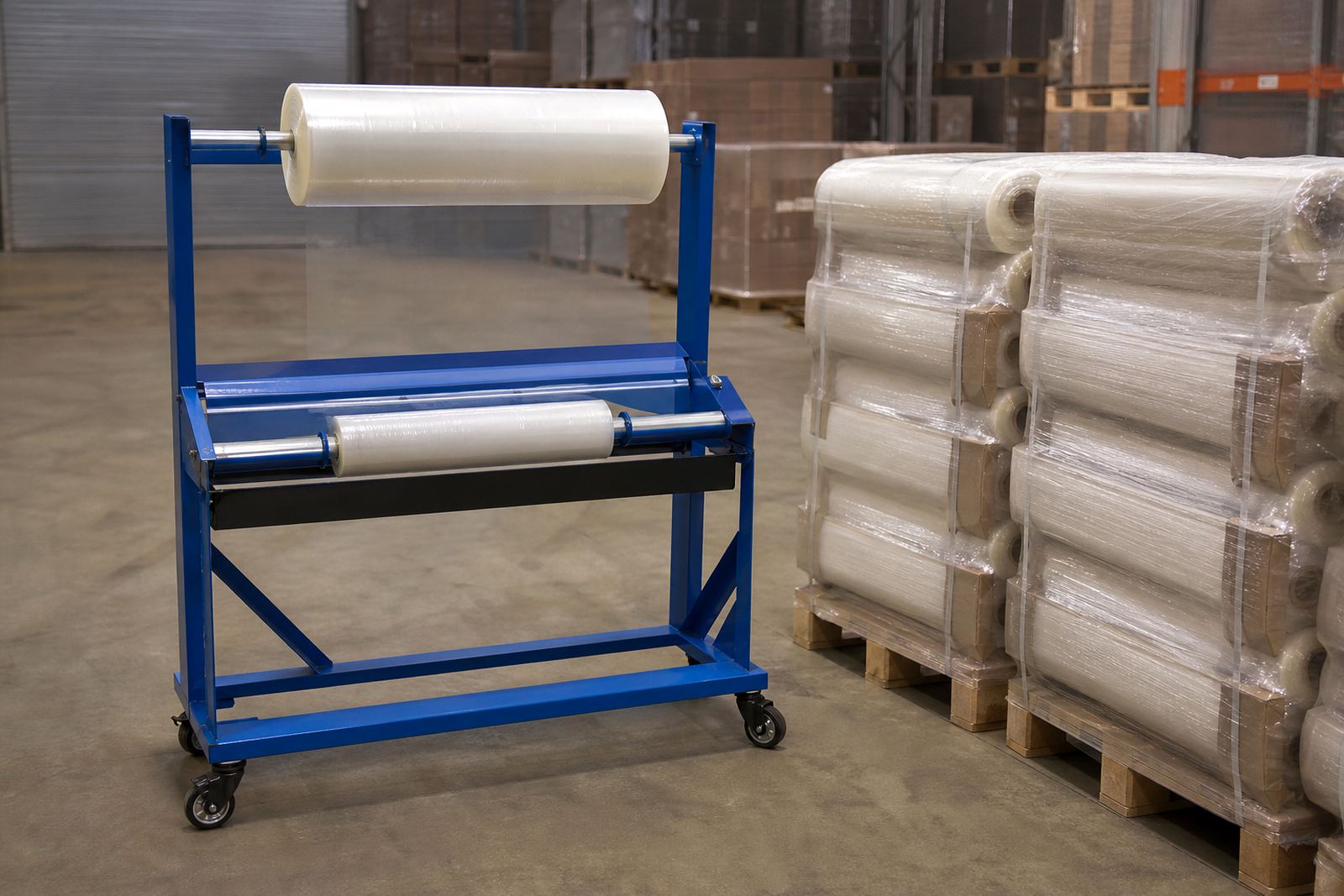
- Optional guide rollers or holders for steadier film feed
For Germiston, Boksburg and Midrand packing rooms where space is tight, a smaller fixed unit can keep the work area tidy. Larger distribution or dispatch lines in Johannesburg, Durban or Cape Town may prefer a wider cutter if different product bundles are packed on the same station.
Where this cutter suits best
This product suits low to moderate throughput packing lines that need a simple manual process and dependable results. It is often used by food packers, general goods handlers, small manufacturing lines, and contract packers that run varied jobs through the same area.
It also works well where the team needs a backup cutting method in case powered equipment is offline. In coastal centres like Durban and Cape Town, operators often appreciate a straightforward tool that is easy to keep clean and inspect, especially where humidity can affect film handling and storage.
- Small to medium packing lines with repeat manual wrapping
- Sites with changing pack sizes and frequent roll swaps
- Operations where power availability is limited or unstable
- Dispatch areas needing a simple cutter at the point of use
- Teams wanting lower maintenance than powered alternatives
If the line needs very high speed cutting or hands free operation, another style may suit better, but for many South African packing rooms this unit is the most practical starting point.
Installation, power needs and line setup
One of the main advantages of a manual shrink cutter is that installation is straightforward. In most cases there is no electrical supply needed and no compressed air or gas connection required. That makes it easier to place at a packing bench, on a basic frame, or beside an existing wrap station.
During setup, our team checks the working height, operator reach, roll clearance and the path the film follows from the roll to the cut point. If the unit is being used on a fixed line, the mount should be secure enough to stop movement during cutting. If it is being moved between stations, the holder or stand should be easy to reposition without taking up too much floor space.
- No electrical power required
- No gas or compressed air required
- Best used on a stable bench, stand or fixed frame
- Suitable for site layout changes and simple relocations
- Can be paired with basic roll change support and operator training
For sites in Pretoria, Polokwane and Johannesburg where packing areas may be reconfigured around seasonal demand, the simple setup helps keep downtime low.
Care, blade life and servicing on South African sites
Manual cutters are easy to maintain, but they still need regular care if you want a neat cut every day. The blade should be checked for wear, resin build-up and dull spots. A blunt edge can snag the film, leave ragged edges, or force the operator to use extra pressure.
On busy lines, we recommend a simple care routine: wipe down the cutter, inspect the guard, check mounting points and confirm that the blade tracks correctly. In humid coastal areas and in dusty inland plants, regular cleaning matters because dirt and moisture can affect the movement and finish.
- Inspect the blade at each service interval
- Replace worn blades before cut quality drops
- Check fasteners and mounting points for looseness
- Keep the cutting area clear of film offcuts and dust
- Store spare blades and parts in a dry cabinet
Our servicing support includes preventive servicing, blade replacement, dispenser repairs and breakdown callouts where needed. That helps keep the cutter ready for shift work and reduces avoidable line stops.
What to confirm before you order
Before ordering a manual shrink cutter, it helps to confirm a few details from the packing line. This avoids the wrong width, awkward fitment or a blade style that does not suit the film being used. We usually ask clients to share the film width, the type of pack, the mounting position and the daily throughput.
- Film width and roll diameter
- Shrink film type and thickness
- Whether the cutter is handheld or fixed in position
- Available space at the packing station
- Daily pack count and operator handling method
- Any safety or site rules that affect mounting or blade access
If you are running a line in Germiston, Boksburg, Midrand or further afield in Durban, Cape Town, Pretoria or Polokwane, we can help assess the site and recommend the right size. Our team can also support installation, setup and operator training so the cutter is used correctly from day one.
For many packing lines, the right manual cutter is the one that matches the film, the team and the pace of work, not just the roll width.
Key facts
| Product type | Hand-operated shrink film cutter |
|---|---|
| Typical use | Low to moderate throughput packing lines |
| Power requirement | None |
| Air or gas requirement | Not required |
| Common working widths | 300 mm to 1000 mm, subject to site need |
| Mounting options | Handheld or fixed bench / frame mounted |