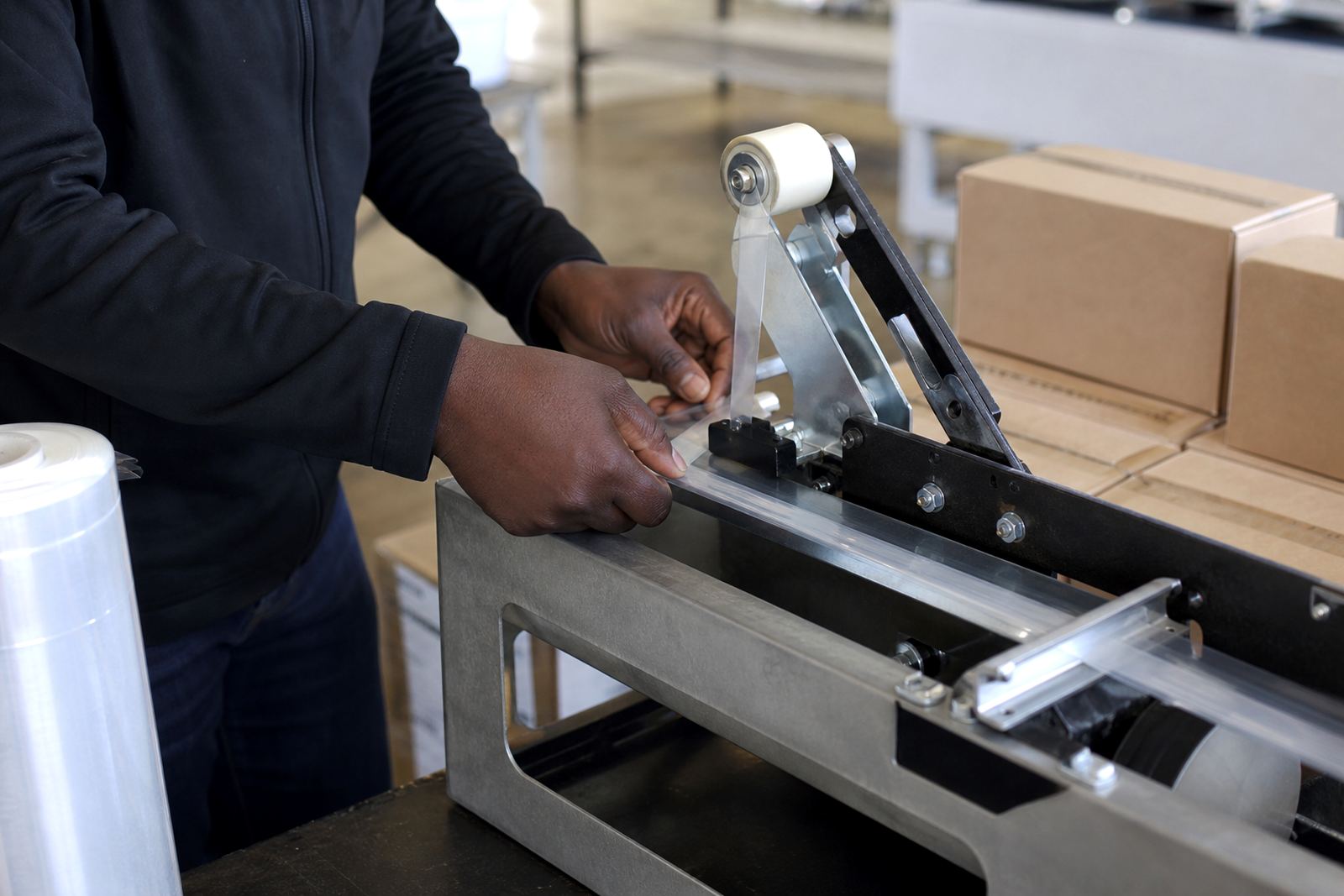
Clean Cutting for Slim Film Widths
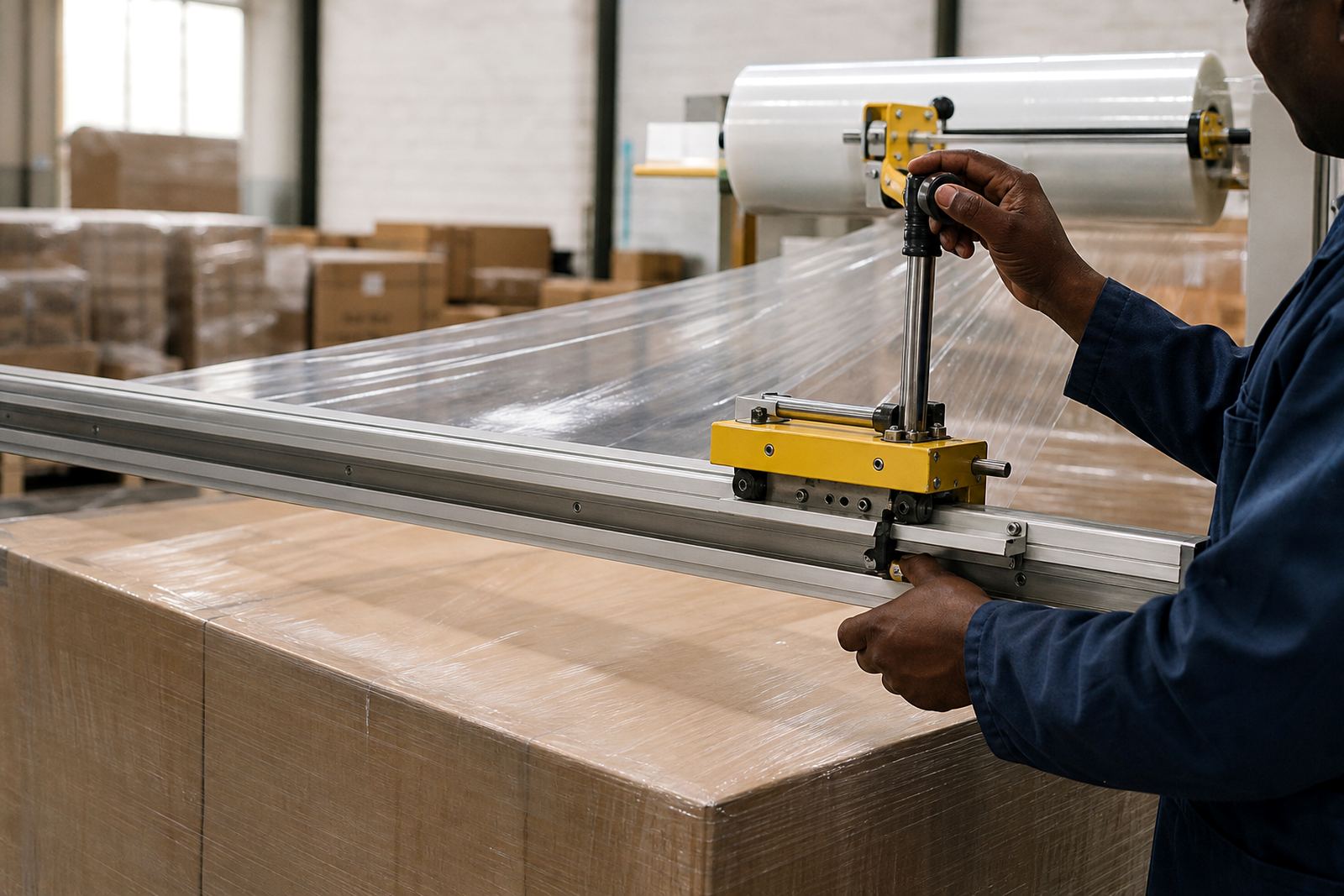
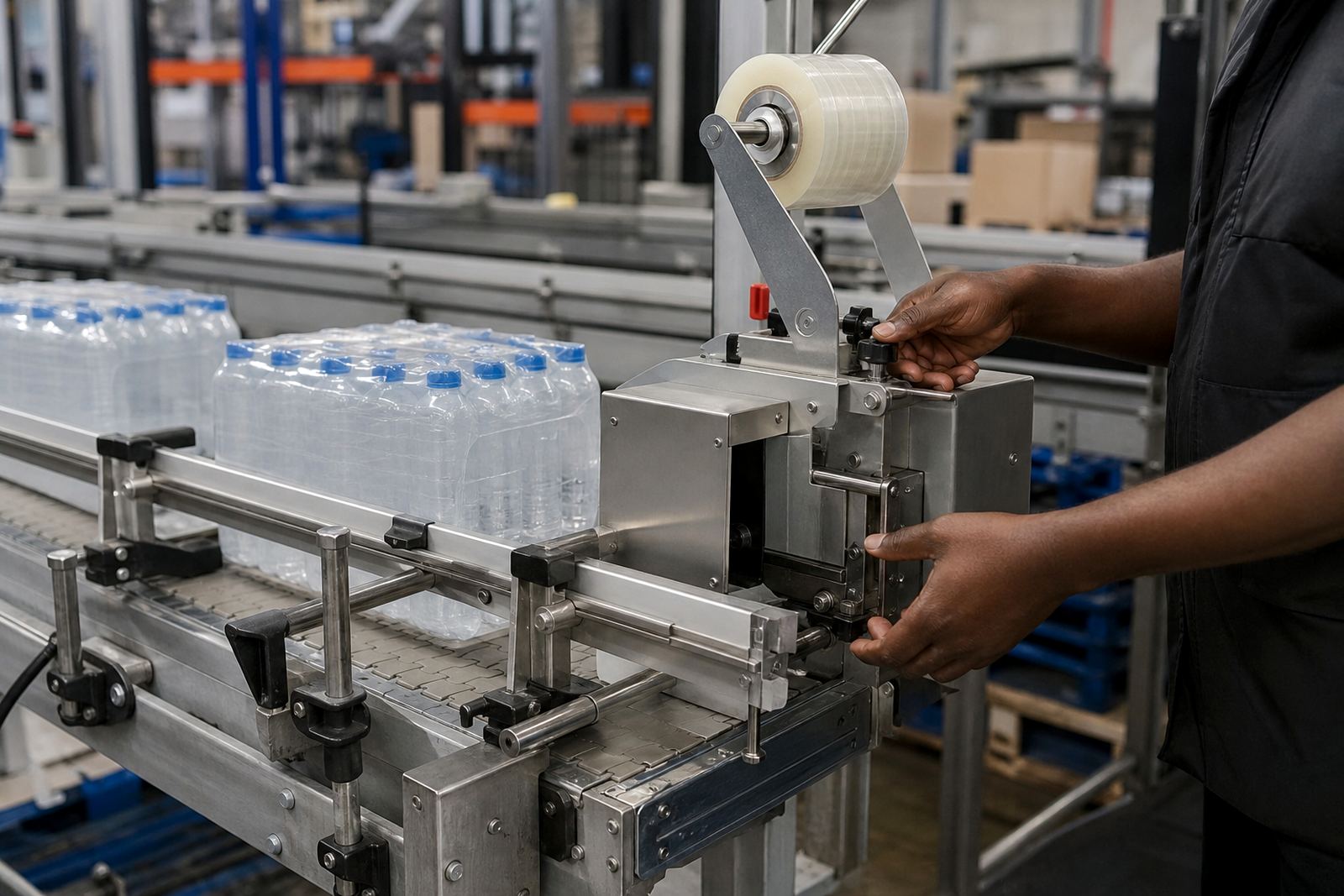
The narrow web cutter is made for shrink film and stretch film applications where the web width is limited and the edge finish matters. On packing lines, narrow rolls can wander, fray or split if the cutter is too blunt, too wide, or not aligned properly, so this unit keeps the cut line straight and the feed controlled. It is commonly used where products are wrapped one at a time, where label visibility matters, or where the pack size changes often through the day.
For sites in Germiston, Johannesburg, Pretoria and Boksburg, the cutter is a practical fit for food, printing, plastics, warehousing and light manufacturing lines. It helps reduce waste at the edge of the film and gives operators a better grip when feeding or trimming narrow webs. The unit can be set up as a fixed line item or as part of a mobile packing station, depending on how your operation runs.
Sizes, Blade Options and Mounting Choices
Narrow web cutters are supplied in different working widths and mounting styles so the unit can match the film width and the line layout. A typical range starts at 100 mm web capacity and extends through 150 mm, 200 mm and 300 mm versions, with blade length selected to suit the application. Blade type can be specified for general-purpose cutting or for finer film control where the material is thin and tends to stretch during handling.
Mounting can be bench-fixed, bracket-mounted or fitted to a custom frame on the packing line. In some cases, the cutter is positioned close to the unwind point, while other sites prefer a slightly offset position to improve operator access. For coastal sites such as Durban and Cape Town, we often check corrosion exposure and recommend fittings that stand up better to humidity and salt air. That saves trouble later and keeps servicing more practicle.
- Working widths commonly from 100 mm to 300 mm
- Fixed or adjustable blade setups
- Bench, wall or frame mounting options
- Corrosion-aware hardware for coastal conditions
Where This Cutter Fits Best on Site
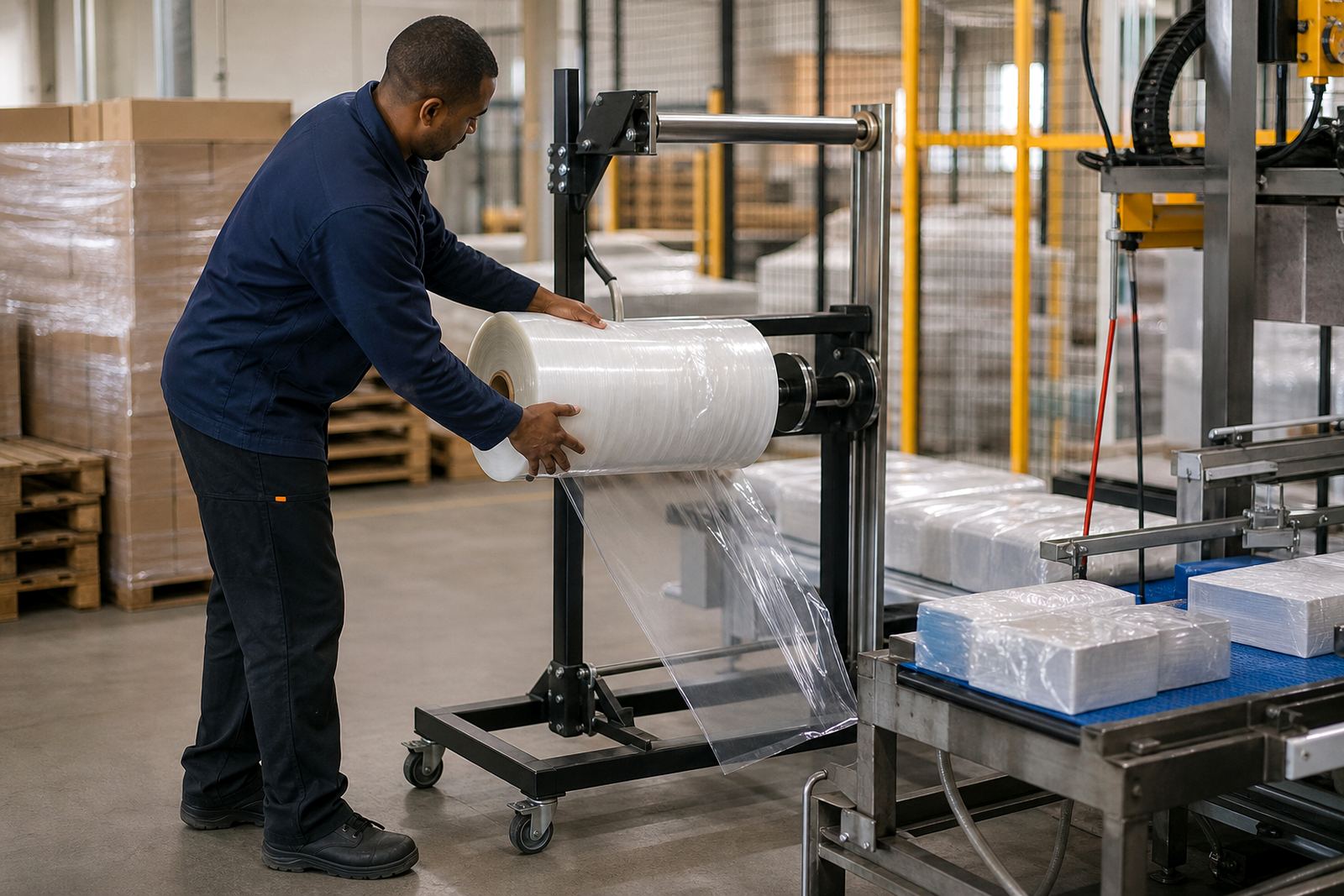
This product suits businesses that run narrow film for bundling, sleeve wrapping, tray packs, small cartons or protective wrapping around individual items. It is also useful where the operator must keep one hand free and still make a quick, accurate cut. If your line handles frequent roll changes, the cutter reduces time lost to awkward trimming and helps keep the wrapping area tidy.
In Ekurhuleni and across Gauteng, many sites use this type of cutter in packing rooms with limited space and mixed shift teams. It is also a good choice for smaller depots in Polokwane or Midrand where the team needs equipment that is easy to explain and simple to repeat. During load-shedding, the cutter continues to do its job if the rest of the line is manual, which is useful when packing must carry on without a full machine stop.
Installation, Power and Site Requirements
Most narrow web cutters are installed as a manual unit and do not need electrical power or compressed air. That makes them easy to place on an existing packing line without adding extra load to the site. If your operation uses a powered dispenser or a heated cutting process, we will confirm the supply requirement before installation and make sure the line setup is suitable.
For a clean install, the cutter should sit at the right working height and in a position where the operator can feed film without twisting. Floor space around the station should stay clear so rolls can be changed safely and the cutter is not knocked out of line by trolleys or pallets. Our team can do onsite installation, line setup and site assessments in Germiston, Pretoria, Durban, Cape Town and surrounding industrial areas.
- Most units are manual and need no power supply
- Air supply is only needed for certain fitted systems
- Best installed at a stable working height
- Clear access is needed for roll changes and safe use
Care, Servicing and Blade Replacement
Like any cutting tool, the narrow web cutter works best when kept clean and checked regularly. Film dust, adhesive residue and general packing debris can build up around the blade area and affect the finish. A simple wipe-down at the end of shift helps, and a scheduled inspection is wise on busy lines where the cutter is used all day.
We recommend preventive servicing at planned intervals, especially if the line handles high volumes or tougher materials. Blade replacement should be done before the edge becomes too dull, because worn blades can drag the film and leave ragged edges. Our service team can attend breakdown callouts, do dispenser repairs, supply spares and carry out safety checks to keep the equipment reliable. If a site runs in humid conditions or near the coast, it is worth checking fasteners and exposed metal more often.
- Daily wipe-down keeps residue from building up
- Blade wear should be checked on a schedule
- Preventive servicing reduces downtime
- Safety checks help protect operators and product quality
What to Confirm Before You Order
Before placing an order, it helps to confirm the film width, roll diameter, core size and whether the cutter will be used with shrink film or stretch film. You should also note the type of pack, how many cuts are made per shift, and whether the operator needs left-hand or right-hand access. Those details make a real difference when matching the cutter to the line.
Check the mounting point, the available space around the station and whether your team wants a fixed or adjustable unit. If the line is used by several operators, ask about training so everyone uses the cutter the same way. We can also assist with roll change support, equipment upgrades and site assessments for businesses that want a tighter setup. Thabo Maseko and the team at Film Cutters work with packing lines across South Africa, from Johannesburg and Boksburg to Durban, Cape Town and Polokwane.
Key facts
| Product type | Manual narrow web cutter for film applications |
|---|---|
| Film compatibility | Shrink film and stretch film |
| Working width options | 100 mm, 150 mm, 200 mm, 300 mm |
| Mounting | Bench, wall or frame mounted |
| Power requirement | None for standard manual units |
| Typical use | Packing lines, wrapping stations, roll change areas |