What a sliding rail cutter does on a packing line
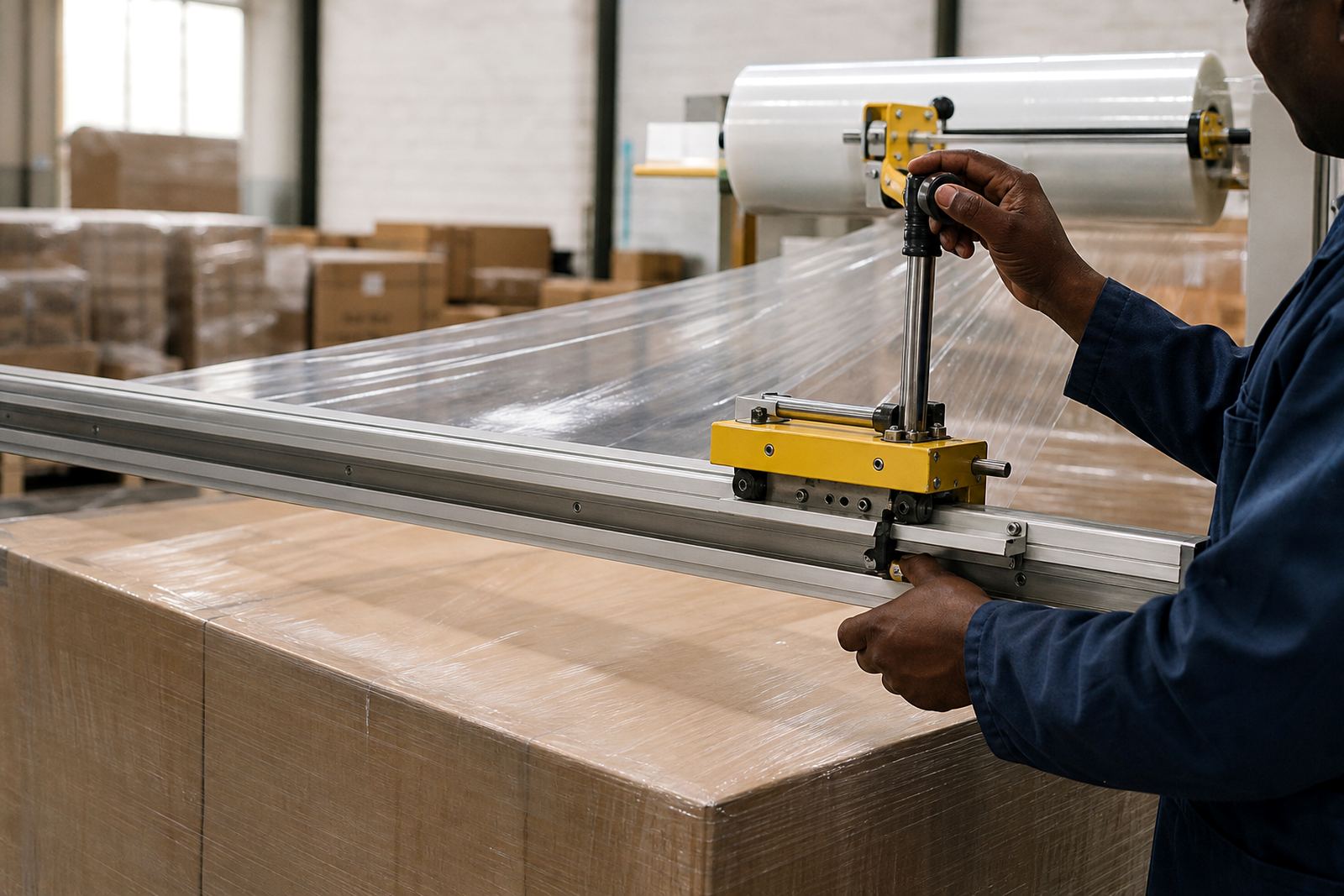
A sliding rail cutter is a guided hand-operated cutting unit that moves along a fixed rail to give a straight cut across shrink film or stretch film. Instead of pulling the blade freehand, the operator runs the cutter along the rail so the cut stays true from one side of the load to the other. That matters on lines where neat film edges help with pack quality, sealing, and a cleaner wrap finish.
This type of cutter is used where film must be trimmed after wrapping, or where a controlled cut is needed at the end of a cycle. It is a practical choice for warehouses, distribution centres, contract packers, and production sites that handle mixed pallet sizes. The guided motion reduces snags and uneven edges, which helps when operators are working fast and the team needs the same result on every shift.
In Germiston and other busy industrial areas, the value is simple: fewer re-cuts, less film waste, and better control for operators who may be working around load-shedding interruptions or shifts that run late into the day.
Sizes and options for different film widths
Sliding rail cutters are normally selected to suit the film width and the size of the packing station. Standard options are often used for common pallet wrap widths, while longer rails suit wider loads or lines that handle oversized cartons and irregular product stacks. The rail length should always be checked against the widest practical load, not only the standard one.
Typical options include different rail spans, blade styles, and handle configurations. Some sites prefer a lighter unit for easier manual movement, while others choose a heavier frame for steadier tracking on a high-use line. If the site handles both shrink film and stretch film, it is worth confirming blade compatibility and the cut finish required for each application.
- Rail lengths to suit standard and extended film widths
- Manual sliding action for controlled straight cuts
- Blade and carriage options for different film types
- Mounting styles for fixed line stations or mobile work areas
- Left-hand or right-hand operating preference where applicable
For depots in Johannesburg, Pretoria, Durban, Cape Town and Polokwane, the right length and mounting choice can make the difference between a smooth routine and constant adjustments during the shift.
Where this cutter suits best
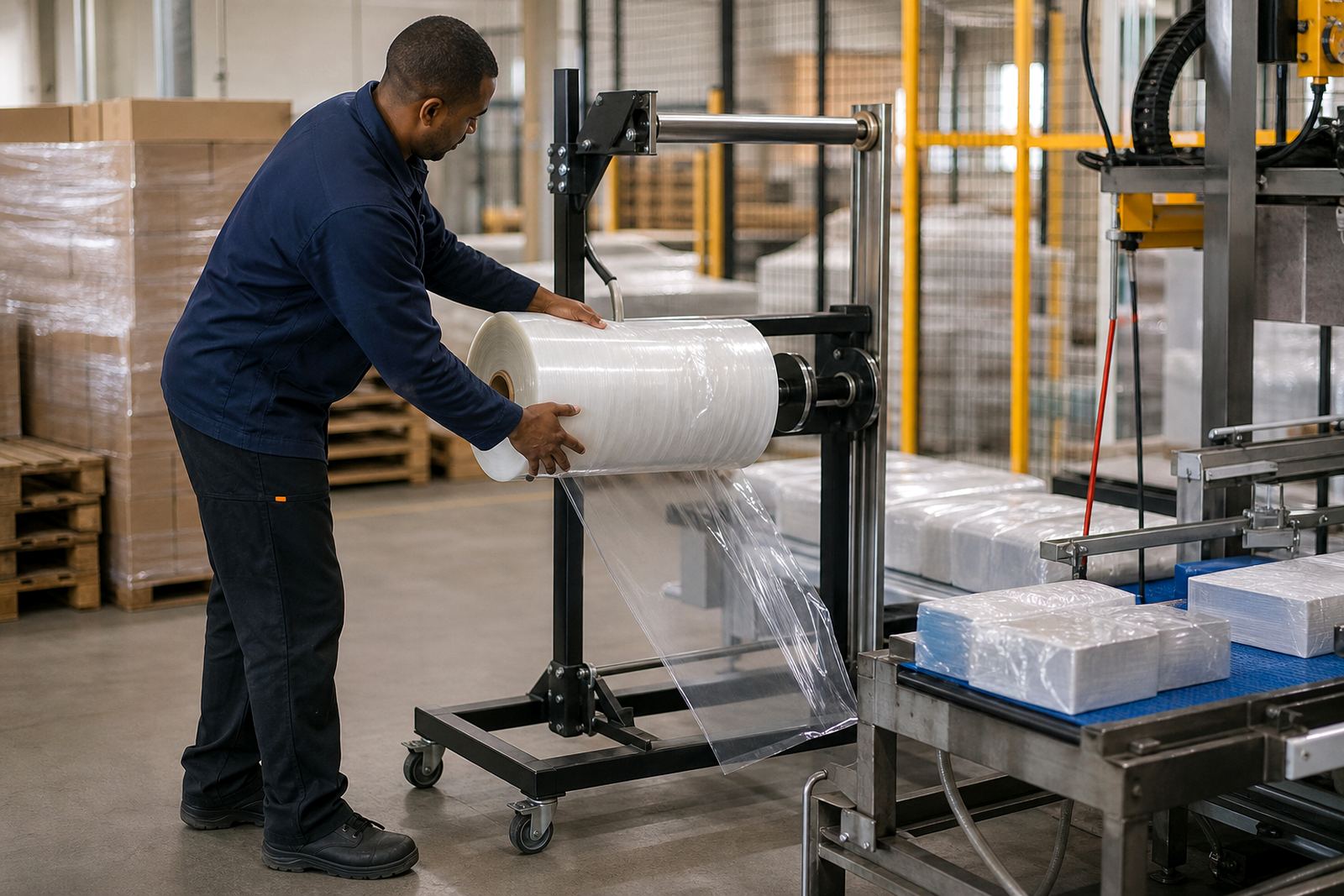
This product suits operations that need repeated straight cuts on packing lines, especially where film control is important and operator skill levels vary. It is commonly used in pallet wrapping areas, dispatch bays, production packing rooms, and rework stations where damaged wrap must be trimmed quickly and neatly.
It is a sensible fit for businesses dealing with mixed load sizes, frequent roll changes, or more than one shift per day. Sites in coastal areas such as Durban or Cape Town may also prefer equipment that is easy to clean and inspect, since humidity and dust can affect moving parts over time. In inland plants like Boksburg or Midrand, the main concern is usually speed, consistency and keeping the line moving without complicated setup.
- Pallet wrap stations
- Contract packing and fulfilment lines
- Distribution centres and dispatch areas
- Manufacturing plants with end-of-line packing
- Sites that need repeatable trimming by different operators
Installation and site setup requirements
Sliding rail cutters are usually installed as part of a packing station setup, either on a fixed frame or in a position that gives the operator clear access to the film path. The rail must be aligned properly so the carriage moves freely and the cut line stays straight. If the unit is mounted too high, too low, or out of line with the film tension, the operator will feel it straight away.
Most installations do not need power or gas, since the cutter is generally a manual guided unit. That makes it a practical choice where electrical supply is limited or where the site needs a simple tool that keeps working during load-shedding. The important part is a firm mounting surface, enough clearance for the rail travel, and safe working space around the film roll and load.
For sites with safety rules or municipal inspection requirements, the installation should also consider walking space, blade storage, and the operator's reach. Our team can assess the line before fitting and set the unit so it works with the existing wrapping process, not against it.
Care, servicing and blade life
Like any cutting tool on a packing line, a sliding rail cutter works best when it is kept clean and checked often. Dust, wrap residue and damaged film can build up on the rail and carriage, which affects the glide and can cause rough cuts. A short daily wipe-down and regular inspection will usually keep the unit in good condition.
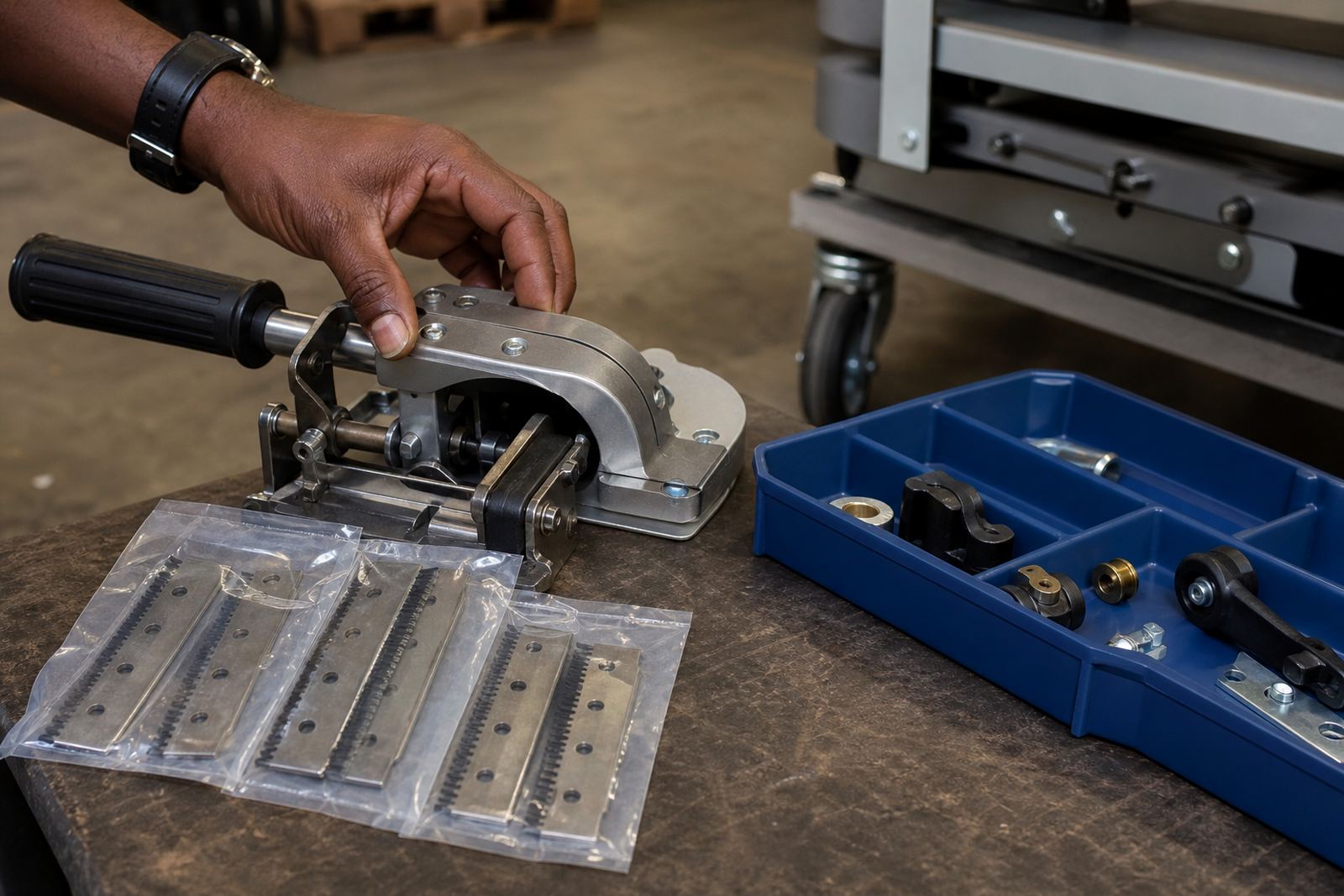
Blade condition matters most. A blunt blade can drag the film, leave uneven edges, and put more strain on the operator. Replace blades before they start tearing film or requiring extra pressure. Bearings, guides and fixing points should also be checked during preventive servicing so wear does not creep in unnoticed.
For high-use sites in Germiston, Johannesburg and Pretoria, we recommend planned servicing rather than waiting for a failure. That keeps the line moving and helps avoid breakdown callouts during busy dispatch periods.
- Clean the rail and carriage regularly
- Check blade sharpness and replace on schedule
- Inspect fasteners and guide alignment
- Keep spare blades on site for busy shifts
- Train operators to spot drag, snags and uneven cuts early
What to check before you place an order
Before ordering a sliding rail cutter, measure the film width, the available mounting space, and the working height at the pack station. It is also worth checking the type of film used, whether shrink or stretch, and whether the line needs one-sided or two-sided access. A cutter that suits the product but not the operator's workspace will slow the job down.
Ask about the rail length, blade type, replacement parts and the expected cutting frequency. If your site runs multiple shifts, or handles different pallet sizes on the same line, tell us that upfront so the correct setup can be recommended. It also helps to know whether the cutter will be used by trained packers only or by a wider team with mixed experience.
Our Germiston base supports clients across South Africa with onsite installation, line setup, training, spare parts and service support. If you are comparing options for a new line or replacing a worn unit, it is worth matching the cutter to your wrap speed, your film grade and the way your operators actually work day to day.
Key facts
| Product type | Sliding rail cutter for shrink film and stretch film |
|---|---|
| Cut action | Guided manual slide across the film width |
| Typical use | Straight, consistent cuts on packing lines |
| Power or gas needs | No power or gas required for standard manual operation |
| Mounting | Fixed station or line-mounted setup, depending on site |
| Service support | Installation, blade replacement, repairs, training and spares supply |