Safe Cutting for Stretch Film on Busy Packing Lines
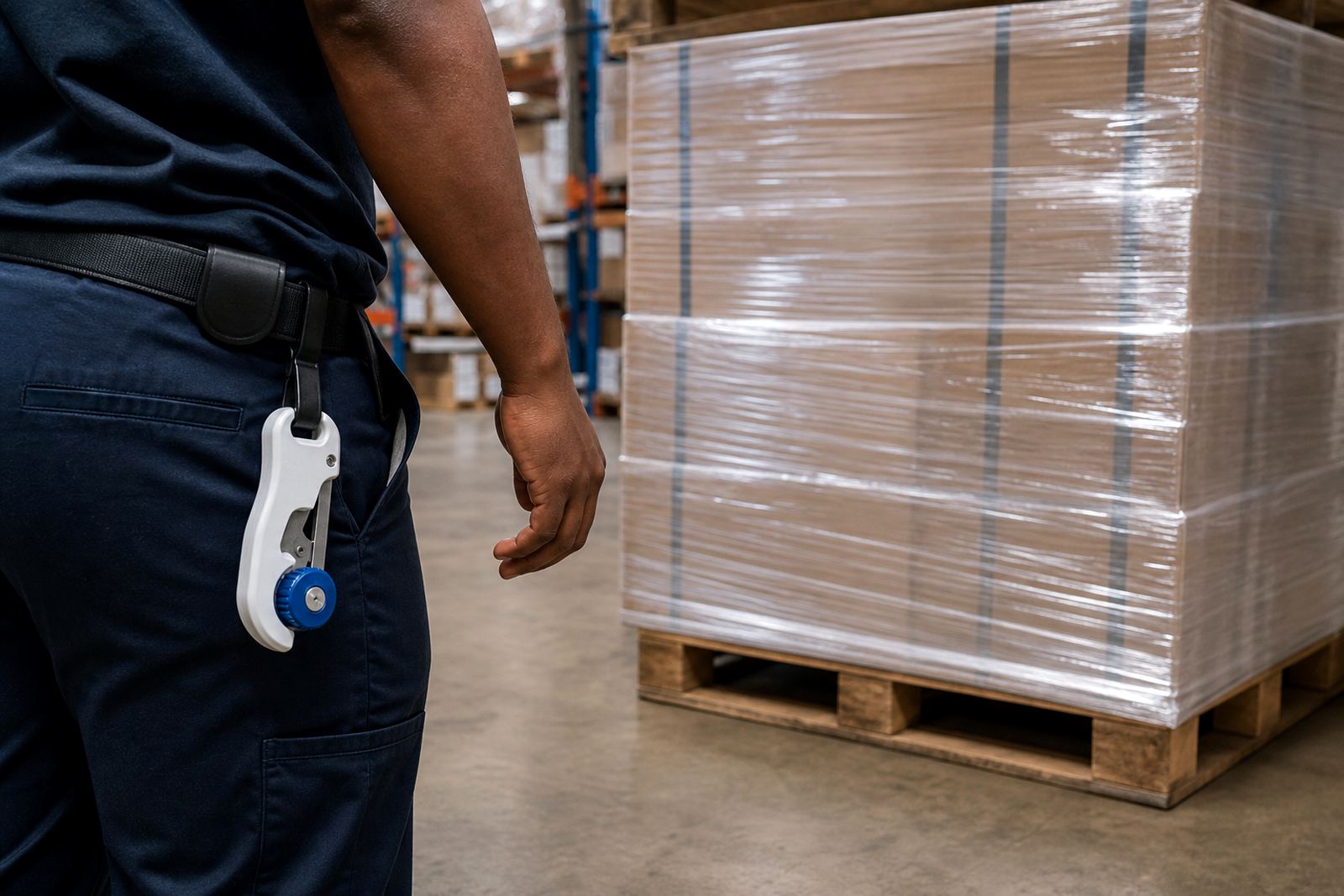
A pallet wrap cutter is built for one simple job: to cut stretch film cleanly without a sharp loose blade in the operator’s hand. In busy packing areas, that matters. When pallets are being wrapped, checked, moved or unpacked, the cutter gives a controlled cut that is easier to manage than knives or improvised tools. It is suited to stores, dispatch bays, production lines and warehouse floors where safety and speed both count.
For operations in Johannesburg, Germiston, Boksburg, Midrand, Pretoria, Durban, Cape Town and Polokwane, this type of cutter is especially useful where different shifts handle the same load. It gives a repeatable result, so the wrap finishes neatly and the next person on the line is not fighting loose tails or damaged film. It also helps reduce waste from torn wrap and uneven cuts, which can add up fast over a month.
How the Cutter Works and What Makes It Practical
The cutter is designed for manual use on stretch wrap and similar pallet film. Most units use a guarded cutting edge or a guided blade path so the film is sliced, not ripped. That makes it safer during pallet completion and more useful when opening wrapped stock in receiving areas. The operator keeps control of the tool and the cut happens where it should, not across the load or the product below.
It suits companies that want simple equipment with low maintenance needs. There is no motor to wire in, no compressed air line to connect, and no gas supply to manage. In other words, it is a straightforward hand tool or line-side accessory depending on the model selected. For sites where load-shedding already affects other equipment, that simplicity is a real advantage, because the cutter is ready whenever staff are ready.
- Clean cut for stretch wrap at the end of palletising
- Useful for unpacking and stock control areas
- Helps reduce hand contact with exposed blades
- Good for high-turnover warehouses and packing stations
Sizes, Formats and Options to Match the Job
Pallet wrap cutters are available in different lengths and handle styles, depending on how the team works. Some sites prefer a compact hand-held format for quick cuts close to the pallet. Others need a longer reach for taller loads or deeper wraps. The right choice depends on film width, pallet height, operator access and how often the tool will be used during a shift.
Common options include fixed-blade models, guarded blade models and versions with an extended reach. Some are better suited to general warehouse use while others are better for packing lines where the operator needs one-handed control. If your loads vary a lot, from light cartons to heavier industrial stock, it is worth checking whether the cutter can handle both thin film and multiple film layers without snagging. A good fit saves time and avoids rework.
- Hand-held cutters for general pallet wrap work
- Extended reach options for taller or larger loads
- Guarded blade styles for safer operator handling
- Models suited to single-layer or layered stretch film
Where It Suits Best in South African Operations
This product suits a wide range of sites, including FMCG warehouses, distribution centres, manufacturing plants, building supply yards, cold storage facilities and contract packing operations. It is also useful where pallets are handled in coastal conditions, since wrap can stick differently in humid air and the film often needs a cleaner finish to stay secure during transport.
It works well in Germiston and the wider Ekurhuleni industrial area, but also in branches and depots right across South Africa. If your operation ships to stores, depots or project sites, a proper cutter keeps the wrap tidy when goods are loaded for road transport. That matters on rough routes, because badly cut film can loosen and flap during transit, especially on mixed loads. A neat finish helps the pallet arrive in better order.
For sites working under municipal safety checks or internal warehouse rules, a cutter with a guarded edge can support safer handling practices. It is a practical improvement where supervisors want fewer knife-related incidents and more consistent end-of-line quality.
Installation, Mounting and Site Requirements
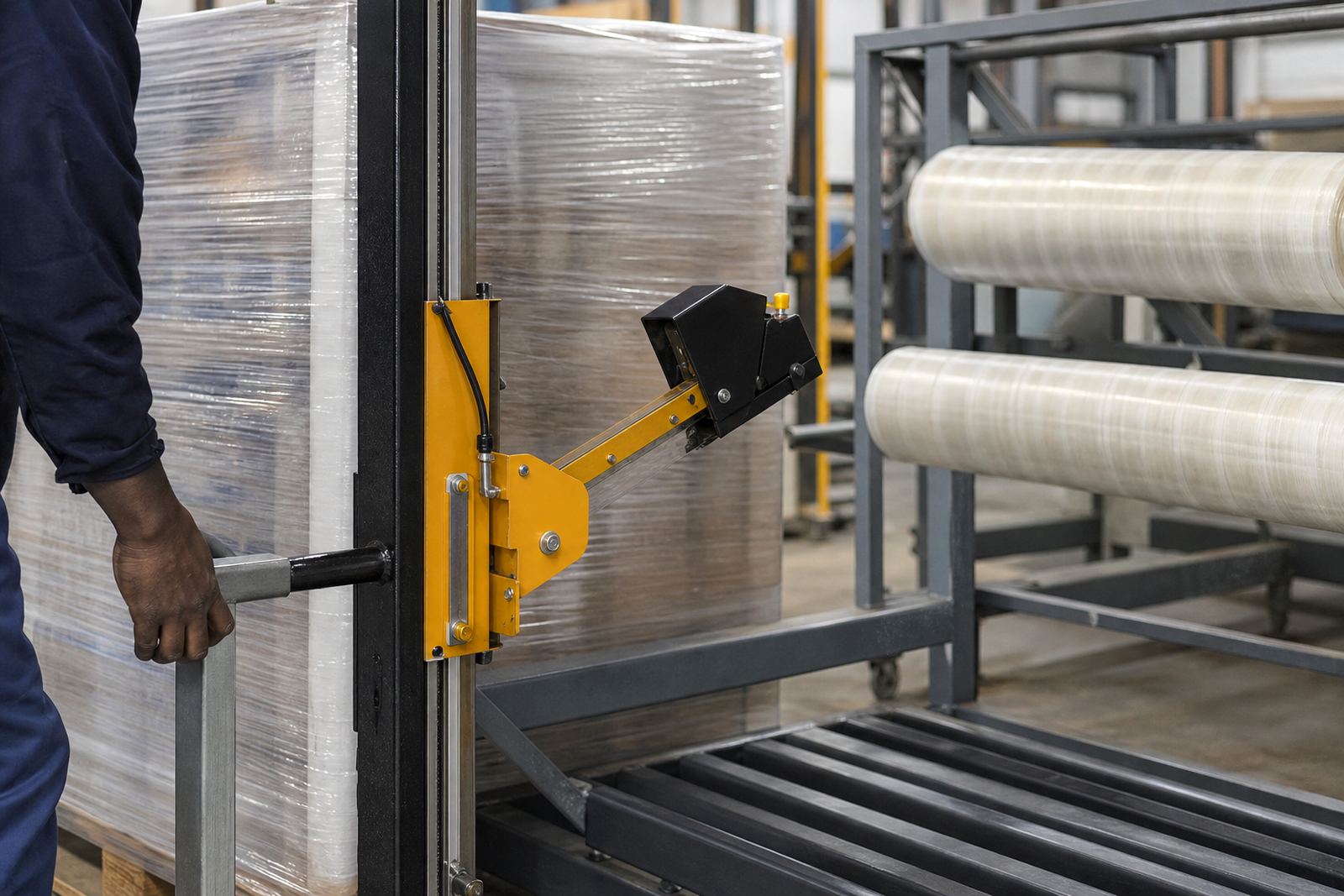
Most pallet wrap cutters do not need a complex installation. Depending on the version chosen, they may be hand-held, mounted at a wrapping point or kept at fixed stations near pallet completion and unpacking. The key is to position the cutter where staff can reach it easily without crossing walkways or stretching over moving loads. If the tool is mounted, it should be placed at a height and angle that matches the average operator movement and the line layout.
No electricity, gas or compressed air is usually required. That makes the unit easy to use in areas with limited services or in sections where equipment must remain simple and portable. For larger operations, it can be included in a line setup with clear storage points, blade exchange procedures and basic safety instructions. Onsite installation support can help confirm the best placement, especially where pallets move between conveyors, wrapping zones and staging areas.
Care, Servicing and Blade Replacement
Like any cutting tool, a pallet wrap cutter works best when it is kept clean and checked regularly. Stretch film residue can build up, particularly in dusty warehouses or on sites where cartons shed fine debris. A quick wipe-down at the end of a shift helps keep the cut smooth and reduces drag. If the blade starts to pull or fray the film, it may be time for replacement rather than continued use.
Preventive servicing is simple but useful. Staff should check for looseness in the handle, wear on the cutting edge and damage to any guard or guide parts. If the cutter is used in a fast-moving packing area, blade replacement should be handled before the tool becomes unsafe or starts wasting film. We can support blade replacement, dispenser repairs, breakdown callouts and operator training so the equipment stays in proper working order. A small check now can save a lot of irritation later, and fewer broken wraps means less stop-start on the line.
- Clean film residue regularly
- Inspect blade sharpness and guard condition
- Replace worn parts before they affect cut quality
- Keep spare blades on hand for busy shifts
What to Check Before You Order
Before ordering, it helps to confirm the film type, pallet height, how the cutter will be used and whether the tool needs to suit one operator or many. If the site wraps different load sizes, ask about reach, grip style and whether the cutter is easier to use with gloves. It also helps to know if the tool will be used only for wrap cutting or also for unpacking stock, since that affects the preferred blade guard and handle shape.
You should also check your safety rules, storage method and expected daily volume. A high-throughput site in Durban may need a different setup from a smaller branch in Polokwane or Boksburg. If your team wraps in cold rooms, near docks or in humid coastal conditions, ask about the best finish for grip and durability. We can help with site assessments, equipment upgrades, roll change support and operator training, so the chosen cutter fits the way your line actually works.
- Film type and thickness used on the line
- Pallet height and operator reach needed
- Daily cutting volume and shift pattern
- Storage point and safety procedure on site
- Need for training, spares or servicing support
Key facts
| Product type | Pallet wrap cutter for stretch film |
|---|---|
| Primary use | Safe cutting during pallet completion and unpacking |
| Power / gas | No electricity, gas or compressed air required |
| Installation | Hand-held or fixed point use depending on model |
| Best suited to | Warehouses, packing lines, dispatch bays and stock control areas |
| Support options | Onsite installation, blade replacement, servicing, training and breakdown callouts |