What a film roll cradle does on a packing line
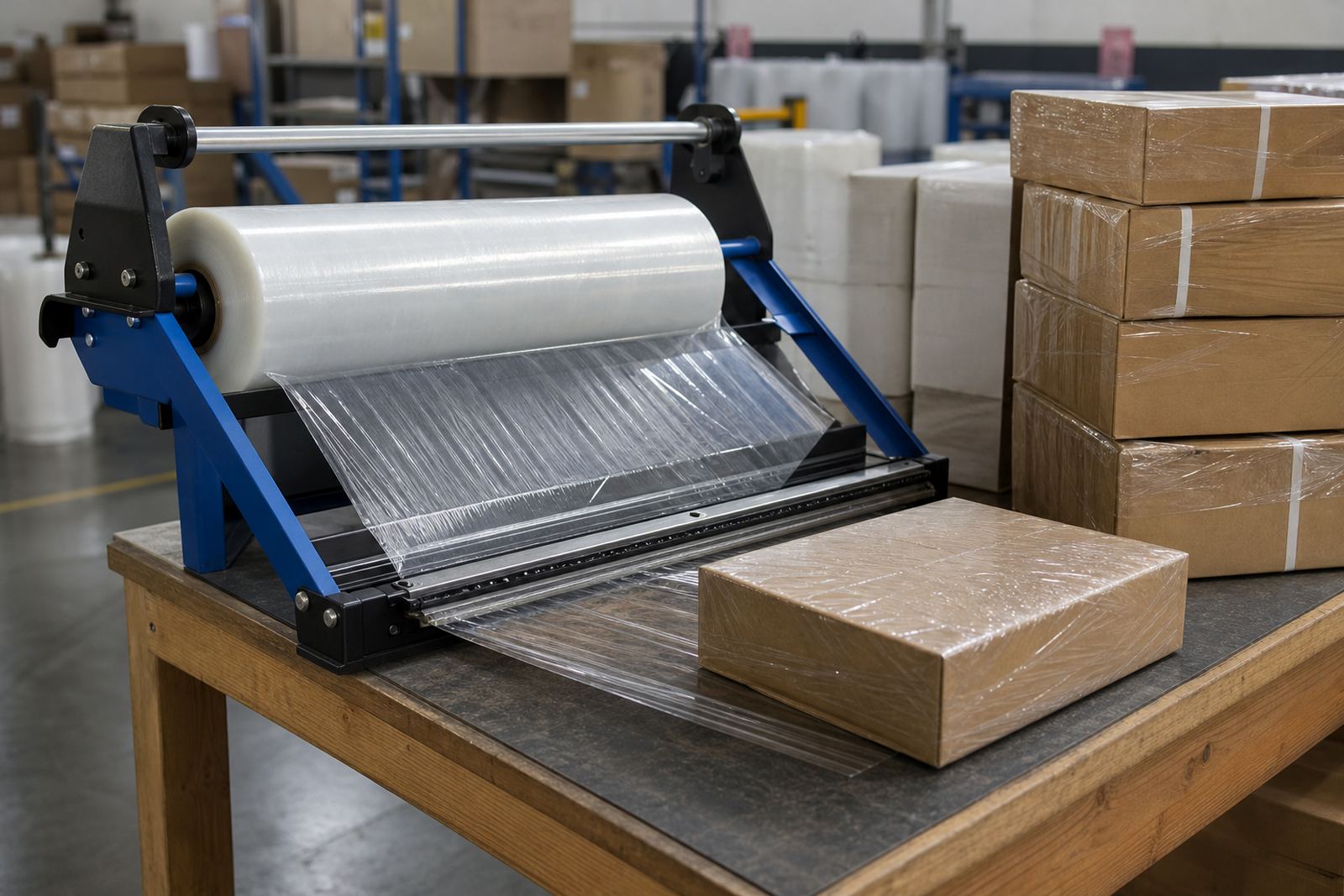
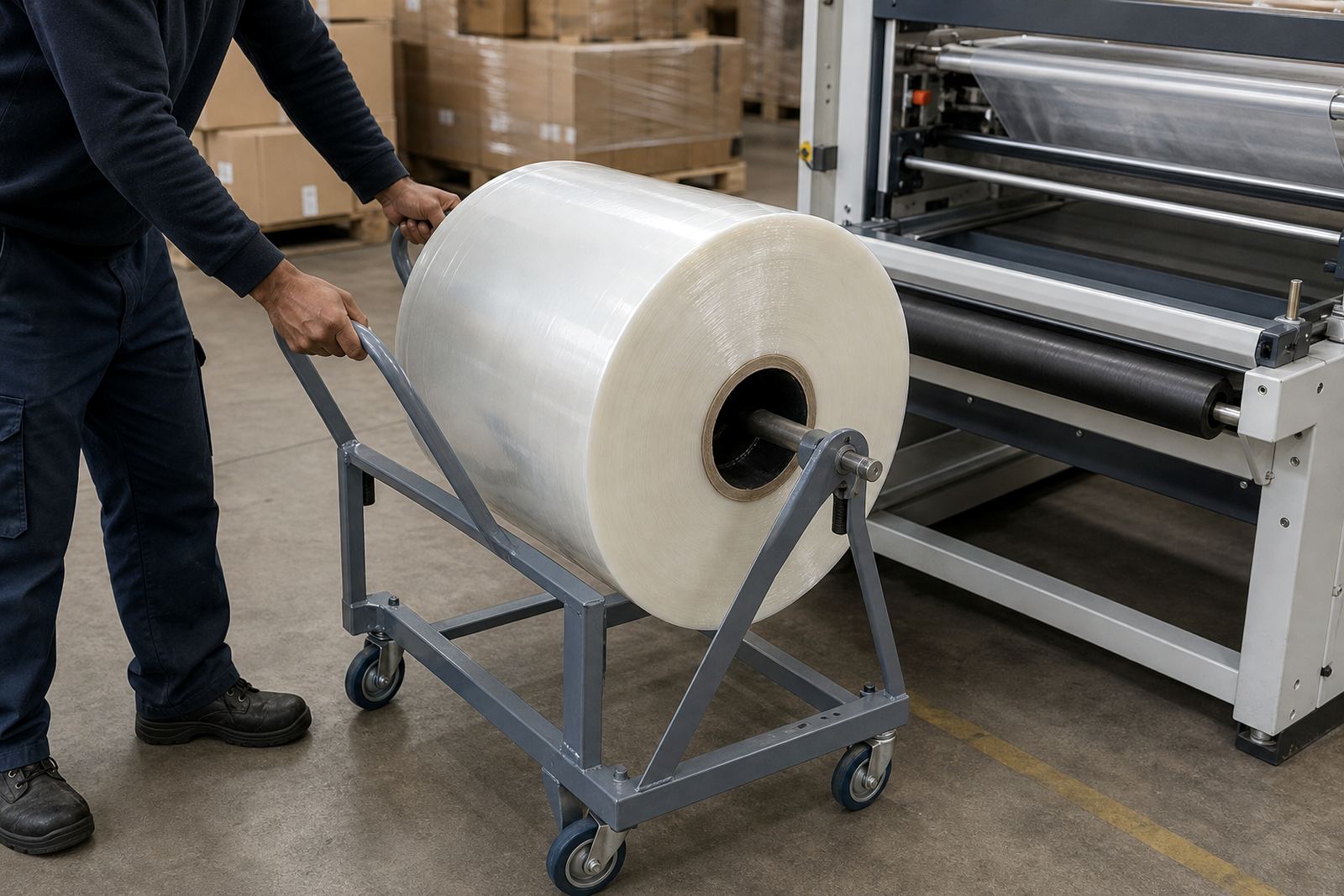
A film roll cradle is a simple support frame that holds a film roll in position while it is being loaded, moved or prepared for use. It is used where rolls are too heavy or awkward to lift safely by hand, especially on busy lines where changeovers happen often and operators need a stable place to work from.
On shrink film and stretch film applications, the cradle helps keep the roll from dropping, rolling away or being lifted at an awkward angle. That reduces strain on the team and helps protect the film edges from damage. In many Germiston, Johannesburg and Pretoria plants, this is the difference between a smooth roll change and a stop-start changeover that wastes time.
The cradle is not a powered machine. It is a handling aid that works alongside your existing packing line, dispenser or wrapping setup. For sites dealing with shift work, load-shedding or mixed product runs, it adds a practical layer of control without complicating the line.
Sizes, load capacity and setup options
Film roll cradles are usually selected to suit the roll diameter, roll width and the maximum weight your team handles. A cradle that is too narrow or too light will not give proper support, while one that is oversized can make loading slower than necessary.
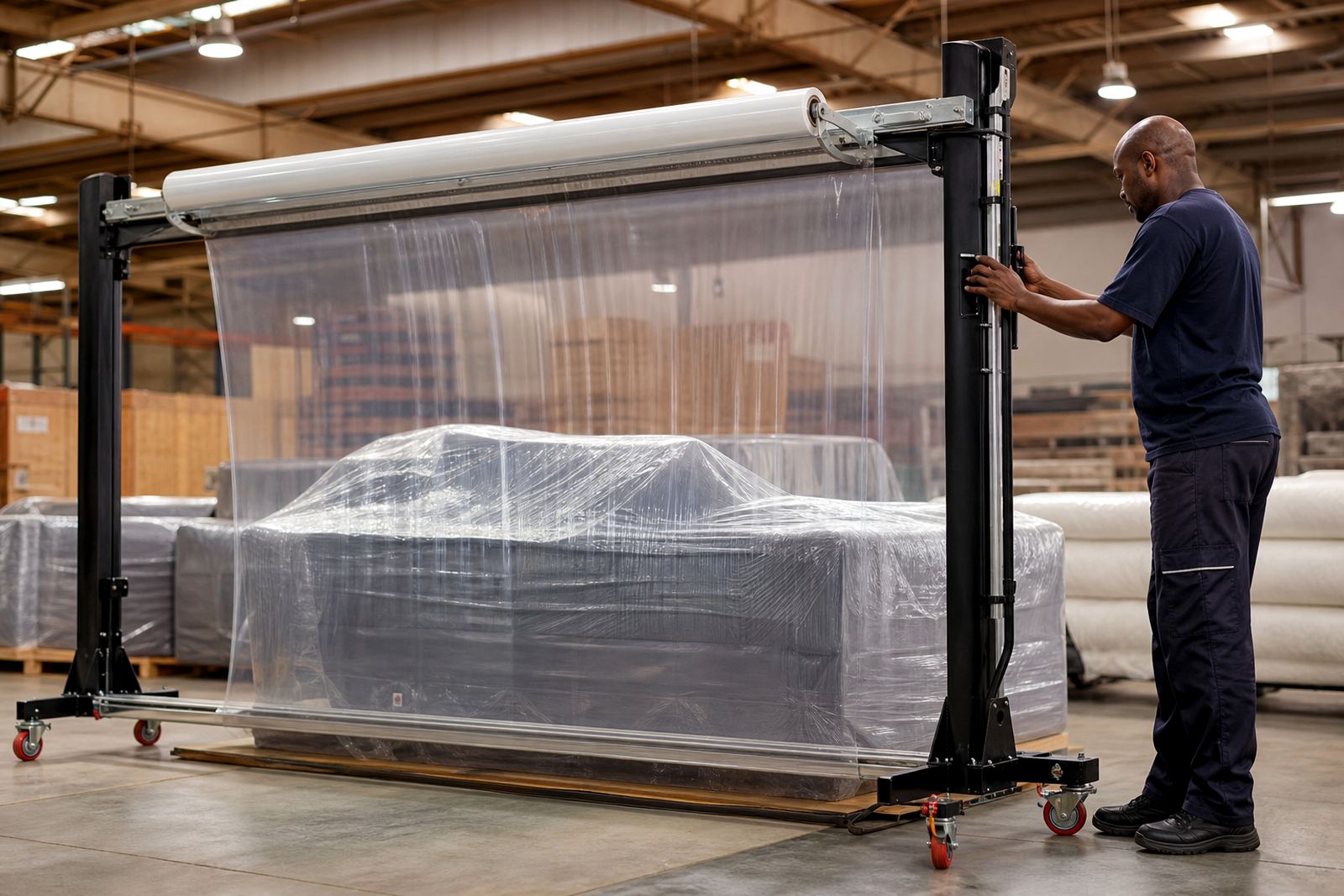
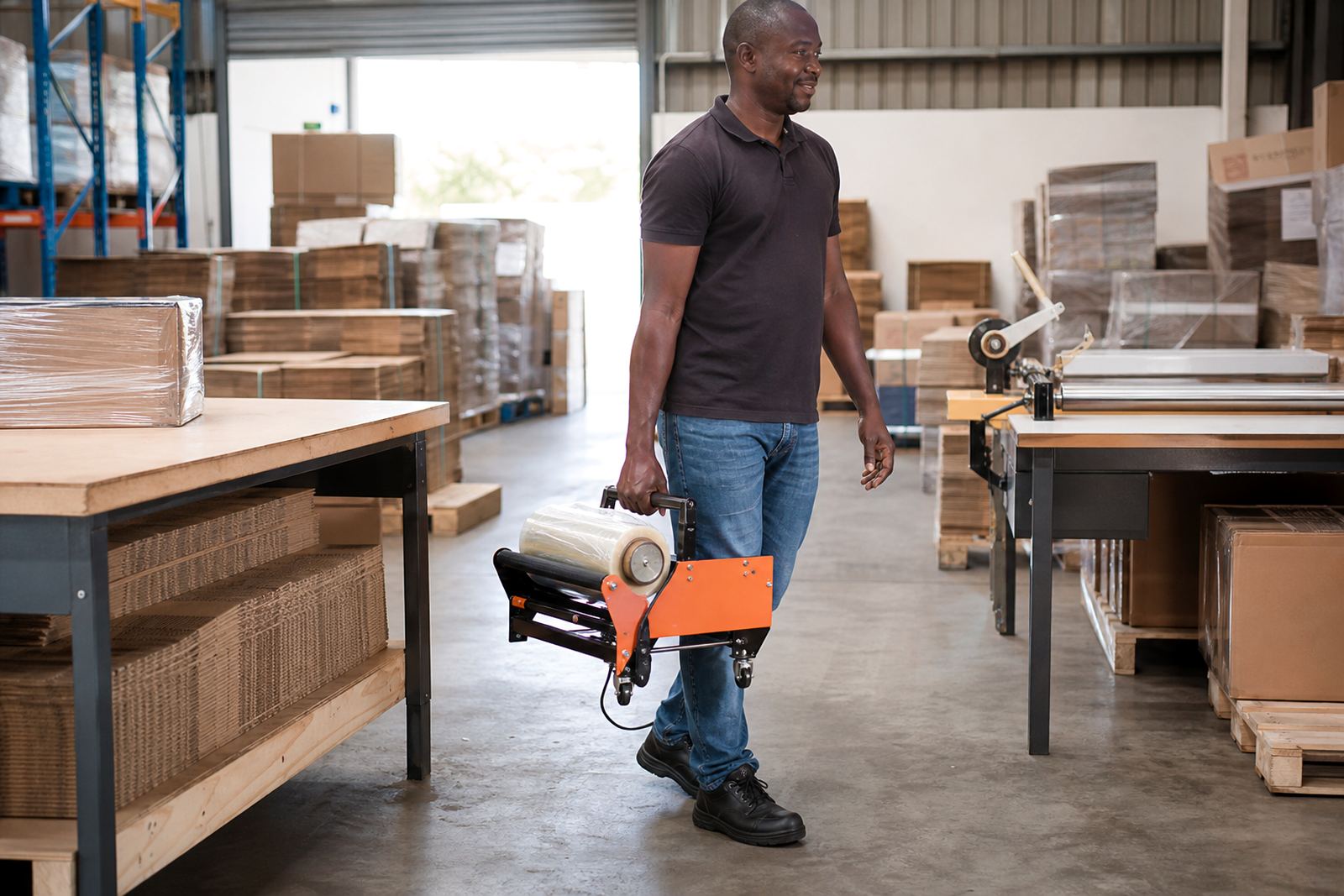
Common options can be supplied for standard and heavier industrial rolls, with frame heights and support widths matched to the film size in use. For some operations a fixed cradle is enough, while others prefer a mobile unit with castors for use between lines or around a loading bay.
- Suitable for shrink film rolls and stretch film rolls
- Fixed or mobile frame options
- Support arms or roller supports for easier roll placement
- Heavy-duty construction for warehouse and packing floor use
- Can be set up beside a dispenser or loading station
For colder stores, coastal humidity in Durban or Cape Town, and dusty industrial areas, the finish and frame style should be chosen carefully so the cradle keeps working well with basic care. A properly selected cradle also helps if you move stock between depots in places like Boksburg, Midrand or Polokwane.
Where a roll cradle suits best
This product suits packing lines where operators load large film rolls by hand or with limited lifting aid. It is useful in food packing, warehouse dispatch, FMCG, manufacturing, agricultural packing and general industrial wrapping areas. If your team changes rolls several times a shift, the cradle can reduce bending, twisting and the extra effort that comes with lifting from the floor.
It also suits sites where the film is stored away from the line and brought in as needed. By giving the roll a proper support point before installation, you cut down on edge scuffs and accidental drops. That matters on lines where film quality must stay consistent, and where a damaged roll can throw off production for the rest of the shift.
- High-volume packing lines
- Warehouses with frequent roll replacement
- Sites with limited lifting equipment
- Operations that need safer manual handling
- Lines where changeover speed matters
Many customers use a cradle together with a dispenser, a loading point or a line-side service area. If your operation runs in a smaller Germiston factory or a larger regional site, the key is matching the cradle to the real handling process, not just the roll size on paper.
Installation needs and what the cradle does not require
A film roll cradle is straightforward to install. Most units need only a level floor and enough clearance for the operator to approach the roll safely. No special power or gas supply is required, which makes it suitable for sites that want a simple mechanical solution without adding another electrical load to the line.
For fixed installations, the frame should be positioned where rolls are received and loaded often enough to justify the space. Mobile units should have clear travel paths and a flat surface so castors move properly. If the cradle is used near other packing equipment, allow enough room for safe lifting and for the film to be loaded without scraping against nearby frames or guards.
On sites affected by load-shedding, this kind of equipment keeps working because it is not dependent on power. That can be useful where packing teams need to continue sorting, staging or preparing rolls even when the rest of the line is under pressure.
Care, servicing and safe daily use
Like any handling aid, the cradle should be checked regularly for wear, loose fasteners, damaged rollers and any bending on the frame. If the support points are worn, the roll may sit unevenly and become harder to load. Basic cleaning is usually enough, but facilities in dusty or humid areas should include the cradle in normal housekeeping and inspection routines.
Our team supports preventive servicing, site assessments and breakdown callouts for packing line equipment. We can also assist with blade replacement, dispenser repairs, roll change support and operator training where the cradle forms part of a wider film handling setup. In practice, a short inspection during service visits saves a lot of trouble later, especially where line staff work under pressure and small faults get missed.
- Check frame alignment during routine cleaning
- Inspect castors or rollers for smooth movement
- Tighten loose hardware before it affects loading
- Keep the floor level and free of debris
- Replace worn support parts before they damage film rolls
Our service coordinator can arrange support for customers across Johannesburg, Pretoria, Durban, Cape Town and Polokwane, with field support from our Germiston base. The aim is to keep the cradle ready for daily use and avoid unnecessary downtime.
What to check when ordering a film roll cradle
When ordering, start with the film roll details. Measure the outside diameter, roll width and approximate weight of the heaviest roll you plan to load. Also check whether the roll core, loading method and line layout place any limits on frame height or support width. If you use more than one film type, list each size so the cradle can be matched to the full range.
It is also worth confirming whether you need a fixed cradle, a mobile cradle or a unit that works beside existing dispensers and packing stations. If the line changes often, ask about handling clearance and whether the operator loads from the side or front. Those small points matter more than many people think, and they affect both safety and speed.
For best results, share photos of the line area, the floor space available and any nearby obstacles. That helps us match the cradle to your process and avoid supply delays. If your site has municipal safety rules, internal OHSA checks or warehouse traffic routes that affect placement, mention those during the enquiry so the right option can be proposed first time.
Why South African packing teams choose Film Cutters
Film Cutters is based in Germiston, Ekurhuleni and supplies shrink film and stretch film cutters, dispensers and handling support for packing lines across South Africa. The team works with businesses in Johannesburg, Pretoria, Durban, Cape Town, Polokwane, Boksburg and Midrand, with practical support from installation through to servicing.
Our team includes Thabo Maseko, Naledi Khumalo, Johan van Wyk, Ayanda Dlamini, Michelle Naidoo and Pieter Smit. We focus on equipment that makes daily work easier to manage, with parts, repairs and training available where they are needed. If your line needs a film roll cradle that fits your rolls and your floor space, we can help you check the right size and setup before you order.
Key facts
| Product type | Film roll cradle for shrink film and stretch film handling |
|---|---|
| Typical use | Supports heavier rolls during loading and changeover |
| Construction | Heavy-duty steel frame |
| Mounting | Fixed floor position or mobile castor option, depending on site needs |
| Power or gas | None required |
| Ordering details | Roll diameter, roll width, roll weight, loading method and available floor space |