A packing line that needed faster film handling
The client was a mid-sized mixed-goods packer in Montague Gardens, serving retail and wholesale orders with a steady flow of cartons, mixed pallets and short-run dispatches. Their existing film handling was slowing the team down, with uneven cuts, loose film tails and a few too many stop-start moments when the line was under pressure.
The brief was clear: improve wrapping consistency, reduce handling strain and keep the line moving without adding a complicated process. Because the site runs in a busy industrial area, we also had to factor in tight floor space, shared access points and a workflow that could not afford long interruptions. Load-shedding planning was part of the discussion too, since the team needed equipment that could be used confidently when power conditions changed.
We started with a site assessment and measured the wrap station, pallet approach and operator movement around the line. That gave us the clearances needed for the cutter positions and helped us choose hardware that would suit the packing rhythm instead of forcing the team to work around it.
- Site: Montague Gardens, Cape Town
- Client type: Mixed-goods packing operation
- Primary issue: Slow, inconsistent film cutting and dispenser handling
- Key requirement: Better throughput without adding operator fatigue
What we supplied and how it was set up
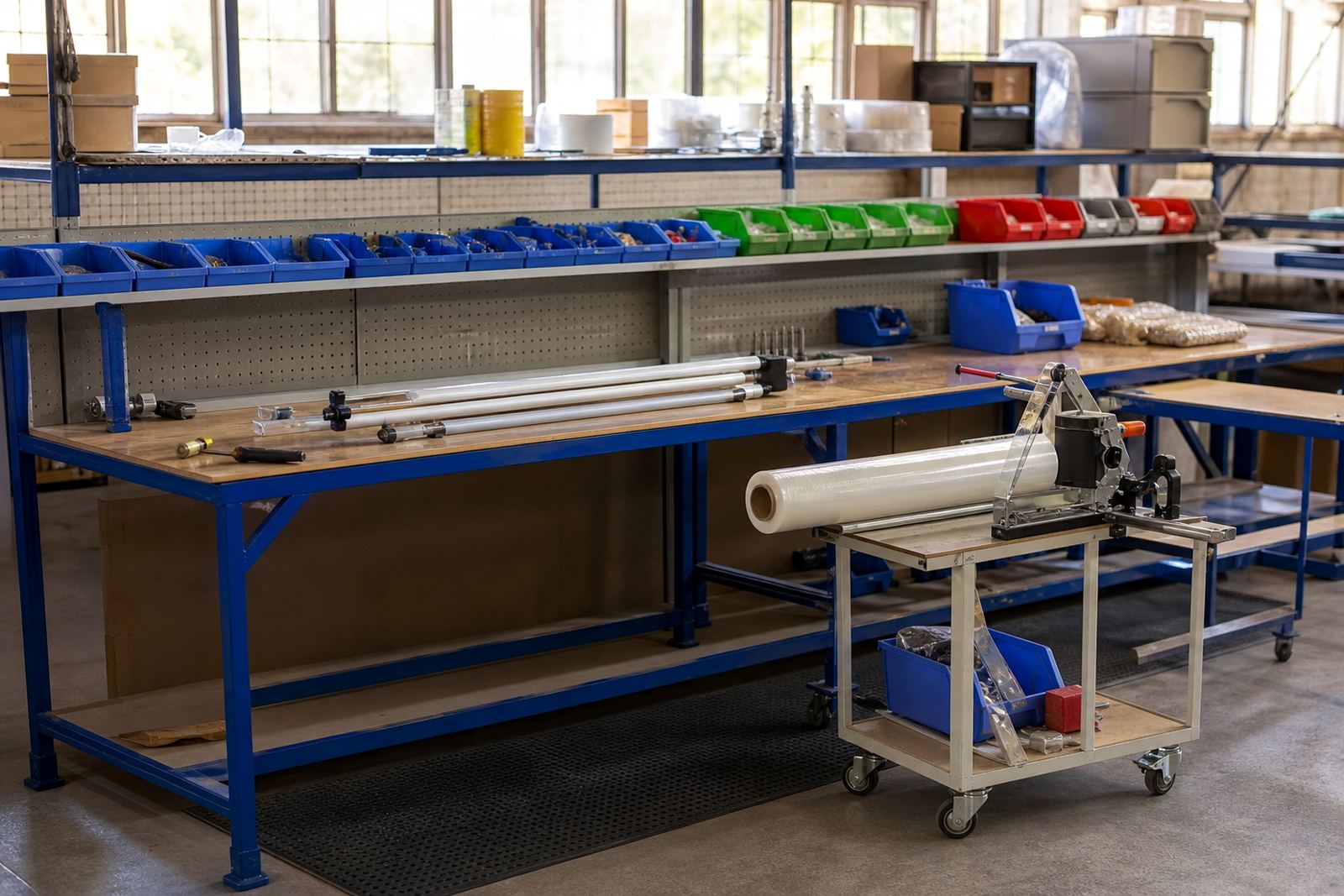
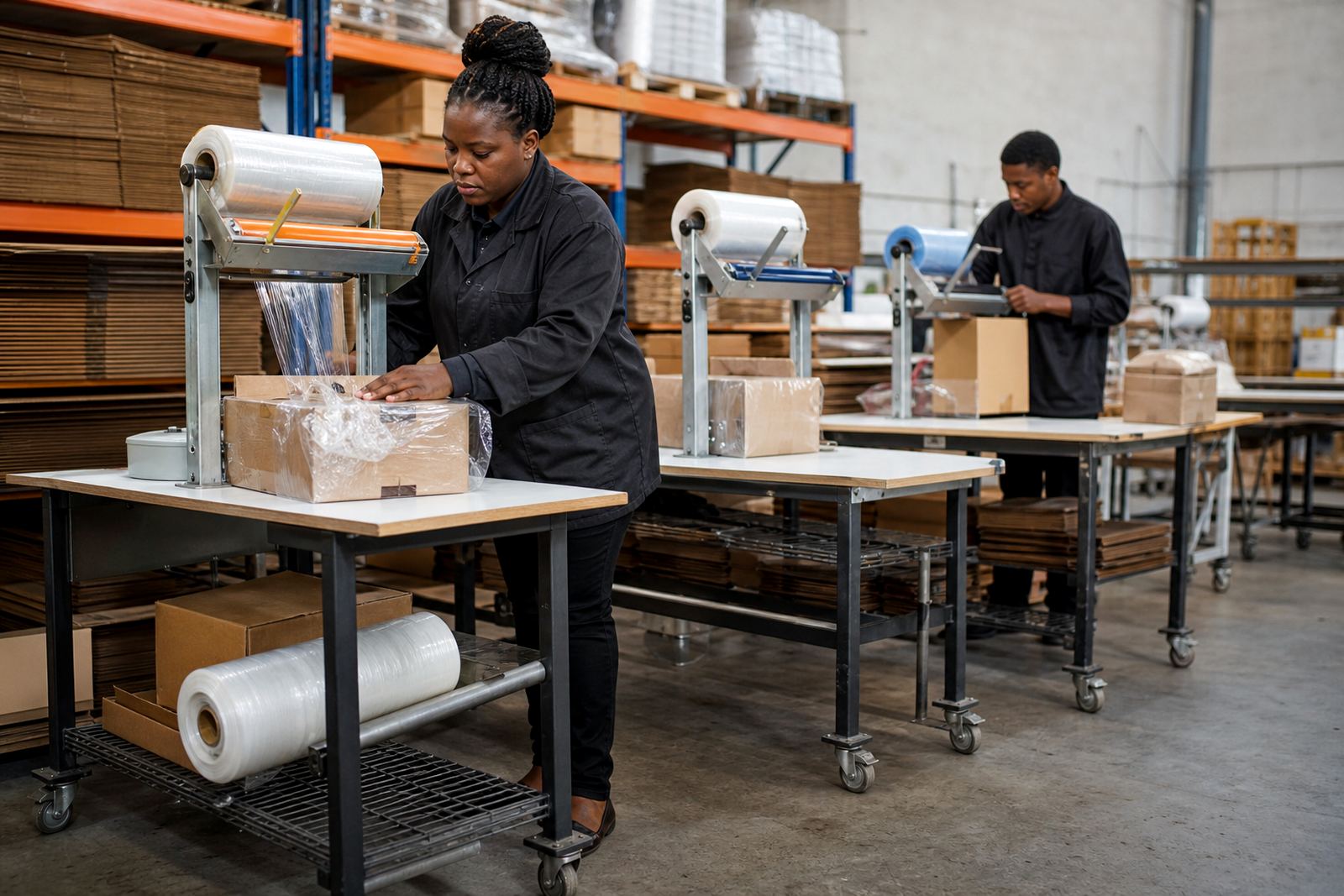
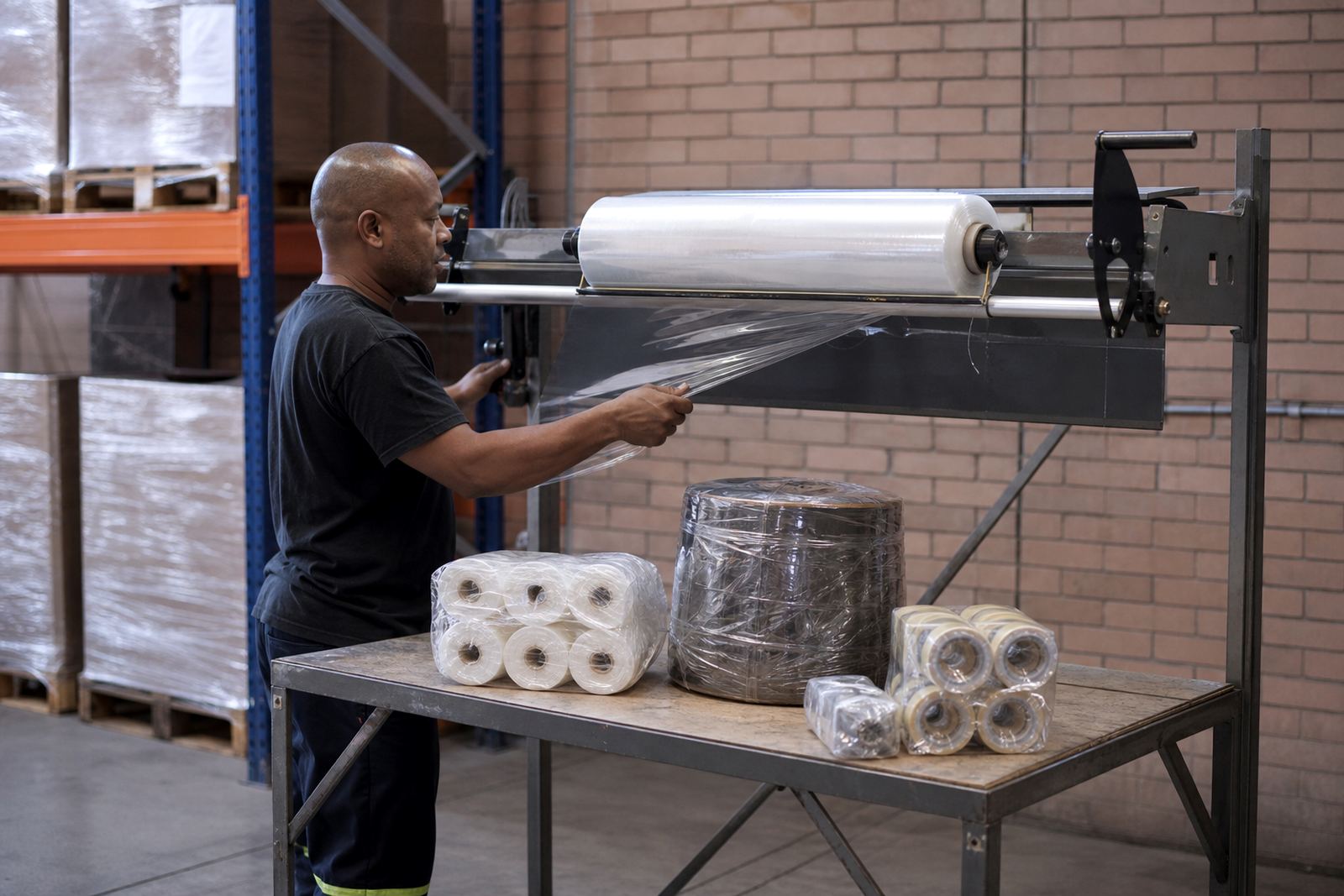
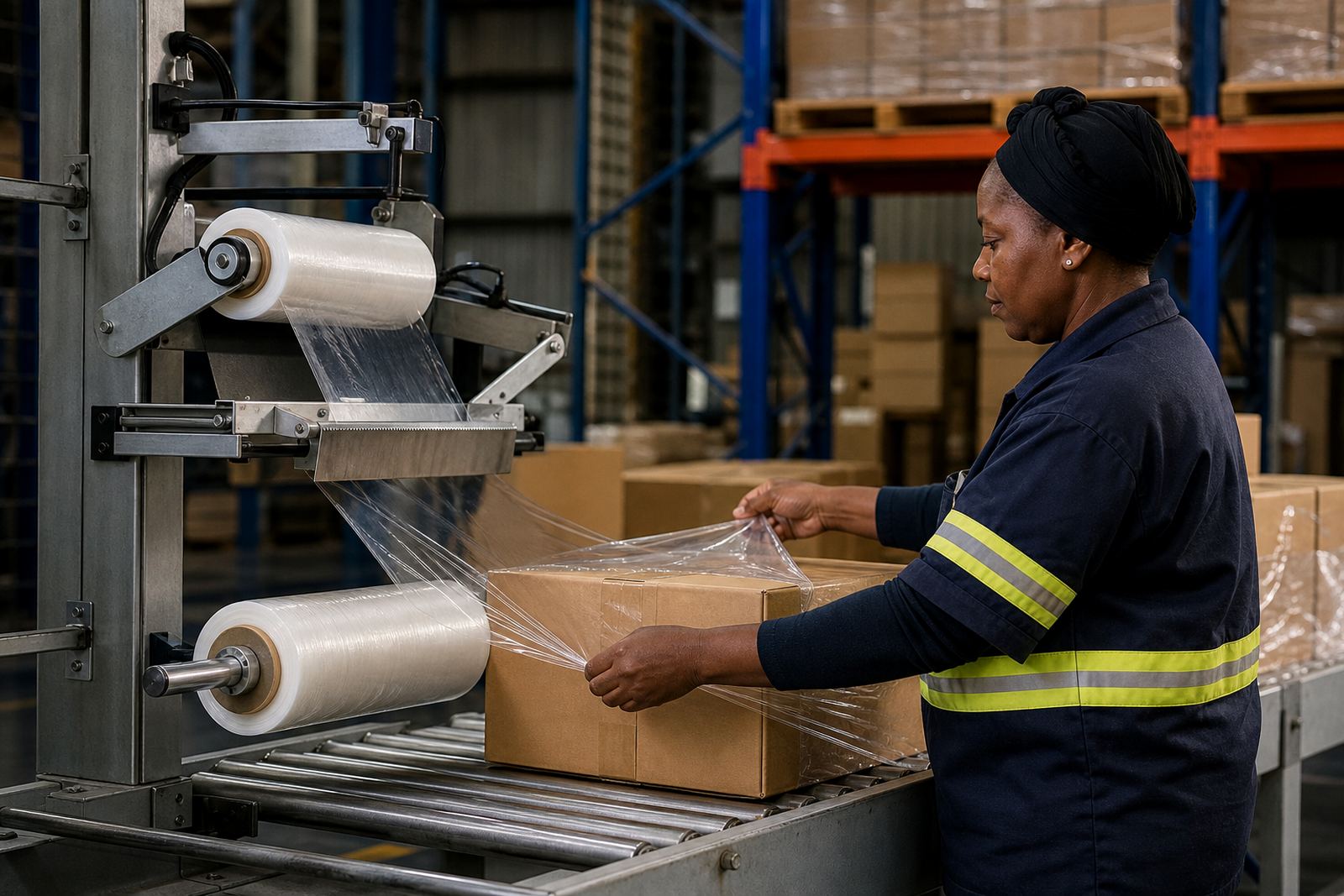
For this project we supplied shrink film and stretch film cutters and dispensers suited to a packing line environment, with a layout that allowed operators to work faster and keep their hands clear of loose film edges. The setup was arranged for regular daily use, not a once-off fix, so the equipment had to be easy to load, simple to clean and straightforward to service.
We installed the dispensers at the working height agreed during the assessment and set the cutters so they could be reached cleanly from both sides of the station where needed. The line used a mix of pallet wrapping and carton handling, so we kept the solution flexible enough for both product streams. The install also included a safety check on operator movement, blade access and film roll changeovers.
Our team on site handled the practical details, from mounting and alignment to test runs with the client’s own film rolls. We checked that the film tracked correctly through the dispenser, that the cut was clean and that the team could change rolls without awkward lifting or unnecessary twisting.
- Cutters supplied for shrink film and stretch film use
- Dispensers aligned for quick roll changes
- Mounting set for a mixed-goods packing station
- Clean cut performance tested under normal line speed
Constraints on a live industrial site
Montague Gardens is a working industrial area with truck movement, tight loading windows and a constant need to avoid clogging the floor with extra equipment or packaging waste. The client also had limited downtime available, so the installation had to be completed in stages while the packing line stayed operational. That meant careful sequencing and clear communication with the shift lead.
Another constraint was the range of operators using the line. Some staff had years of packing experience, while others were newer and needed a system that was forgiving and easy to learn. We kept the controls and handling points simple, and made sure the team could repeat the same process across shifts without relying on one person to manage the station.
There was also the practical matter of maintenance access. In coastal Cape Town conditions, metal fittings and moving parts need regular attention, so we left enough space around the cutters for cleaning and future blade replacement. That small detail helps keep the line tidy and reduces the chance of film dust and debris building up around the station.
- Limited downtime during working hours
- Shared floor space with pallet movement and dispatch traffic
- Multiple operators using the same station across shifts
- Need for easy servicing in a coastal environment
Timeline from assessment to handover
The project ran over three weeks from first visit to final handover. Week one covered the assessment, measurements and review of the film handling process. In week two we prepared the equipment, confirmed the mounting positions and scheduled the install around the client’s production windows. Week three was used for the on-site fitment, testing and operator handover.
Because the line was already active, we did not try to change everything at once. Instead, we worked through the station in practical steps and confirmed each part before moving on. That approach kept the packers working and gave the client time to raise any adjustments while the equipment was still on site.
After installation we ran a few live cycles with the team and checked the repeatability of the cut, the ease of roll loading and the time taken for a standard changeover. The result was a cleaner station and fewer interruptions during peak dispatch periods.
- Week 1: Site assessment and line review
- Week 2: Equipment preparation and scheduling
- Week 3: Installation, test runs and handover
- Final step: Operator walkthrough and safety check
Results on the line after go-live
Once the line was running with the new cutters and dispensers, the client saw a more controlled wrap station and less film waste from damaged or uneven cuts. Operators could work with less effort, and the changeover between rolls was quicker. That matters on a site where outbound orders can build up fast and a few minutes saved on each pallet adds up over a shift.
There was also a visible improvement in presentation. Film sat tighter on the load, the ends were neater and the team had better control over the wrap process. For a mixed-goods operation this helps reduce rework, because poorly wrapped loads often need attention before despatch. The new setup gave the client a steadier workflow and made training easier for new staff.
From our side, the biggest benefit was that the solution matched the way the site actually runs. It did not add complexity, and it gave the team a repeatable process they could trust from one shift to the next. A small change in the right place can make a proper difference on a packing line.
- Cleaner film cuts and less loose tailing
- Faster roll changes at the wrap station
- Reduced operator strain during busy shifts
- More consistent pallet presentation for despatch
What we would repeat on a similar Cape Town site
If we were doing a similar install again in Cape Town, we would start with the same assessment approach and keep the equipment choice tied closely to the line speed and operator flow. That is the safest way to avoid overcomplicating a simple packing problem. We would also plan for maintenance access from the start, especially where humidity and regular wash-downs can affect fittings over time.
We would keep the handover practical too. A short training session, one or two live test runs and a clear maintenance plan are usually enough to get the team comfortable. The client in Montague Gardens wanted something that would keep working day after day, and that is exactly the sort of result we aim for on every packing line project.
For sites in Germiston, Johannesburg, Pretoria, Durban, Cape Town or Polokwane, the same principle applies: match the cutter and dispenser to the way the line actually moves, then back it up with servicing and support so the system stays reliable.
- Start with a measured site assessment
- Keep the setup simple for all shifts
- Allow space for servicing and blade replacement
- Train operators on the actual line routine
Key facts
| Project location | Montague Gardens, Cape Town |
|---|---|
| Client type | Mixed-goods packing operation |
| Timeline | 3 weeks from assessment to handover |
| Equipment | Shrink film and stretch film cutters and dispensers |
| Services used | Onsite Installation, Line Setup, Safety Checks, Operator Training, Roll Change Support |
| Base for support | Germiston, Ekurhuleni with national service coverage |