Project background in Polokwane
The client was an agricultural input packer based in Polokwane, serving outlets and growers across Limpopo and beyond. Their line handles a wide spread of pack sizes, from smaller cartons for fast-moving stock to heavier mixed loads that need steady wrap control before palletising. The main issue was that film changeovers were slowing the line and operators were getting uneven cuts, especially during busy periods when orders changed from hour to hour.
The brief was clear. Keep the line moving, reduce waste, and make the film application more repeatable for different pallet sizes. The site also had to cope with local conditions, including dusty loading areas, warm afternoons, and the odd power dip that can throw a shift off. They wanted a setup that was simple enough for operators to use without constant callouts, but still tough enough for daily use in a working agri pack environment.
What we found on site
We completed an onsite assessment and checked the packing flow from staging through to wrap and dispatch. The team was using mixed film rolls and a few temporary fixes that were never ideal for a full shift. Some rolls were not seating correctly, which caused slack wrap, and the old cutter arrangement was not giving a clean finish on every change. In a high-throughput setting, that kind of inconsistency becomes waste very quickly.
We also looked at operator movement around the line, roll access points, and where the dispenser needed to sit so it would not interrupt pallet staging. The packing area had enough space for a proper mount and service access, but the layout needed careful positioning. We noted three constraints that shaped the solution:
- Varied pallet heights and carton sizes during the same shift
- Dust and vibration around the packing bay
- Fast roll changes with limited downtime between dispatch waves
Once those points were clear, we could specify a setup that matched the work rather than forcing the line to work around the equipment.
Film cutter and dispenser specification
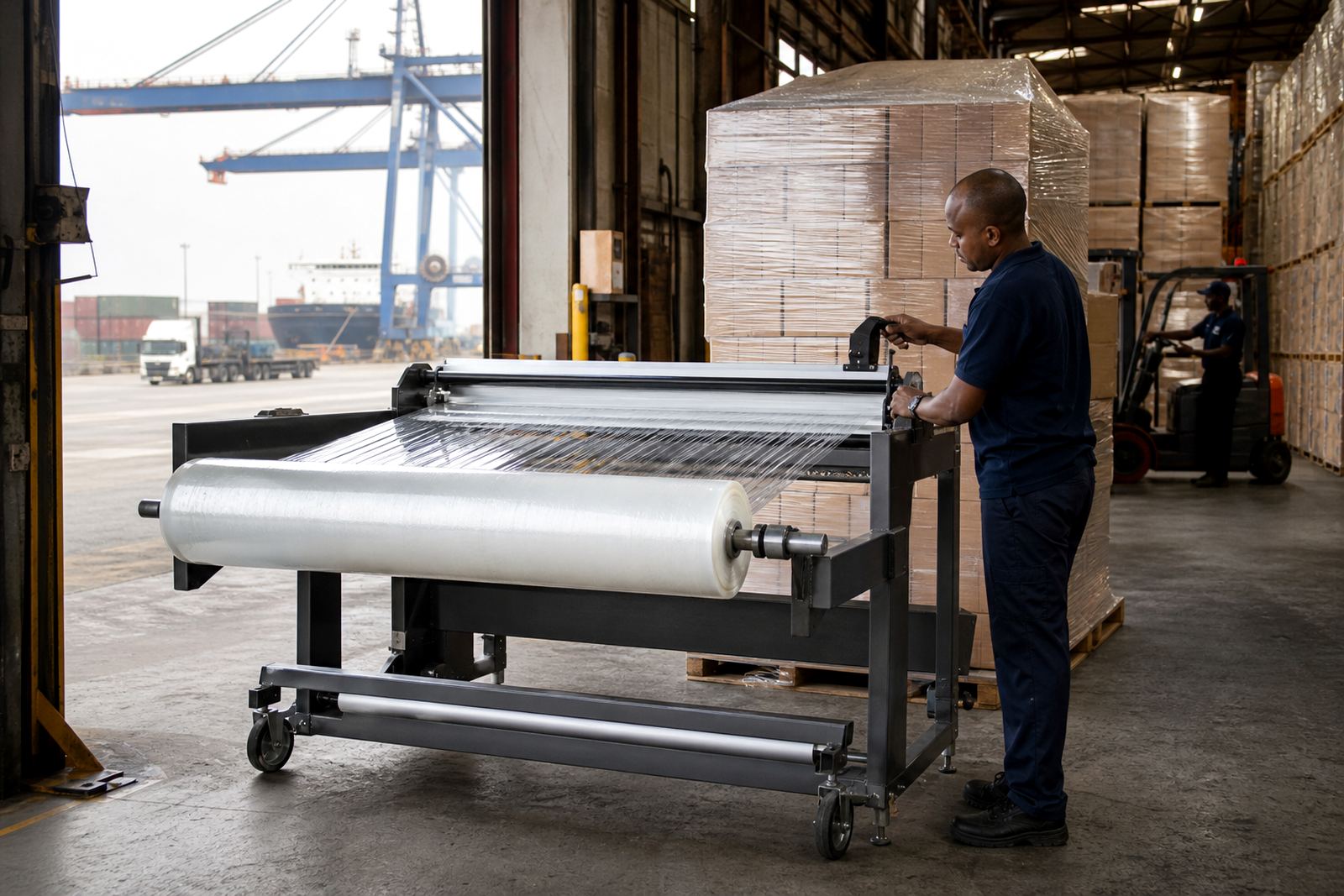
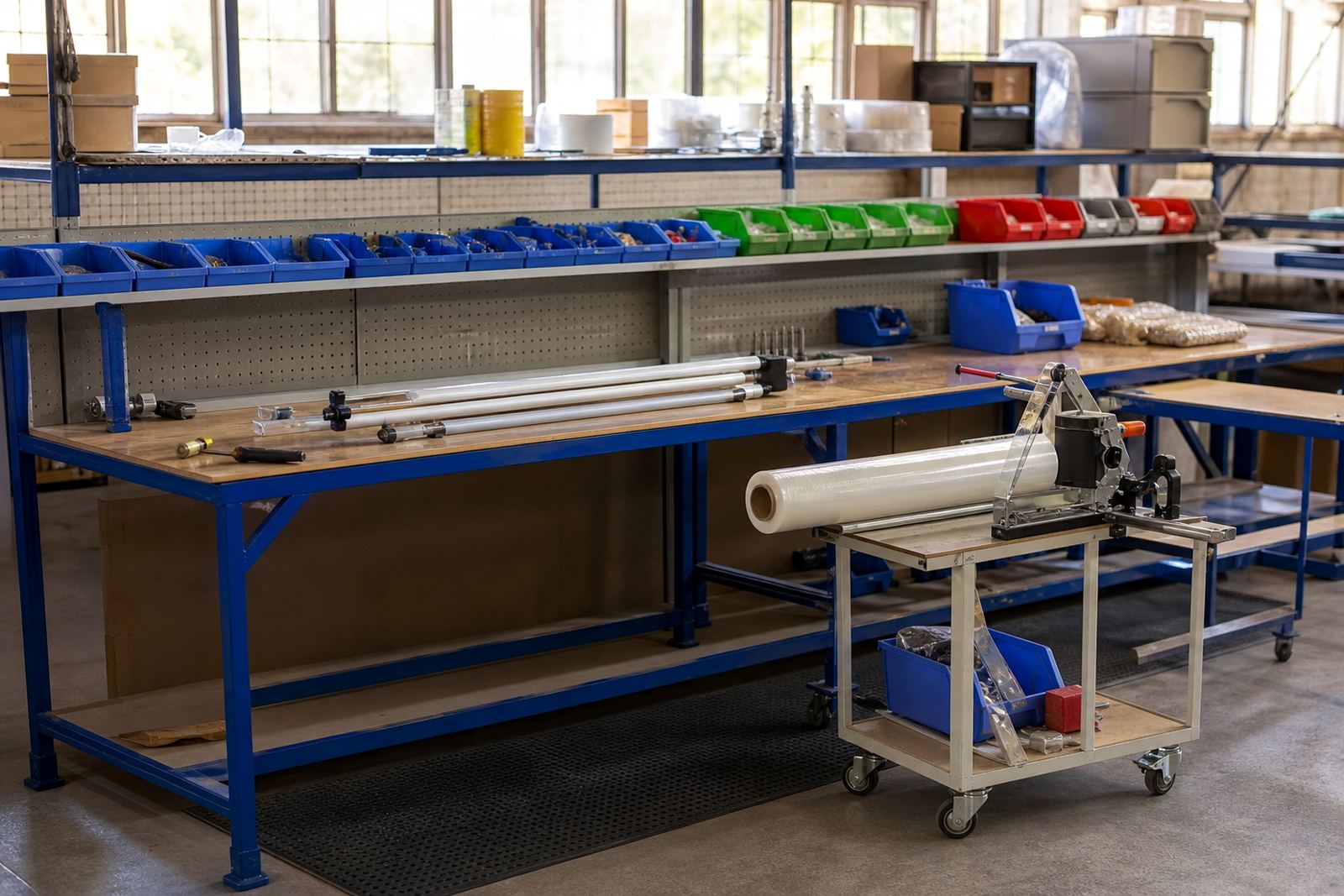
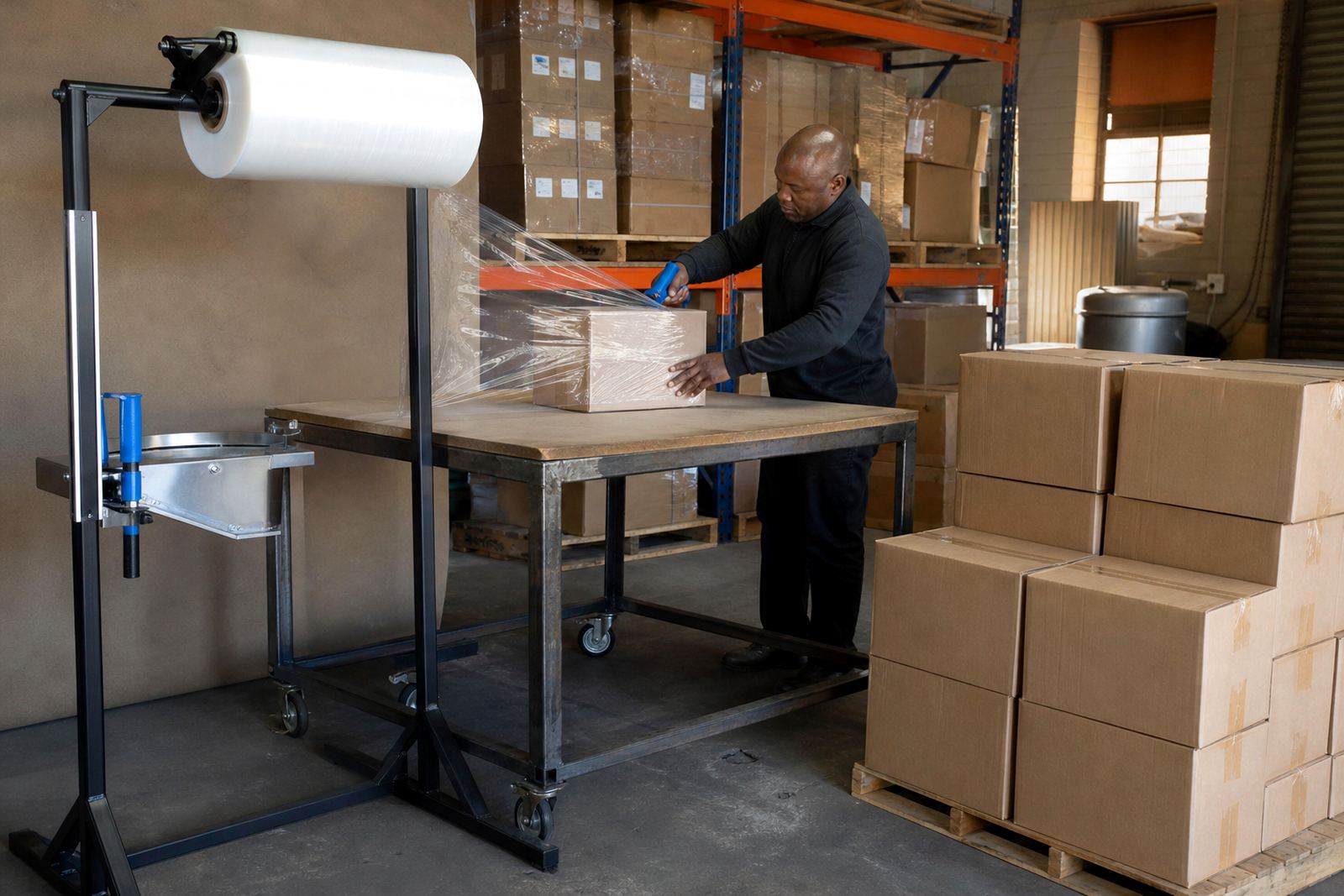
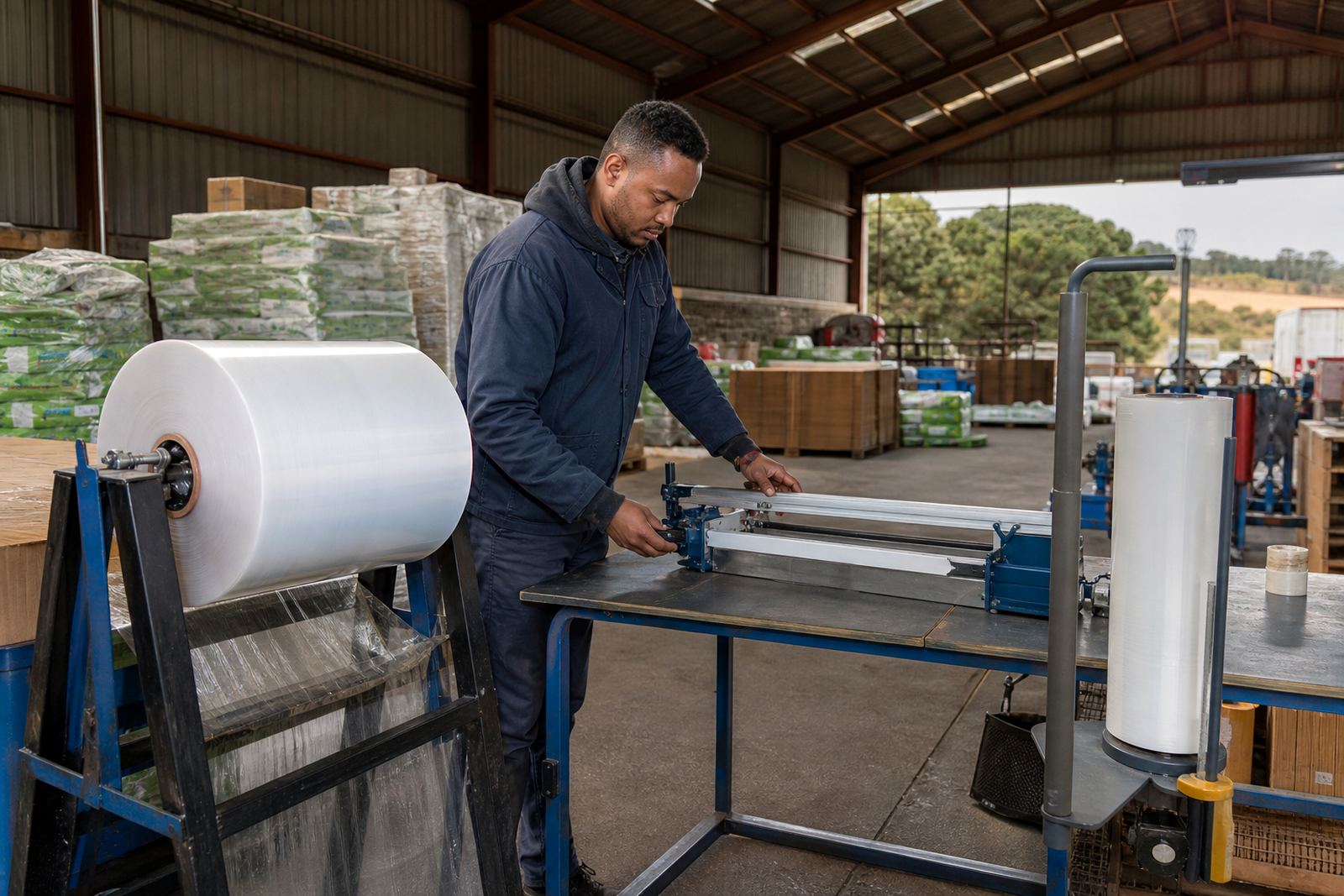
For this site we supplied a shrink film and stretch film cutter and dispenser arrangement suited to packing lines handling mixed loads. The setup was selected for controlled film release, tidy cutting, and simple operator handling. It was also chosen with serviceability in mind so blades and moving parts could be checked without stopping the whole bay for long.
Key features included a heavy-duty frame, smooth film feed, controlled tensioning, and a blade arrangement that gave a cleaner cut edge. We matched the dispenser height and reach to the pallet wrap position so operators could work without stretching or bending too much. That matters on a line that runs all day, because small ergonomic issues become bigger problems after a few hundred cycles. The finish was practical, not fancy, and that is what the client needed.
- Suitable for shrink film and stretch film handling on packing lines
- Designed for frequent roll changes and mixed load sizes
- Manual operation for simple day to day use
- Hard-wearing construction for warehouse and agri pack conditions
- Easy access for cleaning, blade checks, and basic servicing
Installation and line setup over two weeks
The project ran over two weeks from assessment to handover. In week one, we finalised the site layout, confirmed the mounting position, and prepared the line for installation. We also reviewed the flow of pallet movement so the dispenser would not clash with trolley routes or loading activity. In week two, we completed the installation, aligned the dispenser, set the film path, and carried out line setup tests with live packing activity.
During setup we worked through a few film types the client uses in day to day packing. This let us check how the cutter behaved with different tension settings and how easily operators could reload rolls in real use. We also confirmed the fixing points and made sure the installation was secure for a busy industrial bay, where vibration and repeated handling can loosen poorly installed kit over time. The result was a clean install that sat properly in the packing flow.
Training, checks, and support after handover
Once the unit was running properly, we gave operator training on film loading, cutting technique, safe handling, and quick checks before each shift. We also covered blade replacement, what to look for if the film starts snagging, and how to spot wear before it turns into downtime. The client wanted something their team could manage without waiting for a technician every time, and that was the right approach for this site.
We completed a set of safety checks as part of handover and left the team with a practical servicing routine. That included cleaning points, inspection intervals, and roll change support steps for busy dispatch days. In our experience, the best results come when the equipment is only part of the answer, the rest is operator habit and a clear maintenance rhythm. That was particularly important here because the site runs at pace and there is not much room for faffing around.
- Operator training for safe loading and cutting
- Preventive servicing schedule for blades and moving parts
- Site checks for fit, tension, and access points
- Roll change support for peak dispatch periods
Results for the packing line
The completed setup gave the client a more consistent film finish across a wide range of pallet sizes. Film changes became quicker, wrap control improved, and operators had fewer interruptions while preparing loads for dispatch. The line also became easier to manage during peak intake periods, when different product sizes move through the same bay at once. For a business in Polokwane that handles agricultural inputs, that consistency matters because delivery windows are often tight and the loads need to stay secure in transit.
In practical terms, the setup reduced waste from poor cuts and helped the team keep the packing area tidier. The client also reported fewer small delays caused by fiddly roll handling. We would class that as a solid result for this type of job, because the goal was not just to fit equipment, but to make the work easier for the people using it every shift. It did exactly that.
What we would do again on a similar site
If we were doing another agri pack site in Limpopo or elsewhere in South Africa, we would follow the same process: assess the line first, match the dispenser to the real pallet flow, and train the operators before the first busy shift. That sequence saves time later and keeps the installation practical from day one. We would also keep service access high on the list, because if a blade or feed point is awkward to reach, maintenance gets delayed and performance drops.
For sites dealing with variable load sizes, we would again specify a setup that allows clean film control without overcomplicating the line. The best solution is usually the one operators can use confidently every day, not the one that looks impressive on paper. That thinking shaped this Polokwane project, and it is why the result held up well in a proper working environment.
Key facts
| Project location | Polokwane, Limpopo |
|---|---|
| Client type | Agricultural input packer |
| Timeline | 2 weeks from assessment to handover |
| Equipment supplied | Shrink film and stretch film cutter and dispenser setup |
| Key load profile | Varied carton and pallet sizes |
| Core services | Onsite installation, line setup, training, safety checks |