What the Centurion team needed from the wrap station
The site was a busy warehouse in Centurion handling mixed pallet sizes, with dispatch peaks that climbed sharply at month-end. Their wrapping team needed a station that could keep film running straight, reduce hand strain and make roll swaps faster without slowing the packing line.
The brief was simple enough on paper, but the conditions were not. The area sat near an open loading bay, so dust and temperature changes were part of daily use. The team also wanted equipment that could cope with regular power interruptions and still be easy to use after a shift handover.
- Steadier film feed for stretch wrap on outbound pallets
- Faster roll changes with less manual handling
- Clear operator steps for day and night shifts
- Low-maintenance parts that could be serviced locally
Constraints on site and how we planned around them
Centurion warehouses often have tight aisle spacing, forklift traffic and a need to keep pedestrian routes clear. This site was no different. We had to work around live operations, avoid blocking dispatch, and make sure the wrapping point did not interfere with pallet staging or municipal fire access requirements.
There was also the practical matter of load-shedding. The customer wanted a setup that could pause safely and restart without wasting a half-loaded roll. In addition, the wrapping station sat close to a doorway, so dust movement and wind gusts could affect lighter film edges if the feed path was not controlled properly.
- Active warehouse floor, no full shutdown available
- Limited footprint beside dispatch lanes
- Power interruptions during afternoon shifts
- Need to keep wrap waste and offcuts under control
What we supplied and installed
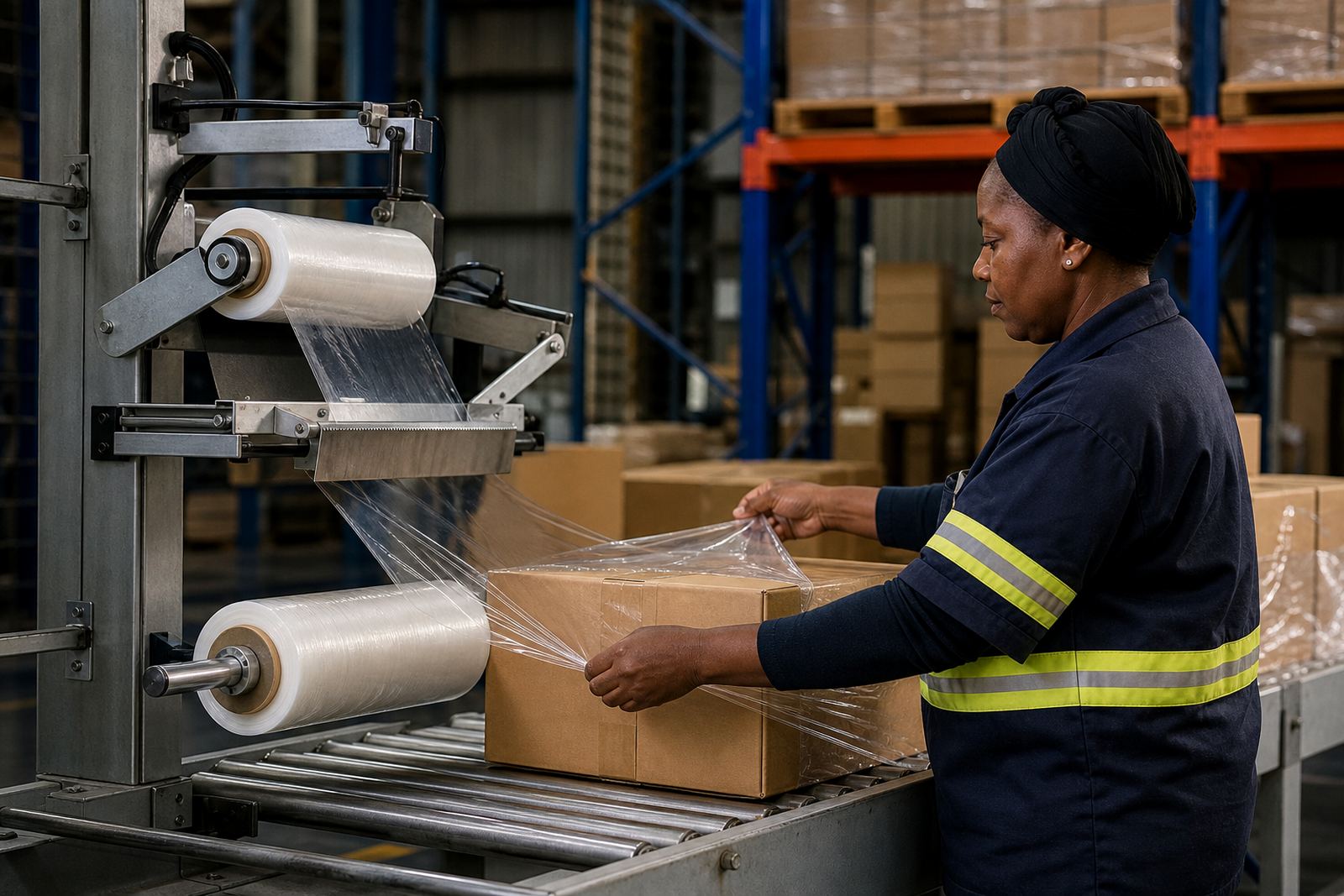
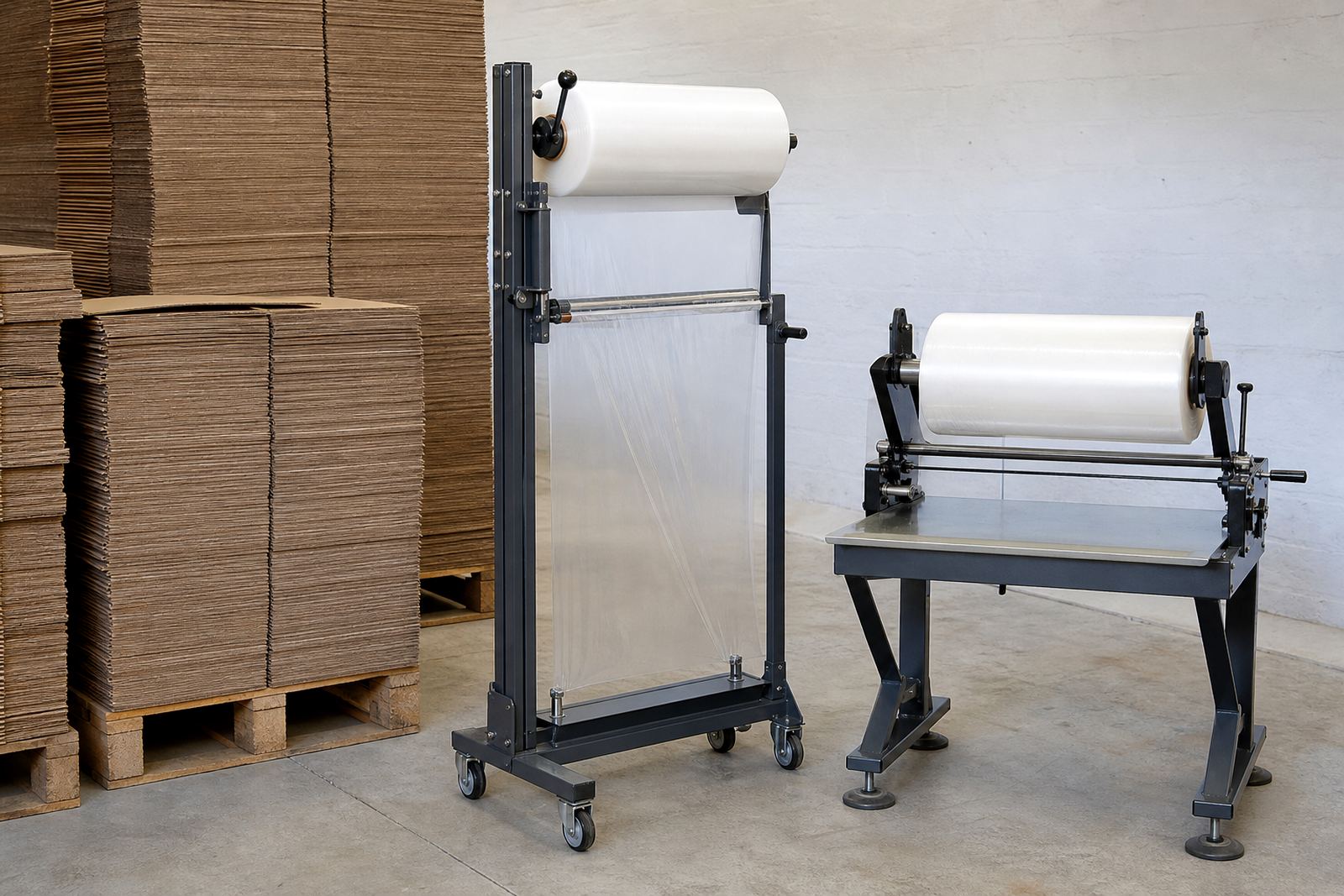
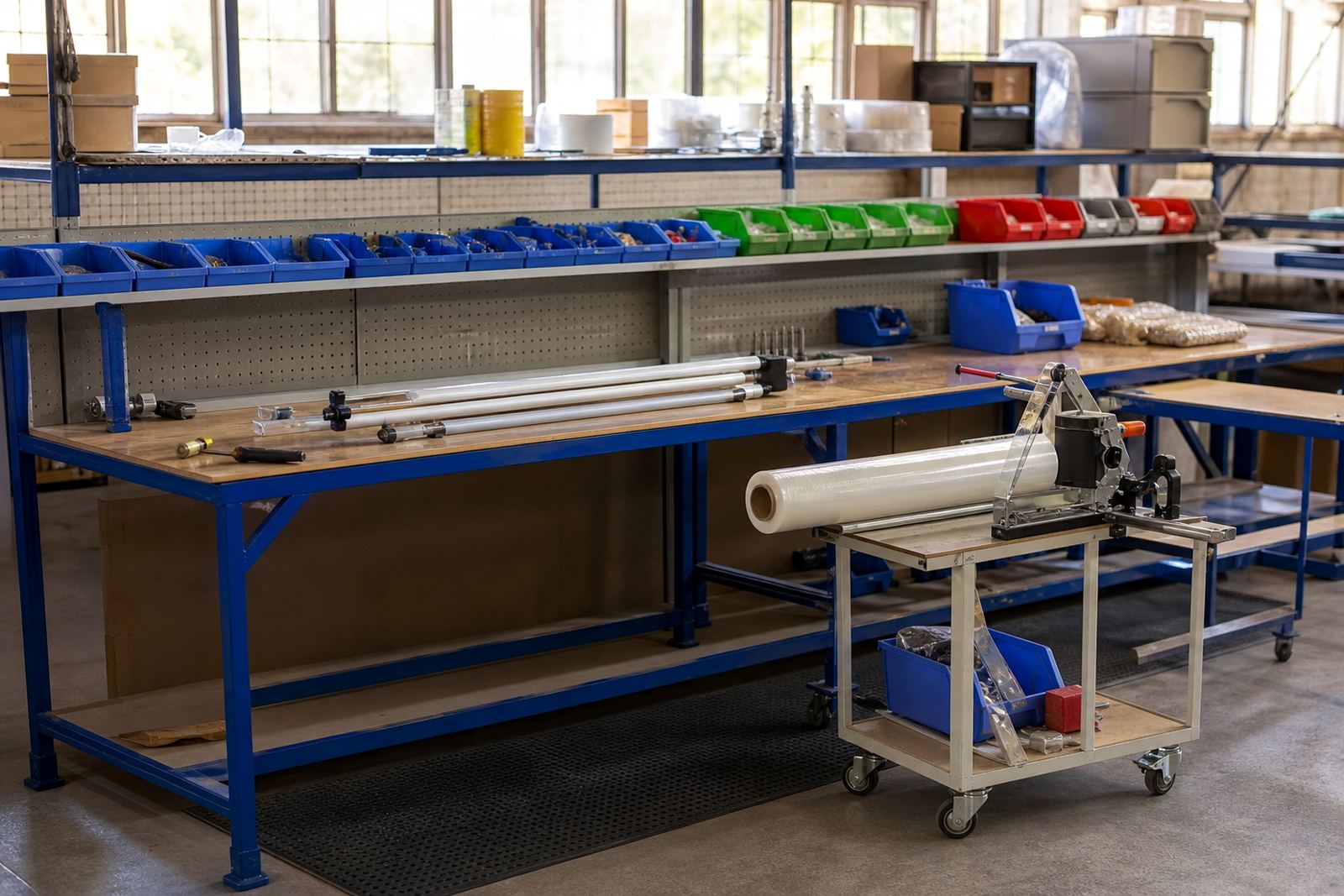
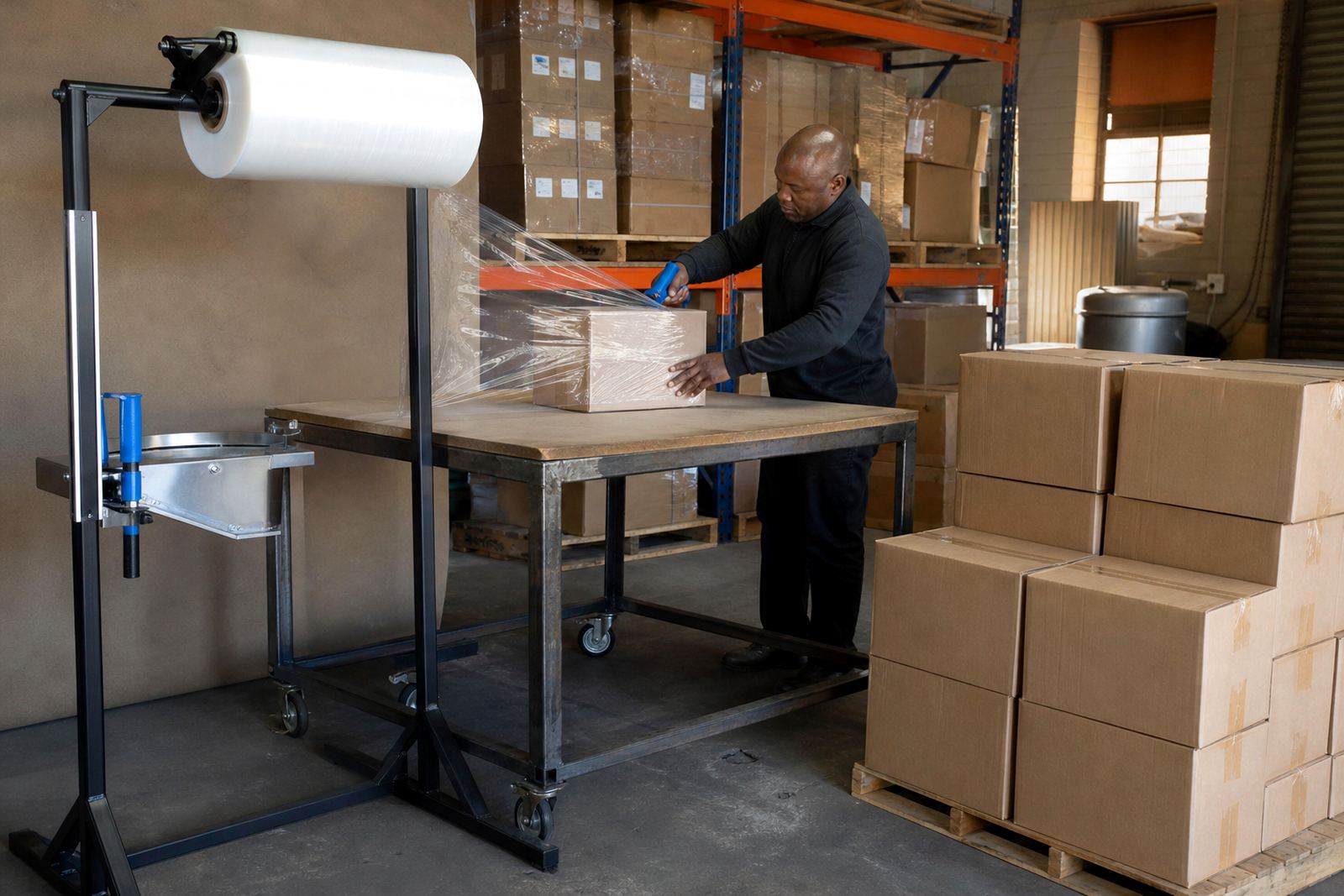
We supplied a film cutter and dispenser set matched to the site’s roll size and hand wrap routine, then positioned it to suit the normal direction of pallet flow. The station was fitted for stretch film use, with a guide path that helped keep the film feeding evenly and reduced the tugging that operators had been doing by hand.
The install was completed with practical details in mind: safe blade access, a stable mount, and enough room for a quick roll swap without crowding the aisle. We also checked the film path against the team’s common pallet widths and heights, so the first wrap layer could be started cleanly every time.
- Film cutter and dispenser matched to packing line use
- Stable mounting for consistent feed and cleaner starts
- Blade position set for safer operator handling
- Spare parts list prepared for local support
Timeline from site visit to handover
The project ran over three weeks from first assessment to handover. Week one was the site visit and measurements, where we checked pallet flow, bay layout and operator movement. We also reviewed film rolls on hand and looked at where most of the waste was happening.
Week two covered supply, prep and final fit-up. In week three we completed the installation, carried out basic checks and trained the team on roll changes, blade safety and daily cleaning. It was a straightforward rollout, but the small details mattered. A half-metre here or there can change how a packing station works all day long.
- Week 1: assessment and measurements
- Week 2: supply and prep
- Week 3: installation, checks and operator training
Results seen after the first operating week
Once the station was in use, the warehouse team reported steadier film feed and fewer stops during wrap cycles. Roll changes became quicker and less awkward, which helped keep the line moving during the morning rush. Operators also found the new setup easier to use after shift changes, with less guesswork around blade position and film tension.
For the supervisors, the main benefit was consistency. The wrapped pallets looked tidier, the film was tracking better, and there was less waste from uneven starts. In a warehouse setting, that adds up quickly over a week, especially when volumes are high and stock has to move out on time.
- Cleaner film starts and more even coverage
- Less waste from misfeeds and rushed roll swaps
- Shorter delay between pallets during busy periods
- Safer handling around the cutter and dispenser
What we would repeat on the next warehouse rollout
We would tackle the next project the same way: assess the pallet flow first, set the station around the actual working pattern, and train the operators before the first busy shift. That approach keeps the install practical and avoids equipment being placed where it looks neat but is hard to use.
For Centurion and similar sites across Gauteng, the key is to plan for real conditions. That means allowance for dust, a simple backup routine for load-shedding, and enough space for roll handling so the team is not wrestling with the dispenser every few minutes. When those points are covered, the station tends to pay its way in day-to-day use.
Key facts
| Project location | Centurion, Gauteng |
|---|---|
| Client type | Warehouse packing and dispatch operation |
| Roll type | Stretch film |
| Timeline | 3 weeks from assessment to handover |
| Core outcome | Steadier feed and easier roll changes |
| Services used | Onsite installation, line setup, operator training, safety checks, roll change support |