
Packing conditions in agri input plants
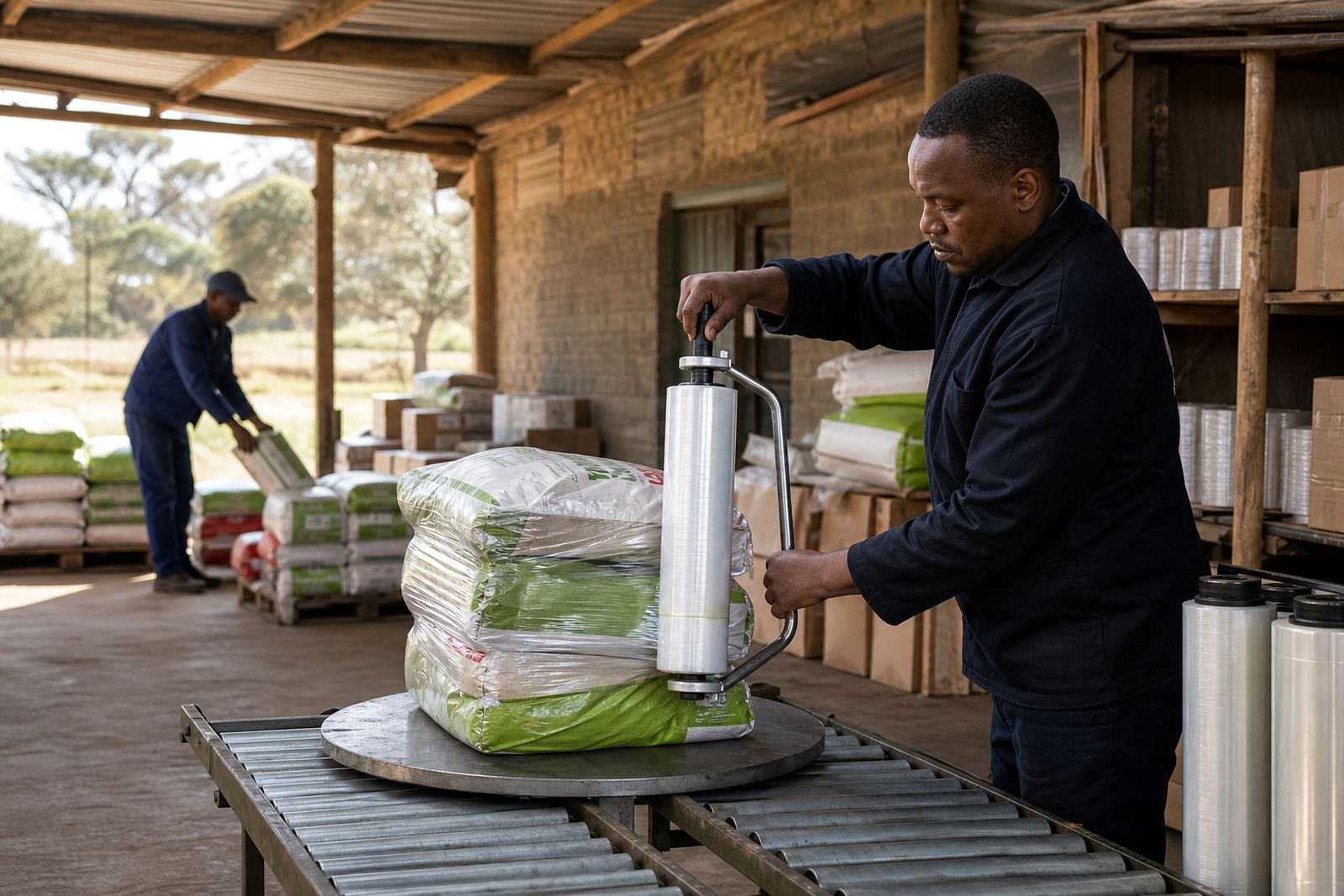
Agri input packing usually means fertiliser, seed, feed additives, trays, bags and boxed accessories moving through the same floor. In Gauteng, KZN and the Western Cape, those packing areas can be hot by midday, dusty from product handling, and tight on space when stock arrives in waves. If the film is not controlled properly, crews end up fighting tangles, uneven tension and wasted time at the end of every pallet run.
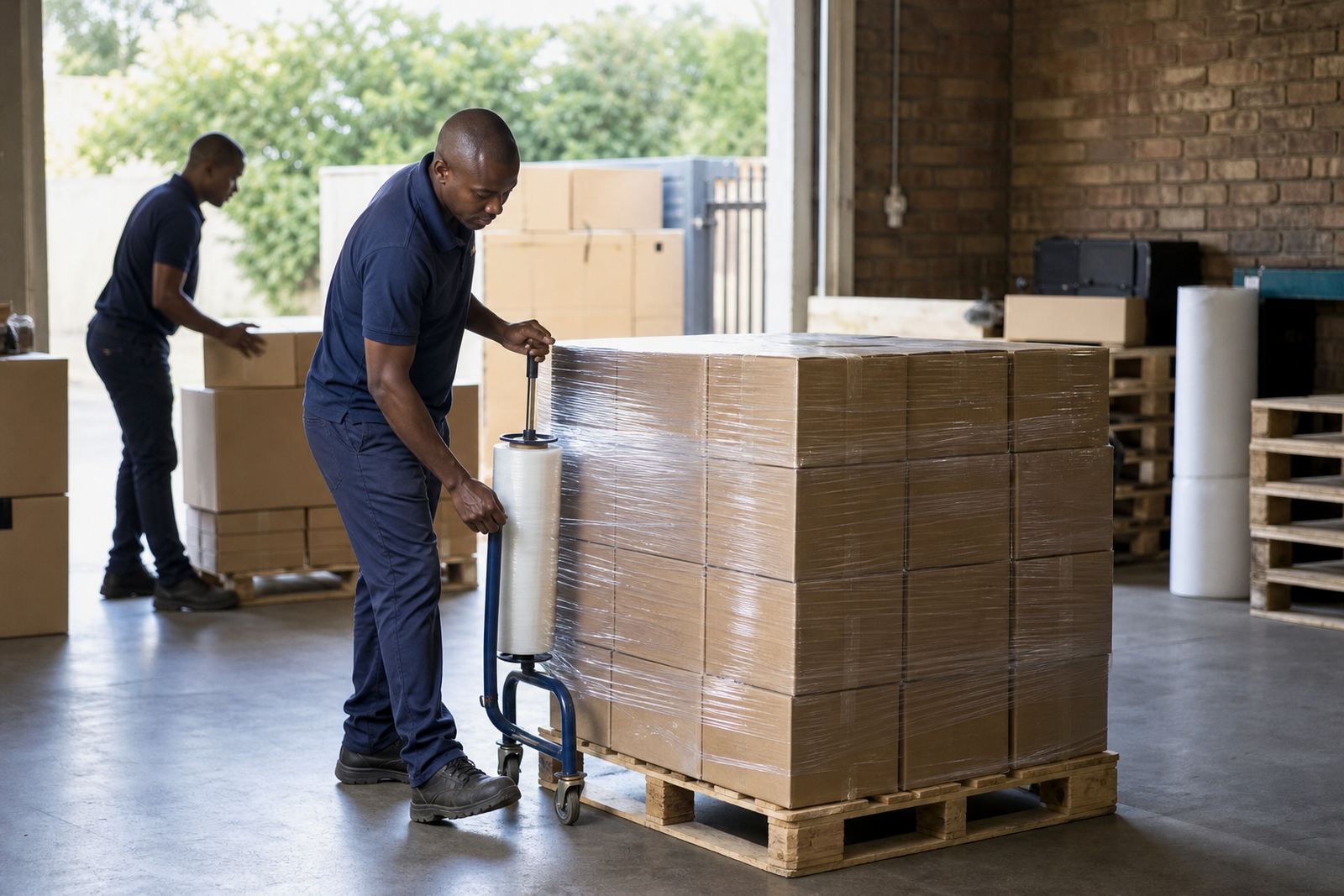
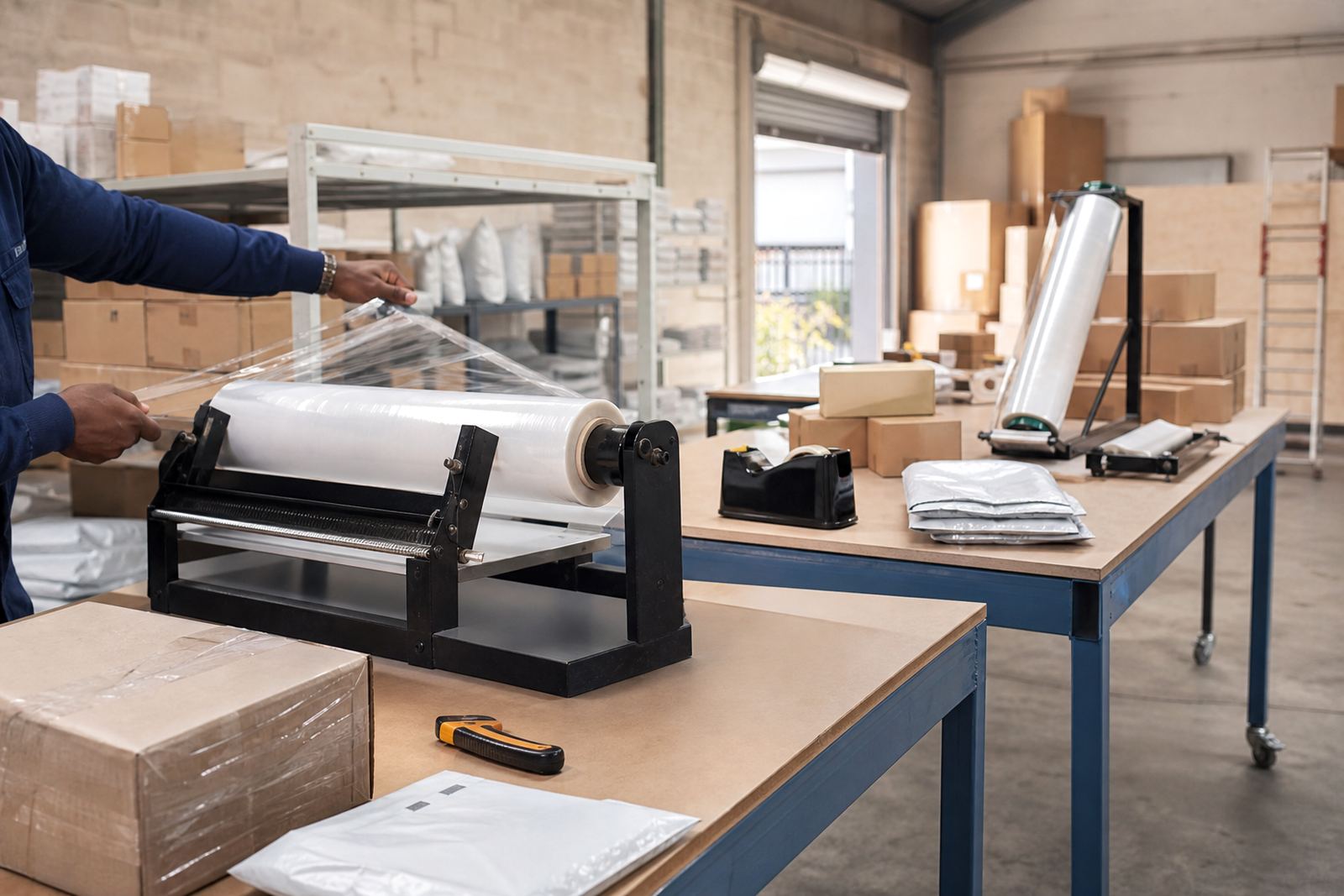
Film cutters and dispensers give operators a cleaner grip on shrink film and stretch film, so the wrap follows the load instead of dragging across it. That matters when cartons must stay square, sacks must not shift, and pallets need to leave the site looking tidy for store rooms, distributors or agricultural depots. For businesses working in Germiston, Boksburg, Midrand, Pretoria or further afield in Durban and Cape Town, the aim is simple: fewer stoppages and better handling on every shift.
Typical equipment set for agri packing lines
Most agri input sites do not need complicated kit. They need cutters and dispensers that suit the way the line is already set up, whether the team is hand wrapping, working beside a conveyor, or finishing loads near the dispatch bay. The right set-up depends on film width, pallet height, operator skill and how often changeovers happen.
- Handheld cutters for shrink film on small runs, sample packs and mixed cartons.
- Stretch film dispensers for pallet loads moving from filling or packing to storage.
- Blade units that keep the cut edge neat and reduce film snagging on rough carton corners.
- Repairable dispenser parts so the unit can stay in service instead of being replaced too soon.
- Safety checks for sites where operators work near forklifts, loading bays and pallet jacks.
In many plants, one or two well placed dispensers can make a bigger difference than changing the entire wrapping station. The goal is practical control, not extra hardware.
How to plan the layout around your packing flow
A good layout starts with the real movement of material. Where does the pallet form, where does it wait, and where does it leave the line? On agri input sites, the wrapping point is often squeezed between bagging, labelling and dispatch. If the dispenser is too far from the load, operators waste steps. If it sits too close to a turning path, it gets knocked or blocked.
We usually advise keeping the film point close enough for one operator to reach without stretching, with a clear path for the pallet jack or forklift. In humid coastal areas like Durban and Cape Town, also think about storage conditions for film rolls and spare blades. Film left near open doors can pick up dust and moisture, which affects handling. In inland sites around Johannesburg and Polokwane, heat and load-shedding can change shift timing, so the line should still run safely when the team is working faster to catch up.
Where possible, set the cutter at a fixed height and make sure the operator can change rolls without awkward lifting. A small adjustment to the station often saves more time than people expect.
Common mistakes we see on agri sites
Most problems come from trying to make one film solution do everything. Shrink film and stretch film behave differently, and a dispenser that suits one task may be clumsy on another. Another common issue is using worn blades for too long. That slows the cut, pulls at the film and can leave operators using extra force, which is hard on the hands and slows the line down.
- Choosing a cutter without checking the film width and roll weight first.
- Mounting the dispenser where forklift traffic can hit it.
- Leaving spares in a dusty storeroom instead of a clean, dry cabinet.
- Skipping operator training, then blaming the team when film tears or slips.
- Ignoring minor wobble or looseness in the unit until it becomes a breakdown.
Another mistake is waiting for a full failure before calling for help. A simple blade replacement or dispenser repair early on is usually cheaper than losing a half day of packing during a dispatch rush. On many sites, that small delay turns into missed truck times and extra labour.
Budget ranges for practical installations
Budget depends on how many stations need support and whether the job is a new fitout, a repair or a line upgrade. For smaller agri packing areas, a basic cutter or dispenser solution may start from around R1 500 to R4 500 per unit, depending on the type of film and the finish required. Mid-range set-ups with stronger fittings, spare parts and setup support often fall between R5 000 and R12 000 for a working station.
For larger packing lines with multiple wrapping points, preventive servicing, roll change support and operator training, the total can move higher, especially if several bays or shifts need coverage. A full site assessment is the best way to avoid buying the wrong unit or under-ordering spares. It also helps to plan for yearly blade replacement and occasional dispenser repairs, rather than waiting until the season is already busy.
Many agri businesses in Ekurhuleni, Gauteng and the coastal metros prefer to phase upgrades over time. That keeps cash flow easier to manage and lets the line stay live while improvements are rolled out.
Support for packing teams that cannot afford stoppages
Film Cutters works from Germiston and supports customers across Johannesburg, Pretoria, Durban, Cape Town, Polokwane, Boksburg and Midrand. The team handles onsite installation, line setup, preventive servicing, spares supply, equipment upgrades and breakdown callouts, which is useful where packing schedules are tight and there is no room for trial and error.
The team includes Thabo Maseko, Naledi Khumalo, Johan van Wyk, Ayanda Dlamini, Michelle Naidoo and Pieter Smit, so a site can get help from people who understand both the line and the day to day pressure around dispatch. Clients reach out through the enquiry form on the contact page, then the right support can be matched to the site, the film type and the pace of the packing operation. A short site assessment often shows up simple fixes that make a real difference.