When blade wear starts affecting the line
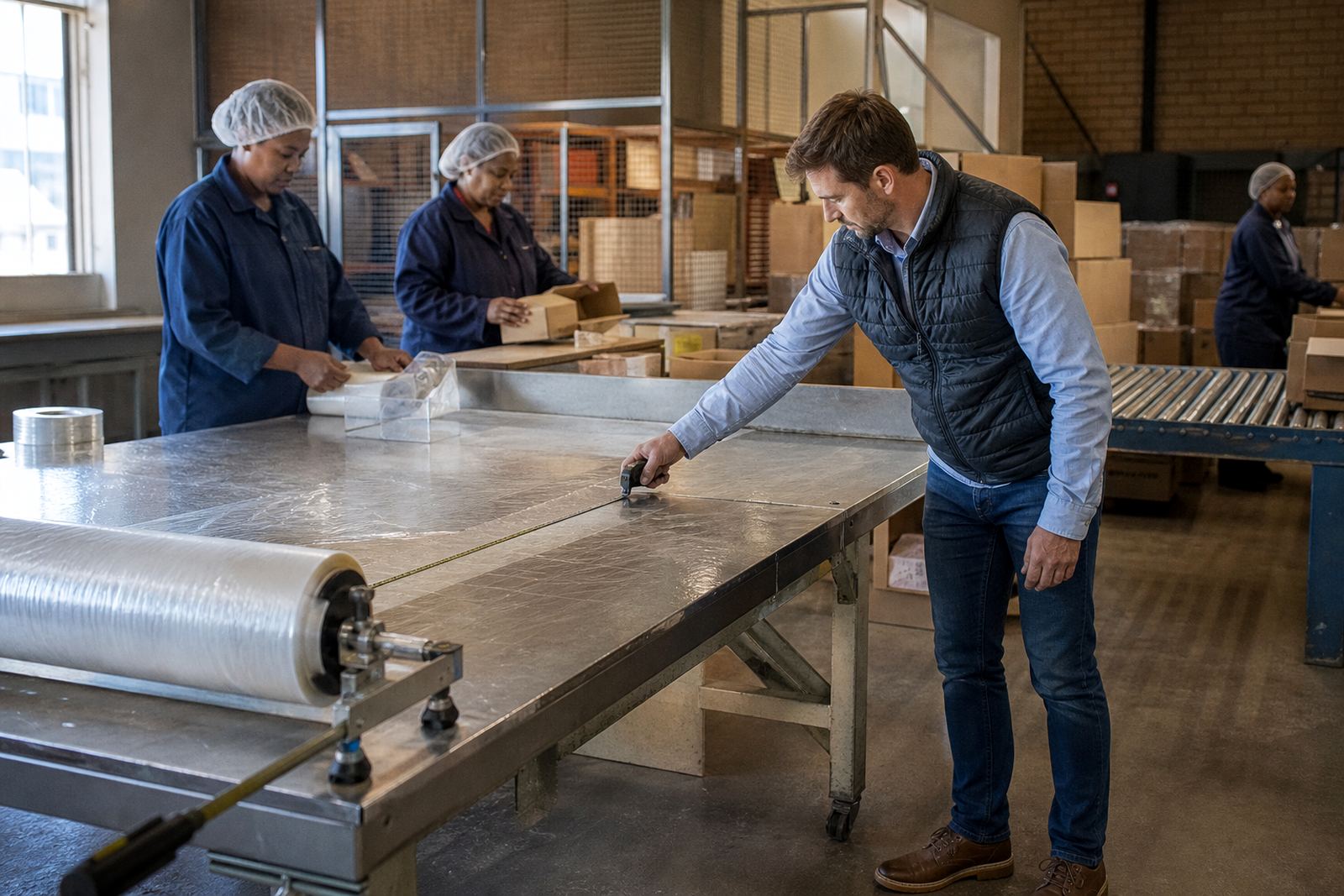
Blade wear usually shows up long before a complete failure. Operators may notice rough film ends, extra pulling at the roll, more hand force needed during cuts, or uneven wrapping on pallets and bundled packs. On busy lines in Germiston, Boksburg and Midrand, those small signs can quickly turn into slow changeovers and wasted film.
We replace blades on shrink film and stretch film cutters and dispensers used on packing lines, including hand-held, mounted and line-side units. The service suits food packs, beverage lines, warehouses, distribution centres and manufacturing sites where clean film cuts matter for presentation, load stability and safer handling. If a blade has started nicking film instead of slicing it, it is usually due for replacement.
- Cleaner cuts with less film drag
- Less strain on the operator during busy shifts
- Reduced risk of torn film tails and uneven wraps
- Safer handling of worn cutting edges
What the blade replacement service includes
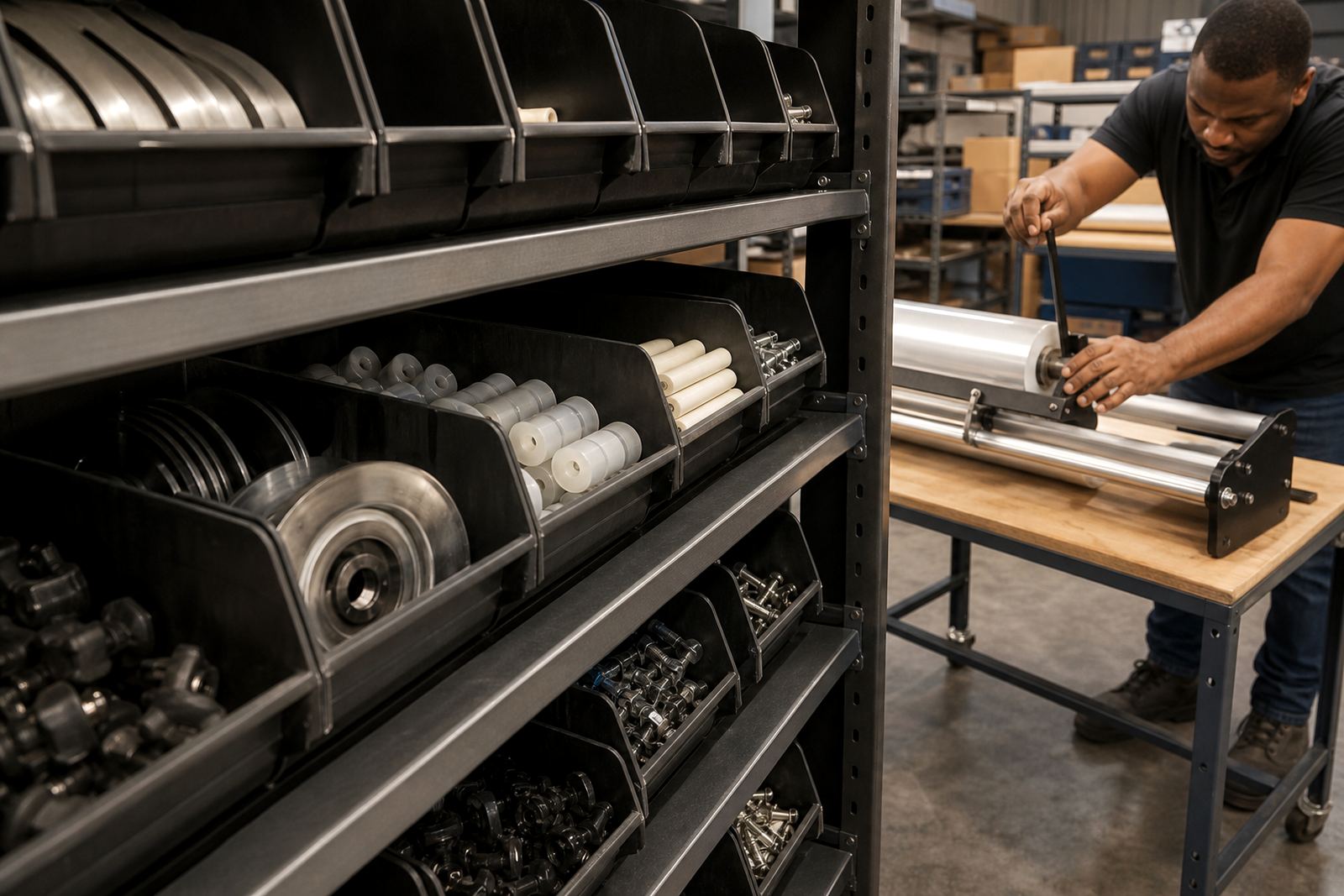
Our service is set up to get the cutter back into line quickly, with the right blade fitted and checked in working position. We bring replacement blades matched to the cutter type and application, then inspect the holder, mounting points and cutting path before signing off the unit. Where required, we also check springs, guides and fasteners that affect blade pressure and alignment.
For plants dealing with dust, humidity or heavy shift use, especially near the coast in Durban or Cape Town, we look for corrosion, film residue build-up and loose fittings that can shorten blade life. If a blade is damaged by impact or improper handling, we can advise on the cause and what to change at the next maintenance interval.
- Removal of worn, chipped or damaged blades
- Fitting of the correct replacement blade
- Alignment and pressure check on the cutting assembly
- Basic safety inspection of the cutter body and handles
- Advice on wear causes and maintenance intervals
How we carry out a blade change on site
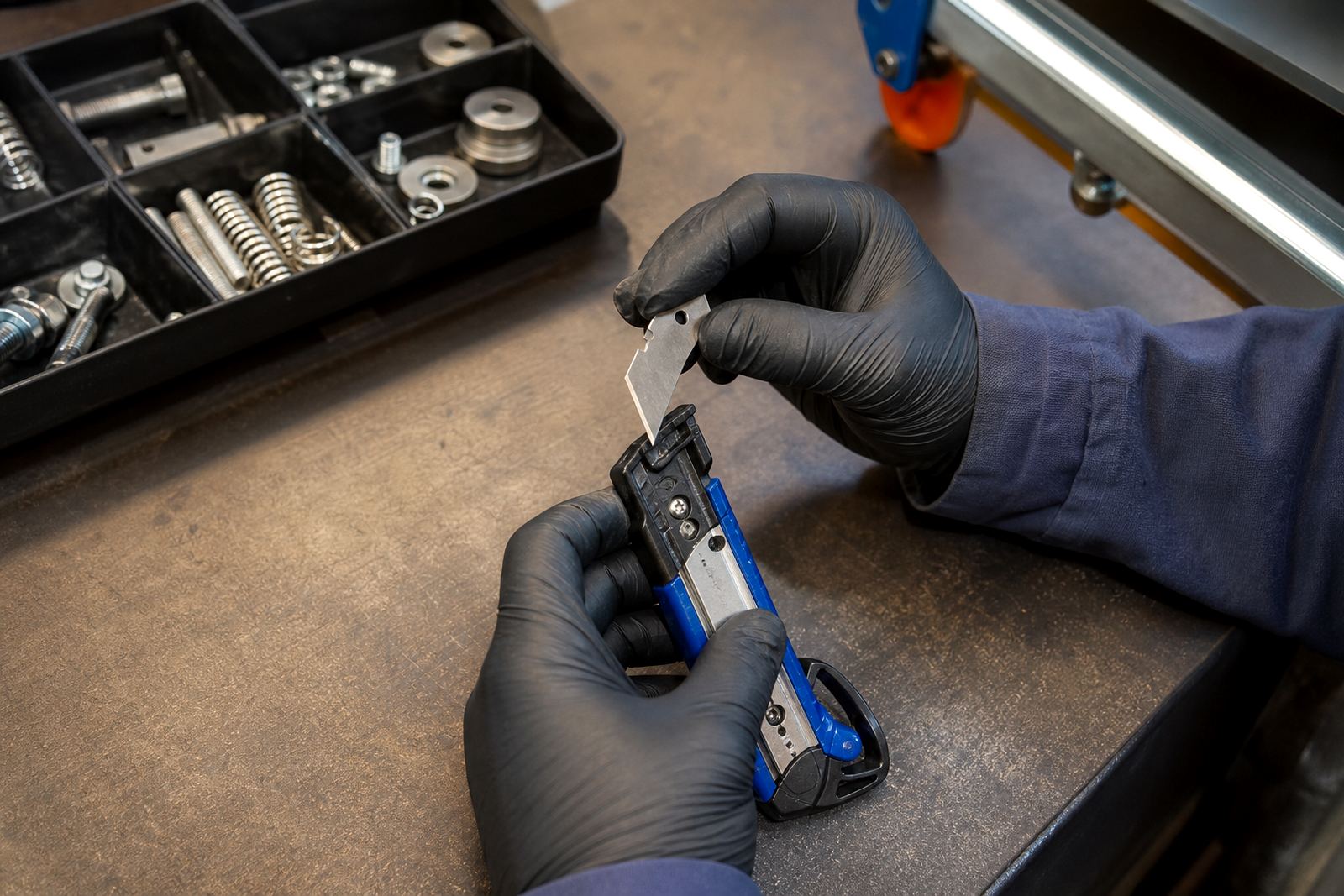
We keep the process practical so production time is not lost longer than necessary. A technician arrives with the required blade type, tools and safety kit, confirms the cutter model and isolating conditions, then removes the old blade and fits the new one. After installation, the unit is tested with the film type used on site, including shrink film and stretch film of different gauges.
Where the line runs through long shifts or load-shedding recovery periods, we can plan the visit around your start-up window, changeover window or a period when the line is already stopped for other work. That helps avoid interrupting packing targets. If a cutter needs more than a blade change, such as a damaged mount or worn dispenser part, we flag it before it becomes a bigger problem.
- Confirm the cutter type and blade requirement
- Isolate the unit and remove the worn blade safely
- Fit the replacement blade and secure all fixings
- Test cutting action on the live film used at the site
- Hand over with care notes and next service advice
Turnaround times and planning for packed schedules
Blade replacement is often a same-day or next-available visit, depending on where your site is and whether the blade size is standard or special-order. Germiston, Johannesburg and Pretoria sites are usually easier to fit into short notice routes, while Durban, Cape Town and Polokwane jobs may need a bit more lead time for travel planning and stock allocation.
For regular users, we recommend scheduling blade changes in advance rather than waiting for a failure. That is especially useful on high-output lines where one worn cutter can slow the whole packing area. When a site has several cutters in use, we can group replacements so the team does not lose time handling each unit separately.
- Same-day or next-available service where stock and route timing allow
- Planned visits for multiple cutters on one site
- Support for urgent breakdown callouts when blades fail mid-run
- Flexible scheduling around shift changes and production peaks
Pricing approach for blade replacement
Pricing depends on the cutter type, the number of blades required, the condition of the holder or dispenser, and whether the visit is part of a larger service call. We quote clearly before the work starts, so you know what is included and what is not. If a unit only needs a routine blade change, the cost stays straightforward. If repair work or spares are also needed, those items are listed separately.
For businesses with multiple packing lines, regular maintenance plans usually work out better than waiting for individual breakdowns. That gives you predictable costs, less downtime and better control over stock. We can also advise on keeping spare blades on site so operators are not left waiting for a critical part during busy periods.
There are no hidden charges for the actual change process. Any travel, urgent callout or extra parts requirement is discussed upfront, which helps with budgeting for sites in Ekurhuleni and beyond. Our goal is to keep the line moving without loading you with avoidable costs.
Keeping blades on a sensible replacement cycle
Blade life depends on usage, film type, dust levels, operator handling and how often the cutter is cleaned. As a general guide, busy packing lines should inspect blades every few weeks and replace them when cuts start to lose clean edges. Sites working with thicker stretch film, abrasive dust or high-volume pallet wrap may need more frequent changes.
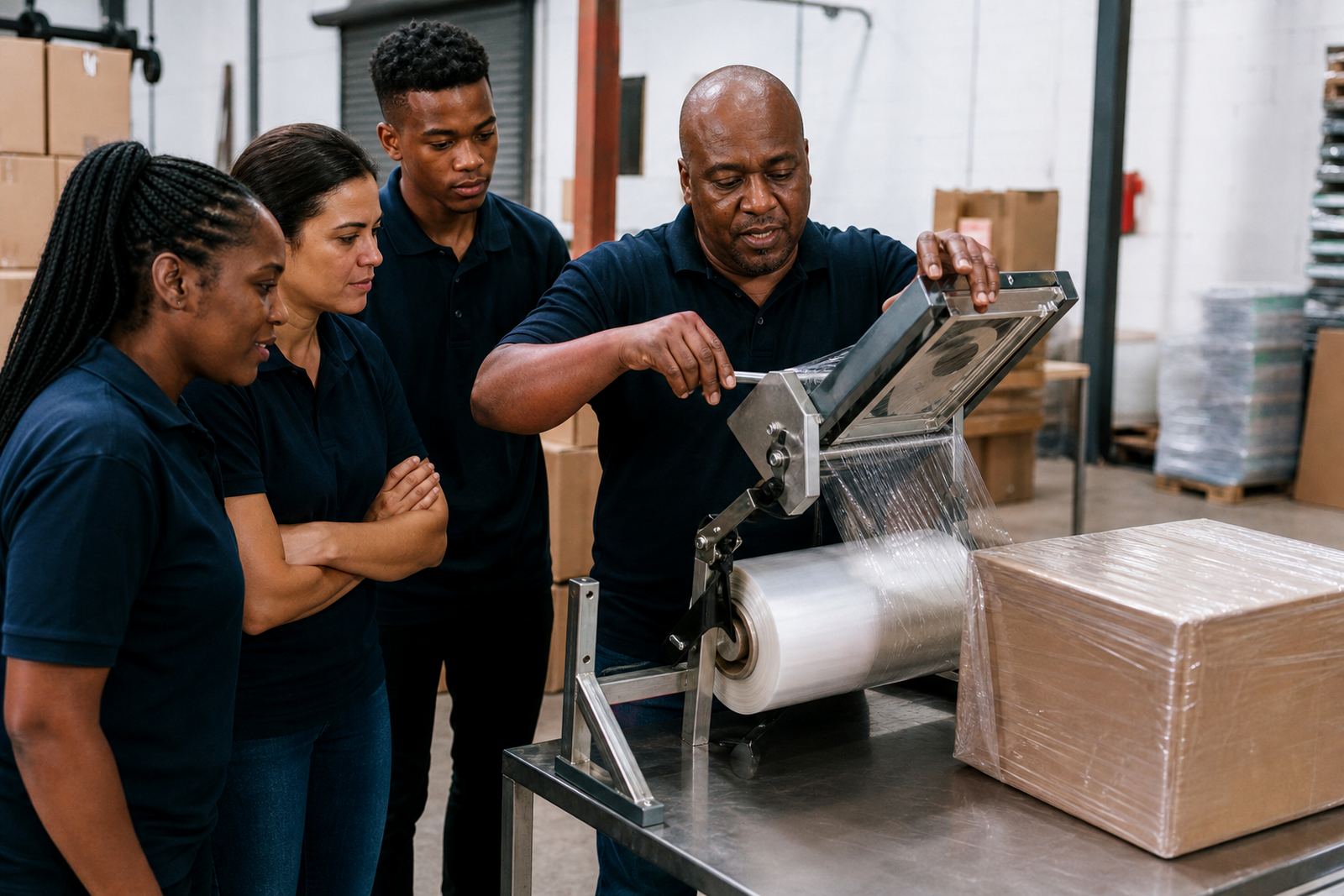
We usually suggest pairing blade replacement with preventive servicing, safety checks and operator training if there have been repeated issues. That helps reduce repeat wear from poor handling or incorrect film loading. On humid coastal sites and in areas with heavy warehouse traffic, regular checks are even more important because residue and corrosion can shorten service life.
- Inspect blades on a fixed calendar, not only when they fail
- Replace sooner if cut quality drops or operators apply extra force
- Keep spare blades in a dry, labelled parts store
- Combine blade changes with servicing and safety checks where possible
Key facts
| Service scope | Replacement of worn, chipped or damaged blades on shrink film and stretch film cutters and dispensers |
|---|---|
| Typical response areas | Germiston, Johannesburg, Pretoria, Durban, Cape Town, Polokwane, Boksburg and Midrand |
| Blade fitment checks | Alignment, pressure, holder condition and fastening inspection |
| Recommended interval | Inspect every few weeks on busy lines, replace when cut quality drops |
| Turnaround | Same-day or next-available where stock and route timing allow |
| Pricing method | Quoted according to cutter type, blade count, site condition and any extra parts needed |