What We Look At During a Site Assessment
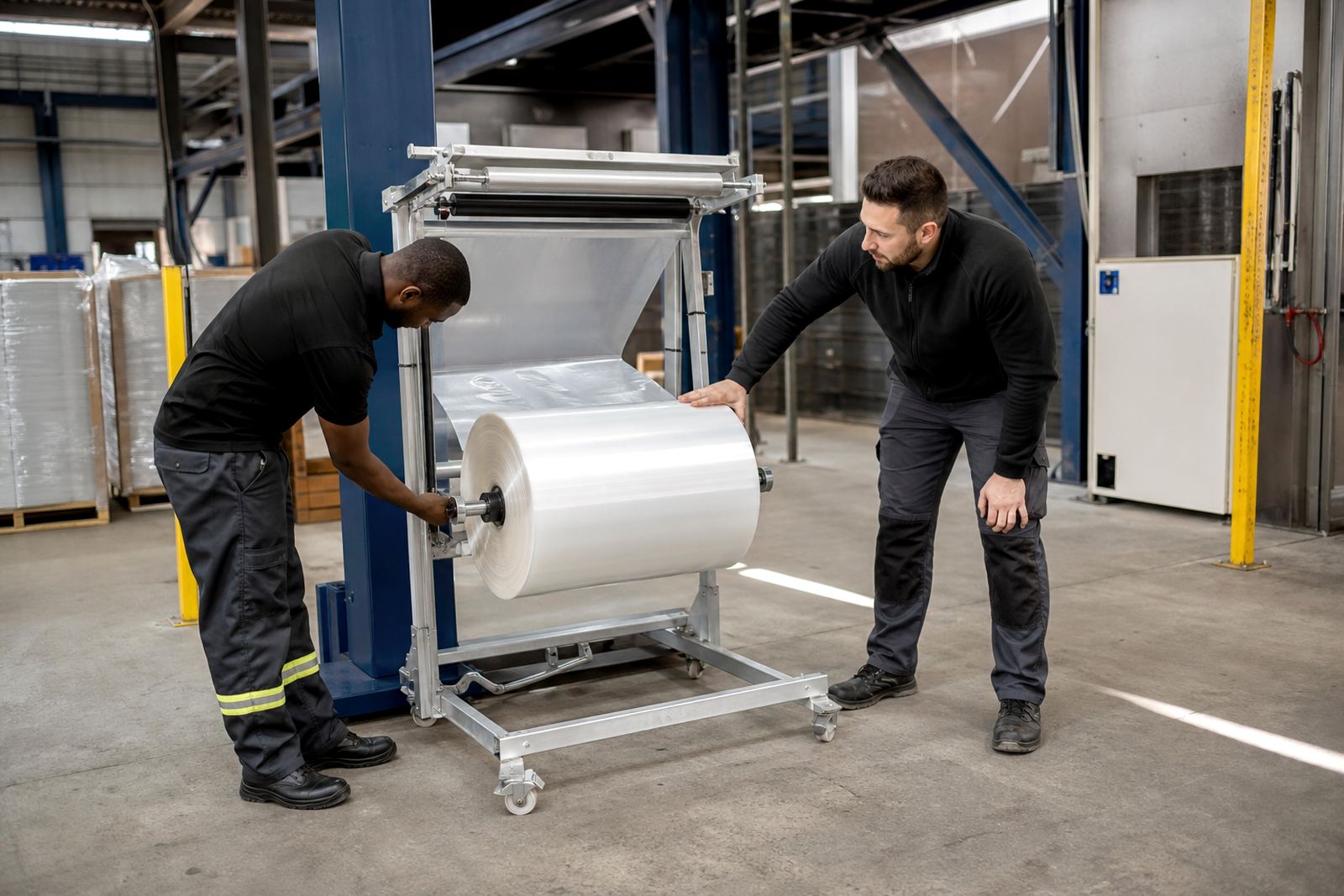
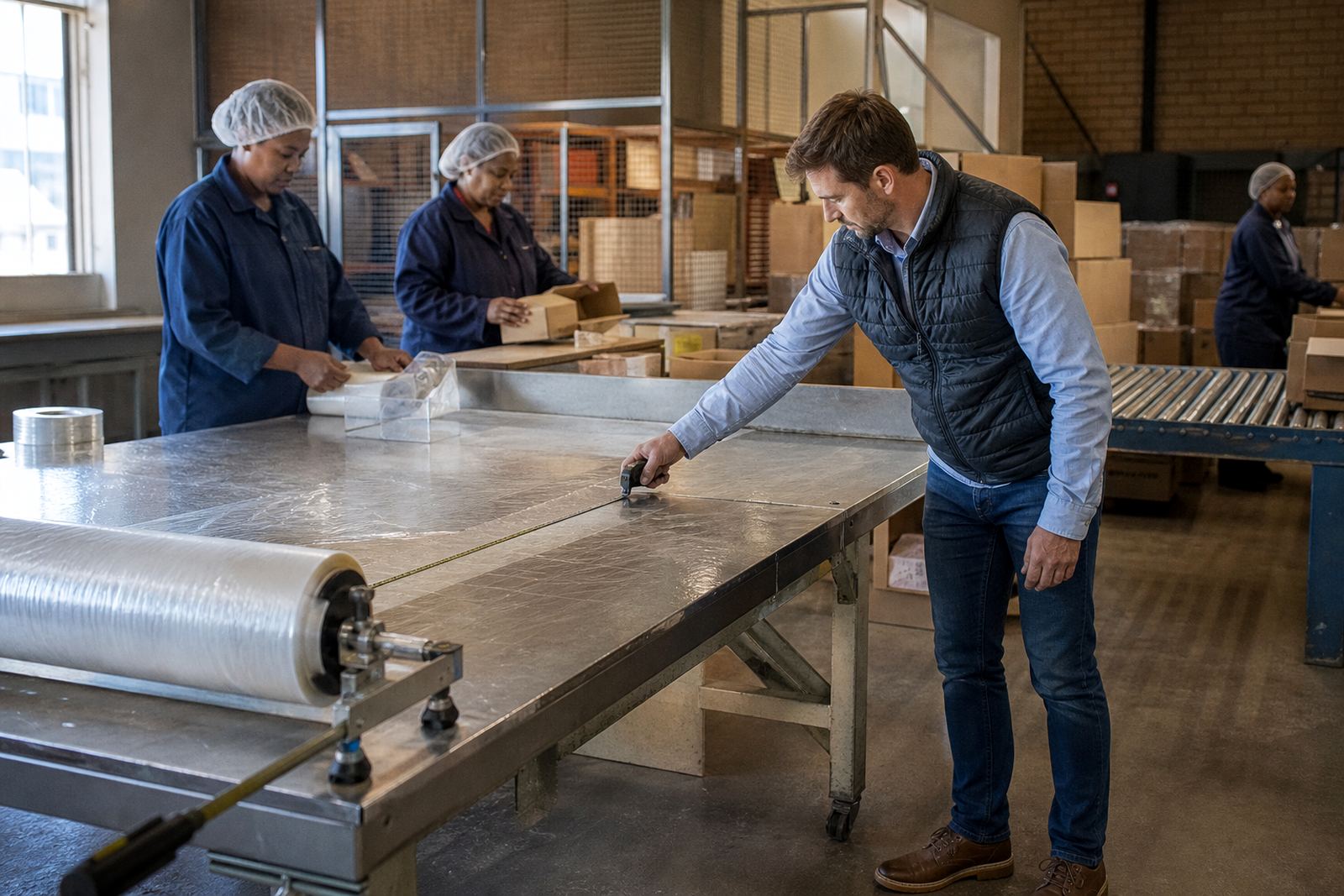
Our site assessments are practical, not theoretical. We walk the packing area, watch how film is loaded and cut, and check how operators move between wrapping, sealing and pallet dispatch. This helps us identify where the line loses time, where film is being overused, and whether the current cutter or dispenser is suited to the type of film in use.
We work across Germiston, Johannesburg, Pretoria, Durban, Cape Town, Polokwane and surrounding industrial areas, so we understand the mix of warehouse layouts, high-throughput packing lines and space limits found in South African operations. If your site is battling load-shedding, narrow aisles or long roll-change times, we factor that in too.
- Packing flow and operator movement
- Film width, thickness and roll diameter
- Product size, pallet height and wrapping pattern
- Cutting method, dispensing speed and waste points
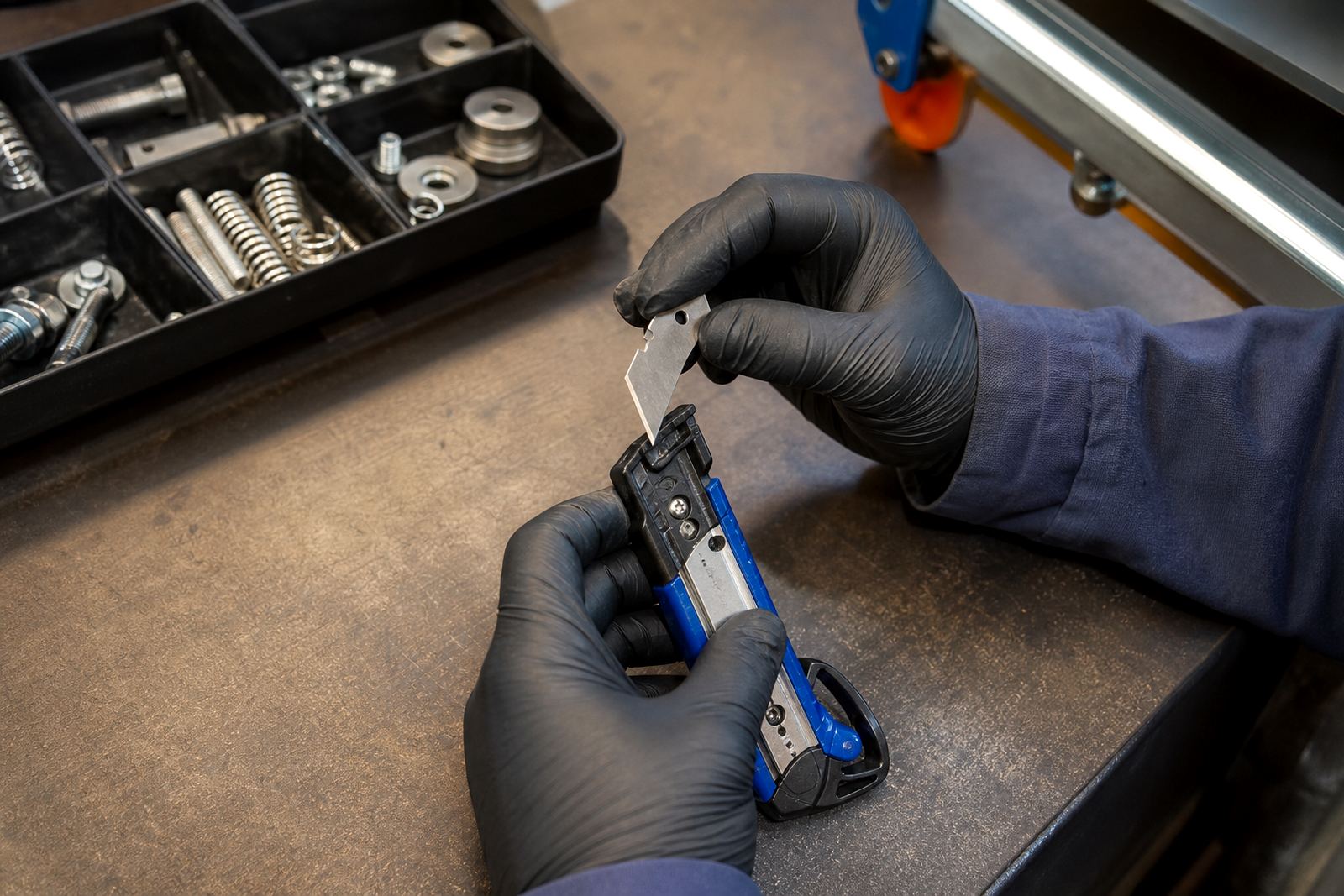
- Safety issues around blades, snagging and hand contact
How the Assessment Is Done On Site
The process starts with a short briefing so we understand what is packed, how many shifts are running and what equipment is already in use. We then measure the working area, check the available mounting points and note the current roll change method. If needed, we also inspect the route from storage to packing and from packing to dispatch because small delays there can become major bottlenecks.
We look at operator reach, blade exposure, film tension and whether the dispenser allows a clean, consistent pull. For sites in coastal areas such as Durban and Cape Town, we also consider humidity, corrosion risk and how storage conditions affect film handling. In some plants the issue is not the cutter itself but the way rolls are stored, stacked or handed over between shifts.
- Briefing with the supervisor or line lead
- Measurement of the line space and work height
- Review of current cutter, dispenser and spare stock
- Observation of one or more packing cycles
- Notes on hazards, waste and operator fatigue
What You Receive After the Review
After the assessment, we prepare a clear recommendation based on the actual site conditions. That can include a cutter and dispenser match for shrink film or stretch film, a suggestion for a different mounting position, or a change in blade type to suit your application. We also flag any servicing needs, for example worn guides, loose fittings or damaged cutting edges.
The report is focused on what will help the line run better without adding unnecessary complexity. If your team needs more than one solution for different packing stations, we can separate the recommendations by line, product size or shift use. This makes it easier to budget and easier for your supervisors to roll out the changes.
- Equipment recommendation matched to the film type
- Notes on safety improvements and operator handling
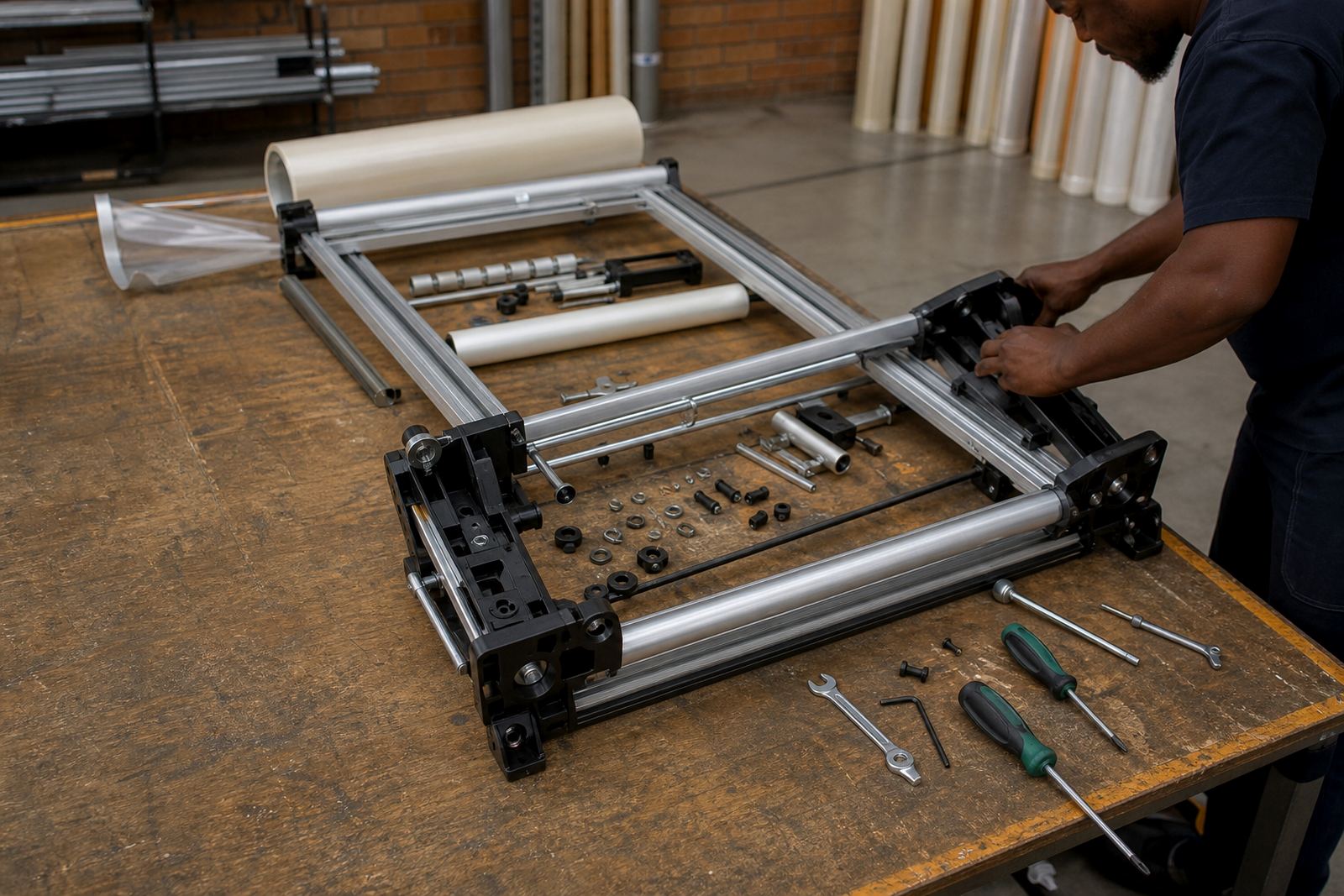
- Maintenance points and likely wear items
- Suggestions for line setup and roll-change method
- Optional training points for staff using the equipment
Turnaround Times and Planning
Most assessments can be scheduled quickly, depending on your location and line access. For sites in Gauteng, we can often arrange an earlier visit, while Durban, Cape Town and Polokwane are planned around travel and production availability. The on-site visit itself is usually completed in a single session, though larger sites may need more than one line to be reviewed.
Turnaround for feedback is usually short once we have the measurements and observations. If the site is busy, we can work around shift change or quieter production windows. That keeps disruption low and lets us see the line working under normal conditions, not just when it is stopped for a walkthrough.
- Local assessment visits arranged around your shift pattern
- Fast feedback after measurements are captured
- Suitable for single lines or multi-station packing areas
- Can be planned with installation or upgrade work if needed
Pricing Approach and Value
Pricing depends on the site size, travel distance and how many lines or stations must be reviewed. We keep the approach straightforward and discuss the scope before the visit so there are no surprises. If the assessment forms part of a larger project such as an equipment upgrade, line setup or training session, we can combine the work to reduce repeat callouts.
The value comes from avoiding the wrong equipment choice. A cutter that does not suit the film width or roll weight can slow operators down, cause extra waste and lead to more breakdown callouts later. One good assessment can prevent repeated trial-and-error spending, especially in plants with tight packing targets and limited maintenance cover.
- Quoted according to site size and travel area
- Clear scope before the visit starts
- Combination pricing possible for linked services
- Useful for reducing waste, downtime and rework
Maintenance Intervals After Installation
Once the right cutter or dispenser is in place, regular checks keep it working properly. We usually recommend a quick visual check every week for wear, film dust build-up and loose parts, with a fuller inspection every one to three months depending on shift count and usage. High-volume sites may need tighter intervals, especially where blades are used heavily or roll changes happen many times a day.
For sites with heavy dust, moisture or long operating hours, preventive servicing is worth scheduling before problems show up on the line. That can include blade replacement, fastener checks, alignment adjustments and safety checks. A short maintenance interval now is often less costly than a breakdown during a busy dispatch period.
- Weekly operator checks for wear and cleaning
- Monthly or quarterly servicing for active lines
- Blade replacement based on use, not only calendar time
- Helpful for plants running multiple shifts or handling damp storage conditions
Key facts
| Assessment scope | Packing flow, product size, operator movement, film type and line layout |
|---|---|
| Site coverage | Germiston, Johannesburg, Pretoria, Durban, Cape Town, Polokwane and nearby industrial areas |
| Typical visit length | About 1 to 3 hours per line, depending on access and complexity |
| Report format | Practical recommendation with equipment, safety and maintenance notes |
| Recommended review cycle | Every 6 to 12 months, or sooner after line changes |
| Supported film types | Shrink film and stretch film used on packing lines |