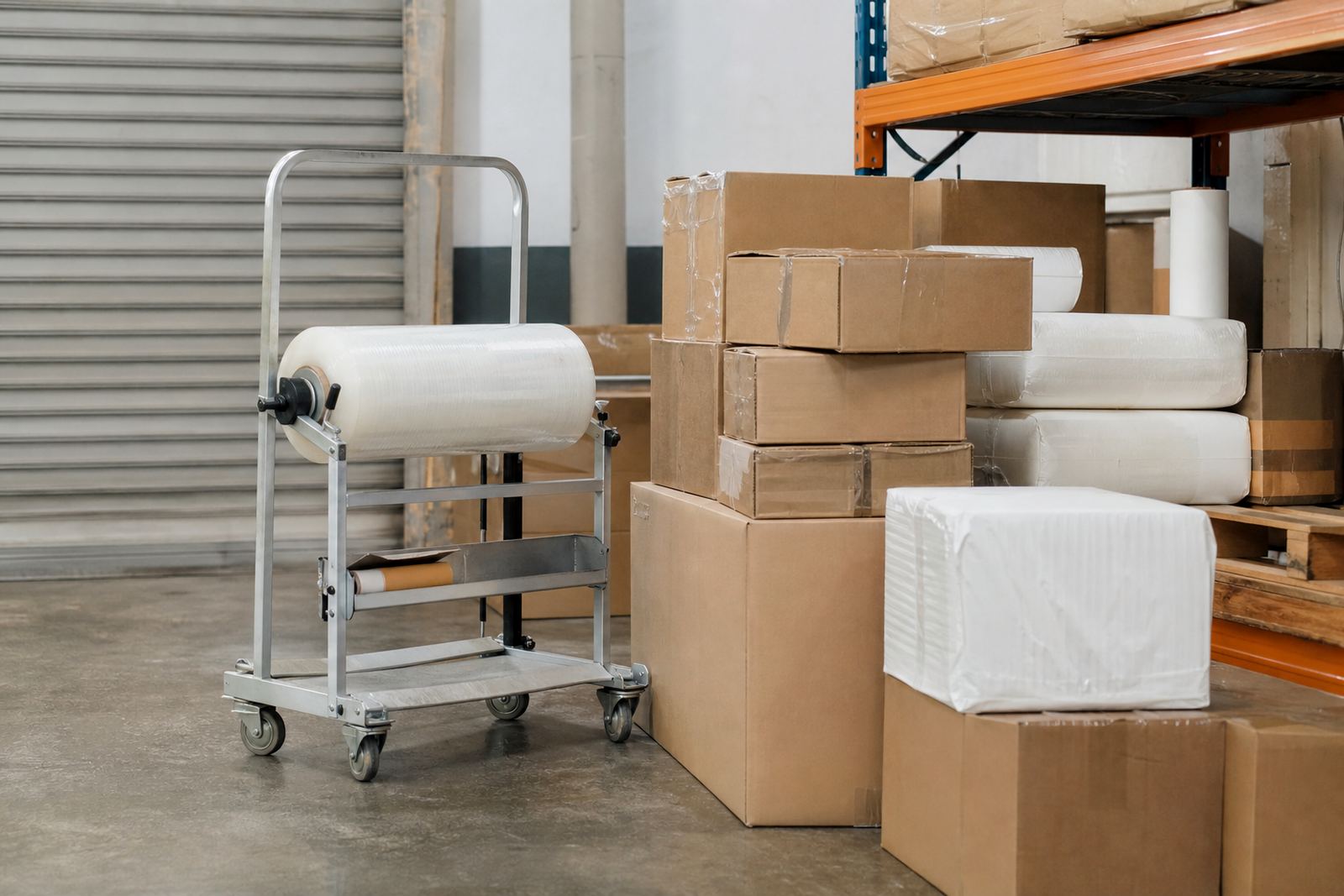
A mobile dispenser for moving packing points
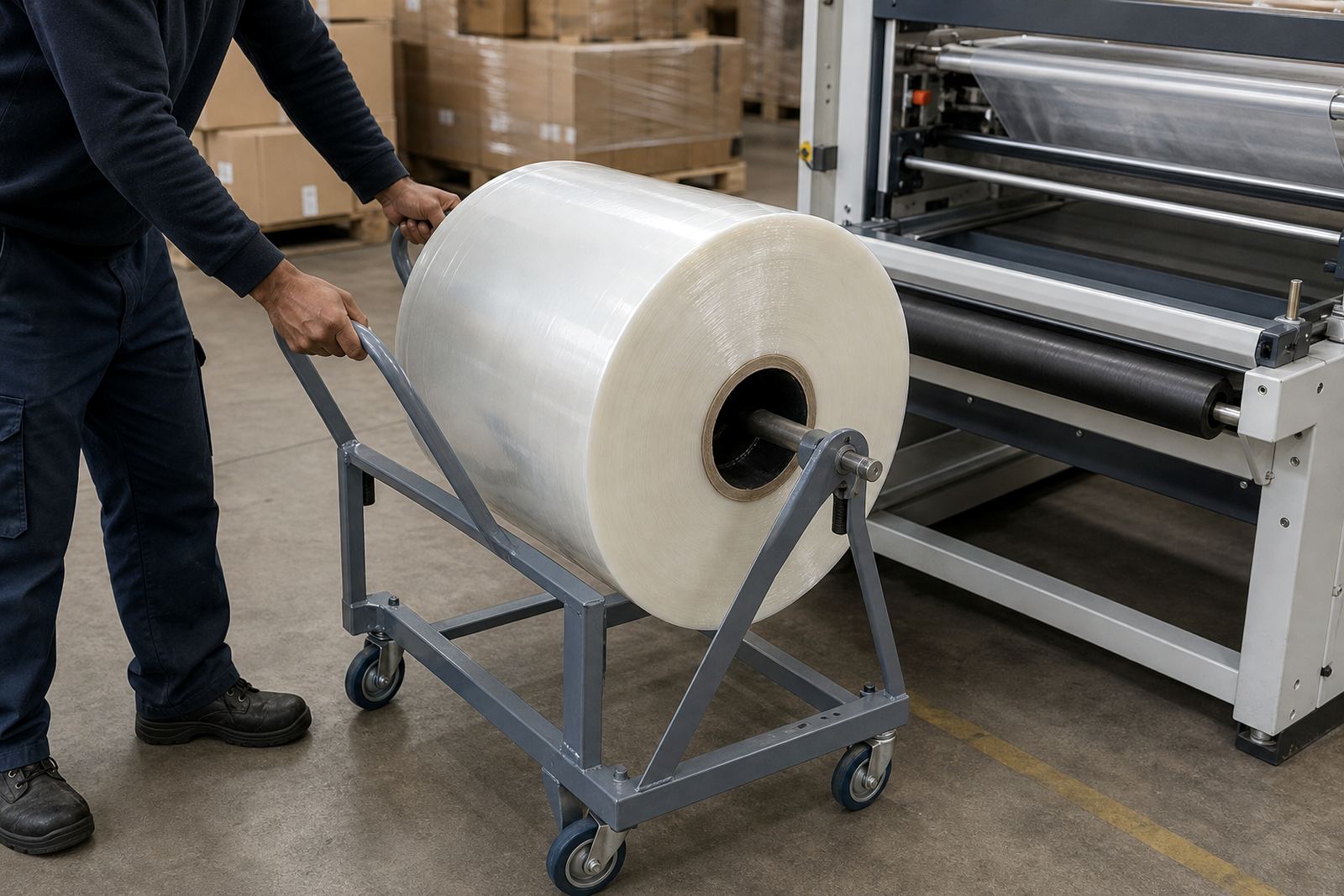
A trolley film dispenser is built for packing areas where the film station does not stay in one place. It carries the roll on a wheeled frame so operators can move it between bays, wrap points, pallet staging areas or short-term overflow lines. That makes it useful in factories that reconfigure often, run multiple shifts, or need one unit to support different products during the day.
Because the roll sits on a stable carriage, the film feeds more evenly than when a roll is carried by hand or left on the floor. Operators spend less time wrestling with the roll and more time keeping product moving. In plants with limited floor space, this also helps reduce clutter around the wrap area and lowers the chance of film getting dirty or snagged on pallets, corners or rack legs.
- Mobile frame with castors for easy movement between stations
- Suitable for stretch film and shrink film handling setups
- Helps keep the roll at a practical working height
- Useful for one line, or for several packing points in the same plant
Where the trolley dispenser suits best
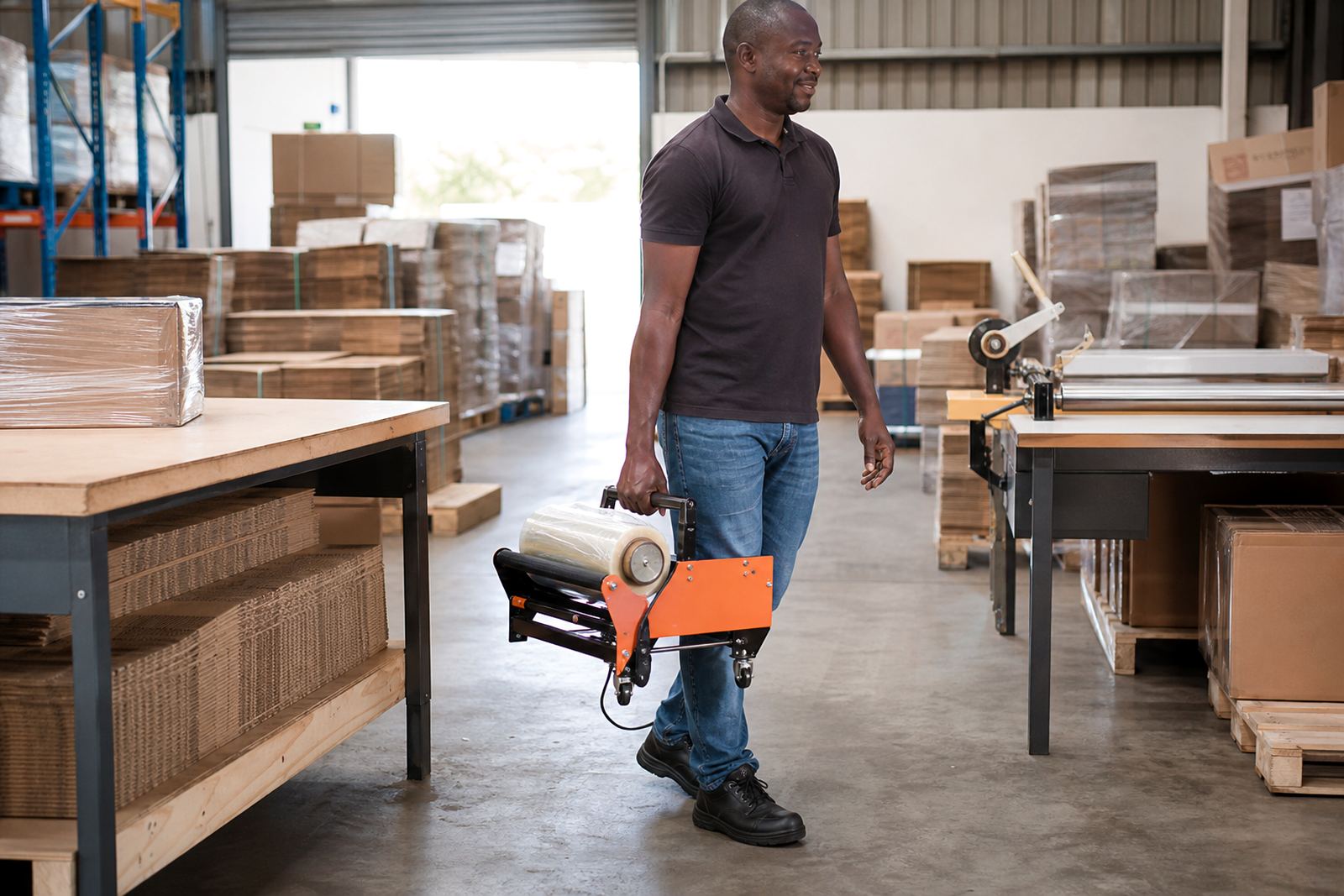
This type of dispenser suits warehouses, contract packers, food and beverage plants, distribution centres, agricultural packhouses and light manufacturing sites. It is often chosen where pallet wrapping is done in more than one location, or where the line team needs to take the dispenser close to the load rather than carrying film across the floor. Sites in Johannesburg, Pretoria, Durban, Cape Town and Polokwane often use mobile units where line layouts change with seasons, shifts or batch sizes.
It also helps where conditions are not ideal for fixed equipment. In humid coastal areas, film can pick up dust and moisture if it is stored badly, so having a controlled mobile station helps keep the roll cleaner. On plants that deal with load-shedding, the trolley itself does not need power, so it stays useful even when the line is running from backup systems or manual pack stations. That can be a real advantage for smaller depots and satellite warehouses.
- Good for temporary packing zones and overflow lines
- Useful in sites with mixed product sizes and changing pallet counts
- Practical where floor plans are tight or routes are shared with forklifts
- Handy for seasonal operations and stock build-up periods
Sizes, roll capacity and configuration choices
The dispenser can be supplied in practical working sizes to suit the roll widths and weights used in your operation. Some sites need a compact unit for lighter hand wrap work, while others need a stronger frame for heavier industrial rolls. The exact build depends on the film type, the diameter of the roll core and how the operator feeds the film during use.
Typical options include adjustable core holders, tension control, brake control and a higher handle position for comfort. A well set-up unit should let the operator pull film smoothly without jerking or wasting wrap. If the line uses a mix of film grades, it is worth checking the roll width range and core size before ordering, so the trolley fits the film already in store. Small details matter here, because the wrong holder can slow the whole bay down.
- Roll width and core size matched to the film in use
- Adjustable height options for different operator positions
- Manual tension or brake control for consistent film feed
- Optional heavier frame for tougher packing environments
Installation, setup and power needs
Installation is usually straightforward because the trolley does not require mains power or gas. That keeps setup simple at sites in Germiston, Boksburg and Midrand where lines may need to start quickly after a layout change or maintenance stop. The main job is to position the dispenser correctly, check the wheel movement, set the film roll in place and make sure the feed direction suits the packing method.
For shrink film applications, the trolley is normally used as part of the handling and feed process rather than as a powered shrinking system. For stretch film work, it supports controlled application at the packing point. If a site uses multiple operators, we also look at where the trolley will be parked, how it will move through the aisle and whether the floor surface has joints, ramps or uneven concrete that could affect mobility.
- No electrical connection required for the trolley itself
- No gas supply needed for the dispenser unit
- Best placed on level floors with enough aisle width for safe movement
- Can be introduced into existing packing lines with minimal downtime
Care, servicing and daily checks
Like any packing tool, the trolley works best when it is kept clean and checked often. Dust, wrap scrap and pallet fragments can build up around the wheels and guides, especially in busy warehouses. A quick daily look at the castors, brakes, holder arms and film path helps prevent stoppages. If the trolley is moved between areas, it should be checked for wheel wear and for any loose fasteners caused by vibration or rough floors.
Our team supports preventive servicing, blade replacement where needed, dispenser repairs and site checks for packing operations across South Africa. For sites near the coast, a little extra care is useful because salty air can shorten the life of metal parts if the trolley is not cleaned regularly. In inland plants, the main issue is usually dust and packaging debris. Either way, simple maintenance goes a long way and saves time later.
- Clean wheels and brackets regularly
- Check brakes, fixings and film guide parts
- Keep spare wear parts on site for busy operations
- Schedule servicing before peak production periods
What to confirm before you place an order
Before ordering a trolley film dispenser, it helps to confirm how the line actually works on the floor. The roll width, core size, film type and average roll weight all affect the right unit. It is also worth checking who will use it, how far it will travel and whether it needs to fit through narrow doors, between racks or around pallet stack points. If the unit will be used on more than one line, the team should agree where it will be stored and who is responsible for moving it.
We also recommend checking the packing speed and the way film is applied. A trolley that works well for one operator may not suit a shift team if the handle height or brake setting is off. If you are unsure, a site assessment can help us match the dispenser to the layout and the film already in use. That avoids costly rework and makes training easier for operators and supervisors alike.
- Film type, roll width and core size
- Roll weight and how often rolls are changed
- Floor condition, aisle width and movement route
- Number of operators and packing points using the unit
Key facts
| Product type | Mobile trolley film dispenser for packing lines |
|---|---|
| Movement | Manual wheeled trolley with castors |
| Power requirement | None |
| Gas requirement | None |
| Typical use | Stretch film and shrink film handling |
| Support | Installation, setup, training, servicing and repairs |