Start With the Right Position on the Line
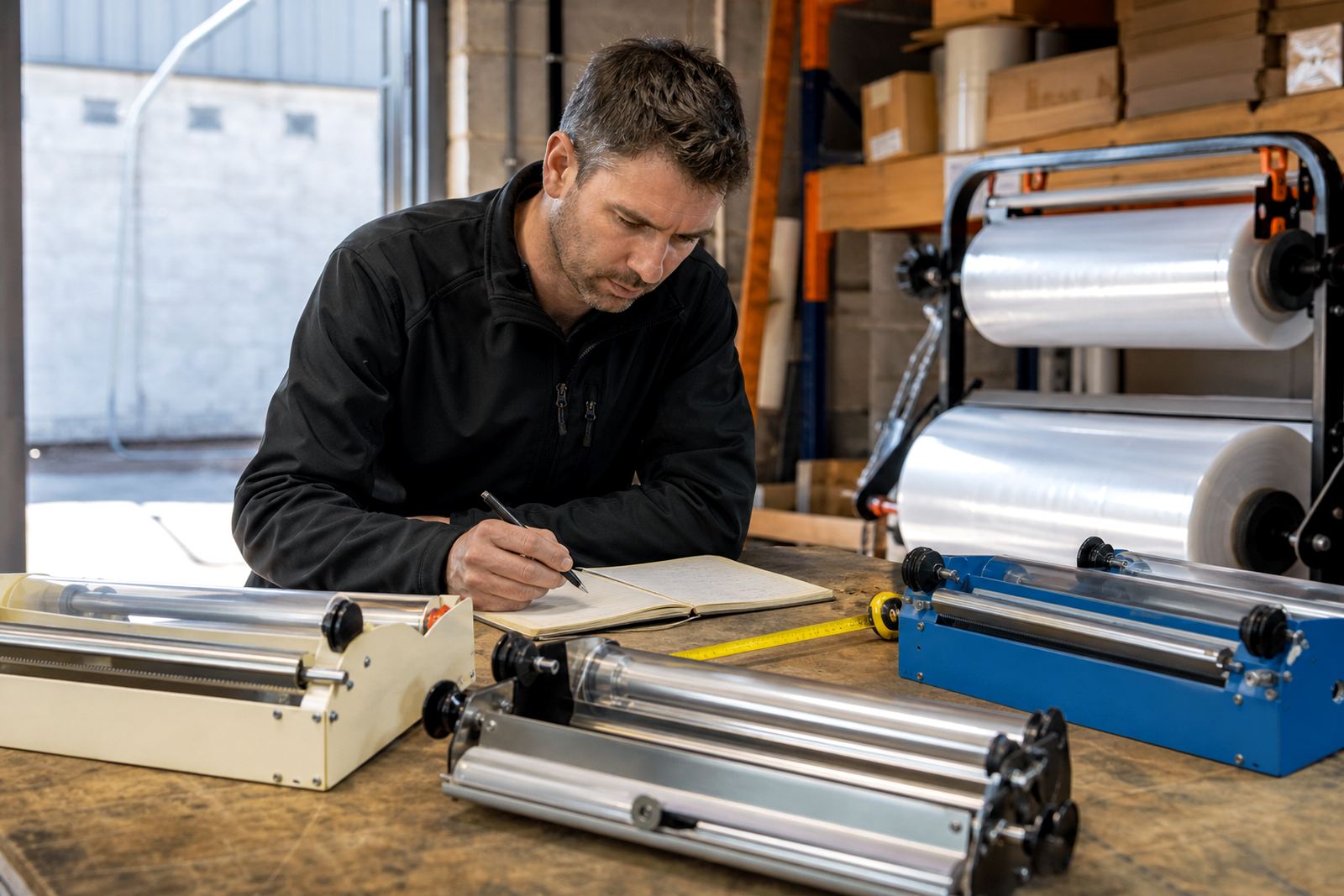
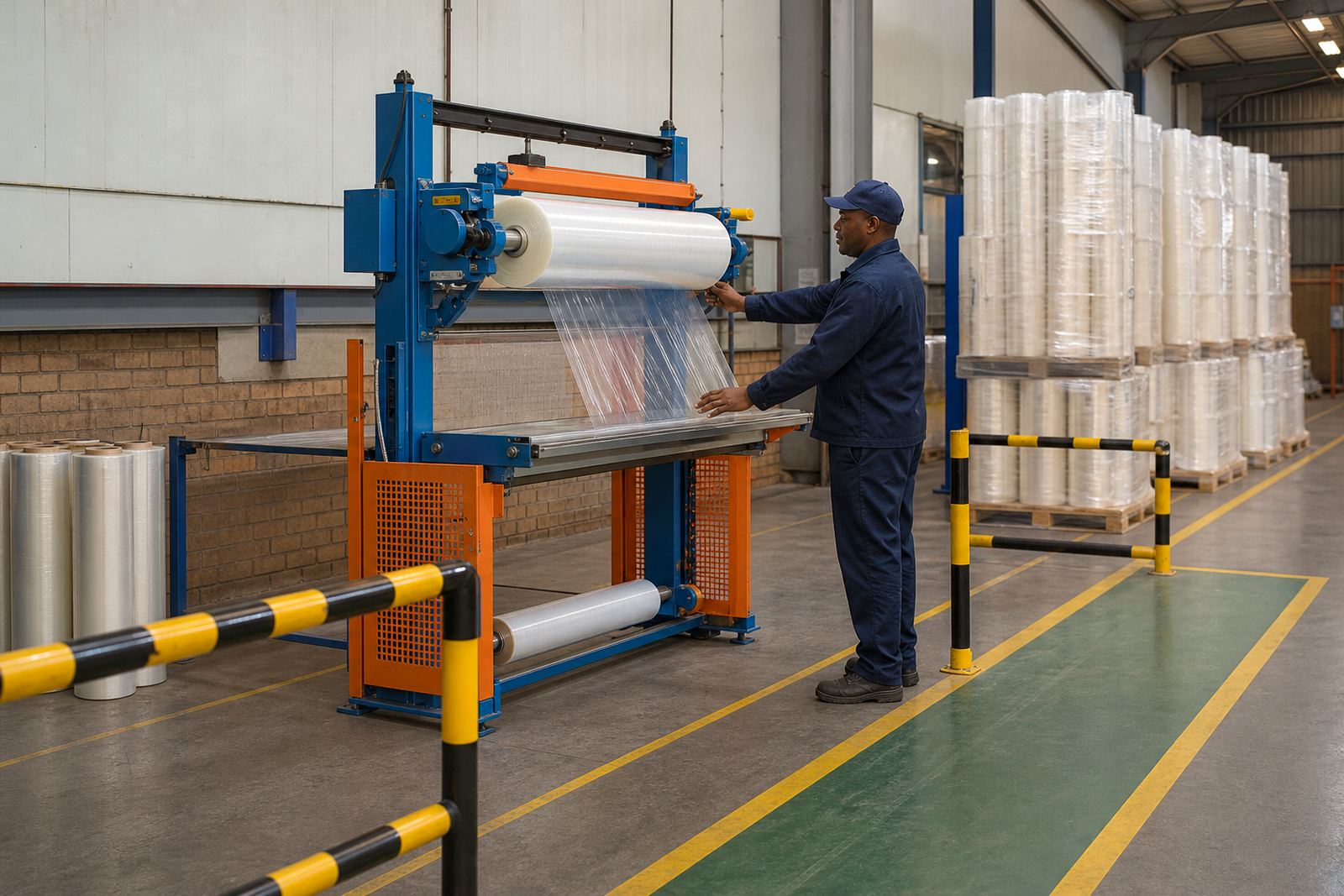
The best installation point is the one that keeps the operator close enough to work cleanly, but far enough from moving product, rollers and pinch points. On packing lines in Germiston, Boksburg and Midrand, we often see problems where the cutter is fitted too high, too low, or too close to a corner where staff have to twist while loading film. That leads to bad posture and slow handling.
Choose a position where the operator can reach the film path without stretching across moving parts. Leave enough room for both hands to guide the roll and trim safely, and make sure the unit does not block maintenance access to the sealing area, conveyor edge or wrapping arm. If the line is exposed to strong sunlight, dust or coastal humidity, the mounting point should also allow easy cleaning and inspection, not tucked into a blind spot.
- Keep the cutter within normal arm reach from the standing position.
- Allow a clear walkway behind the operator, with no loose cables or pallets.
- Set the unit where film feed can be seen from head height and waist height.
- Avoid positions next to hot panels, wet floors or vibration heavy frames.
Guarding That Still Lets the Operator Work Fast
Good guarding should stop fingers, sleeves and loose packaging from getting into the cut path, but it must not make the station awkward to use. On South African lines where load-shedding recovery is common, operators often return to a line in a hurry and can miss the first safety step. Guarding must be simple enough that staff use it every time, even during shift change.
The guard should cover the cutting zone and any exposed edge, while still leaving a clear view of the film track. If a hand has to go inside a guarded area, the task needs a proper safe method, such as a hold point, guide surface or tool-assisted loading. Do not rely on habit alone. If the operator needs to lean over the guard to finish a roll change, the setup is wrong and should be adjusted.
- Check that the guard does not trap film scraps or stretch wrap tails.
- Make sure fasteners are tight and there are no sharp edges on covers.
- Test the guard in normal use, not just when the machine is stopped.
- Confirm the operator can see the cutting line without opening the whole assembly.
Map the Access Points Before the First Roll Goes In
Every packing line should have clear access points marked for loading, cutting, clearing jams and servicing. If more than one person works on the same station, mark the main hand position and the no-go areas so the team does not crowd one another. In larger plants around Johannesburg and Pretoria, this is especially useful where supervisors, packers and maintenance staff all move through the same bay.
Before start-up, stand at the station and check the reach from the operator side, the service side and the emergency stop side. The question is simple: can each task be done without stepping into a moving area? If not, the line needs a better setup. Access should also remain usable when the floor is damp, when pallets are stacked nearby, or when a trolley is parked at the side. That last point is often overlooked.
- Mark the operator standing point on the floor if the layout allows it.
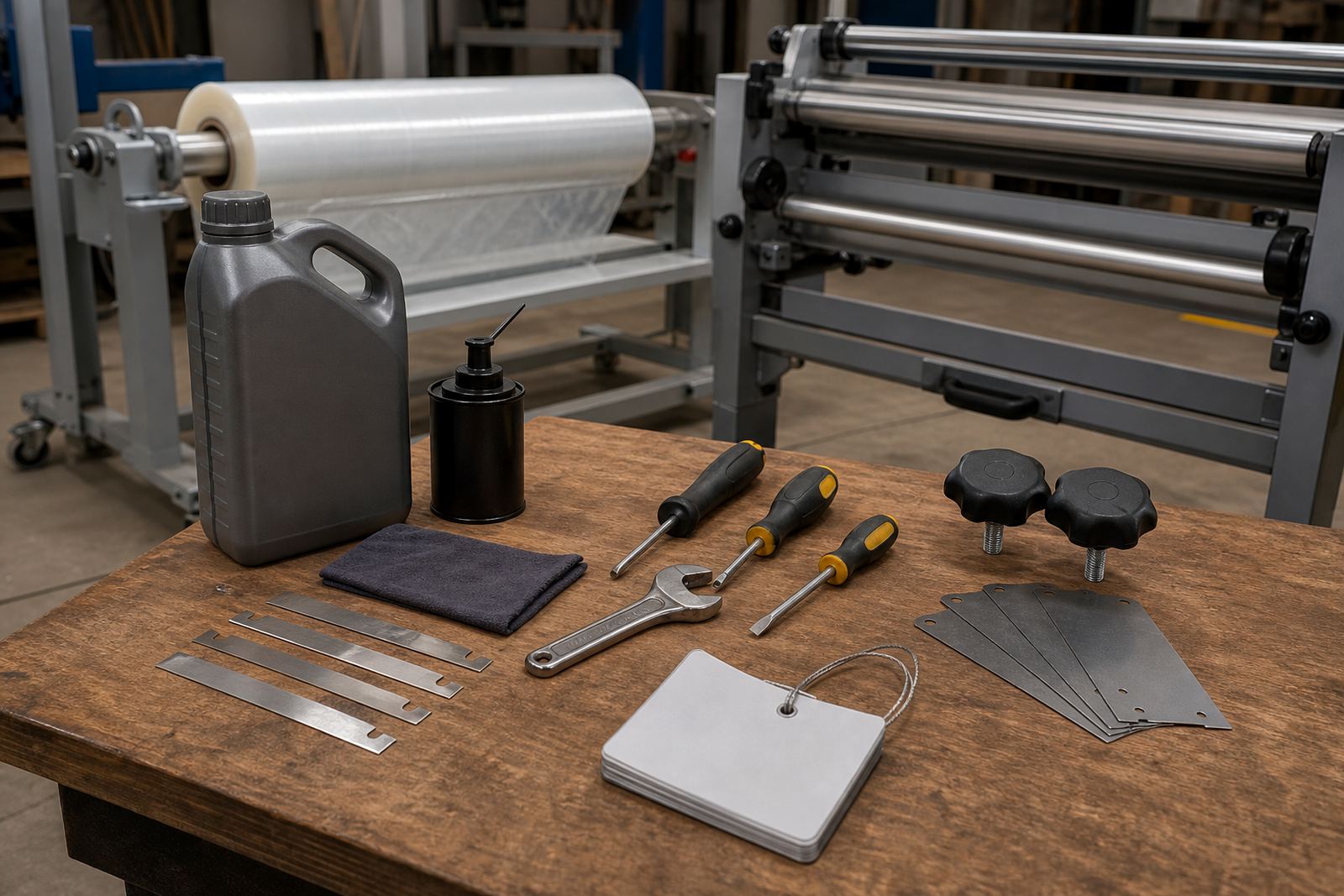
- Keep the service side open for blade replacement and repair work.
- Leave space for a technician to inspect fixings without removing major parts.
- Ensure emergency controls are never hidden by film rolls, cartons or tools.
Set the Film Path for Smooth Handling and Fewer Snags
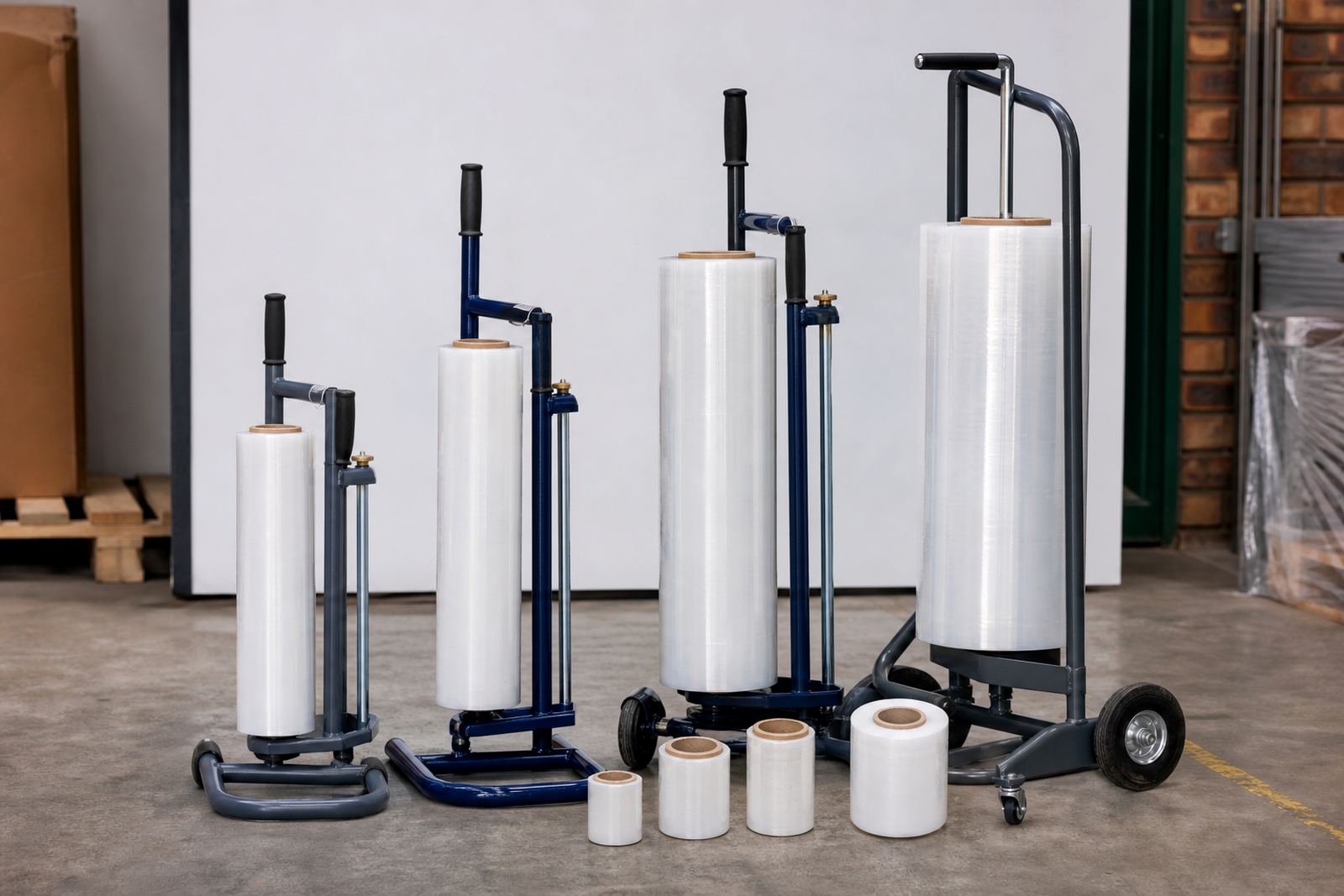
A safe setup is also a neat setup. If the film path is badly aligned, operators pull harder, overreach, and work faster than they should. That creates unnecessary strain and makes the cutter harder to control. The film should run cleanly from the roll holder through the dispenser and onto the product without rubbing against frame edges or loose brackets.
Check the angle of feed, the height of the roll and the tension needed to move the film. If the dispenser forces the operator to lift above shoulder height, the arrangement should be lowered. If the film drops too low, staff will bend excessively and lose control of the cut. In Durban and Cape Town, where humidity can affect film behaviour, a tidy path matters even more because sticky film can cling and wander off line. Small adjustments can save a lot of downtime, ag no one wants repeated re-threading during peak output.
- Keep the film roll level and stable before starting each run.
- Remove burrs, dust and sharp corners from the guide path.
- Test a full feed cycle with the operator standing in normal position.
- Watch for film flutter, side pull or snagging at startup and after stops.
Train Operators on Safe Loading, Cutting and Roll Changes
Training should cover the exact way the station is used on site, not just a general talk about safety. A packer in Polokwane working on a light duty line will need different handling tips from a shift team on a high volume export line in Germiston. The operator must know where to stand, where to place the hands, how to keep the body out of the cut path and what to do if the film jams.
Short practical sessions work better than long theory. Show the team how to load a roll, check the guard, make a clean cut and report wear before it becomes a breakdown. Supervisors should also know when to stop the line if the dispenser is damaged or if the blade is dull. A small nick in the blade can lead to extra force, poor cuts and a greater chance of injury.
- Demonstrate the correct loading position with the line stopped.
- Explain who may replace blades and who must call for service.
- Set a rule for safe two person work when rolls are heavy or awkward.
- Record training dates so new staff get the same instructions.
Use a Simple Daily Checklist Before Start-Up
A short checklist helps the shift team catch issues before production starts. It should take only a few minutes and be done at the beginning of every shift, especially after maintenance, cleaning or a power interruption. In busy plants around Cape Town and Durban, the biggest risk is not dramatic failure but small skipped steps that build into unsafe handling over time.
Make the checklist practical and visible near the station. The supervisor should confirm it is completed, and any faults must be reported before the first roll is loaded. If the line has had a breakdown callout, or if spare parts were fitted, the station needs a fresh inspection. Load-shedding can also leave equipment in an odd state, so always recheck guards and alignment after power returns.
- Are all guards in place and secure?
- Is the blade sharp, fixed correctly and free of damage?
- Is the film path clear, clean and aligned?
- Are the floor area and access points free of obstructions?
- Are the operator and service controls easy to reach?
- Has any damage, loose part or unusual noise been reported?
When to Call for Installation Support or a Safety Review
If your packing line has changed, the setup should be reviewed again. New cartons, a different roll size, a faster line speed or a moved conveyor can all change the safest position for the cutter. The same applies after a blade replacement programme, a dispenser repair, or an equipment upgrade. What worked last year may not be good enough now.
A proper site assessment can save time and reduce rework, especially where several operators share one station. Film Cutters works from Germiston and supports sites across Johannesburg, Pretoria, Durban, Cape Town and Polokwane, with onsite installation, line setup, preventive servicing and operator training. If you need a safety check, the enquiry form on our contact page is the place to start. We can review guarding, access points, roll change support and service needs on the same visit when required.
- Book a review after any layout change or line move.
- Ask for a safety check before peak season or major production runs.
- Include spare blades, repair parts and training needs in the same visit.
- Keep records of faults so repeat issues can be traced quickly.