Start With the line risk check
Before you set a maintenance cycle, look at where your packing line is most likely to slow down. In many plants, that means the cutter blade, dispenser rollers, mounting brackets and any parts that get dust, adhesive or film build-up. If your site runs long shifts or handles high volumes in summer heat, plan for more frequent checks because wear can show up faster than expected.
It helps to divide the line into three groups. First are safety critical items, such as blade guards and fixing points. Second are performance items, like cutters, guides and tension related parts. Third are convenience items, such as labels, handles and brackets that make the job easier for operators. That way your budget goes where it matters most, not just where a fault is obvious.
- List the equipment on each line and note the film type used
- Record shift length, daily output and the main failure points
- Mark parts that affect safety first, then productivity, then comfort
- Set a higher inspection frequency for dusty or coastal sites
Build a simple service calendar
A practical schedule is easier to follow than a long maintenance document. For most packing lines, a daily visual check, weekly cleaning routine and monthly inspection will catch many issues early. If your operation in Durban or Cape Town works in humid conditions, include corrosion checks too because moisture can affect metal parts and fasteners. On sites with load shedding, make sure the team also checks any power related accessories after outages, since sudden stops can leave film under tension.
Use a wall chart or a digital log, whichever your team will actually update. Keep the timing short and consistent. For example, a five minute pre shift check often saves a full hour of line trouble later. It also makes it easier to show who checked what if a fault keeps coming back.
- Daily: clean visible film dust, check blade condition and confirm smooth feed
- Weekly: tighten fixings, inspect guards and test dispenser movement
- Monthly: examine wear parts, alignment and operator handling points
- Quarterly: review all faults and update the plan based on real line data
What to inspect during each visit
Each inspection should follow the same order so nothing gets missed. Start with safety, then check how the cutter performs, then look at the smaller details that affect repeatability. If blades are dull, operators often push harder, which can create uneven cuts and unnecessary strain on the unit. If a dispenser feels stiff or the roll does not sit square, that usually means alignment or bearing wear has started.
Pay attention to the surrounding area as well. Film scraps, dust and packaging offcuts can build up around moving parts and make a line seem slower than it really is. A quick clean can reveal whether the actual problem is mechanical or just dirt. That small step often saves a callout, bru.
- Blade sharpness and blade seating
- Roll alignment and free movement
- Signs of cracking, bending or loose mounting points
- Guard condition and operator access to moving parts
- Noise, vibration or drag during film dispense
Plan parts replacement before they fail
Waiting for a part to fail usually costs more than replacing it on time. Keep a list of the items that wear fastest, then replace them according to use, not guesswork. In a high volume plant in Boksburg or Midrand, a blade might need replacement sooner than at a smaller site in Polokwane. The same applies to springs, rollers and fasteners that work hard every day.
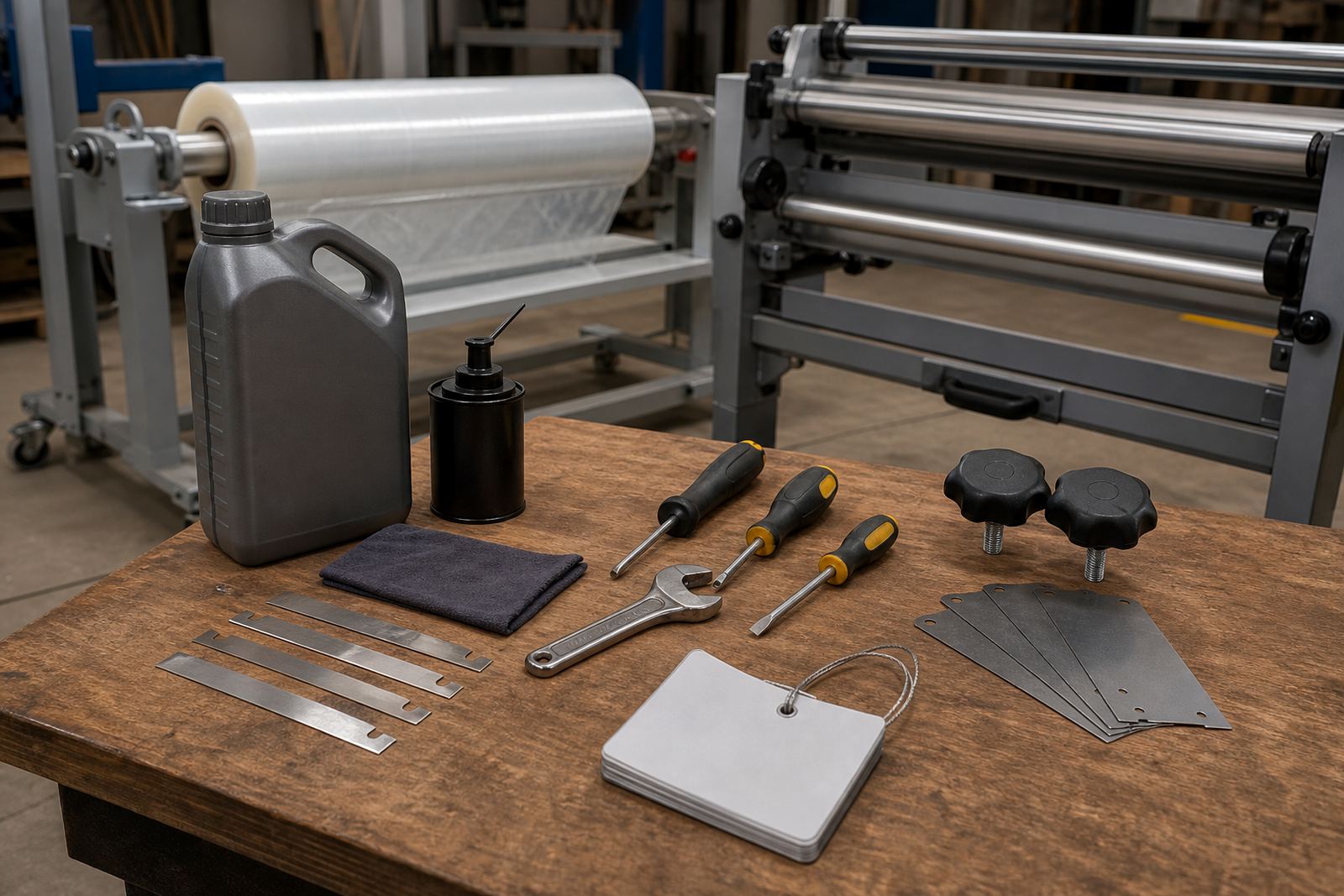
Keep spare parts on site for the items that stop a line quickly if they fail. Store them in a clean dry cabinet and label them clearly by machine type. If your site uses different film widths or several packing stations, separate the spares so the team does not waste time searching during a breakdown.
- Hold spares for blades, rollers, fixings and common wear parts
- Record fitment dates so you can track how long each part lasts
- Replace damaged guards or brackets immediately, not at month end
- Review stock after every major shutdown or production change
Keep operators involved in day to day care
Operators are usually the first people to notice a change in how a cutter feels or sounds. Train them to spot drag, misfeed, poor cutting and loose fittings before those issues grow. Keep the training practical, using the exact equipment installed on the line rather than general notes. A 10 minute refresher at the start of a shift can prevent a lot of repeat faults.
Make sure the team knows what they may clean and what must be left to a technician. That avoids damage from over cleaning, wrong tools or unsafe handling. Simple reporting also helps. If an operator can log the fault, the time and the film type, your maintenance team can diagnose the issue much faster and less guesswork is needed.
Use a service record that shows real trends
Good maintenance planning is easier when the records are clear. Note the date, line number, fault, action taken and parts used for every visit. Over time, those notes show whether the same issue keeps returning on one packing line or across several sites. That helps you decide whether the answer is a repair, an upgrade or a change in routine.
Review the records at least once a quarter. Look for recurring blade wear, repeated alignment problems, or operators needing extra help during roll changes. If your Germiston base supports lines in Johannesburg, Pretoria, Durban, Cape Town and Polokwane, these records also help keep service standards consistent from site to site. A proper log turns maintenance from a reactive task into a planned part of production.