A clean fit for a busy Bloemfontein packing line
The client was a mid-sized print and finishing operation in Bloemfontein handling wrapped printed goods, carton-packed stationery and mixed retail packs for local distribution. Their team was spending too much time wrestling with loose film, uneven cuts and awkward roll changes, especially during peak runs when orders had to go out the same day.
The brief was straightforward: improve speed at the wrapping point, keep cuts neat, and make the station easier for operators to use across different pack sizes. They also wanted something that would hold up in a dusty production area, with enough stability for daily use and no fiddly setup. As with many inland sites, load-shedding and stop-start shifts were part of the reality, so the equipment had to be simple to return to service after interruptions.
What the team needed from the specification
Before we supplied anything, we assessed the packing flow, film widths in use and where the operator stood relative to the sealing and banding points. The site needed a cutter and dispenser arrangement that could suit both shrink film and stretch film without slowing the line. We also had to keep the footprint tight, because the wrapping area sat between a pallet zone and a finished-goods staging area.
The main constraints were practical rather than cosmetic. The floor was not perfectly level, the packing space was shared by more than one shift and the team had limited room to store spare rolls. We therefore focused on a setup that could be mounted neatly, allow fast roll swaps, and reduce the chance of film snagging or accidental cuts.
- Film widths handled on site: standard packing rolls used for printed cartons and stationery bundles
- Working area: compact station set-up to suit a narrow packing bay
- Operator use: quick changeovers between product sizes and wrap weights
- Environment: dry inland conditions with regular dust control housekeeping
What we supplied and installed
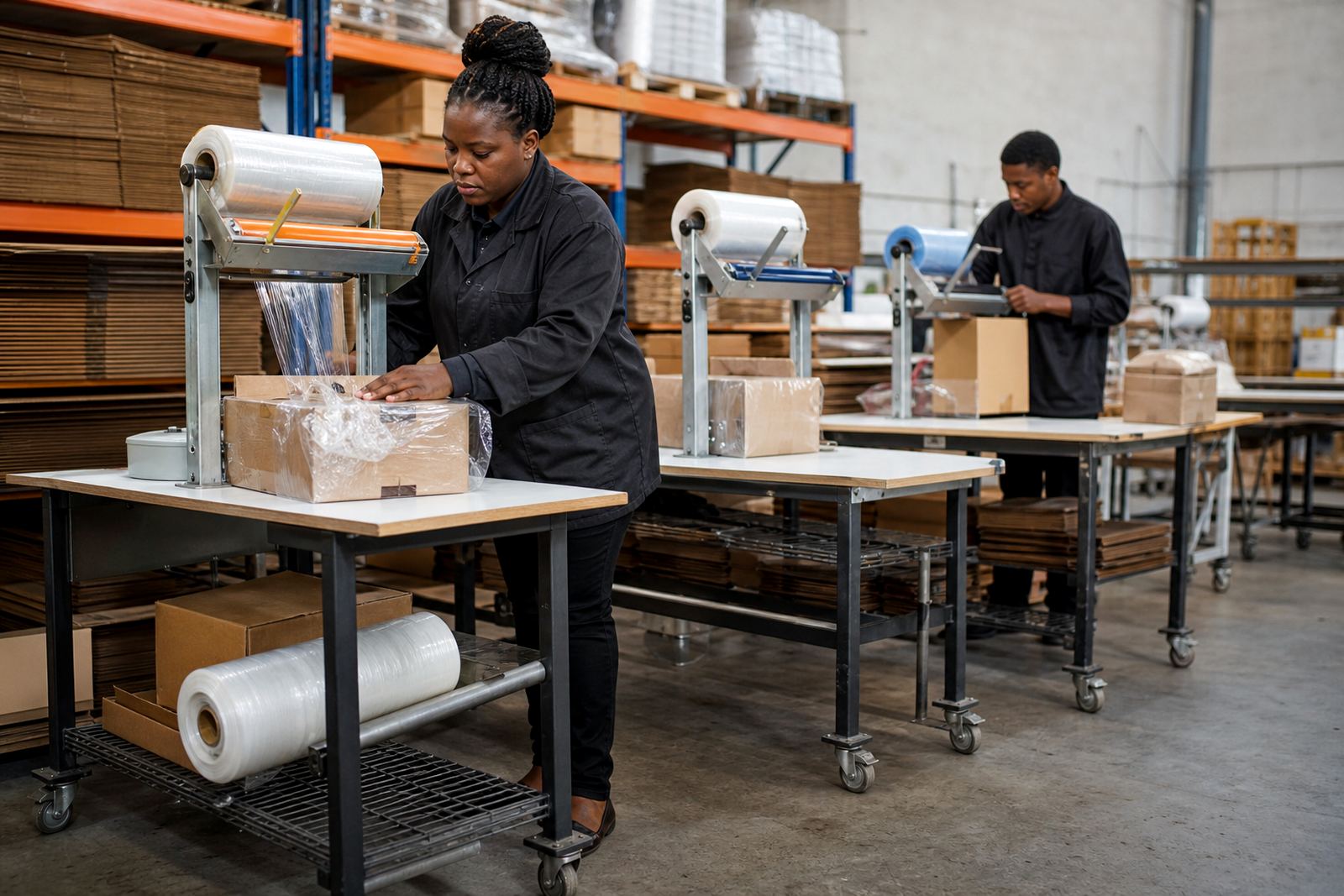
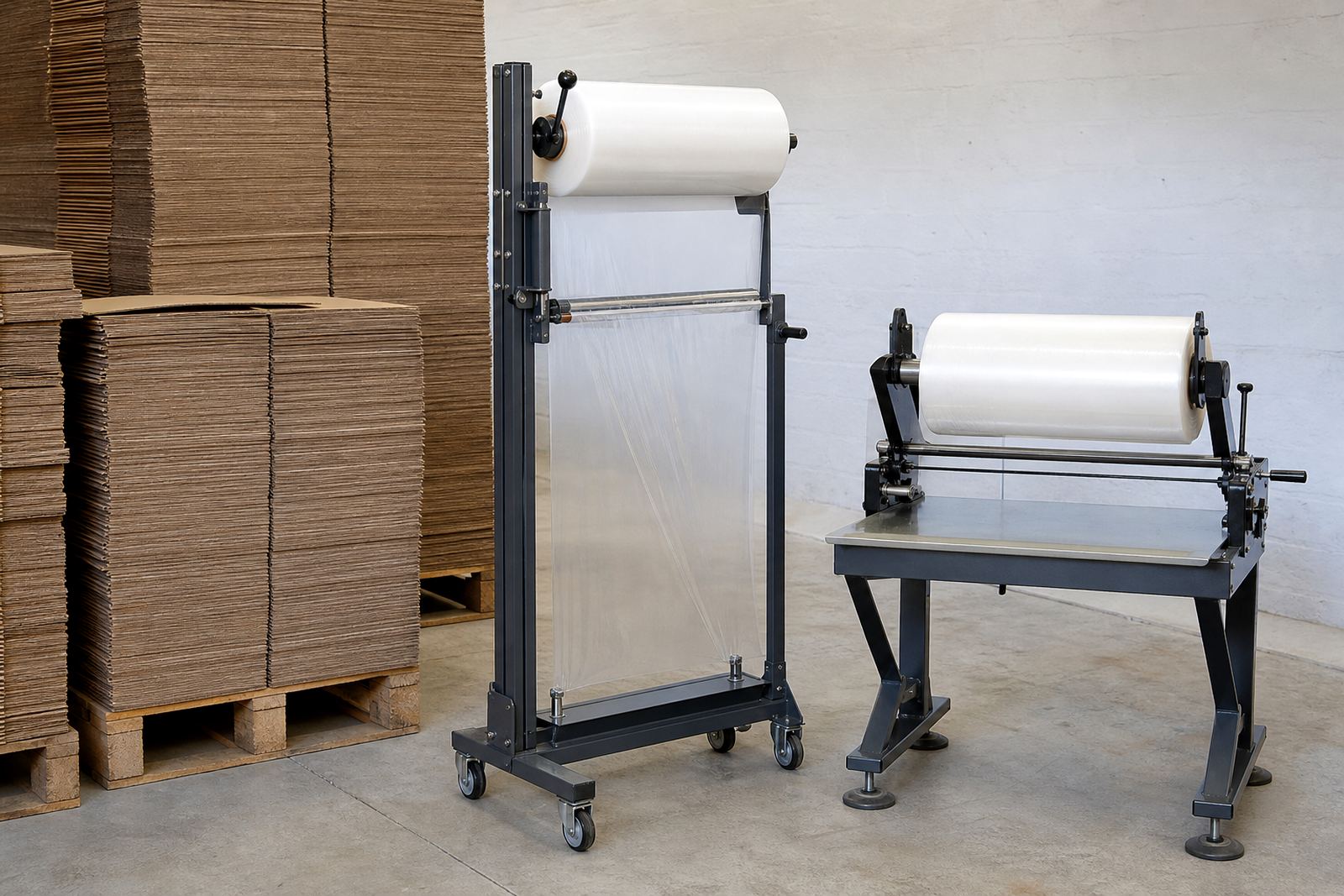
We supplied a film cutting station built around a guided dispenser with a clean cutting edge, stable roll support and easy hand access for the operator. The final arrangement was set to match the client’s line height and workflow, so the film could be drawn, positioned and cut in one movement without unnecessary bending or reaching.
Our team carried out the installation, checked alignment and confirmed that the cut was consistent across the film width. We also made sure the station could be used safely by different operators on different shifts. Where needed, we adjusted the positioning so the roll sat comfortably for both taller and shorter staff members. That small detail made a noticeable difference to handling and reduced the awkward twists that were happening before.
- Onsite installation and line setup
- Fitted cutter and dispenser arrangement for shrink and stretch film
- Blade setting checked for neat, repeatable cuts
- Safety checks completed before handover
- Operator training provided at the station
Two-week timeline from assessment to handover
The project ran over two weeks from first assessment to final handover. In week one, we inspected the packing line, measured the available space and confirmed the film formats in use. We then prepared the equipment and planned the best position for the station so it would not interfere with pallet movement or finished stock staging.
In week two, we completed the installation, tested the feed and cutting action, and carried out practical training with the operators and line supervisor. The client wanted the team to be confident from day one, so we spent time showing blade care, roll loading and what to do if film tension changed during a shift. A short follow-up check was done after initial use to make sure the station still sat correctly under normal production pace.
Results on the print and stationery line
Once the station was in service, the packing team saw cleaner film application and less waste from uneven cuts. Rolls were changed faster, and operators did not have to improvise with knives or offcut handling. That improved both speed and consistency, which matters when a print run ends late and the dispatch bay still has to clear before end of shift.
The client also reported better control when wrapping smaller stationery packs, where excess film had been a recurring issue. Because the cutter was set up to support the line properly, they could keep the packing area tidier and reduce small damage risks from loose offcuts. It is the kind of change that does not sound dramatic, but on a busy floor it saves time every day.
- Neater film cuts across different pack sizes
- Less waste from over-pull and damaged film edges
- Quicker roll changes during busy print runs
- Safer handling for operators working through load-shedding interruptions
What we would repeat on a similar site
If we were doing the same job again for another Bloemfontein print or stationery operation, we would keep the focus on line height, operator reach and the number of film formats in use. Those three details decide whether a cutter station feels natural or becomes another item that staff work around. We would also recommend planning the install around actual shift patterns, not just the drawing on paper.
For sites with shared packing space, we would again keep the footprint neat and choose a layout that supports quick roll access and easy cleaning. In dry inland conditions, dust build-up can affect how smoothly film feeds, so a practical cleaning routine should be part of the handover. On a good install, the equipment should feel like part of the line from the first week, not something that needs constant correction.
Support for print and packing teams across South Africa
Film Cutters works from Germiston and supports packing lines in Bloemfontein and other centres across South Africa, including Johannesburg, Pretoria, Durban, Cape Town and Polokwane. Our work covers installation, servicing, repairs, spares and training for teams that need reliable film handling day after day.
For businesses that want a cleaner wrapping point, safer roll changes and better cut control, we can assess the line, suggest the right station layout and keep the equipment performing properly over time. It is especially useful where production needs to stay moving despite municipal load-shedding, tight dispatch windows or mixed pack sizes coming off the line.
- Onsite installation and line setup
- Preventive servicing and safety checks
- Blade replacement and dispenser repairs
- Breakdown callouts and equipment upgrades
- Operator training and roll change support
Key facts
| Project | Bloemfontein Print Line |
|---|---|
| Client type | Printing and packing operation |
| Town | Bloemfontein, Free State |
| Scope | Shrink film and stretch film cutter station |
| Timeline | 2 weeks from assessment to handover |
| Key outcome | Faster roll changes with neater, safer film cuts |