Contract packing work that changes by the hour
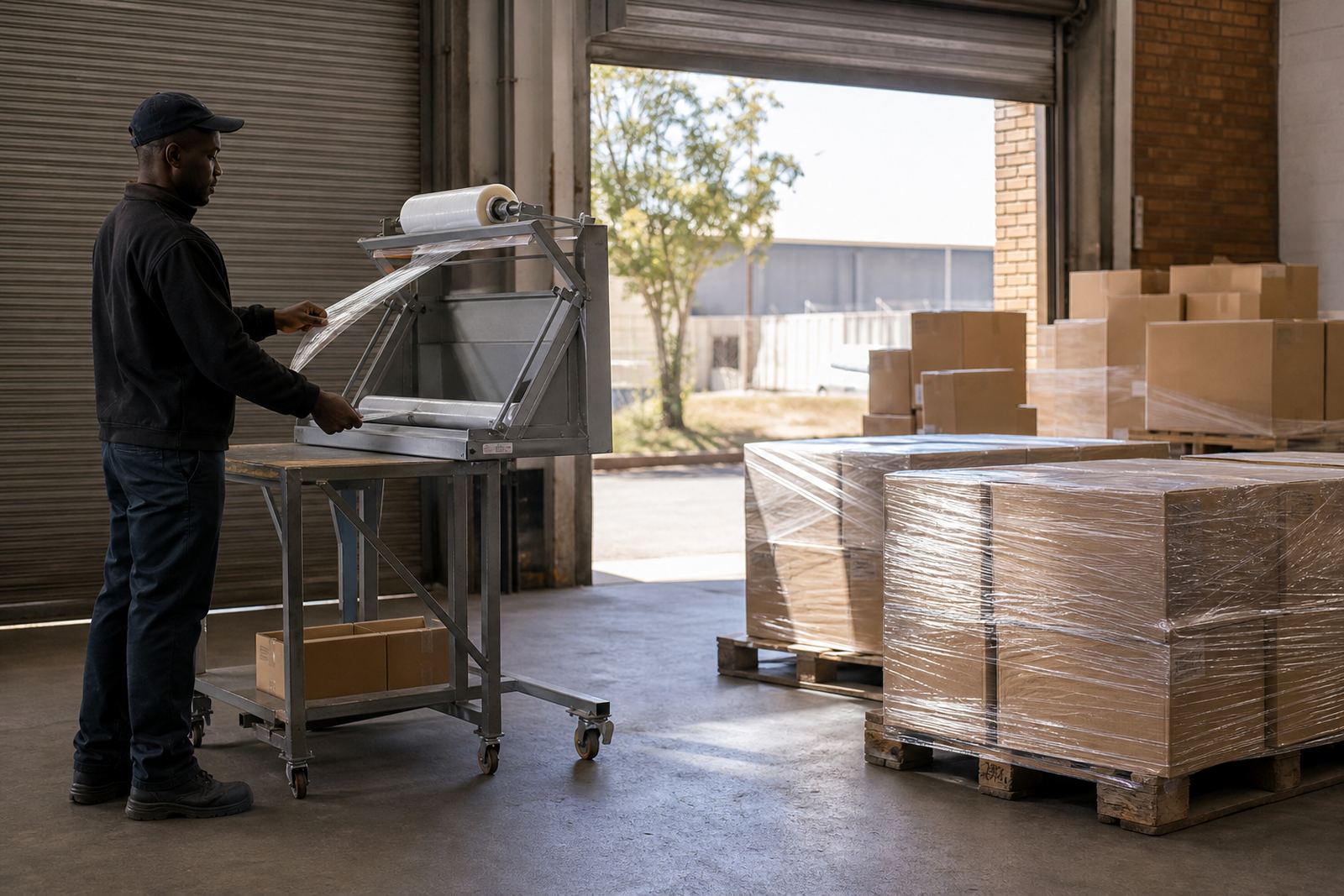
The client was a contract packing operation in Midrand handling mixed product lines for retail and wholesale orders. One shift could be plain cartons, the next stretch wrapped pallets, then a shrink film run for grouped packs. The brief was simple enough on paper: make film handling quicker, safer and more consistent without slowing the team down when stock lines changed.
They had a few pain points that are common on packing floors around Gauteng. Film tails were being wasted during roll changes, operators were cutting film with knives that were not suited to the task, and the line had different packing stations that all needed the same standard of control. The site also had to deal with load-shedding, so any equipment we supplied had to be practical during interruptions and easy to return to service.
Because the work was contract based, flexibility mattered more than a fixed high-volume layout. The solution had to suit busy days, quieter days and quick changeovers between jobs. We also had to keep the floor clear for pallet jacks, allow safe access around the pack benches and make sure the equipment could be used by different operators without long retraining.
The site constraints we worked around
Midrand sites often have tight receiving areas, limited staging space and a mix of permanent staff and temp labour. This one was no different. The packing zone had a narrow traffic path, so we kept the film stations compact and positioned them where roll changes could happen without crossing the main movement route. That reduced delays and made the area easier to keep tidy.
The environment was also dusty in places, with pallet movement and cardboard handling happening in the same bay. We chose equipment with simple, easy-clean surfaces and fittings that could be checked quickly during shift handover. The client wanted something that would work through long hours and not need a lot of fiddling every time the product mix changed.
Another consideration was operator comfort. On a contract site, staff rotate between tasks so the handling method must feel natural straight away. We kept the cutting action predictable and the dispensing points fixed, which helped reduce waste and made the application neater from the first week.
- Compact layout for a busy Midrand packing floor
- Safe access for pallet movement and roll changes
- Suitable for mixed stock lines and rotating operators
- Designed to handle frequent start-stop production
What we supplied and set up
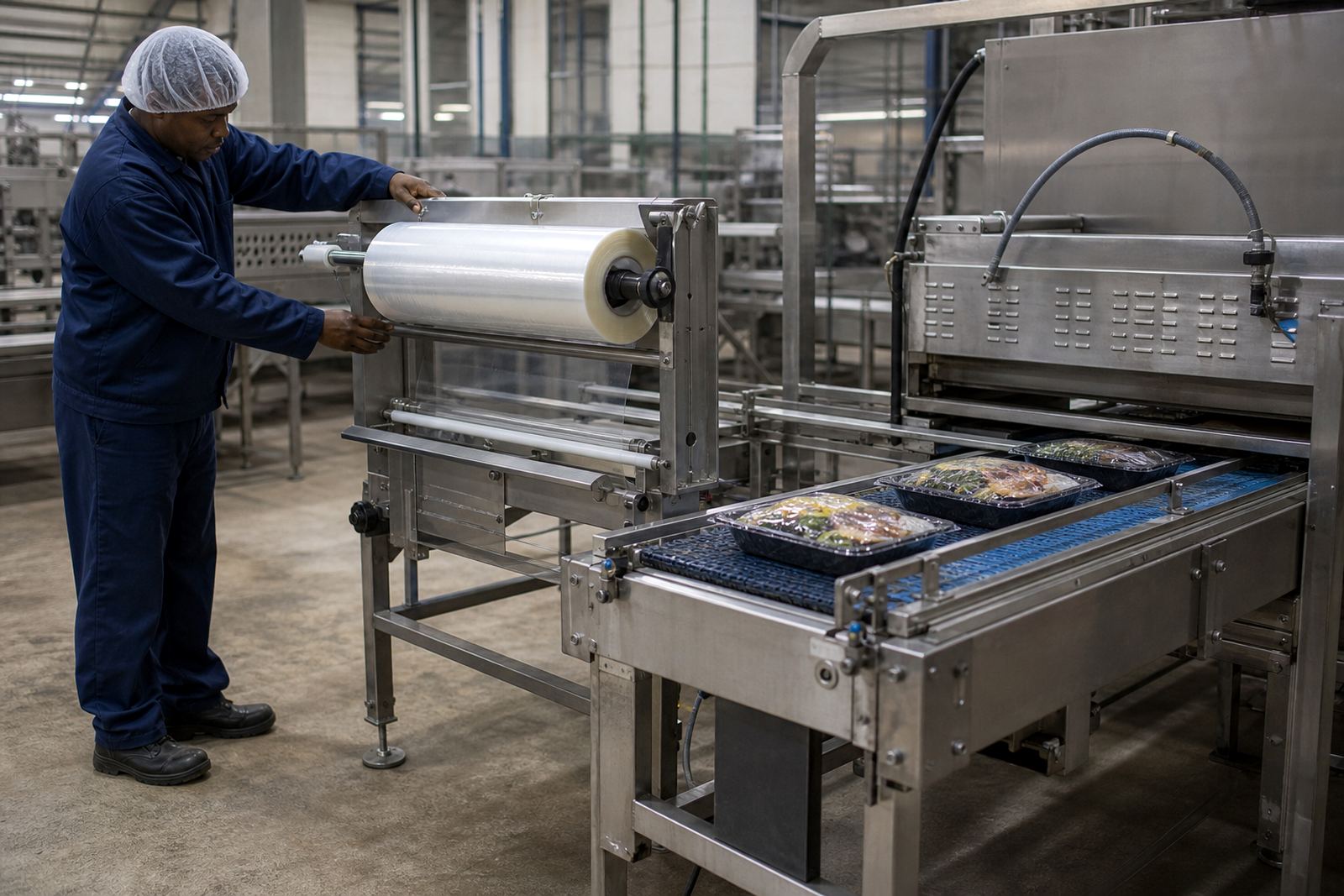
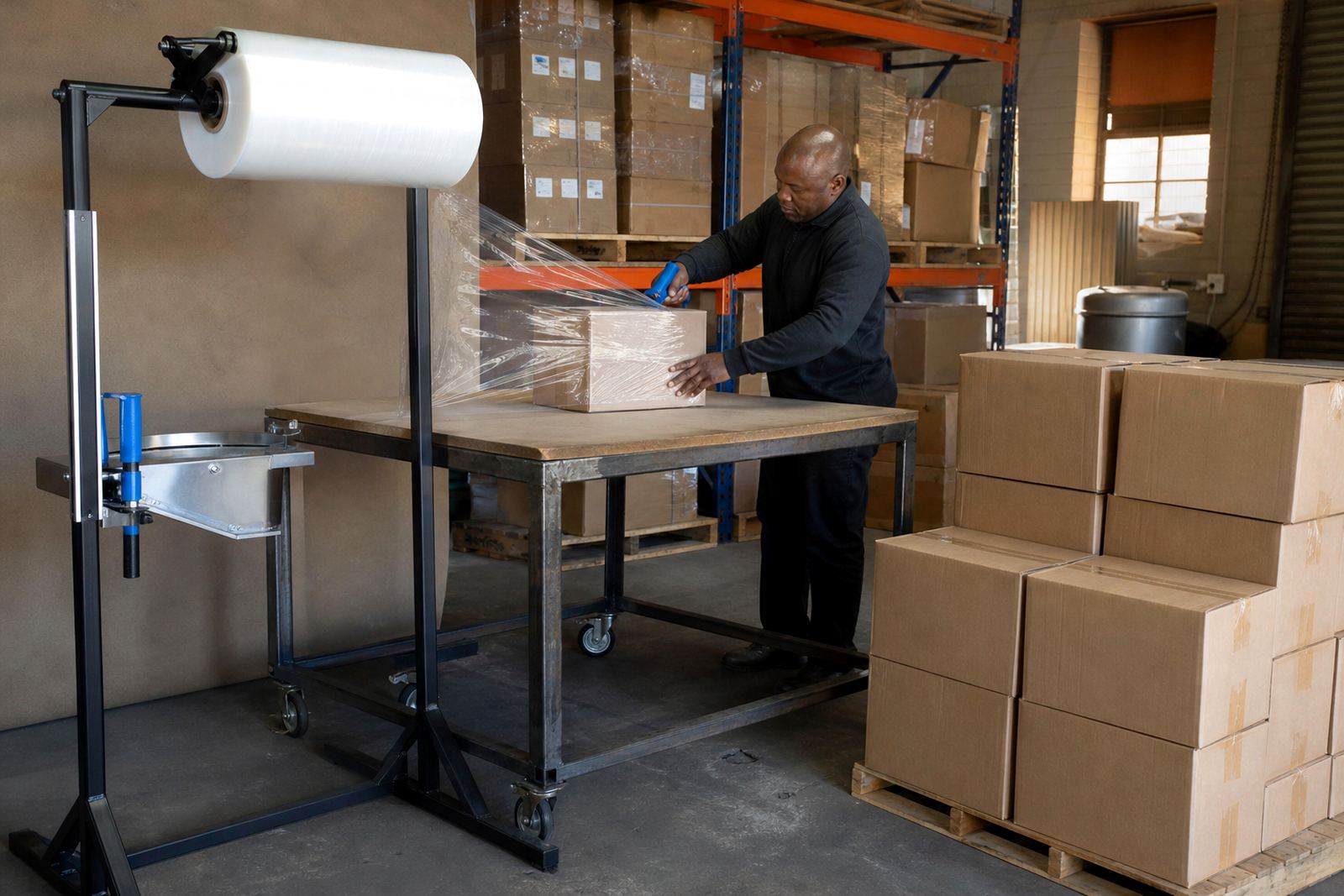
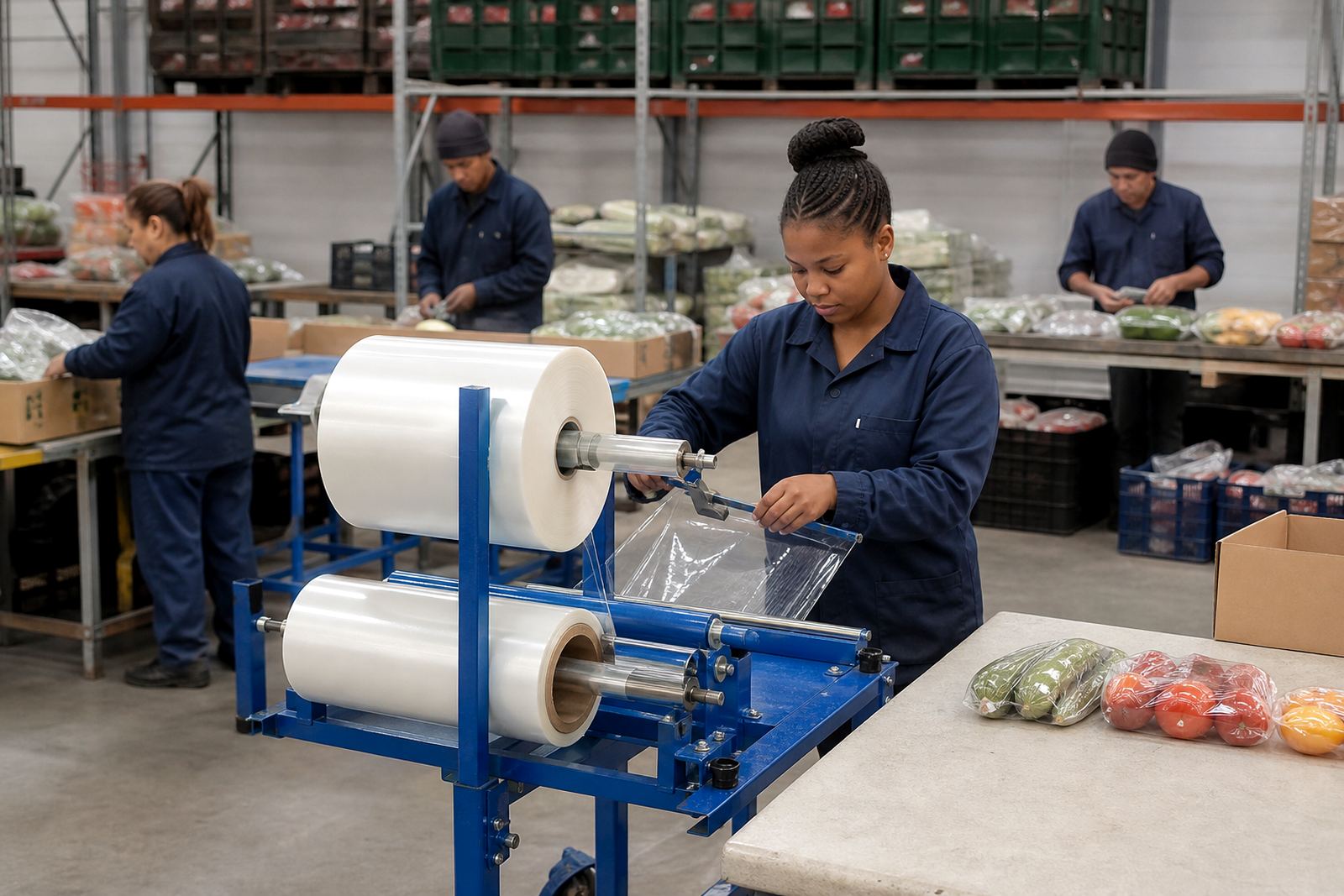
We supplied a combination of shrink film cutters and stretch film dispensers matched to the client’s packing stations. The cutters were chosen for clean, repeatable trimming on film without the rough tearing that was costing time and material. The dispensers were set up to support controlled film application so operators could maintain tension and finish each pack neatly.
The package included installation, line setup and operator training. We walked the team through roll loading, blade handling, safe storage and the correct way to position the dispenser for different pack sizes. The setup also included safety checks and practical guidance for daily use, because a good tool still needs the right process behind it.
- Stretch film dispensers for pallet and pack line use
- Shrink film cutters for controlled film trimming
- Blade replacement support and spare parts supply
- Operator training for safe and repeatable use
- Basic checks for alignment, wear and tension control
We also made sure the equipment could be maintained on site without special tools. That matters on a floor where time is tight and maintenance windows are short. If a blade needed replacing or a dispenser needed attention, the team knew exactly what to do and when to call for support.
A four week rollout from assessment to handover
The project was completed over four weeks. In week one we carried out the site assessment and confirmed the packing flow, the available space and the likely bottlenecks. In week two we finalised the equipment mix and planned the station positions so the layout would work with the client’s busiest lanes.
Week three covered delivery, installation and line setup. We tested the cutting points, checked roll change movement and adjusted the dispenser positions to suit the operators’ reach. Week four focused on training, safety checks and a short follow-up review after the team had used the setup on real jobs. That gave us a chance to make small adjustments where needed, which is usually where the best gains appear.
The rollout was quick enough to avoid disrupting contract commitments, but not rushed. A packing site in Midrand cannot afford long downtime, especially when customer collections are already scheduled and trucks are waiting. The phased approach kept the operation moving while the new setup bedded in.
Results on the packing floor
Once the new layout was in place, the site saw quicker roll changes, cleaner film cuts and less waste around the film stations. Operators no longer had to improvise with general-purpose tools, which improved consistency across shifts. The team could move between job types with less hesitation, and that helped keep the line flowing when the workload changed during the day.
The client also reported better control during busy periods, especially when multiple packs were being handled at once. Because the dispensers were set up for stable film application, the packs looked neater and there was less rework. On a contract site, that matters because every extra minute on a pack adds up across a full shift.
- Faster changeovers between product runs
- Less film waste during trimming and application
- Cleaner pack finish and more consistent tension
- Shorter learning curve for new operators
- Safer handling compared with ad hoc cutting methods
The biggest gain was not just speed but control. The team could trust the equipment, and that reduced hesitation on the line. In practical terms, that is where productivity improvements usually stick.
What we would repeat on the next contract site
If we were doing the same type of job again, we would follow the same process. Start with a short site assessment, map the product flow, then match the cutters and dispensers to the actual work rather than the brochure idea of the work. Contract packing rarely stays still for long, so flexibility needs to be built in from the beginning.
We would also repeat the operator training and the follow-up review after the first few weeks. That second check is useful because the real issues usually show up once the team has worked through a few mixed runs and a few shift changes. It also gives us the chance to confirm whether the blade wear pattern, spare parts list or station spacing needs a small change.
For a Midrand contract pack operation, the right setup is the one that keeps moving with the stock lines. That was the point of this project, and it is still how we approach these sites across Gauteng and beyond.
Key facts
| Project town | Midrand, Gauteng |
|---|---|
| Client type | Contract packing site |
| Timeline | 4 weeks |
| Core equipment | Shrink film cutters and stretch film dispensers |
| Services included | Onsite installation, line setup, training, safety checks, spares support |
| Key outcome | Faster changeovers and cleaner film handling across mixed stock lines |