What the Wadeville packing line needed
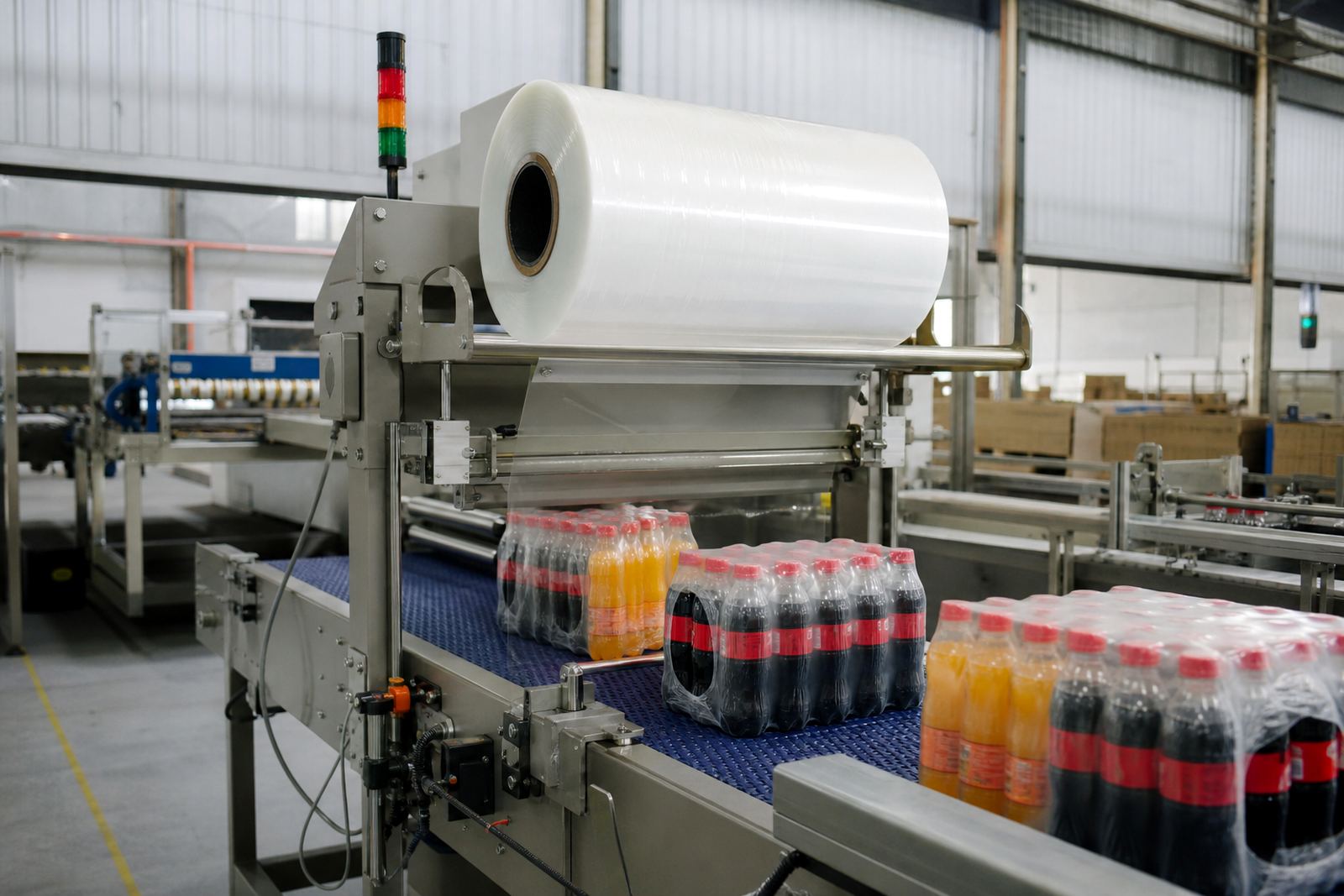
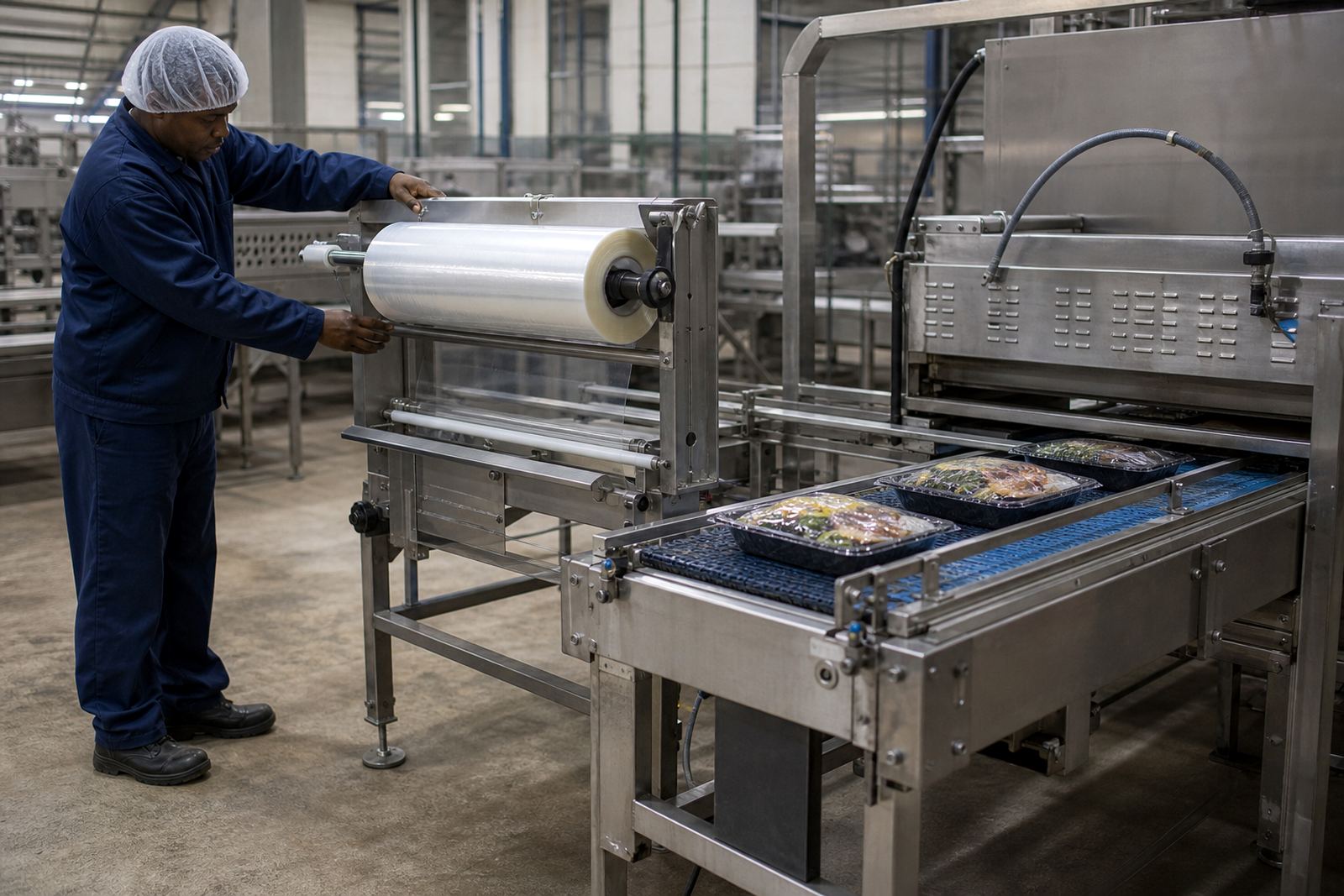
The site was a food packing operation in Wadeville, Germiston, working to tight dispatch times and steady shift output. The team needed a shrink film cutter and dispenser arrangement that would reduce handling time, keep the film edge neat, and hold up in a plant where speed, dust and cleaning cycles all matter.
The brief was practical. The existing method was slowing packers down during roll changes and creating uneven cuts on some loads. That meant more waste, more rework and a bit of frustration at the end of the line. We were asked to improve control without forcing the staff to change the way they worked too much.
Because the pack area is inside a food environment, we also had to keep the installation tidy and easy to clean. The line runs in a busy industrial part of Wadeville, so access for service and parts had to be simple too.
Constraints on site and how we worked around them
The biggest constraints were floor space, live production and the need to avoid long downtime. The packing line could not be shut for a full day, so the work had to be done in stages between production windows. There was also limited room around the wrapping point, which meant the dispenser needed a neat footprint and clear operator access.
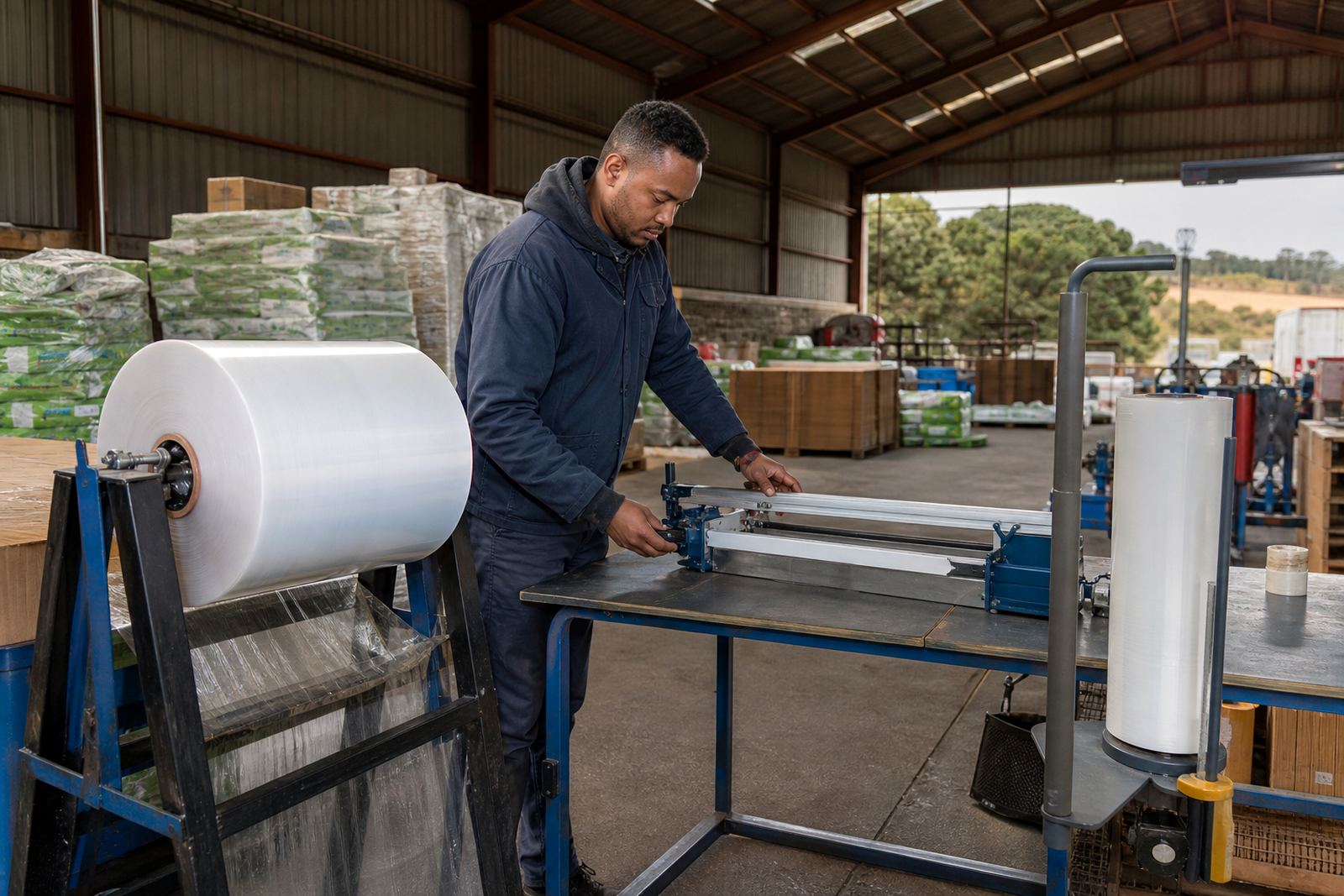
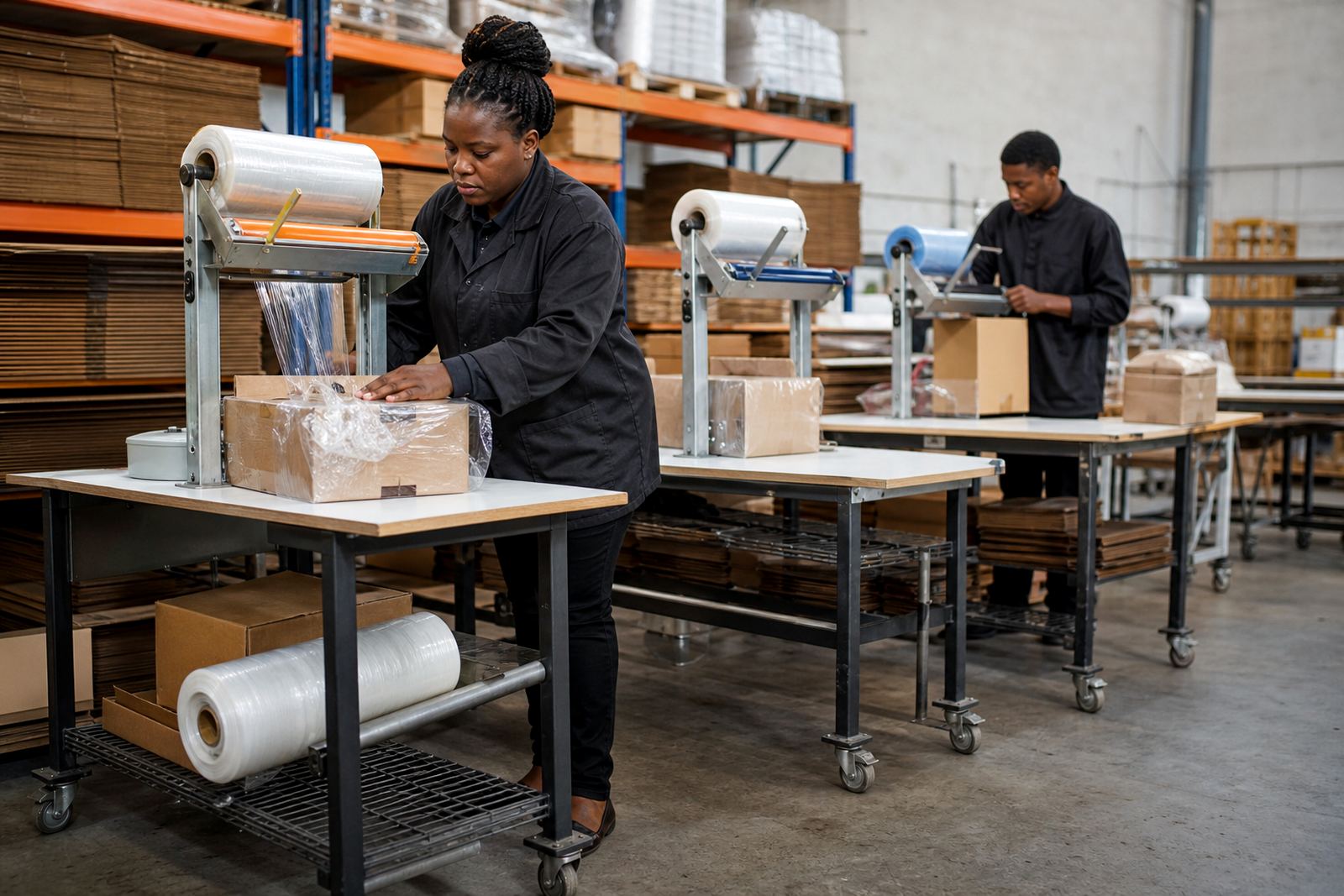
We checked the film rolls in use, the pack height, the wrapping point and the way operators reached the material. In a food plant, little things matter. If the cutter sits too high or too far back, staff lose time and start taking shortcuts. If it sits too low, there is a risk of strain and less control on the cut. We set it up for the actual working height on site, not just a standard position.
- Site: Wadeville, Germiston
- Industry: Food packing and dispatch
- Install window: staged over 2 weeks
- Priority: lower waste, neater film cuts, quicker roll changes
- Site condition: active production area with limited spare space
What we supplied and installed
We supplied a shrink film cutter and dispenser setup selected for regular line use. The unit was installed to give operators a fixed film position, cleaner cutting action and better control during changeovers. It was matched to the roll sizes used on site so the team could keep their current packing rhythm with less fuss.
The installation included mounting, alignment, blade setting and a full operational check. We also confirmed that the dispenser sat square to the line so the film ran true and did not pull to one side. That reduced snagging and helped keep the wrap consistent across different pack sizes.
- Heavy-duty cutter and dispenser assembly for packing line use
- Set for standard shrink film roll sizes used on the floor
- Clean blade action for straight, repeatable cuts
- Stable mounting to reduce movement during busy shifts
- Access arranged for quick roll replacement and cleaning
We also walked the operators through the new setup and showed them the best way to load, cut and reset the film between runs. A short handover saves a lot of call backs later, especially when a line is working under pressure.
Timeline from assessment to handover
The project ran over 2 weeks from the initial site assessment to handover. In week one, we completed the inspection, measured the space and confirmed the film specs in use. We also checked for any bracket or support changes needed before the equipment arrived.
In week two, we completed the installation and carried out the handover with the packing team. That included test cuts, film feed checks and a short period of observation during live packing. We stayed on until the operators were comfortable with the new position and the process felt natural. It was quick, but not rushed.
Because the plant could not afford a long stop, we kept the work practical and well sequenced. That made the whole job easier for the production supervisor and kept the line moving.
Results on the floor after installation
The clearest result was a smoother packing rhythm. Operators spent less time wrestling with the film roll and more time keeping the line moving. The cut quality improved, which meant less film waste and fewer awkward edges during wrapping.
The plant also reported better consistency between shifts. That matters in a food operation where one team may start early and another takes over later in the day. Once the cutter and dispenser were set correctly, the process became more repeatable and easier to manage.
- Faster roll changeovers during busy packing periods
- Cleaner cuts with less excess film
- Better operator control at the wrapping point
- Reduced strain from awkward film handling
- More consistent output across shifts
The team liked that the setup did not require any major changes to the packing line. It simply made the existing process work better, which is often the best outcome in a live plant. A small adjustment can save a lot of time over a month, and this one did.
What we would repeat on a similar job
If we were doing the same type of job again, we would start with the operator position and the actual film roll used on the floor. That gives the best result for a busy site, because the equipment fits the people and the process, not just the drawing. We would also plan for a quick maintenance route so blade checks and servicing can happen without slowing the line.
For a food packing plant in Wadeville or any other industrial area around Johannesburg, Germiston or Boksburg, the lesson is simple: the best setup is the one that works under pressure. A good dispenser has to be easy to load, safe to use and steady during long shifts. If those three things are right, the rest falls into place more easily.
This project showed the value of a measured installation. No fuss, no overcomplication, just a practical improvement that the packing team could use straight away.
Key facts
| Project location | Wadeville, Germiston, Ekurhuleni |
|---|---|
| Client type | Food packing operation |
| Equipment supplied | Shrink film cutter and dispenser |
| Timeline | 2 weeks from assessment to handover |
| Service scope | Onsite installation, line setup, training and handover |
| Primary result | Cleaner cuts, faster roll changes and less film waste |