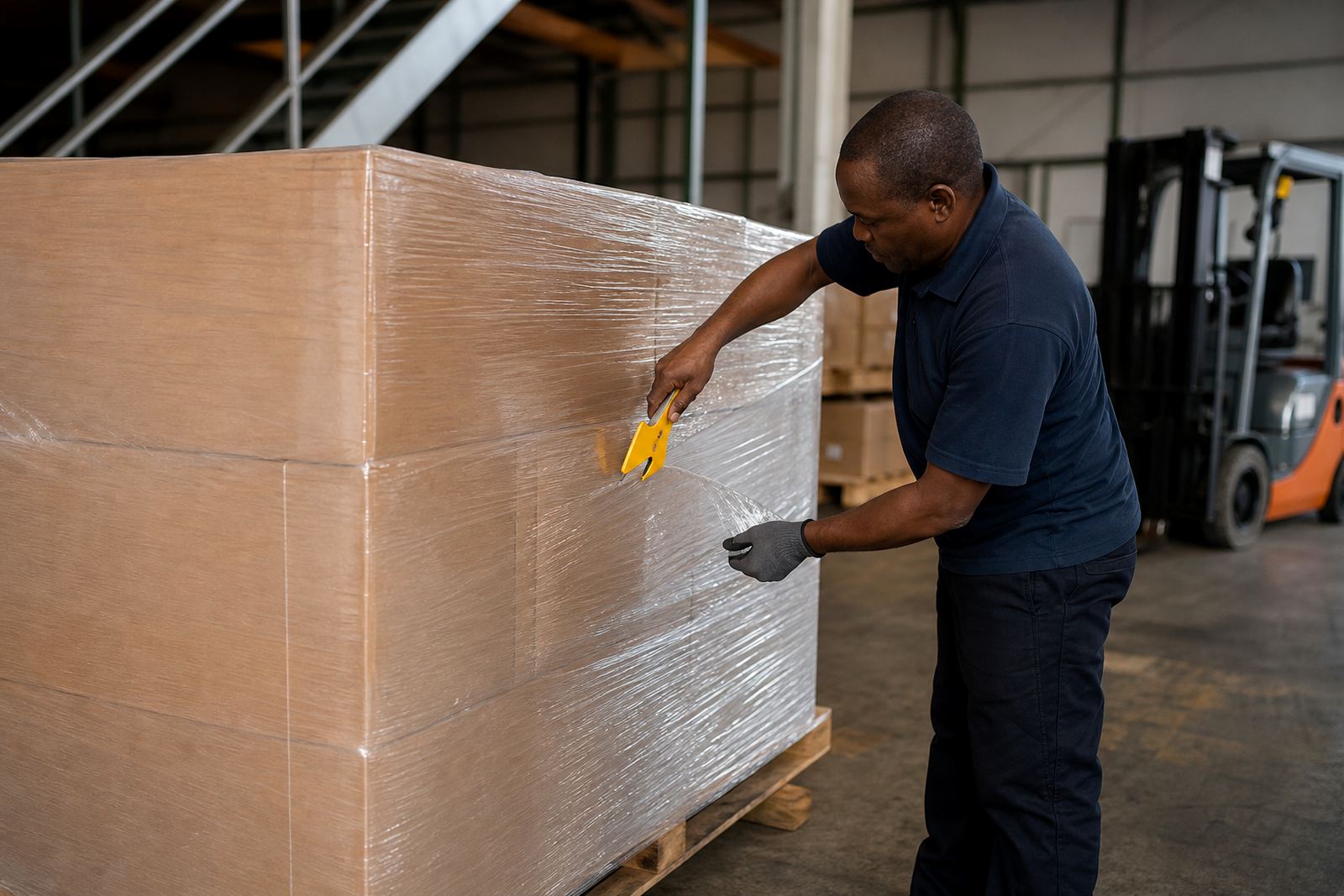
Why pallet wrap cutting causes avoidable injuries
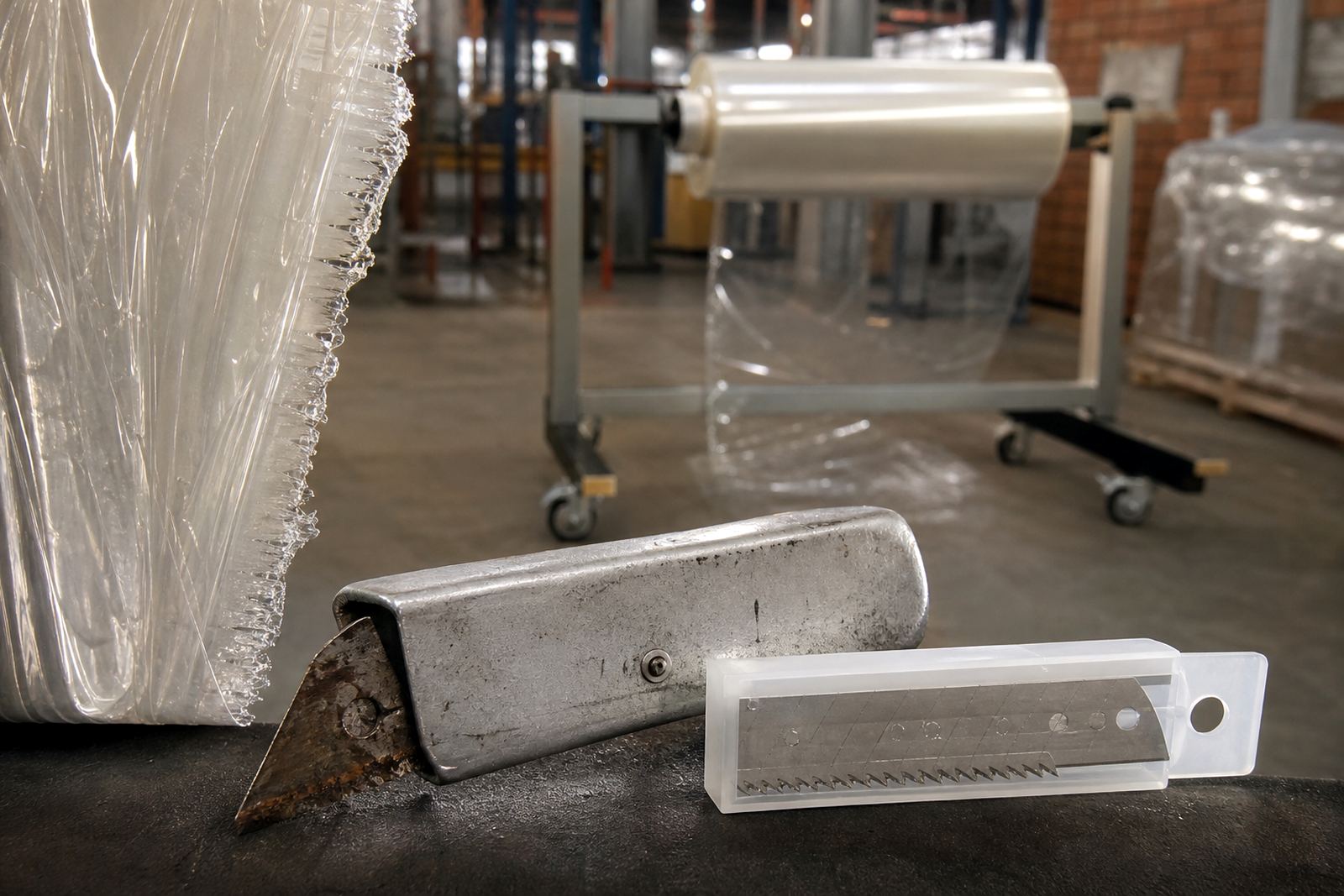
At many dispatch points, operators still use blunt knives, broken utility blades or whatever is nearest when a pallet needs opening. That is where trouble starts. A hand that slips on tight stretch film can land on a blade, on a case corner, or on a stacked pallet edge. Even when no one is hurt, the film can be cut too deep and product gets nicked, crushed or loosened before it leaves the yard.
There is also the pace of the shift to consider. When trucks are waiting and the line is full, people rush. In that pressure, a safe method has to be simple enough to use every time. If a cutter is awkward, slow or hard to grip with gloves on, staff will avoid it and go back to unsafe habits.
Across Germiston, Boksburg and Midrand, we often see the same pattern: the job is done many times a day, but the risk is treated like a once-off issue. Safer cutting is not only about the blade. It is about the whole point of use, from roll change to disposal of used blades and wrap scraps.
What a safer cutting setup should do on the line
A good pallet wrap cutter should guide the hand away from the blade, hold the film steady and reduce the need for twisting or pulling. On a packing line, especially where pallets move fast, the operator needs a tool that works with one clean motion and does not snag on shrink film or stretch film layers.
The best setups also support consistency. That means less guesswork when cutting around uneven loads, mixed cartons or pallets with sharp edges. In wet areas, coastal humidity in Durban or Cape Town can also make film cling differently, so the cutter needs to perform without extra force. If the tool slips, the cut becomes uneven and the risk rises.
- Choose cutters that keep fingers away from the cutting path.
- Match the dispenser to the film width and roll size used on site.
- Make sure the blade can be replaced without exposing hands unnecessarily.
- Use equipment that still works cleanly when gloves are worn.
- Check that the handle and moving parts are easy to clean and inspect.
A practical tool saves time because it removes hesitation. That matters on busy dispatch shifts where operators are handling multiple bays and the packng area cannot afford delays.
Safer habits for dispatch teams in real conditions
Most incidents happen when people improvise. A safe system needs clear steps that every operator follows, whether the pallet is leaving a warehouse in Pretoria or being loaded at a distribution site in Polokwane. The same rule applies whether the wrap is tight, loose or has been reworked after load correction.
Training should cover where to place the cutter, how to open the wrap without cutting into the load, and how to finish the job without leaving loose strips near walkways. It should also cover what to do when a blade dulls, when a dispenser jams, or when a pallet is damaged and needs to be rewrapped before release.
- Stand to the side of the load, not directly in front of the cut.
- Keep the non-cutting hand clear of the film path.
- Replace worn blades before they start tearing the wrap.
- Remove scrap wrap immediately so it does not end up under forklift wheels.
- Report damaged dispensers and loose fittings before the next shift starts.
These are small habits, but they reduce cuts, slips and delays. They also help when load-shedding interrupts a shift and the team returns to the line after a stop, because people can reset and continue with the same method instead of starting in a rush.
A Germiston example from a busy dispatch bay
In Germiston, one dispatch bay handling mixed cartons and palletised stock was spending too much time reworking wrap that had been cut badly. Staff were using general-purpose blades and the same unit kept moving from bay to bay. The result was uneven cuts, a few near misses, and extra time on every truck load.
After a site assessment, the team changed the process. The wrap cutting point was set at a fixed station, the dispenser was matched to the film being used, and operators received short refresher training on safe cutting and blade replacement. A simple checklist was added for the start of each shift, including a quick look at blade condition and handle security.
The change was not dramatic, but it was noticeable. Fewer damaged pallets went back into the yard, the team spent less time correcting wrap, and the bay ran cleaner through the day. That is often how safer methods work in practice. They do not slow the line, they remove the waste that was hiding in plain sight.
Why servicing and blade control matter over time
Even a well chosen cutter will become a problem if it is not maintained. Springs wear, guides loosen, blades dull and dispensers start to rattle. On a line that runs every day, those small faults lead to bigger handling risks. A blade that should glide ends up tearing film, which makes operators pull harder and increases the chance of a slip.
Preventive servicing helps keep the equipment safe and predictable. It also supports stock control, because the site can plan blade replacement, spares supply and upgrades instead of waiting for a breakdown callout. For facilities in humid or dusty environments, regular checks are especially useful because grime and moisture can affect movement and grip.
Useful servicing points include:
- Blade condition and how cleanly it cuts through wrap.
- Handle wear, cracked guards and loose fittings.
- Roll seating and feed alignment on the dispenser.
- Signs of corrosion, dust build-up or sticky movement.
- Operator feedback on comfort and control during a full shift.
When the equipment stays in proper condition, the team is less likely to improvise, and that is a big part of safe pallet wrap cutting.
Choosing the right support for your site
Every site works differently. A high-volume warehouse in Johannesburg may need quicker roll changes and more frequent blade replacement, while a colder or more exposed site in Cape Town may need equipment that stays easy to use in damp conditions. In Durban, coastal air can affect metal parts faster than teams expect, so regular checks become even more important.
Support should cover the full process, not only the cutter itself. That includes onsite installation, line setup, safety checks, operator training, equipment upgrades and breakdown callouts when a unit stops working. It should also include practical help with roll change support and dispenser repairs, because unsafe cutting often starts when the kit is not set up properly.
For businesses that move palletised goods daily, safer cutting is not a side issue. It protects staff, keeps loads tidy and helps the dispatch area run with fewer interruptions. If your team is still using general blades or makeshift tools, it is worth reviewing the method before the next injury or damaged load.