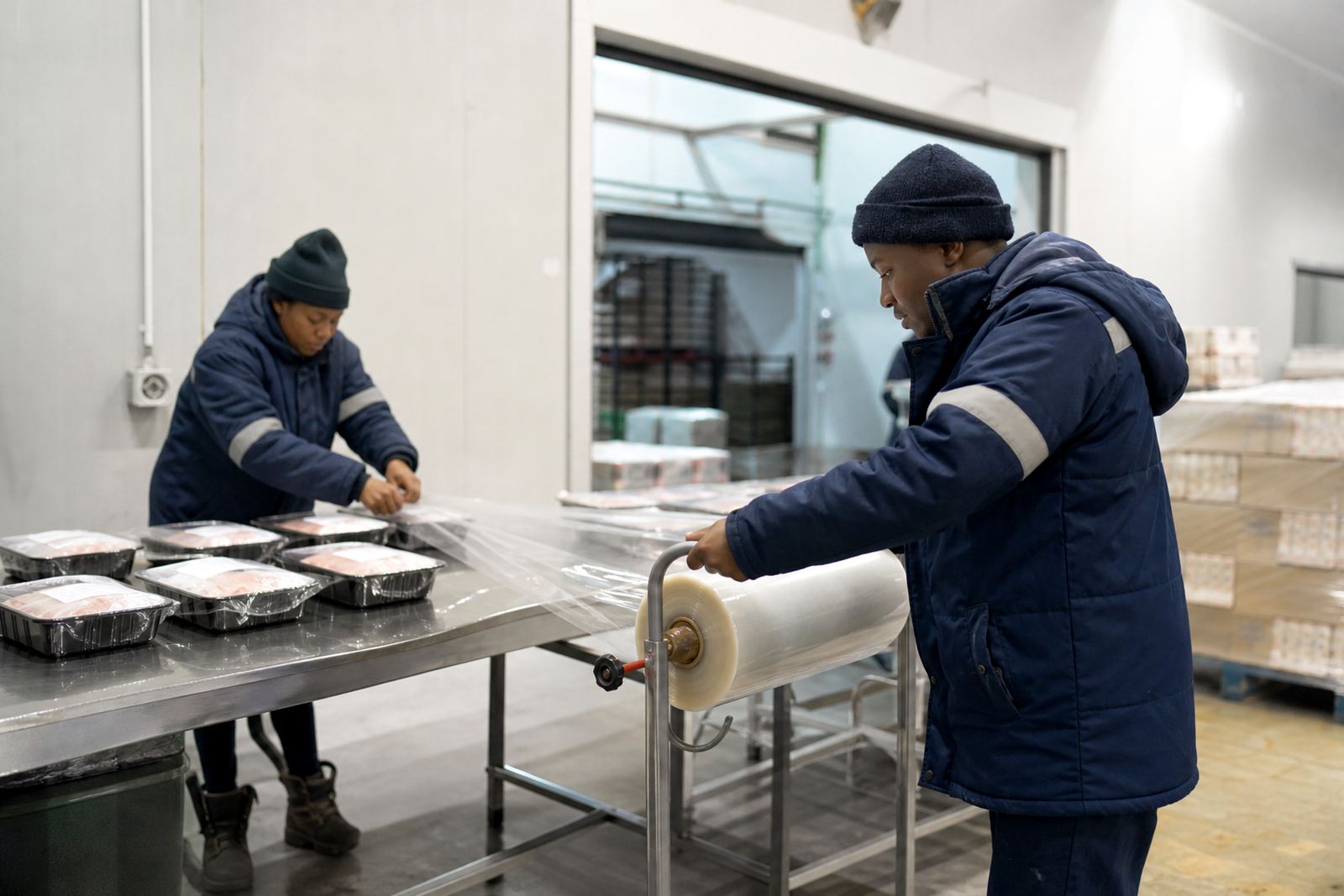
Why chilled packing areas need different film handling
In cold chain packing, the film itself is only part of the job. Operators often work with gloves, damp cartons, colder floors and a faster turnover of stock, so the cutter or dispenser must stay easy to grip and simple to control. If the tool slips or the blade is awkward to reach, the line slows down and wrap quality starts to vary.
We see this in refrigerated packing rooms, frozen foods dispatch, produce packhouses and meat processing sites around Germiston, Johannesburg and Pretoria. The same issue comes up in Durban and Cape Town too, where moisture, washdown routines and early-morning starts can make handling less predictable.
Typical equipment set for cold room and dispatch lines
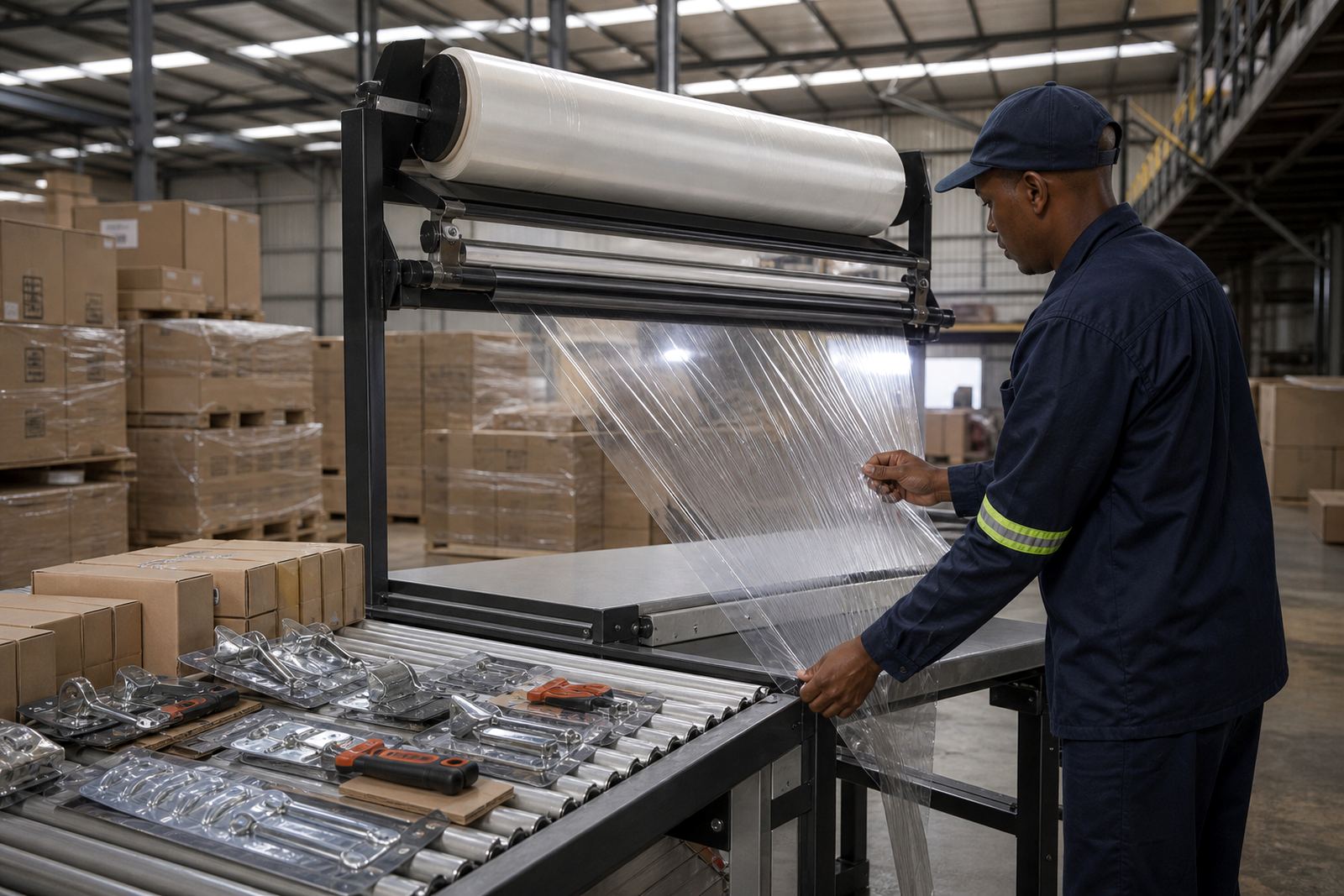
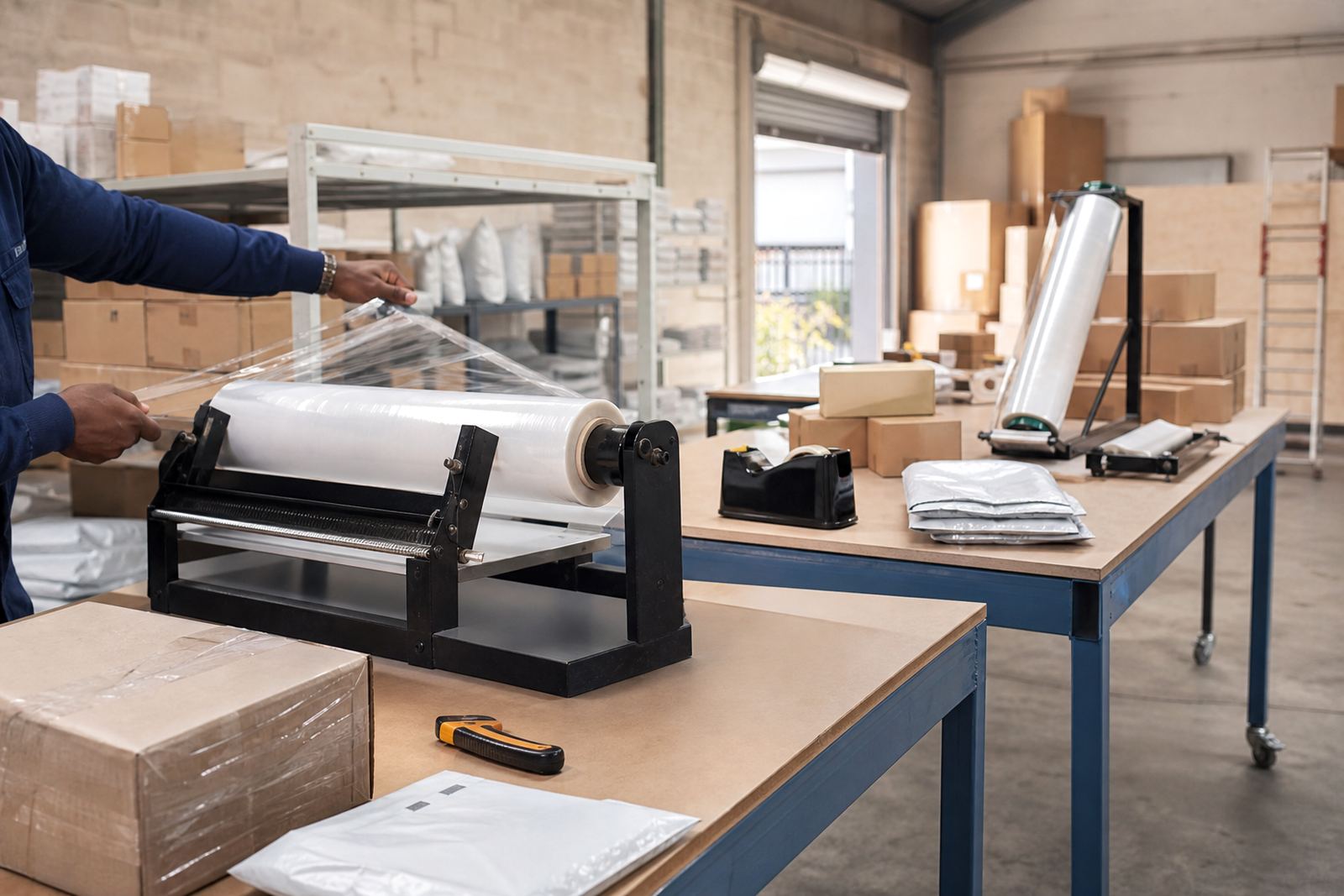
For chilled packing lines, the usual setup is a mix of hand-held and fixed-position tools matched to the product and pallet size. The right choice depends on whether the team is wrapping cartons, trays, slip sheets or pallet loads that must be moved quickly into cold storage. We help clients choose equipment that suits the line speed and the gloves people wear every day.
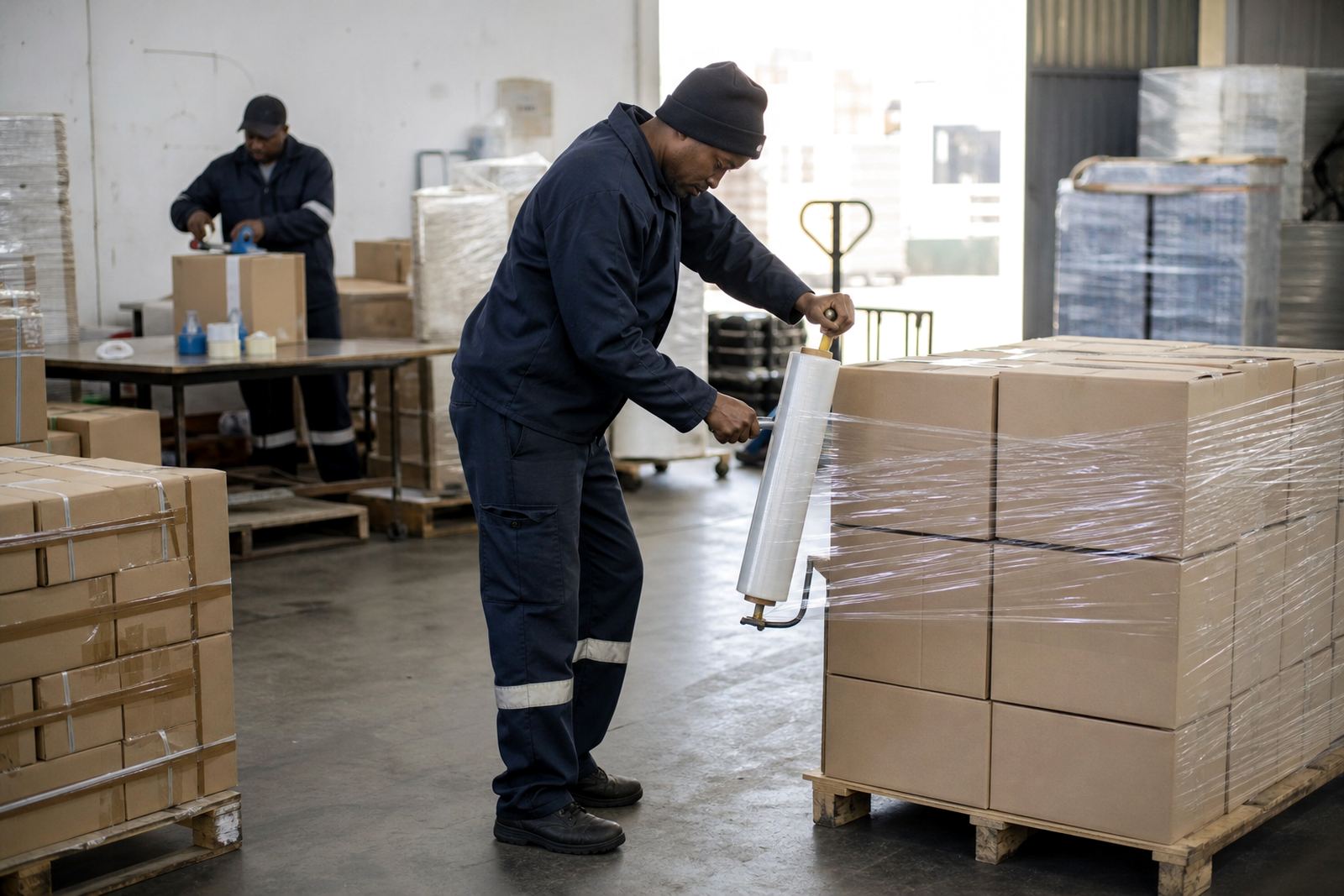
- Stretch film cutters for pallet wrapping stations where operators need clean, quick film cuts
- Shrink film cutters for bundled products, sleeves and retail-ready packs
- Dispensers with steady handling for repetitive work at packing benches
- Spare blades and replacement parts to reduce downtime during peak dispatch
- Training for operators so the tool is used correctly from day one
On larger sites, it is worth keeping one or two back-up units on hand. That helps during shift changeovers, cleaning cycles and when a cutter needs a blade swap or a small repair. In colder rooms, a simple design often works better than a complicated one, because staff need fast access and less fumbling.
Layout planning that keeps cold chain work moving
A good cold chain layout starts with where the wrap is actually used. If the cutter is too far from the packing point, operators waste steps and the film rolls get damaged more often. If it sits too close to the wet zone or the pallet staging area, the tool gets knocked, contaminated or left in the wrong place. The best layout keeps the cutter within easy reach, but out of the way of forklifts and traffic.
For sites in Boksburg, Midrand and Polokwane, we often look at the route from packing bench to cold store door, then to loading bay. That flow matters because a slight bottleneck at the wrap station can back up the whole dispatch run. We also check how the line behaves during load shedding, when backup power, reduced lighting or altered shift patterns can change how people move around the area.
- Keep film rolls dry and off the floor to avoid edge damage and contamination
- Mount or store cutters where operators can reach them without crossing the line
- Allow enough space for gloves, cartons and pallet jacks at each wrap point
- Plan for easy cleaning so residue and moisture do not build up around the tool
- Mark the cutter location clearly for shift teams and temporary staff
Common mistakes we see on cold chain sites
One common mistake is choosing a cutter that feels fine in a showroom but becomes awkward once the operator is wearing insulated gloves. Another is using a general-purpose dispenser in a room where moisture and low temperatures affect grip. The result is slower packing, more wasted film and more blade changes than expected.
We also see teams underestimating the impact of operator training. Even a good tool can underperform if the team is unsure about blade position, film tension or how to change a roll safely. On busy sites, that often shows up as uneven wraps, torn film and a few unnecessary returns to the packing bench.
Another issue is poor spare planning. If the site keeps no replacement blades, a single damaged cutter can hold up a whole shift. In cold chain work, small delays can become expensive because product movement, truck loading and cold room space all depend on timing.
Budget ranges for cutters and dispensers in Rand
Budget depends on whether you need a single hand tool, a small set for one packing room, or a wider rollout across several lines. For many South African cold chain sites, a practical starting point is a modest unit for a single station, then add spare parts and training as the line grows. It is often better to buy fewer pieces of equipment that hold up well than to replace low-cost tools too often.
As a guide, budget ranges usually look like this:
- Basic cutter or dispenser for light daily use: R450 to R1 200
- Heavier-duty unit for frequent line work: R1 250 to R3 500
- Replacement blades and small spares pack: R180 to R900
- Site assessment, setup support and training: R950 to R3 800 depending on site size and travel
For multi-site operations across Johannesburg, Pretoria, Durban, Cape Town and Polokwane, it helps to standardise where possible. That makes spare holding easier and keeps operator training simpler across branches.
Support for sites that need uptime and safer handling
Film Cutters works from Germiston, Ekurhuleni and supports cold chain packing lines nationwide. Our team can assist with onsite installation, line setup, preventive servicing, blade replacement, dispenser repairs and breakdown callouts. We also supply spares, carry out safety checks and support roll change handling where the line needs a steady rhythm during peak dispatch.
Clients often ask for practical checks before they commit to a change. We can assess the site, look at the packing flow and suggest a setup that suits the room temperature, glove use and line speed. If the site runs on tight windows or has early dispatch work, we can also advise on maintenance intervals so the equipment stays ready when the team starts up in the morning.
For cold chain packing, the goal is simple: keep the wrap process fast, neat and safe, without adding extra steps for the operator. That is where the right cutter or dispenser makes the difference.