
Where hardware pack lines need better control
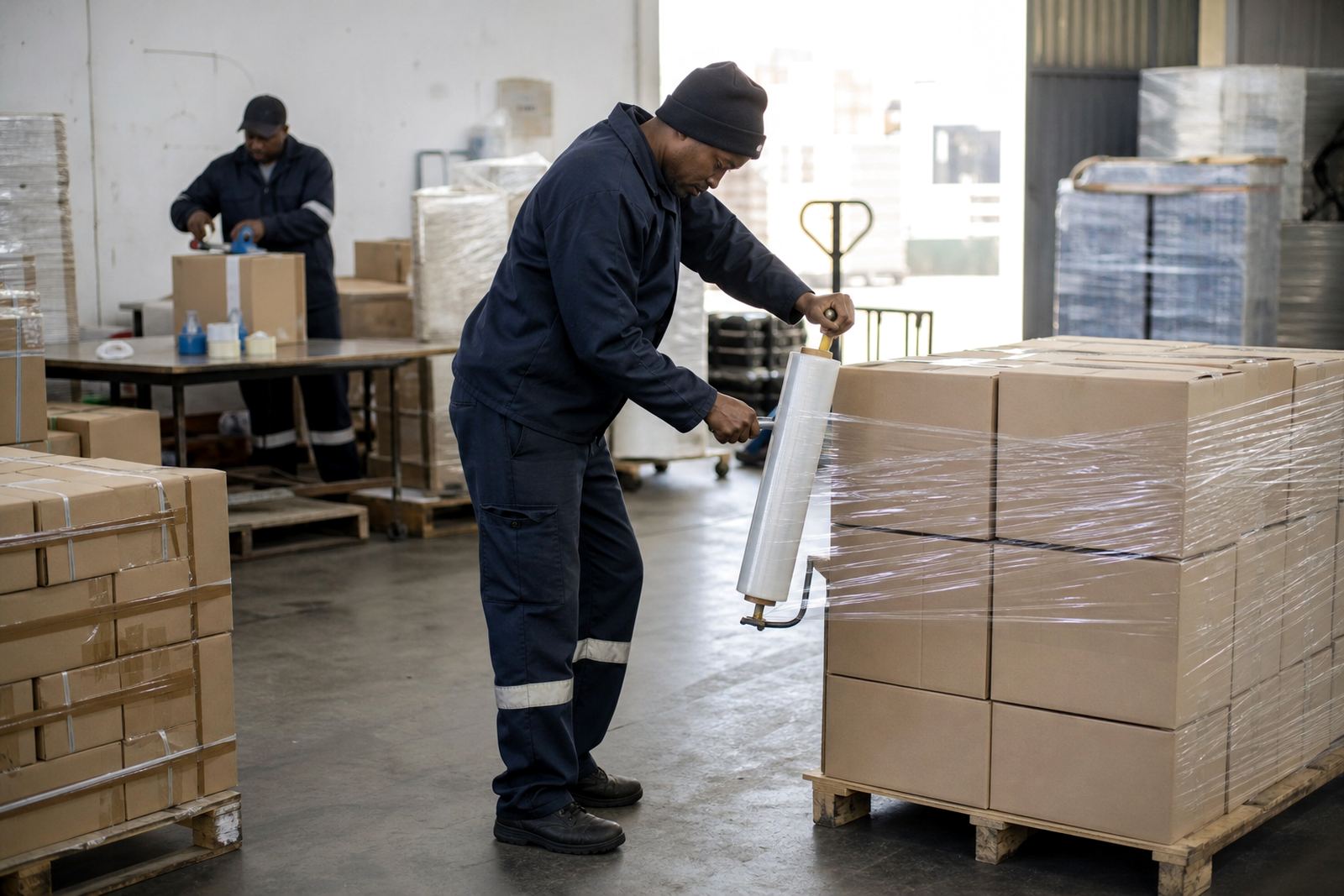
In hardware distribution, packing usually means more than one carton size, mixed SKUs and pallets that change shape from hour to hour. You may be wrapping fasteners, paint accessories, hand tools, fittings, brackets or boxed trade stock for branch replenishment. When the film wanders, tears on sharp corners or gets pulled too tight, the line slows down and the packer works harder than they should.
Our cutters and dispensers are suited to this kind of work because they give operators better control at the point of wrap. That matters on loading bays in Germiston, Boksburg and Midrand where orders need to move quickly, and it matters just as much in Durban where humidity can make handling slippier and film behaviour a bit less predictable.
Typical equipment set for hardware wrapping
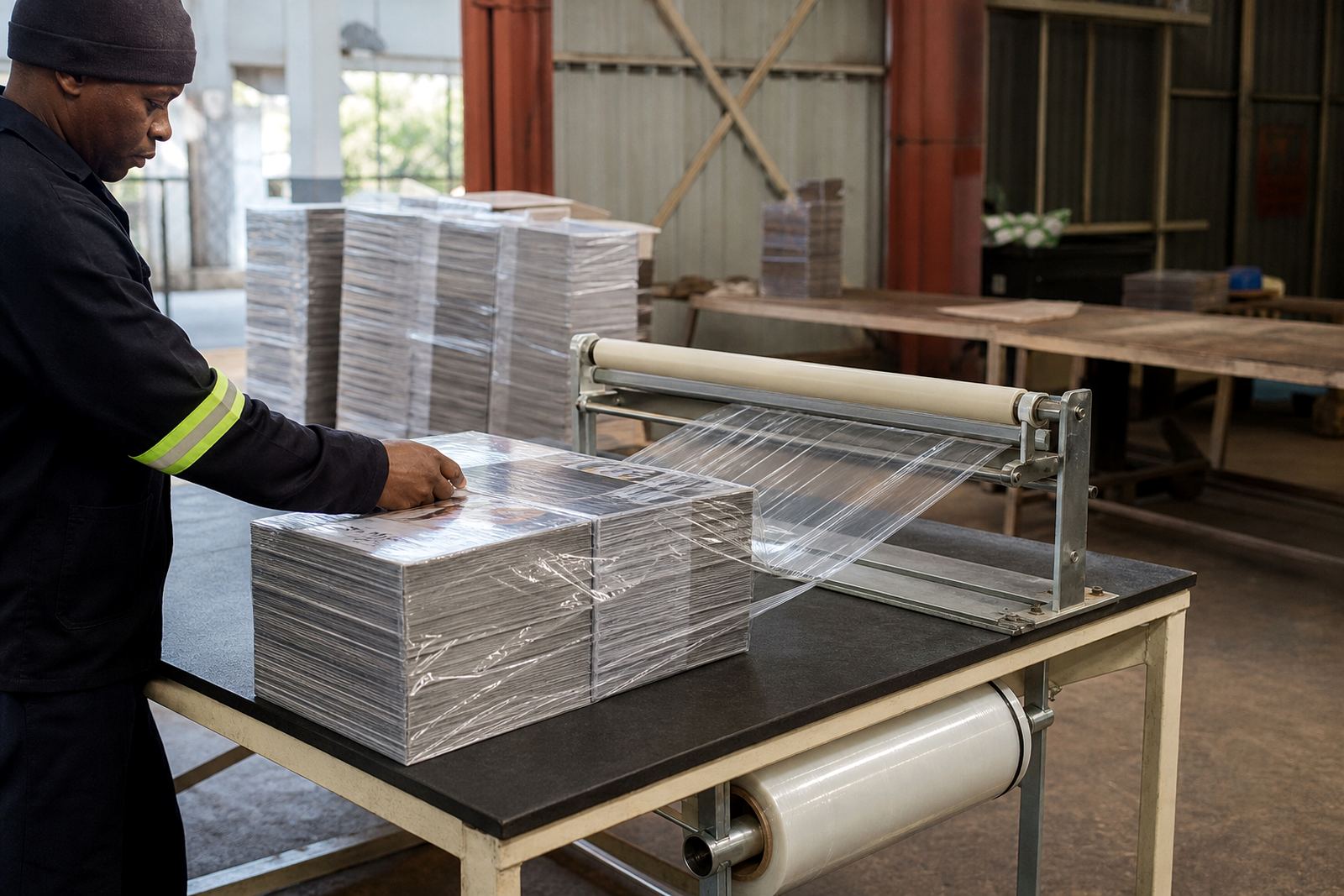
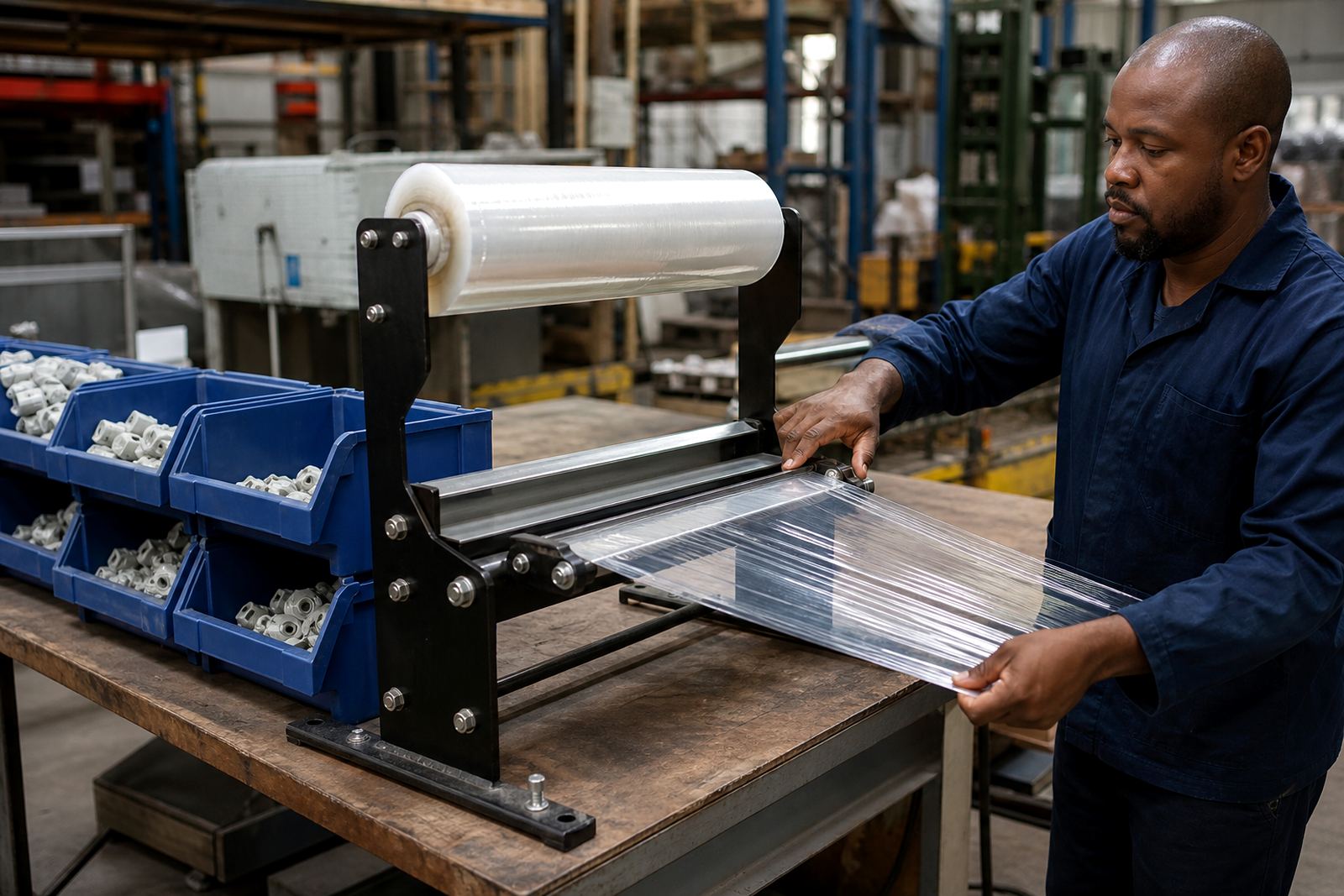
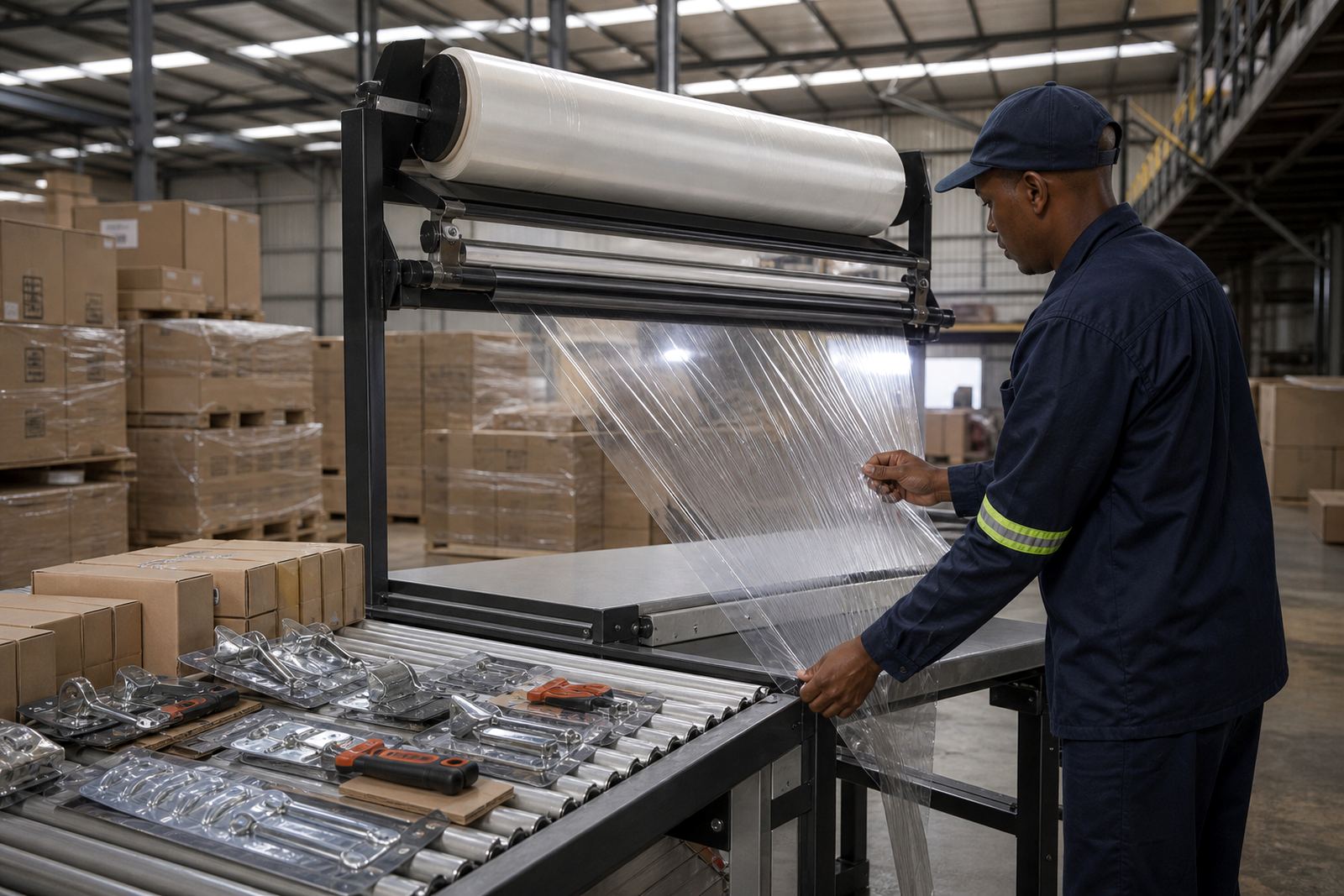
A hardware packing line does not need every extra feature. It needs the right fit for the job. In many cases, a cutter for shrink film, a dispenser for stretch film, or a combination of both is enough to improve the line without changing the whole packing area. The aim is to reduce snagging and keep rolls stable through the shift.
For heavier boxed goods, the handling point is often where the trouble starts. A roll that slips, a blade that is dull, or a dispenser that sits awkwardly can waste film and slow the team down. We supply equipment that supports steady feed, simple loading and reliable blade contact, even when the line is busy and the pack area is under pressure.
- Handheld cutters for short runs and bay packing
- Bench dispensers for repeat pack stations
- Film guides and holders for cleaner wrap starts
- Replacement blades and spare parts for ongoing use
Layout advice for mixed box sizes and pallet builds
The best layout is the one that matches your cartons, your labour and your floor space. On a hardware line, the film point should be close to where the pallet is built or where the carton is closed, so the operator is not walking back and forth. If the station is too far from the load, the line gets messy and the wrap tends to go uneven.
In warehouses around Pretoria, Polokwane and Cape Town, we often find that the wrap station is placed where it suits the building rather than the flow. That can create unnecessary steps, turning room problems and cable crossings. A proper site assessment checks aisle width, roll storage, blade access, pallet jack movement and whether the packer has enough space to work safely around the load.
For sites with load-shedding or backup power routines, the packing zone should still function without relying on powered aids. Simple manual film handling can keep the line going when other equipment is offline, which helps avoid late dispatches and half-finished loads.
Common mistakes we see on hardware lines
One of the biggest mistakes is using the same wrapping method for every carton. Hardware stock varies too much for that. A light box of fittings does not need the same film tension as a pallet of dense boxed tools, and forcing one setting across everything usually leads to waste. Another common issue is letting blades go blunt. Once that happens, operators pull harder and the film starts to shred or bunch up.
We also see sites where the dispenser is repaired after it fails completely instead of being checked early. Small faults like loose fittings, worn guides or a cracked holder build up over time. A short preventive service can stop a breakdown callout later on, which is cheaper and far less disruptive than losing a shift. On busy sites in Johannesburg or Durban, that difference adds up quickly.
- Over-tight wrapping that crushes cartons
- Loose film tension that leaves loads unstable
- Using worn blades for too long
- Poorly positioned stations that slow the whole bay
Budget ranges for hardware packing line equipment
Budget depends on how many stations you have, whether you need shrink or stretch film handling, and how much support the line needs after installation. For a basic manual station, costs can start in the low thousands of Rand for a simple cutter or dispenser. A better specified setup for a busy packing area, with multiple units and spare blades, will move higher depending on the build and the service plan.
For sites wanting installation, setup and operator training, the full project cost is usually shaped by the number of work points, any existing wear in the line, and whether repairs or upgrades are needed at the same time. Some customers only need a targeted improvement to one bay, while others want a full line assessment and a staged rollout across Germiston, Boksburg, Midrand and beyond.
We usually recommend budgeting for the equipment plus a small service allowance for blade replacement, preventive servicing and spare supply. That keeps the line moving and avoids the false economy of buying the cheapest option then replacing it again too soon.
Support across Germiston and the main distribution routes
Film Cutters is based in Germiston, Ekurhuleni and supports packing operations across South Africa. That includes hardware depots, warehouse pack lines and mixed-order dispatch areas in Johannesburg, Pretoria, Durban, Cape Town and Polokwane. The team handles site assessments, onsite installation, line setup, preventive servicing, blade replacement, dispenser repairs, spares supply, operator training, safety checks, roll change support, breakdown callouts and equipment upgrades.
When a packing line is set up properly, the operators feel the difference straight away. The wrap starts cleaner, the rolls last longer and the bay runs with less stop-start movement. For hardware stock that is heavy, boxed and constantly changing, that kind of control is worth planning properly from the start.
Enquiries come through the contact page form, and we handle each request based on the site, the load and the packing volume. Sometimes the best answer is a single dispenser. Sometimes it is a full review of the wrap point, the spares and the way the team works on shift. Either way, the goal is the same: a packing line that can keep up.