What export packing teams need on a busy line
Export packing usually starts with goods that must leave the site in good condition, then travel far enough to pick up dust, handling marks, vibration and weather changes along the way. In Germiston and across Gauteng, many packing rooms work with mixed pallet sizes, different carton weights and tight dispatch windows. That means the film station must keep up with the line without slowing loaders, packers or forklift traffic.
For this use case, the main goal is simple: apply film evenly, avoid waste and keep packs secure until they reach Durban, Cape Town, Polokwane or inland distribution points. A cutter or dispenser that is difficult to hold, catches film or leaves rough edges can create delays and scrap. It also makes the job harder on operators, especially during long shifts and in load-shedding conditions where teams want equipment that is quick to use and easy to reset.
Film Cutters supplies solutions for shrink film and stretch film handling on packing lines. The equipment is selected to help operators cut cleanly, control film tension and work with less strain during repetitive wrapping tasks.
Typical equipment set for export wrapping stations
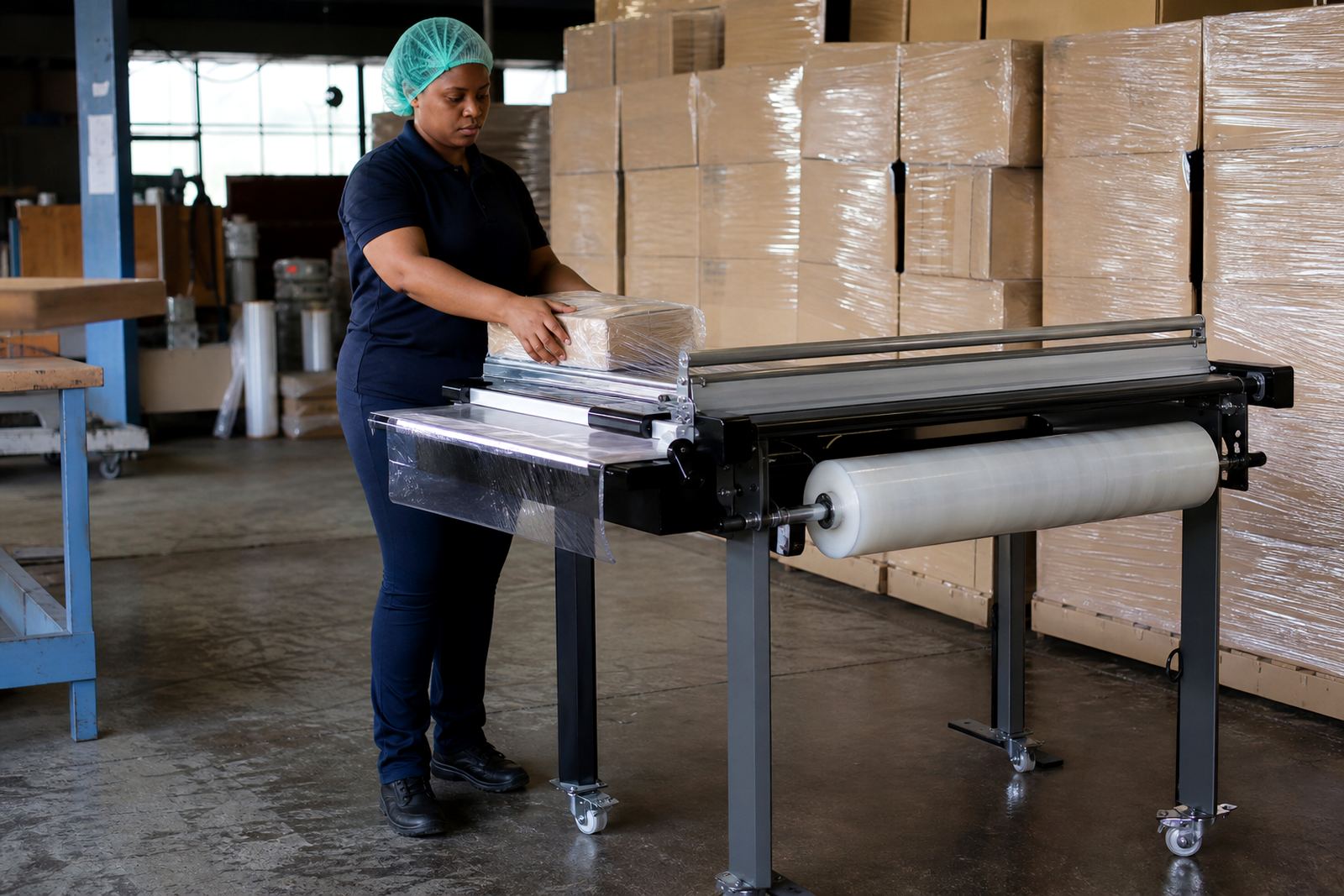
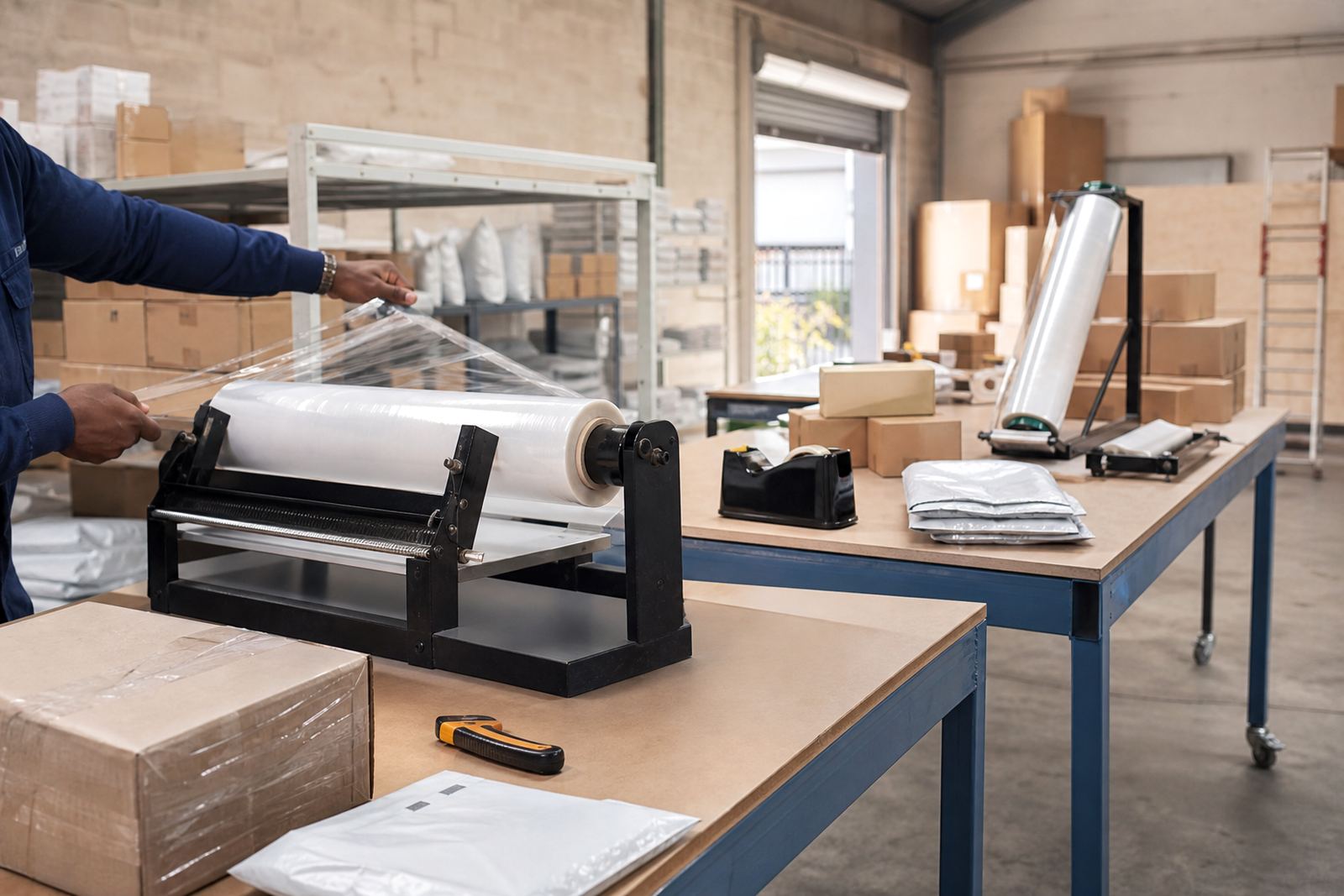
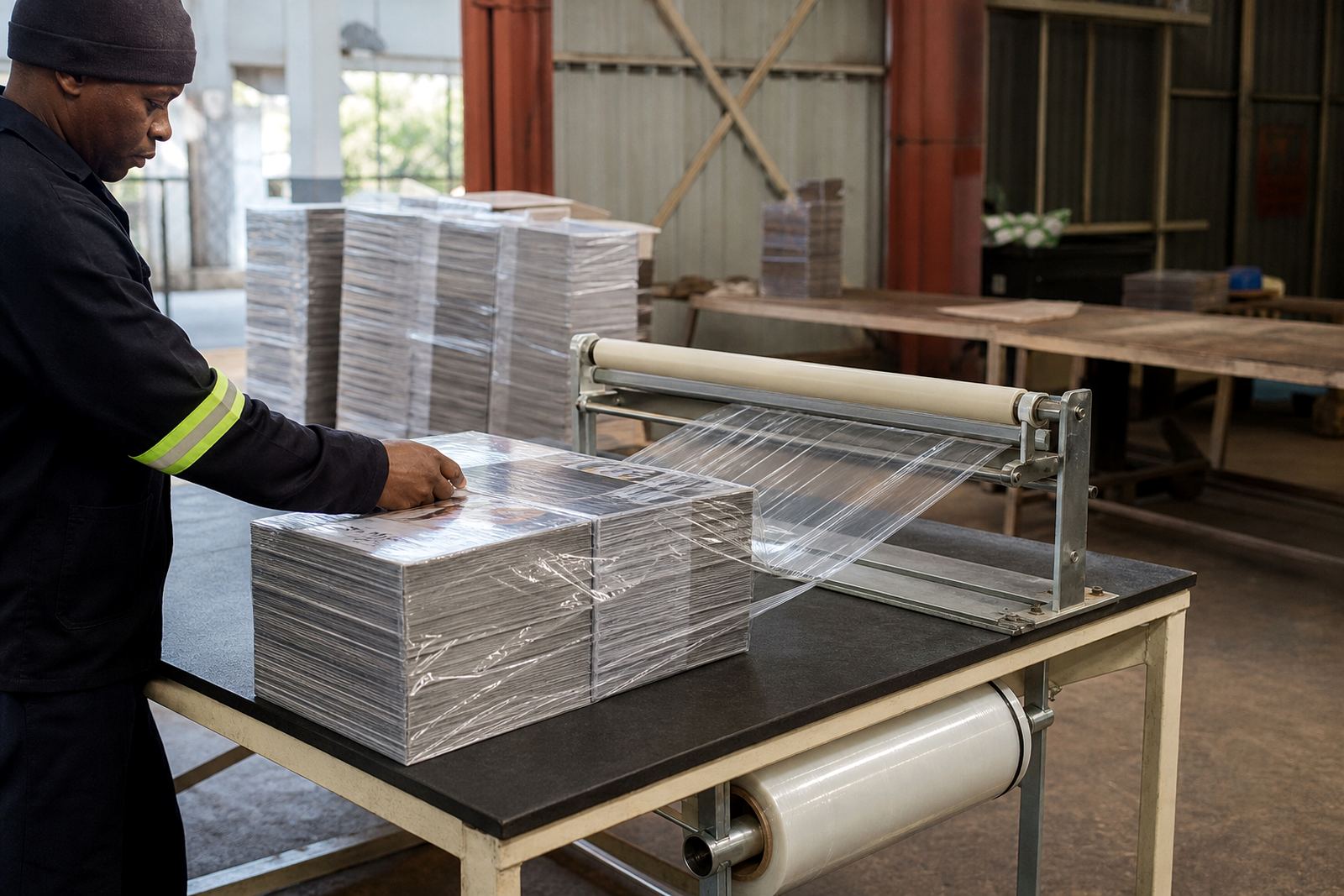
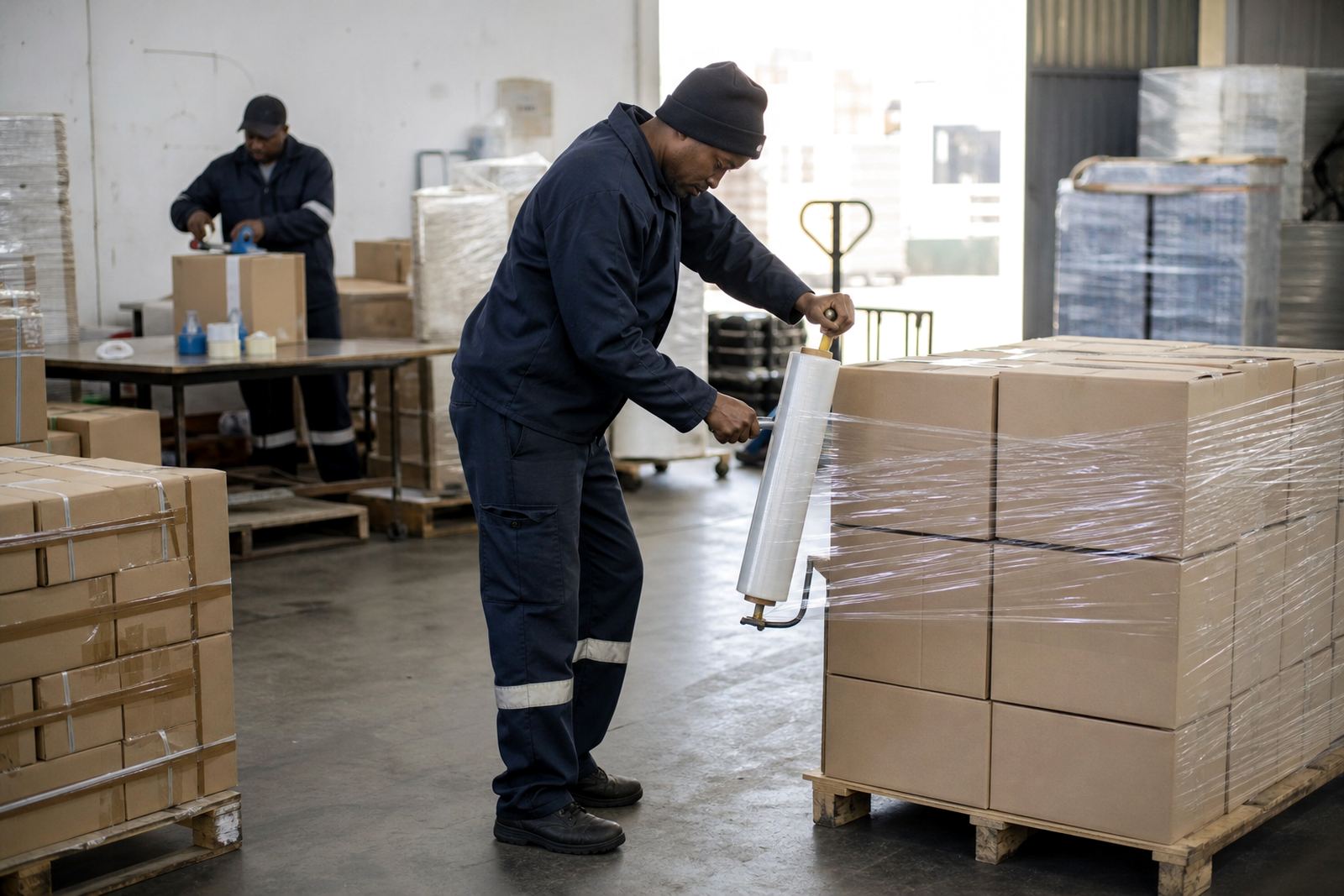
The right set-up depends on whether the line handles cartons, bagged goods, drums or mixed pallets. Many export packing areas use a combination of stretch film dispensers for pallet stability and shrink film cutters for controlled trimming at the sealing point. In some plants, one station may serve a single product flow while another is shared between lines, so the holder and cutter must be easy to move and quick to set up.
- Handheld or mounted film cutters for shrink film trimming
- Stretch film dispensers for pallet wrap application
- Blade replacement and spare parts for regular maintenance
- Operator training for safe handling and consistent wrap tension
- Safety checks for guards, blades and working clearances
- Roll change support for higher-throughput shifts
In busy export sites, small design details matter. A dispenser that sits well in the hand, or mounts neatly beside a conveyor, reduces fatigue and helps the pack line move in a steady rhythm. If the film station is awkwardly positioned, operators start compensating with extra pull, poor cuts or unnecessary movement and that is where waste creeps in.
Planning the layout around conveyors, pallets and forklifts
Good layout planning saves time every single shift. The film point should sit close enough to the pack position for easy reach, but clear of forklift lanes, pallet staging and pedestrian walkways. In larger Germiston and Boksburg facilities, it is common to keep the wrapping point near dispatch so pallets do not need to be moved twice. In smaller Midrand or Pretoria sites, the best answer may be a compact wrap bay next to the final check and load area.
When planning a line, look at where operators stand, where rolls are stored and how often the film needs replacing. If the station is too far from the storage rack, staff waste steps. If it is too close to a busy corner, the risk of knocks and damaged blades rises. Coastal routes also matter. For Cape Town and Durban, humidity can affect cartons and packaging discipline, so teams often prefer a layout that keeps the wrap stage efficient and the finished pallet closed up quickly.
Our team can assist with site assessments, onsite installation and line setup so the equipment suits the actual flow on site rather than a theoretical drawing. That practical fit often makes the biggest difference to output.
Common mistakes that slow export packing lines
Many packing problems come from small setup errors rather than major faults. A film cutter might be technically fine, but if the blade is blunt or the operator is using the wrong roll size, output drops and the film tears unevenly. Another common issue is placing the dispenser too high or too low, which causes shoulder strain and poor control. Over time, that creates safety concerns and more callouts.
- Using the wrong film width for the pallet size
- Leaving blades in service too long between replacements
- Skipping preventive servicing until a breakdown happens
- Setting the dispenser height without checking operator posture
- Ignoring damaged handles, guides or mounting points
- Not training new staff on the correct cut and wrap sequence
Export sites also sometimes expect one tool to solve every packaging task. In practice, shrink film and stretch film need different handling. Matching the dispenser to the job gives better control and less waste, especially on lines that run long hours and cant afford repeat stoppages.
Budget ranges for export packing line equipment in Rand
Budgets depend on whether you need a single replacement unit, a small set for one station or a fuller line upgrade. For a basic cutter or dispenser setup, many sites plan from about R1 500 to R4 500 per unit. Better heavy-use models, or units supplied with mounting and support parts, often fall between R4 500 and R12 000. If a site needs multiple stations, spares, training and installation, the project can move into the R15 000 to R60 000 range, depending on line size and complexity.
Preventive servicing and blade replacement should also be built into the budget. It is usually cheaper to schedule maintenance than to deal with film waste, operator downtime and emergency breakdown callouts. For exporters working to tight dispatch schedules, a small planned spend now can prevent bigger losses later.
We work with operations in Germiston, Johannesburg, Pretoria, Durban, Cape Town, Polokwane, Boksburg and Midrand, so budget planning can be matched to local site needs and response times.
Support that keeps the line moving after installation
Once the equipment is in place, the real value comes from keeping it working day after day. That includes safety checks, spares supply, roll change support, operator training and repairs when parts wear out. Export packing lines often cannot wait for a long delay, so a clear support plan matters just as much as the initial supply.
Film Cutters, based in Germiston, supports clients across South Africa through the enquiry form on our contact page. The team includes Thabo Maseko, Naledi Khumalo, Johan van Wyk, Ayanda Dlamini, Michelle Naidoo and Pieter Smit, with practical help for installations, servicing and breakdown response. If your export line needs cleaner film handling, better control or a safer working setup, we can help assess the site and recommend the right cutter or dispenser arrangement.
For busy packing rooms, the aim is straightforward: fewer stops, better wrap quality and less waste on every pallet that leaves the site.