Why printed goods need neat film on the line
Brochures, books, catalogues and stationery packs are often judged by appearance before the customer even opens the parcel. If the film is loose, wrinkled or torn, it can make a neat product look poorly handled. In print finishing and fulfilment, that first impression matters just as much as the contents.
Printed goods are also easy to mark. Gloss covers scuff, corners dent, and stacked booklets can slip during pallet movement. A proper cutter and dispenser helps operators apply film quickly and evenly, with less waste and fewer hand cuts. That matters on busy shifts where the line is moving and the team is working around load shedding, short labour windows and tight dispatch times.
For printers, publishers, stationery packers and fulfilment centres in Johannesburg, Pretoria, Durban, Cape Town and Polokwane, the right setup keeps the packing area orderly. It also helps with repeatable film application from one operator to the next, which is important when several shifts share the same packing line.
Typical cutter and dispenser setup for printed goods
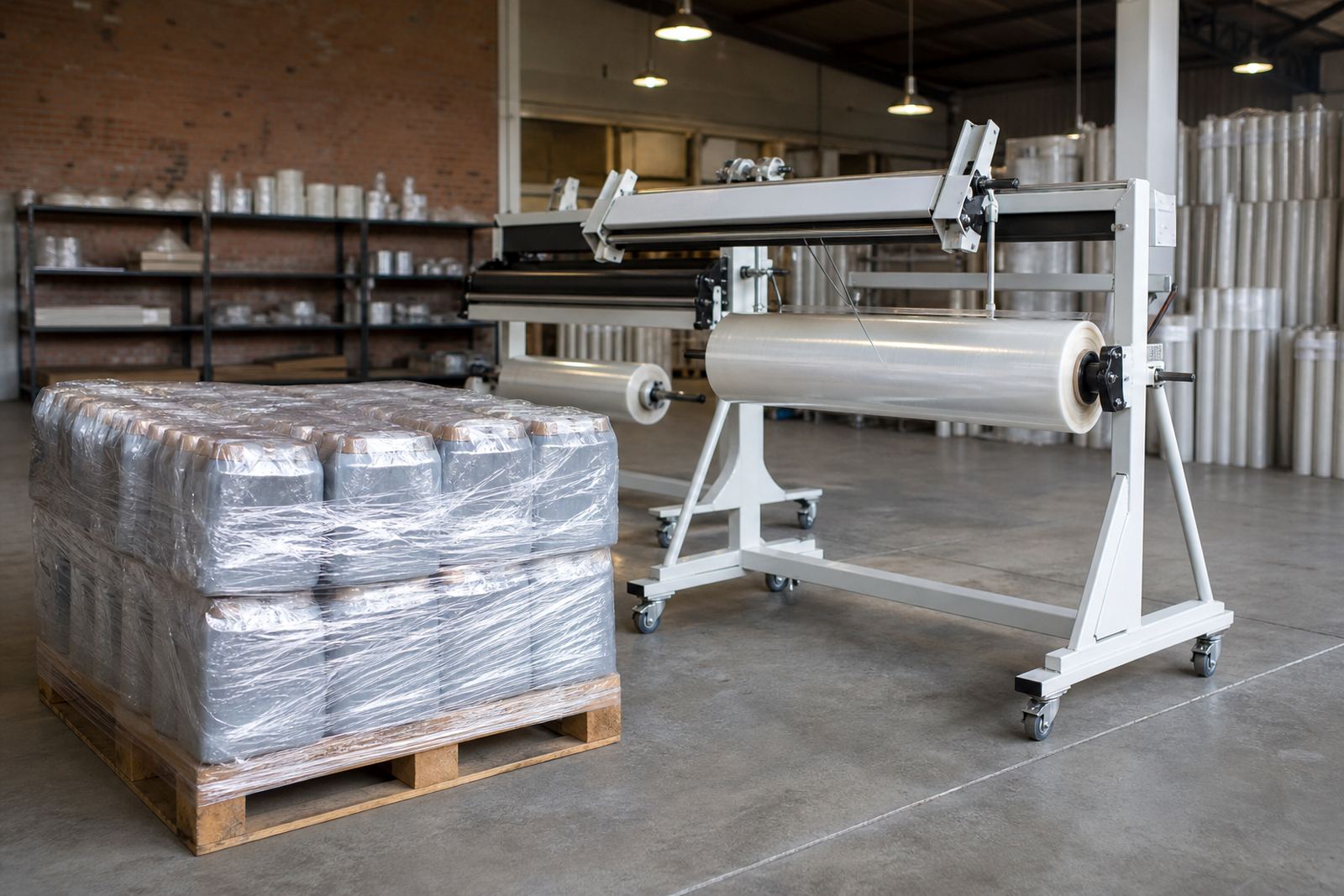
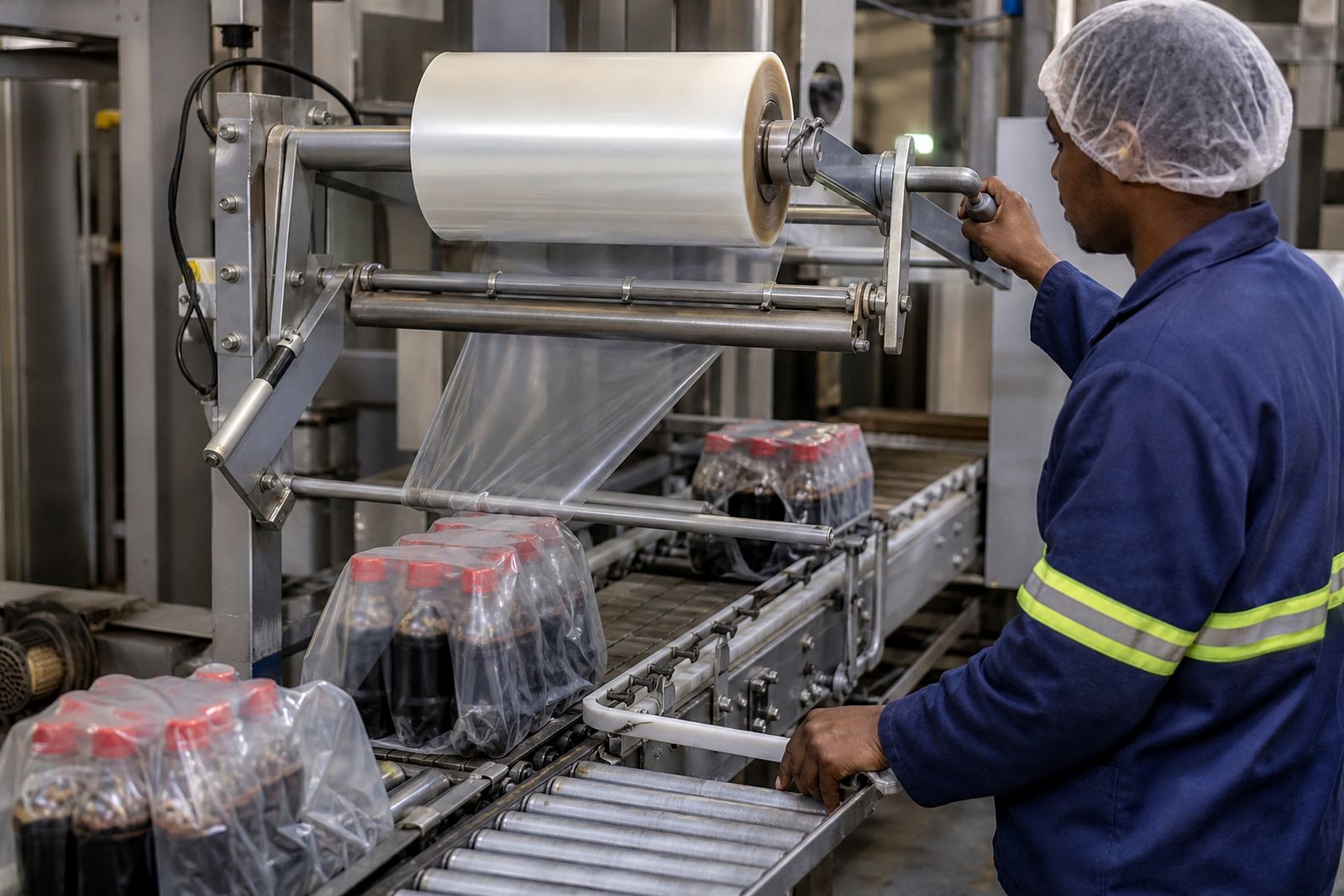
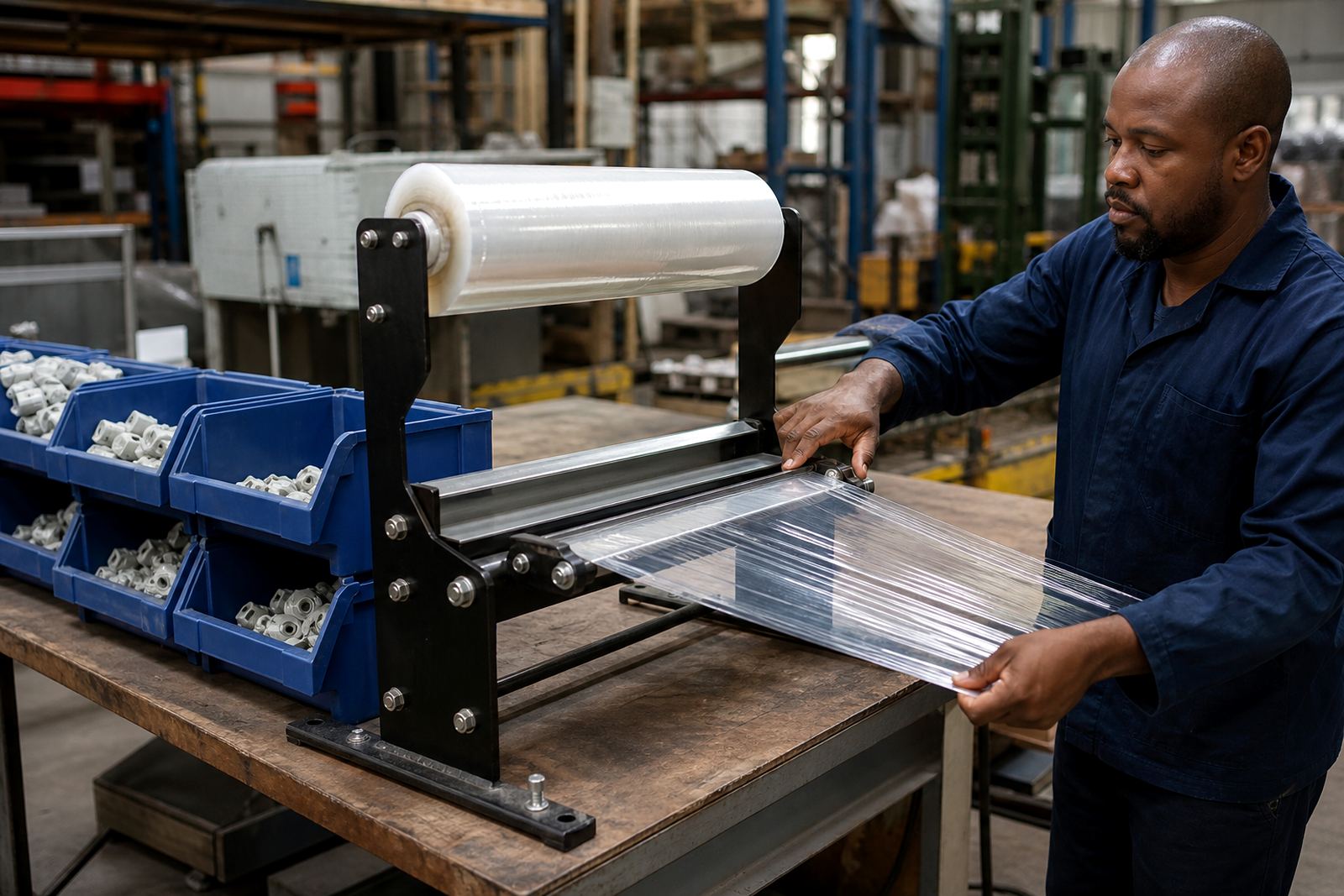
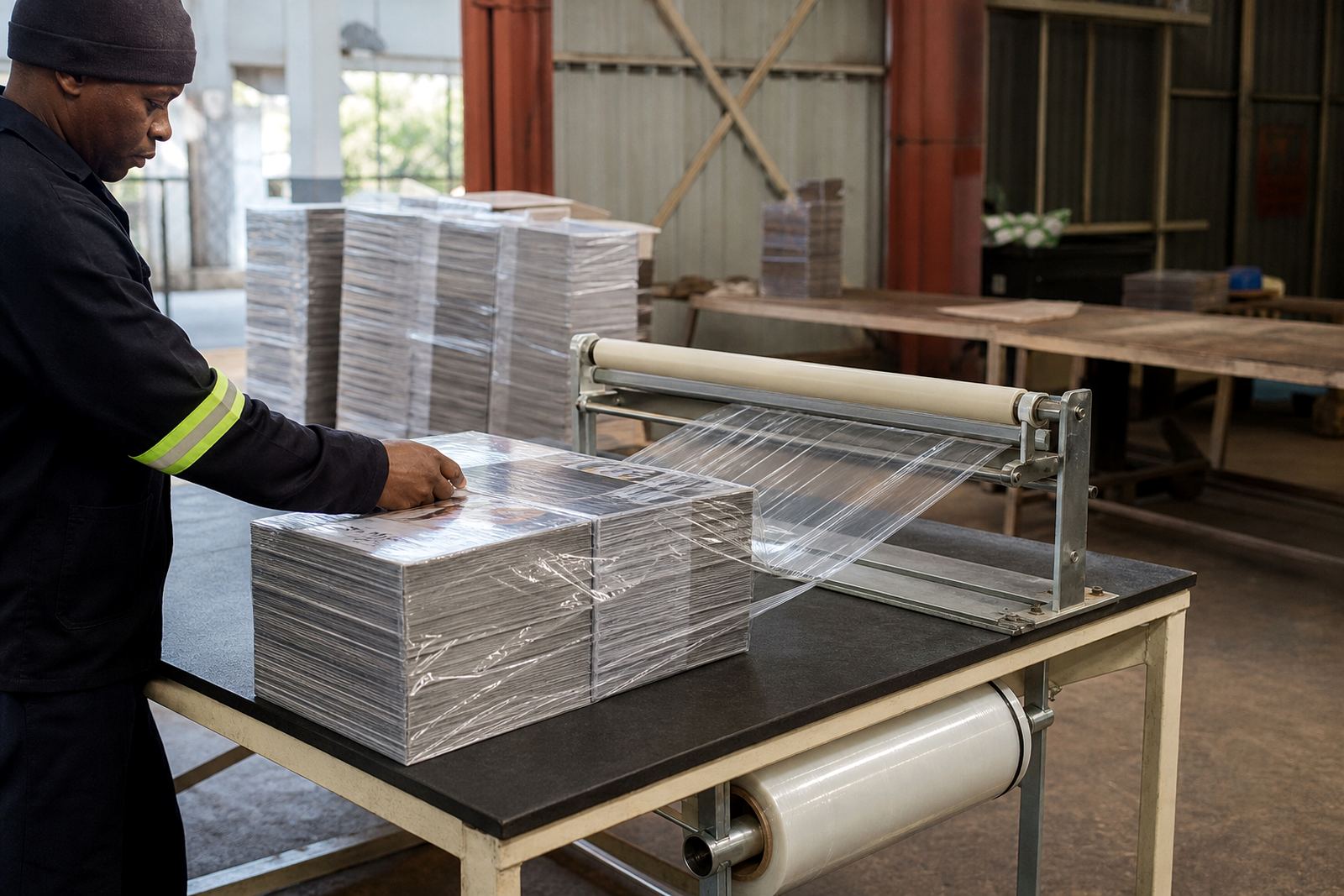
Most printed goods packing lines do well with a simple and dependable setup. The exact choice depends on pack size, film width and how often the line changes over between jobs. Film Cutters works with shrink film and stretch film cutters and dispensers suited to cartons, bundle packs and wrapped cartons moving from final check to dispatch.
A practical line for printed goods usually includes a fixed cutter position near the wrap point, a stable dispenser for controlled film feed, and a clean surface for pack handling. Where the product mix changes often, the equipment should allow quick adjustment without stopping the whole line for long. That helps when a run of A4 booklets is followed by larger coffee table books or stationery packs with odd dimensions.
- Handy for short runs and frequent job changes
- Useful where operators need one handed film control
- Helps reduce film tailing, tears and uneven wrap tension
- Supports cleaner pack faces for retail ready goods
In many Germiston and Boksburg facilities, space is limited, so equipment needs to fit into a tight packing bay without blocking movement. A good layout leaves room for cartons, strapping, labels and pallet movement too.
Planning the layout before you install
Good packing starts with the floor plan. Before any installation, it helps to measure the wrap area, the height of the product stack and the direction of movement from print finishing to dispatch. If the line crosses a doorway or a shared aisle, that needs to be marked out as well. A dispenser placed too far from the pack point slows operators down and creates unnecessary handling.
For printed goods, the layout should keep film away from dust, paper trim and loose offcuts. Paper dust can cling to film and make the finish look untidy. In coastal areas like Durban and Cape Town, humidity can also affect how smoothly film feeds off the roll, so the placement of the roll holder and cutter matters. It is often worth checking the line during the hottest part of the day, not just in the cool morning.
Where there are several products on one line, set the equipment for the largest regular pack first and then work back to the smaller ones. That avoids constant fiddling and helps the operator keep a steady rhythm. A site assessment will usually show whether the packing position needs a simple guard, a different roll height, or a better path for finished packs.
Common mistakes on printed goods packing lines
Printed goods are light, neat and easy to damage, so small mistakes show up fast. A lot of problems come from trying to make one setup do everything. If the film width is wrong, the operator will overwrap or stretch too hard, which can bend corners or make the bundle look uneven.
- Using film that is too wide for the product size
- Setting tension too tight and crushing the pack
- Placing the cutter where operators have to twist awkwardly
- Ignoring blade wear until the film starts snagging
- Skipping training when a new shift comes on
Another common mistake is leaving repairs for later. A blunt blade or loose dispenser mount may not stop the line immediately, but it will slow production and increase scrap. On a busy order day that can become a problem very quickly. Preventive servicing and safety checks are worth the time because they help the line stay steady, not just operational.
Budget ranges for packing line equipment in Rand
Budget depends on whether a business needs a single cutter at one packing point or a full setup across several stations. For printed goods operations, a basic cutter and dispenser arrangement can start at around R3,500 to R8,500 for simple manual use. Mid range setups with better stability, extra control and stronger mounting often sit between R9,000 and R22,000.
For busier lines or sites that need multiple stations, better spares support and more than one installation visit, the total can reach R25,000 to R60,000 or more. That range may include equipment upgrades, training, site assessment and first round servicing. The real cost is not only the machine, but the time saved on changeovers, less wasted film and fewer line stoppages.
Sites in Pretoria, Midrand and Johannesburg often ask for a phased approach. That can work well when budget is split across departments or when a plant is upgrading line by line. It is better to start with the highest volume station and then add the remaining points once the first setup proves its value.
Support that keeps print packs moving
Film Cutters is based in Germiston, Ekurhuleni and supports printed goods packing lines across South Africa, including Boksburg, Johannesburg, Pretoria, Durban, Cape Town and Polokwane. The team handles onsite installation, line setup, preventive servicing, blade replacement, dispenser repairs, spares supply, operator training and safety checks. Breakdown callouts, equipment upgrades, roll change support and site assessments are also available when a line needs attention.
The people behind the service bring practical field knowledge to the job. Thabo Maseko leads the business, while Naledi Khumalo handles sales, Johan van Wyk oversees technical support, Ayanda Dlamini coordinates service, Michelle Naidoo manages operations and Pieter Smit handles field work. That mix helps keep communication direct and the work organised from first enquiry to final handover.
Printed goods are often packed against strict dispatch times, so reliability matters. If the line must run through a power cut, a shift change or a hot afternoon in a busy warehouse, the equipment has to stay predictable. A well set cutter and dispenser is a small part of the line but it makes a big difference to how the pack looks and how fast it moves.