
When a Manual Wrap Cell Needs Better Control
A manual wrap cell often starts as one table, one operator and a roll of film. Once output rises, the same setup can become slow, messy and inconsistent, especially when different staff members wrap pallets, cartons or odd-shaped loads through the day.
In Germiston, Johannesburg and Pretoria we often see manual areas where the film is being torn by hand, blades are left loose on the line, or rolls are stacked awkwardly near the packing bay. That leads to wasted film, uneven tension and avoidable cuts. For Durban and coastal sites, humidity can also make storage and handling a bit more awkward if rolls are left open and dusty.
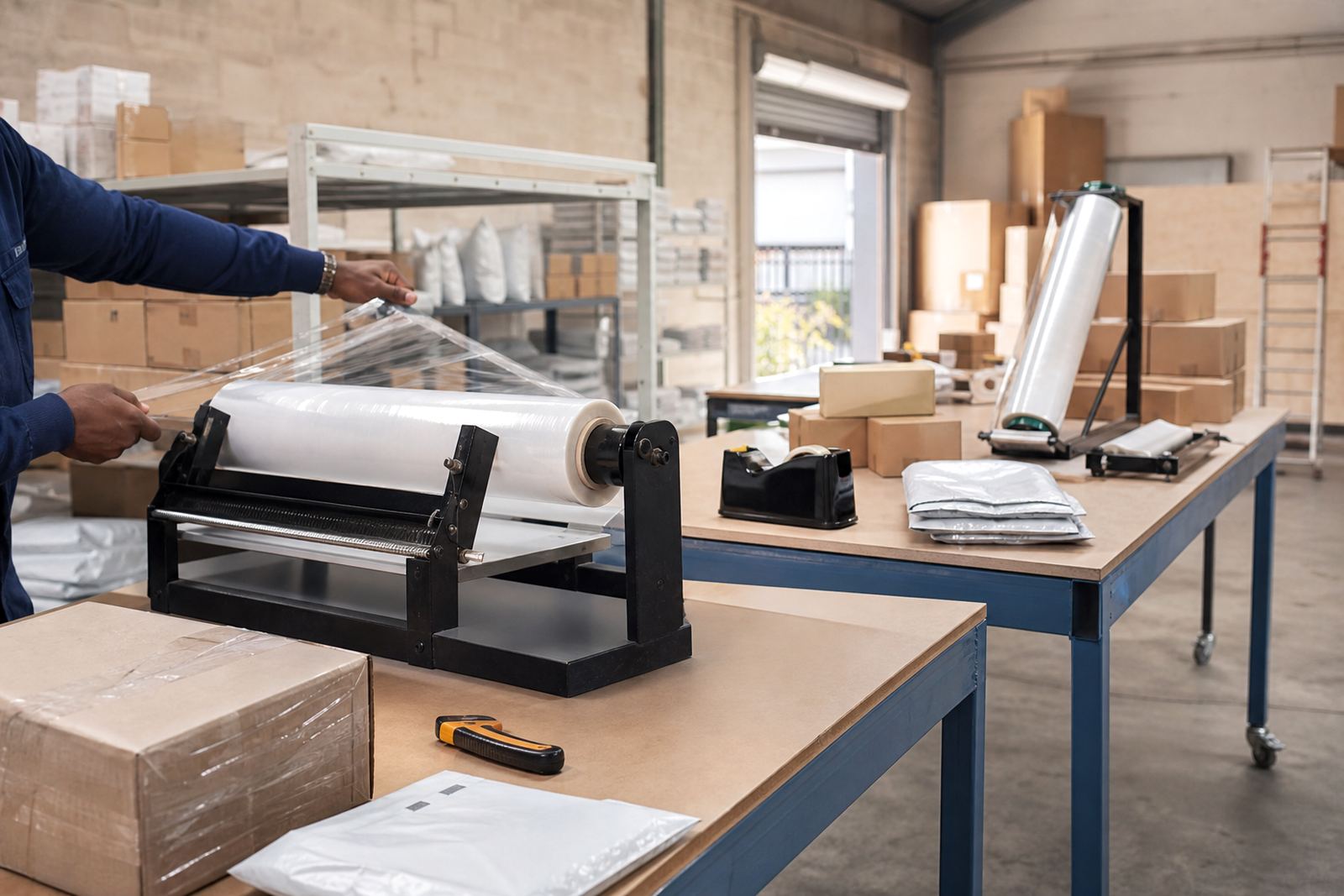
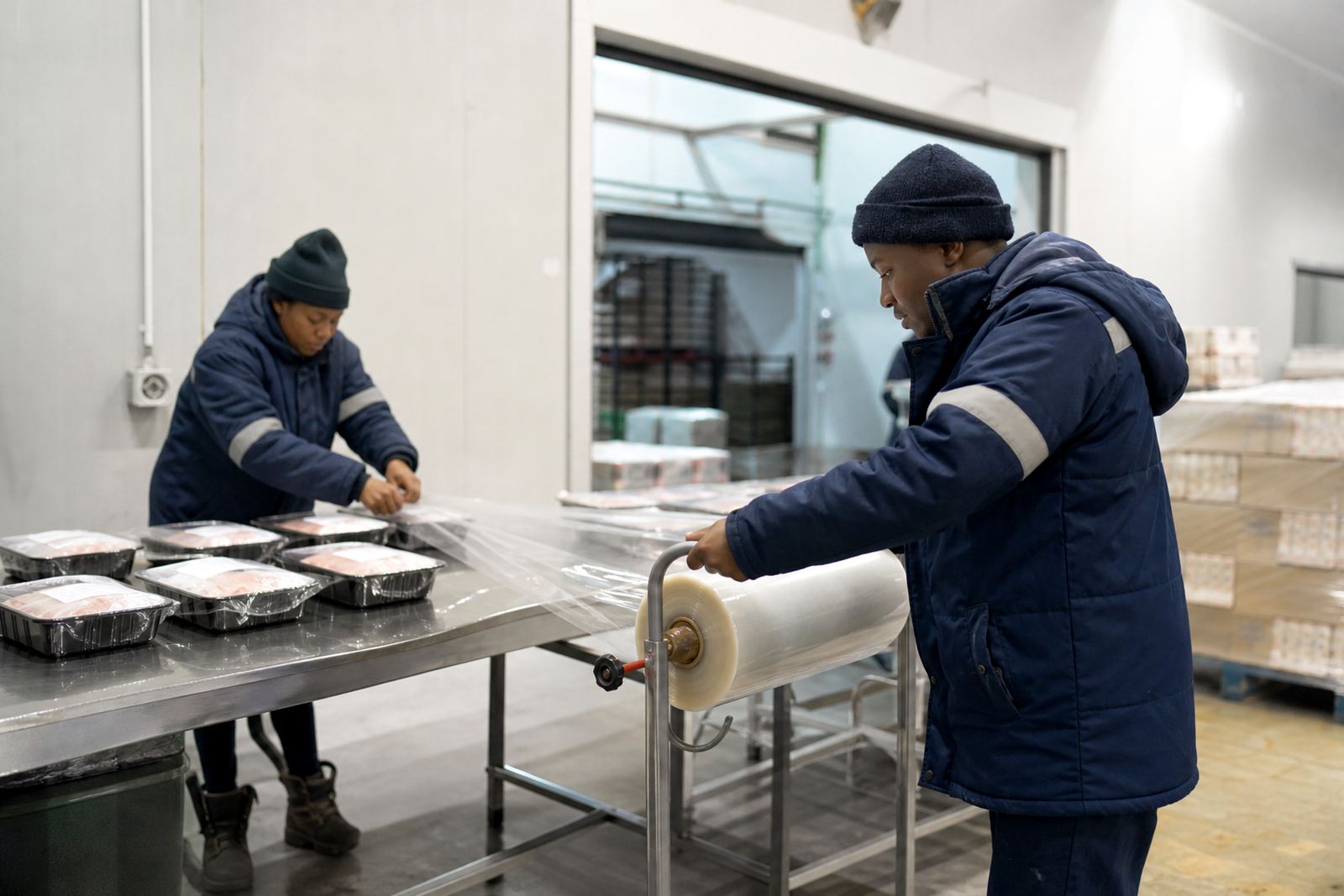
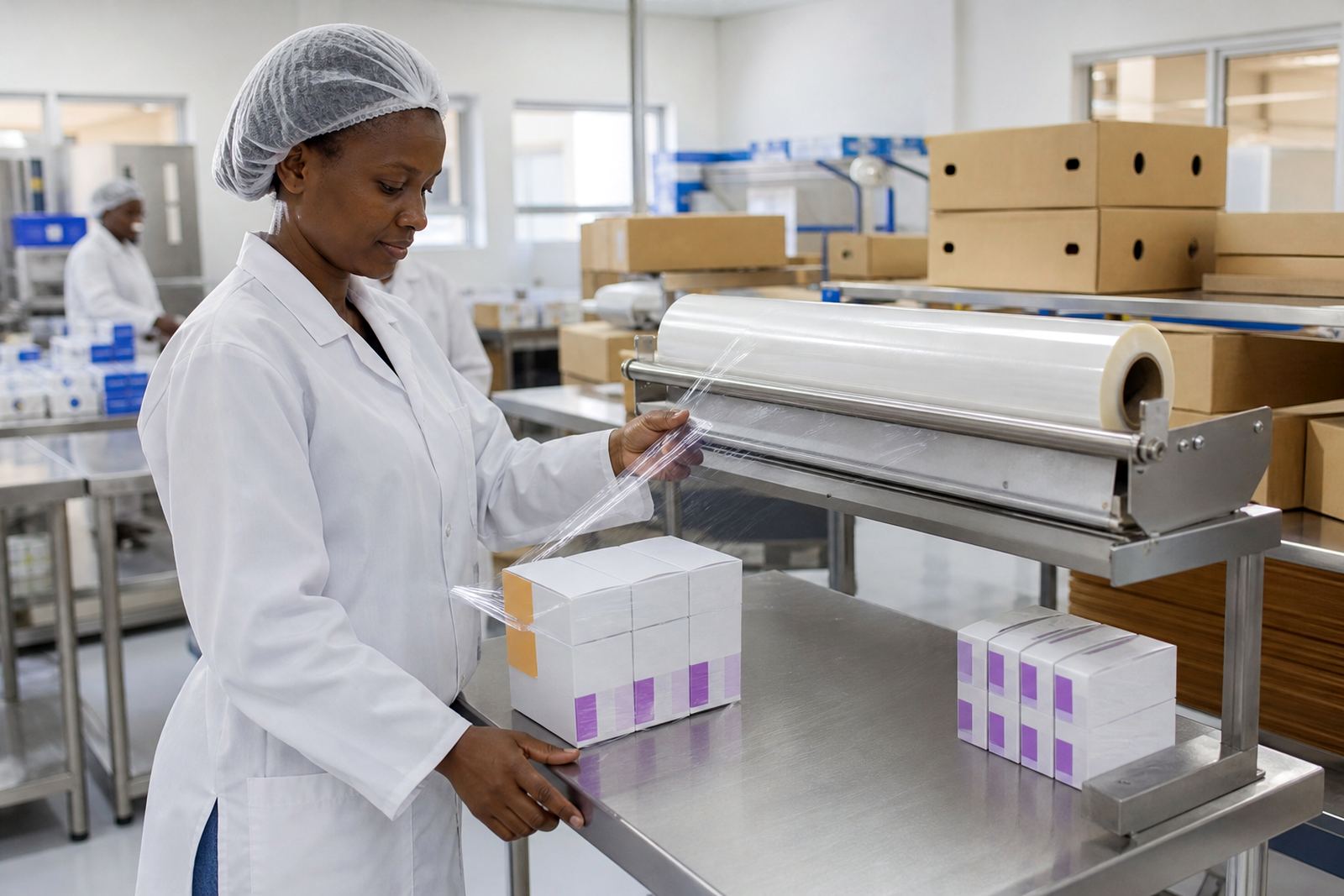
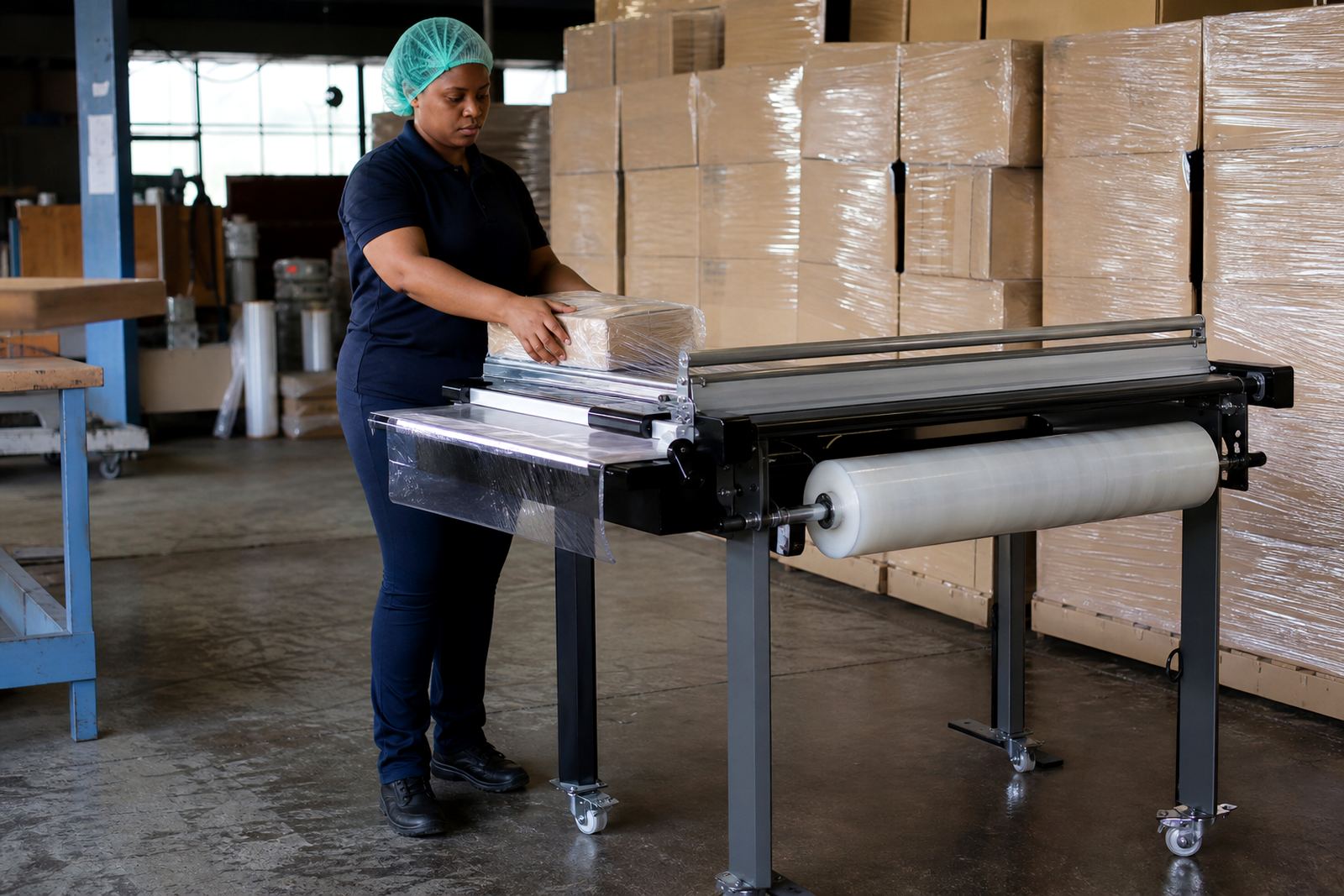
Manual wrap cells work best when the operator can reach the film easily, keep a steady wrap pattern and change rolls without stopping the whole line. A proper cutter and dispenser setup helps the team keep pace without turning a simple station into a bottleneck.
Typical Equipment Set for a Small Manual Cell
The exact setup depends on the load size, film type and how often the station changes between jobs. For many South African packing rooms, a practical manual cell includes a few core items and not much more.
- Handheld or mounted shrink film cutter for clean, controlled cuts
- Stretch film dispenser for pallet wrapping by hand
- Blade guards or safe-edge cutting points where workers pass through often
- Roll holders suited to the film width and core size in use
- Basic spare blades and wear parts for quick changes
- Operator training so the same method is followed on every shift
At larger sites in Boksburg, Midrand or Polokwane, we sometimes add a second dispenser station so incoming goods and outgoing loads do not compete for the same space. That keeps the packing area flowing better, especially when the team is working around load-shedding windows or small delivery cut-offs.
Layout and Planning That Save Time
A manual wrap cell should be planned around the worker, not the other way round. The cutter, dispenser, film rolls and finished load should sit within easy reach, with enough space to move around the pallet safely. If the operator has to stretch, bend or walk too far for every wrap, the job slows down very quickly.
Good layout also helps with housekeeping. Film offcuts should not collect under the table or around the pallet jack path. If the same area is used for receiving, packing and dispatch, then the cutter position should be chosen to avoid cross-traffic. On busy sites in Cape Town and Durban, this matters even more where floor space is tight and shifts can overlap.
- Keep the cutter at working height to avoid wrist strain
- Place spare rolls close but not in the walking path
- Allow enough clearance for pallet jacks and trolleys
- Separate clean packing space from incoming dirty loads where possible
- Mark blade storage and changeover points clearly for each shift
When the layout is planned properly, the operator can maintain a steady rhythm and the film is applied more evenly. That means fewer rewraps, less waste and less frustration at the end of the day.
Common Mistakes We See in Manual Packing Areas
Manual wrap cells often fail for small reasons that get ignored for too long. A blunt blade may still cut, but it forces the operator to use more pressure and increases the chance of snags or rough edges. Poorly fixed dispensers can wobble and make the wrap uneven, while badly stored rolls pick up dust, moisture or damage.
Another common issue is using the wrong cutter for the type of film on hand. Shrink film and stretch film behave differently, so one tool does not suit every job. Some sites also leave operators to improvise with knives and loose blades, which creates safety problems and makes audits harder. For food, cosmetic and municipal supply work, that can become a real concern during site checks.
- Using hand knives instead of proper dispensers or cutters
- Ignoring blade wear until the wrap starts tearing
- Mounting the dispenser too low or too high
- Not training new operators on the correct wrap pattern
- Letting spare film sit near heat, sunlight or damp walls
These problems are usually not expensive to fix, but they do cost time. A simple servicing plan and a small spares stock can prevent a lot of downtime.
Budget Ranges for Manual Wrap Cell Upgrades
Most manual wrap cell budgets are driven by how many stations need attention and whether the site only needs cutters or a full setup with dispensers, mounts, spares and training. A basic single-station improvement can be quite affordable, while a multi-bay packing area with regular servicing will sit higher.
As a practical guide, many small manual improvements start from about R2,500 to R7,500 for a basic cutter and dispenser solution. A more complete fit-out for a busy packing area can range from about R8,000 to R25,000 depending on the number of stations, the type of film in use and any layout changes. Larger sites in Germiston, Johannesburg or Pretoria may also budget for ongoing blade replacement, preventive servicing and operator training over the year.
If the current setup is causing waste, the cheapest option is not always the best one. A slightly better dispenser or safer cutter can pay back through lower film loss and fewer stoppages, especially where the line runs all day and the packing team changes between shifts.
Support for Sites Across South Africa
Film Cutters supports manual wrap cells from our Germiston base, with work carried out across Johannesburg, Pretoria, Durban, Cape Town, Polokwane, Boksburg and Midrand. The team handles onsite installation, line setup, preventive servicing, blade replacement, dispenser repairs, spares supply, operator training, safety checks, site assessments, roll change support, breakdown callouts and equipment upgrades.
For factories, distribution centres and small pack rooms, the aim is simple: keep the packing bay safe, tidy and reliable. Thabo Maseko and the team work with practical site conditions, whether the challenge is tight floor space, shift work, coastal moisture or keeping a manual station going during power interruptions. When the line is set up properly, the job becomes easier for the operator and cleaner for the business.
Clients can reach us through the enquiry form on our contact page when they need advice, spares or a site visit.