Packing parts, fittings and workshop stock without slowing the line
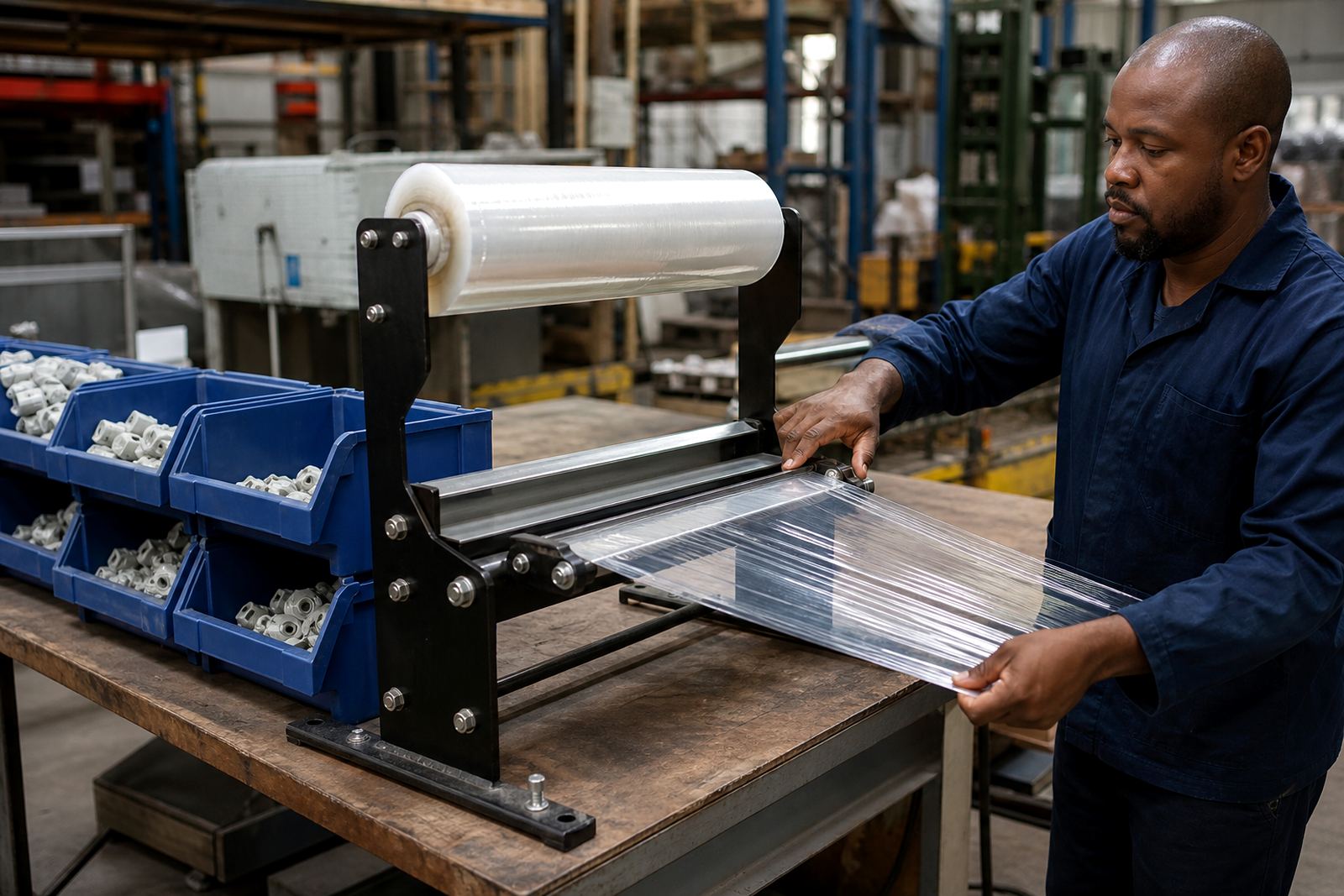
Industrial components are usually packed in batches, not in neat retail cartons. You might be wrapping fasteners, brackets, machined parts, pipe fittings, bearings, valves or assembly kits, and each load needs enough containment to stay together while still allowing easy identification at goods receiving. A proper cutter or dispenser makes that work faster, especially where staff are wrapping mixed items at the end of a production run or preparing stock for dispatch to depots and contractors.
On these lines, the main issue is rarely the film itself, it is control. If the roll drags, the operator tugs too hard, and you end up with wrinkles, poor coverage and wasted metres. A well set dispenser keeps the film aligned so the wrap is tighter around trays, pallets, crates and bundled parts. That matters when goods are moving from a Germiston workshop to a customer in Midrand or over long-distance freight to Durban, where vibration and handling can loosen sloppy loads.
Typical equipment set for industrial component packing
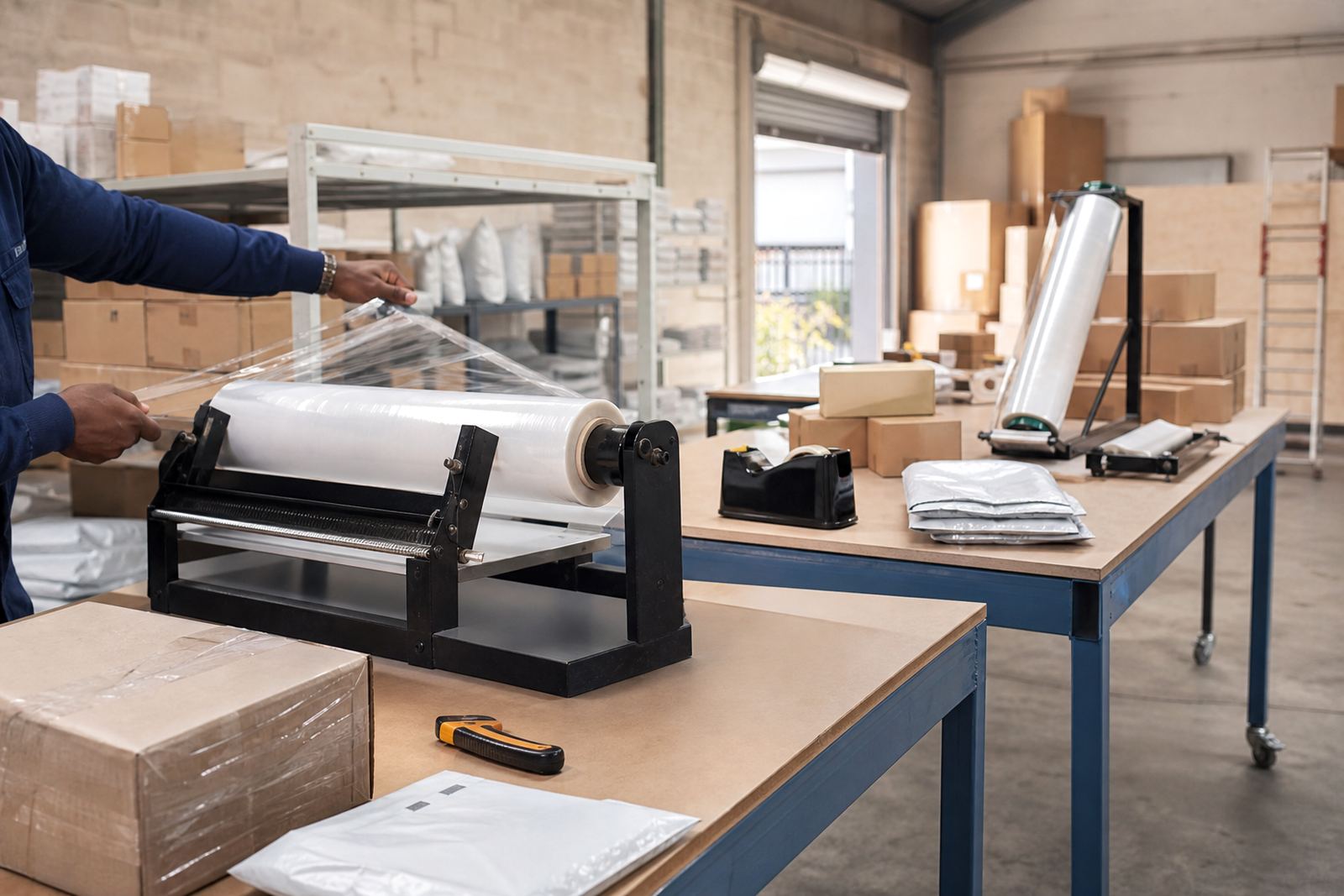
Most industrial component packers use a simple but dependable setup: shrink film or stretch film rolls, a hand-held cutter or dispenser, a stand for repeat work, spare blades, and basic safety checks on the packing bench. For higher volume sites, the cutter is often paired with a fixed station near the line-out area, so the operator can grab film, cut cleanly, and return to the next pallet without walking across the floor.
- Hand-held cutters for smaller packing teams and overflow work
- Bench or stand-mounted dispensers for repeated pallet wrapping
- Blade guards and spare blades to keep cuts clean and safe
- Training for new operators on film tension and cut direction
- Spare parts supply for daily wear items and quick repairs
Where components are oily, dusty or packed after machining, the dispenser needs to be easy to wipe down and simple to service. In coastal areas such as Durban and Cape Town, humidity can affect handling and storage, so it helps to keep the film dry and off cold floors. A supplier that offers preventive servicing and breakdown callouts can save a site from last-minute packing delays, especially during month-end dispatch peaks.
How to plan the packing station layout
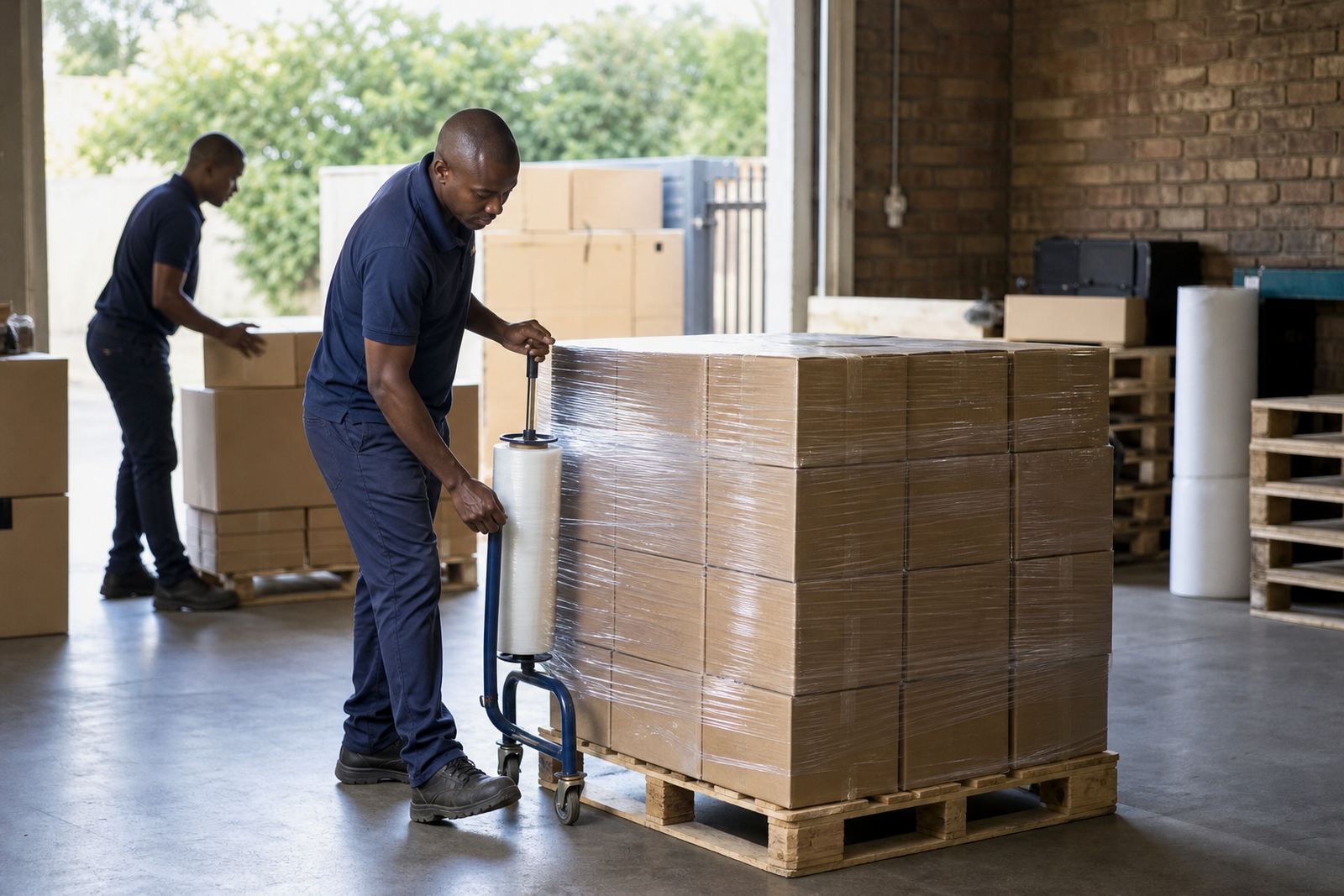
Good layout planning starts with the direction of flow. Film should sit close enough to the pallet staging area so the operator does not waste steps, but not so close that forklifts or pallet jacks strike the stand. In most factories, the best position is beside the wrap point or at the end of the line where finished goods wait for strapping, labelling and loading. If you have more than one packing line, keep each station consistent so staff can move between lines without re-learning the setup.
Think about the working height too. If the film roll sits too low, staff bend and the wrap becomes uneven. If it sits too high, the operator loses control and the film can ride off the edge of the load. During site assessments, we look at clearances, floor condition, traffic paths and storage space for spare rolls. We also check whether the site has enough room for safe blade use and whether the packing area is exposed to dust, rain spray or load-shedding related stoppages that interrupt the rhythm of the shift.
- Keep the cutter within one step of the wrap point
- Mark a clear loading zone for pallets and crates
- Store spare rolls away from sunlight and moisture
- Allow space for safe blade changes and operator movement
- Use the same station height across similar lines
Common mistakes that cost time and film
One of the biggest mistakes is using an all-purpose cutter on a line that needs a more controlled guide. When the film is too loose, operators compensate by stretching by hand, which creates weak points and uneven coverage. Another common problem is blade wear. Once the cutting edge starts dragging, the team uses more force and the roll starts to fray, and that can turn a five second cut into a frustrating reset.
Sites also lose time when no one is responsible for preventative servicing. In workshops around Boksburg, Germiston and Pretoria, it is common to see a dispenser used until it fails completely. That leads to downtime, rushed repairs and extra waste. Safety is another issue. If blades are changed without a proper method, there is a real risk of cuts, especially on busy lines where gloves are not always enough if the tool is poorly maintained.
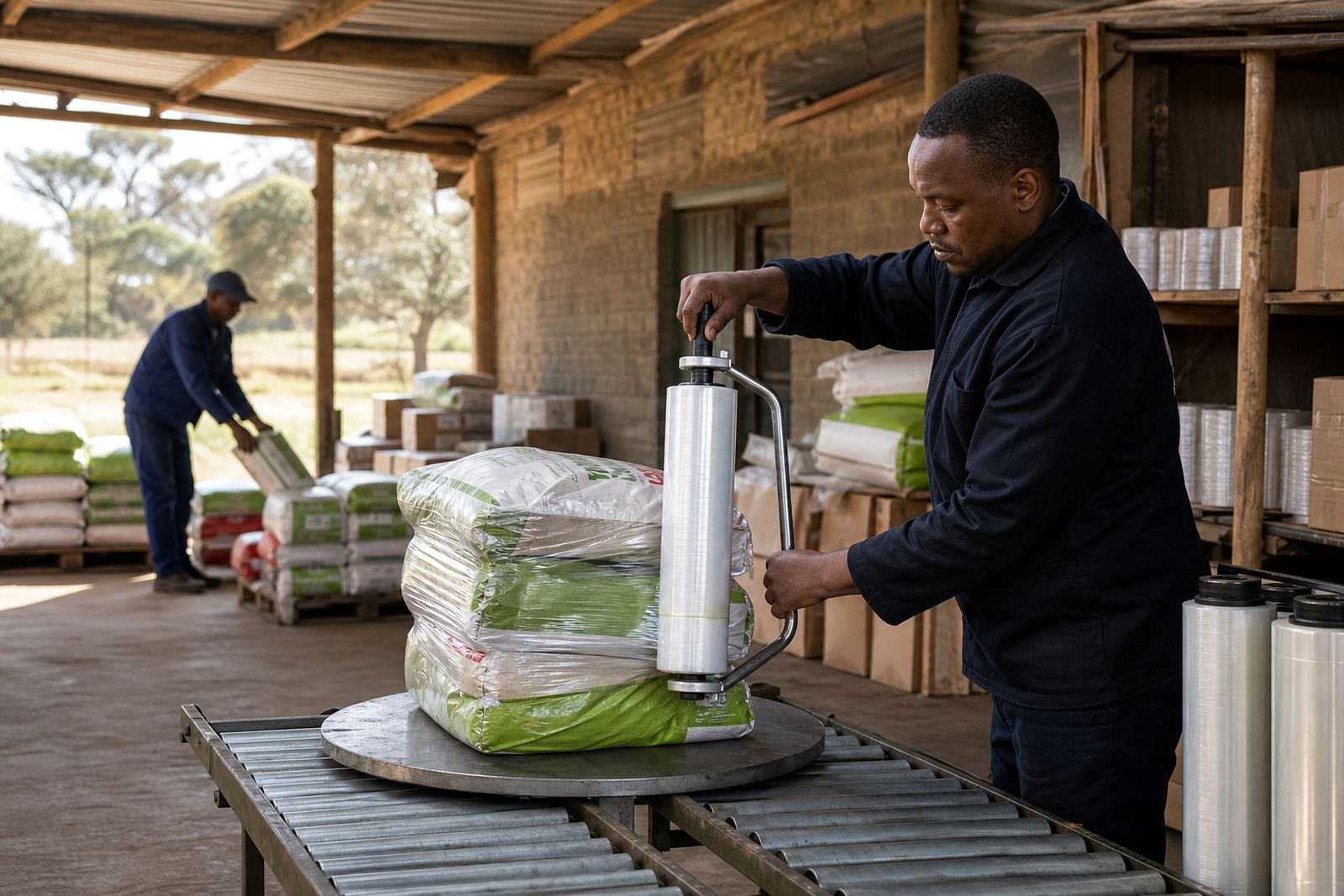
For industrial components, another trap is underestimating the packaging mix. Small bags of fittings may need one method, while long profiles or heavy assemblies need another. If the same roll and cutter are used for every load, the result is inconsistent. The better approach is to match the dispenser to the job, then train operators on when to pull tighter and when to keep the wrap light.
Budget ranges for cutters, servicing and line support
Budget depends on how much film you move, whether you need hand-held tools or fixed stations, and how often the equipment is used. Smaller operations that pack parts in batches can often start with a modest spend, while larger lines with repeated daily wrapping will need a stronger setup and regular support. As a rough guide, basic cutters and dispensers may start from a few hundred Rand per unit, with more specialised units, fitted stands and support packages moving into the low thousands.
For planning, many clients set aside a separate budget for spares, blade replacement, service calls and operator training. That is usually the part that gets missed. If a site in Polokwane or Cape Town runs through busy dispatch periods, it is better to plan for maintenance before the peak than to pay for an urgent callout after a breakdown. Preventive servicing and roll change support also help reduce waste, which matters when film usage is high.
We normally advise customers to budget in layers: initial equipment, installation, training, then a small monthly provision for spares and upkeep. That keeps costs predictable and avoids sudden line interruptions when a cutter wears out or a dispenser needs adjustment. For many industrial component packers, the best return comes from keeping the system simple and maintained, not from buying the most complicated option.
Installation, training and support across South Africa
From our Germiston base, we support industrial component packers across Johannesburg, Pretoria, Durban, Cape Town, Polokwane and surrounding areas such as Midrand and Boksburg. Our team handles onsite installation, line setup, preventive servicing, blade replacement, dispenser repairs, spares supply, operator training, safety checks, site assessments, roll change support, breakdown callouts and equipment upgrades.
That practical support matters when a packing line is running on tight dispatch windows or dealing with power interruptions. If load-shedding affects the shift, operators need equipment that is easy to reset and quick to return to work. We also take note of site rules, especially where workshops are near municipal roads, shared loading bays or regulated industrial parks. The aim is simple: keep the film handling clean, safe and consistent, so the parts leave the site packed properly first time.
Clients usually reach us through the enquiry form on our contact page, and we can then match the equipment to the packing method, the film type and the load size. Whether you are packing small hardware kits or larger industrial assemblies, the right cutter and dispenser setup can cut waste, save time, and make the line easier to manage day after day.