Why pharma lines need tighter film control
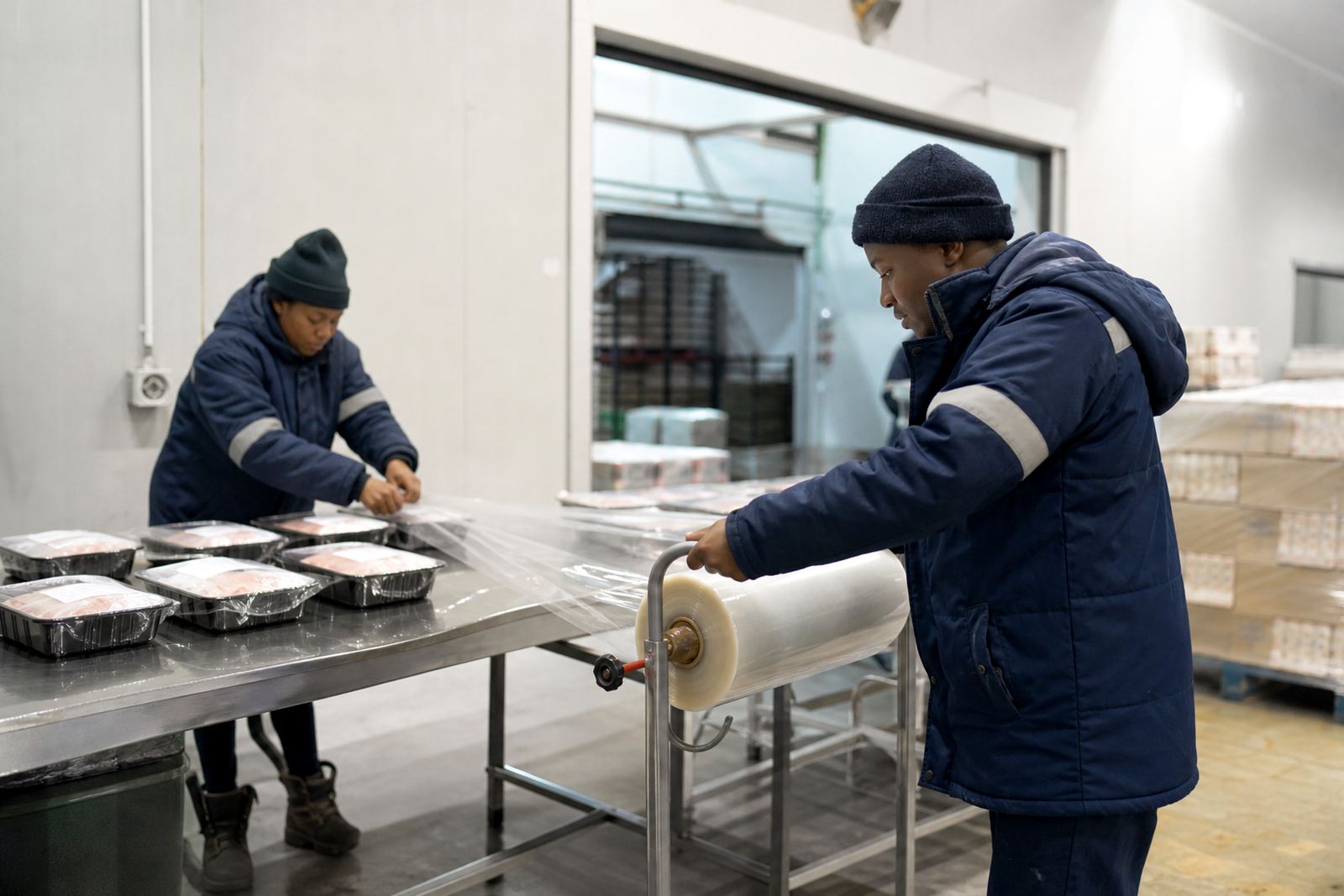
In pharmaceutical packing, the film stage is not just about holding a load together. It affects product protection, line speed, presentation and how much rework the team has to do at the end of a shift. On secondary wrapping lines, a poor cut or uneven stretch can lead to loose packs, torn film, wasted material and delays at inspection points.
For packing rooms in Germiston, Midrand, Boksburg and other industrial areas, we often see the same pressure points: staff changeovers, mixed pack sizes, frequent run changes and limited space around the line. In hotter inland areas and humid coastal sites like Durban, film behaviour can also change during the day, so the cutter and dispenser need to stay predictable and easy to handle.
Our approach is practical. We match the cutter and dispenser to the pace of the line, the film type in use and the amount of manual handling the team still carries out. That means less strain on operators, neater application and fewer interruptions when the line is under pressure.
Typical equipment on a regulated packing line
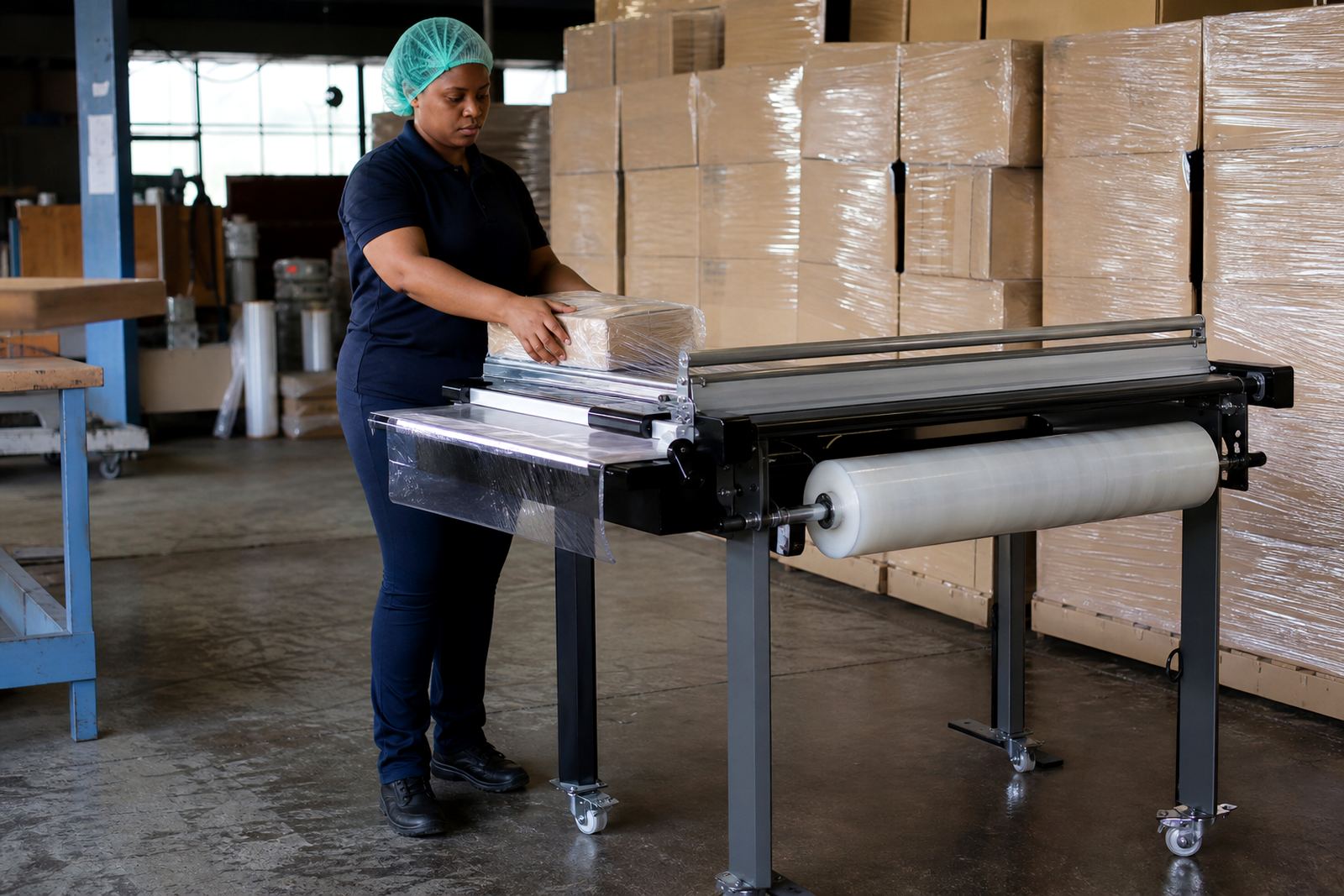
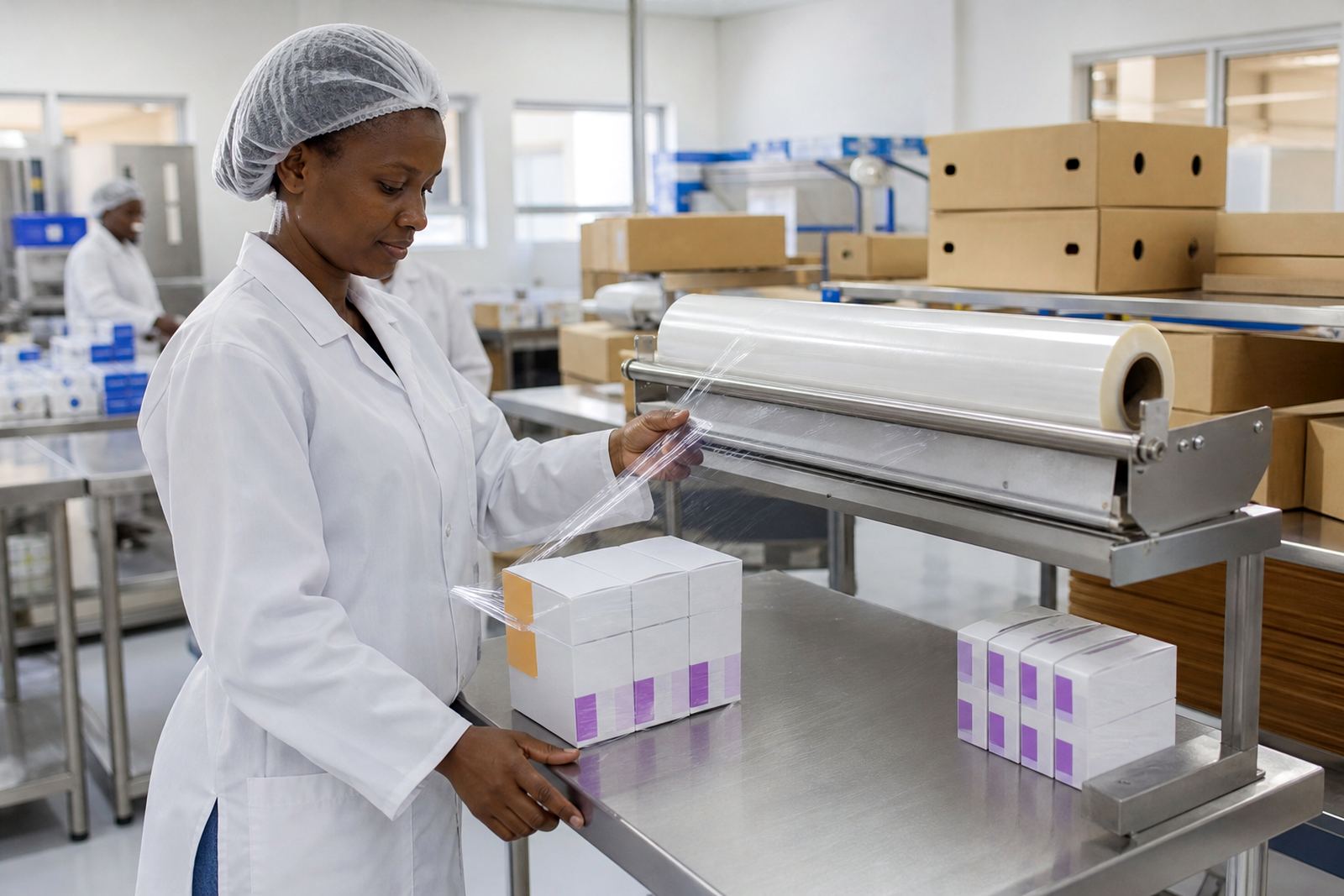
Pharma packing lines usually use a mix of manual and assisted film handling equipment. The exact setup depends on whether the line is wrapping cartons, cases, trays or palletised product before dispatch. The right mix should support clean application without adding unnecessary steps.
- Handheld or mounted stretch film cutters for case and pallet wrapping
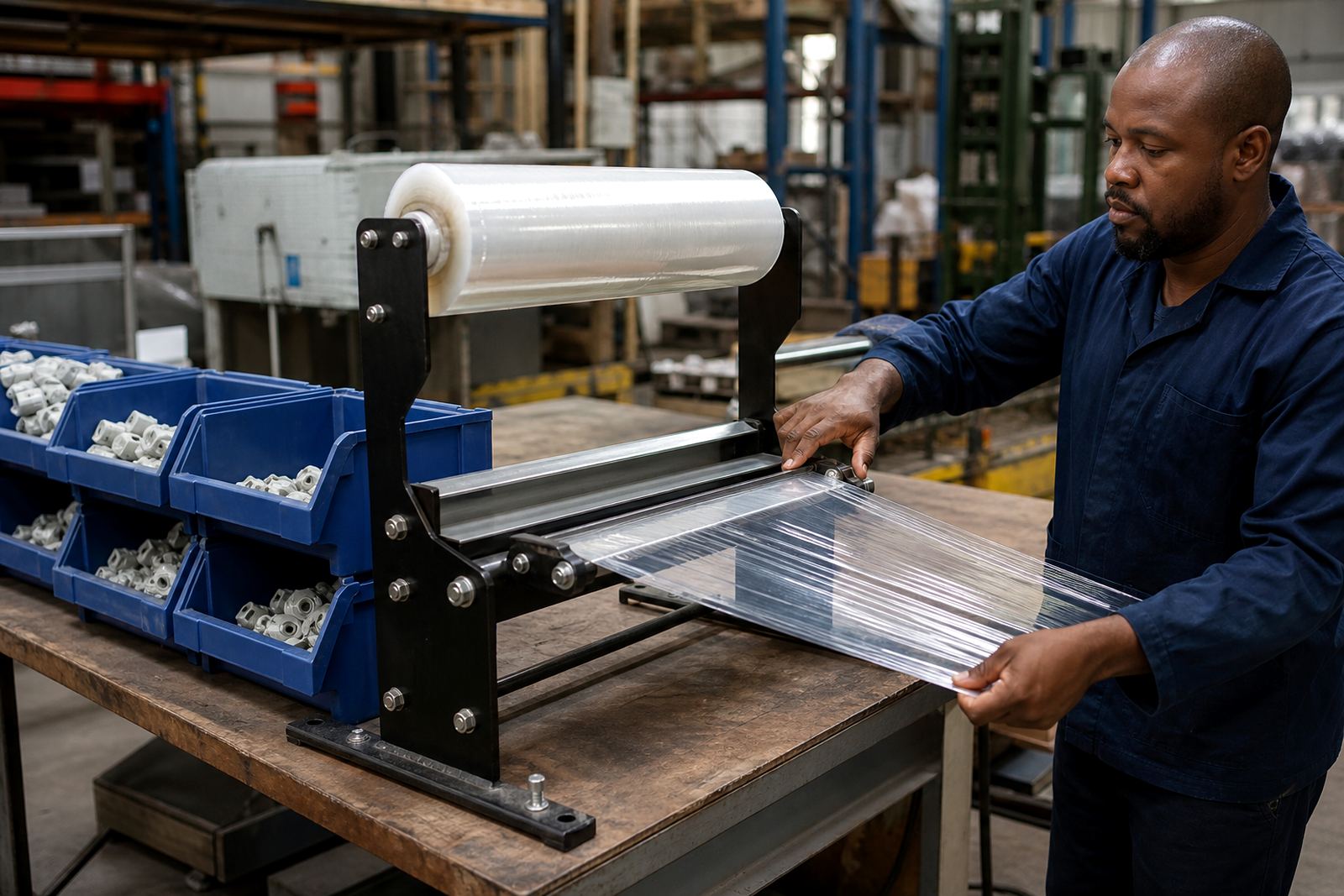
- Shrink film cutters and dispensers for secondary wrapping stations
- Blade assemblies suited to frequent changeovers and controlled cuts
- Film holders and guides for neat feed and reduced tangling
- Spare blades, service parts and replacement wear items
- Optional training aids for new operators and relief staff
In many plants, the packing area already has conveyors, tables, scale check points and pallet staging zones. The cutter and dispenser must fit into that layout without forcing people to overreach, twist or carry rolls too far. A tidy set-up also helps during housekeeping and makes it easier to keep walkways clear.
How we plan the right layout for your line
A good line layout starts with the flow of people and product. We look at where the film is loaded, where the operator stands, how often rolls are changed and where the finished packs move next. In a pharma environment, small inefficiencies can build up quickly, especially when shifts run long or the team is working under a tight dispatch window.
Our site assessments focus on practical detail. We check floor space, mounting height, roll access, blade safety and the hand movements needed for each wrap cycle. If the area is near a cold room, washdown point or air-conditioned pack zone, we also look at moisture, temperature shifts and the effect on the film surface and feed.
For sites in Pretoria, Cape Town and Polokwane, transport routes and service access matter too. A line that works well in one branch may need a slightly different holding setup in another branch because the pack size, staffing pattern or supply timing is not the same. That is why we prefer to specify for the actual site, not a generic drawing.
- Keep cutters within easy reach of the operator, not across the table
- Allow enough clearance for roll swaps without stopping the whole line
- Separate film handling from foot traffic where possible
- Place spare blades and tools in a fixed, labelled point
- Leave space for cleaning and inspections around the station
Common mistakes that create avoidable downtime
Most film handling problems come from small oversights rather than big equipment failures. A cutter can be perfectly serviceable but still perform poorly if it is mounted too high, if the blade is dull or if the wrong film width is being used for the pack. On busy pharma lines, these issues often show up as torn film, uneven tension or operators compensating by hand.
Another common mistake is treating all wrapping tasks the same. Stretch film and shrink film behave differently, and the packing team needs the right tool for each stage. If one tool is forced to do both jobs, the result is slower work and less consistent packs. That is especially true where secondary wrapping must stay neat for inspection, storage and customer presentation.
We also see plants keep damaged holders or loose blade fittings in service for too long. That may save a little in the short term, but it can create safety concerns and unnecessary breakdown callouts later. Preventive servicing and blade replacement are usually far cheaper than line stoppages during a production run.
Support for maintenance teams and production staff
Our support is built around the realities of a working packing line. We assist with onsite installation, line setup, preventive servicing, blade replacement, dispenser repairs, spares supply, operator training, safety checks, site assessments, roll change support, breakdown callouts and equipment upgrades. That gives maintenance teams and supervisors one point of contact when the packing area needs attention.
For pharma operations, training matters just as much as hardware. New operators need to understand the safest way to load film, how to make clean cuts and how to spot early wear before it becomes a problem. We keep the instruction practical, so teams can apply it on the floor without slowing the shift down.
In Germiston and the wider Ekurhuleni area, many clients also want fast response for repairs and spares because a stopped packing station can affect dispatch by the end of the day. Our team works across Johannesburg, Durban, Cape Town, Polokwane and surrounding areas to keep film handling equipment moving properly.
Budget ranges for pharma wrapping projects
Budget depends on the number of stations, the film type, whether you need new holders or replacement parts, and how much onsite work is involved. A small corrective job on one line may be quite modest, while a full multi-station upgrade with training and servicing will sit higher. The figures below are broad working ranges and can shift once we have seen the site.
- Single cutter or dispenser supply and fitting: from about R2 500 to R6 500
- Blade replacement and minor dispenser repairs: from about R750 to R2 500
- Site assessment and line setup support: from about R1 500 to R4 500
- Multi-station upgrade with spares and training: from about R8 500 to R25 000+
For plants that run multiple shifts, a planned maintenance visit is usually cheaper than emergency callouts. It also helps with budgeting because you can spread servicing over the year instead of dealing with unexpected stoppages. If your operation is in a humid or dusty area, regular checks become even more worthwhile.