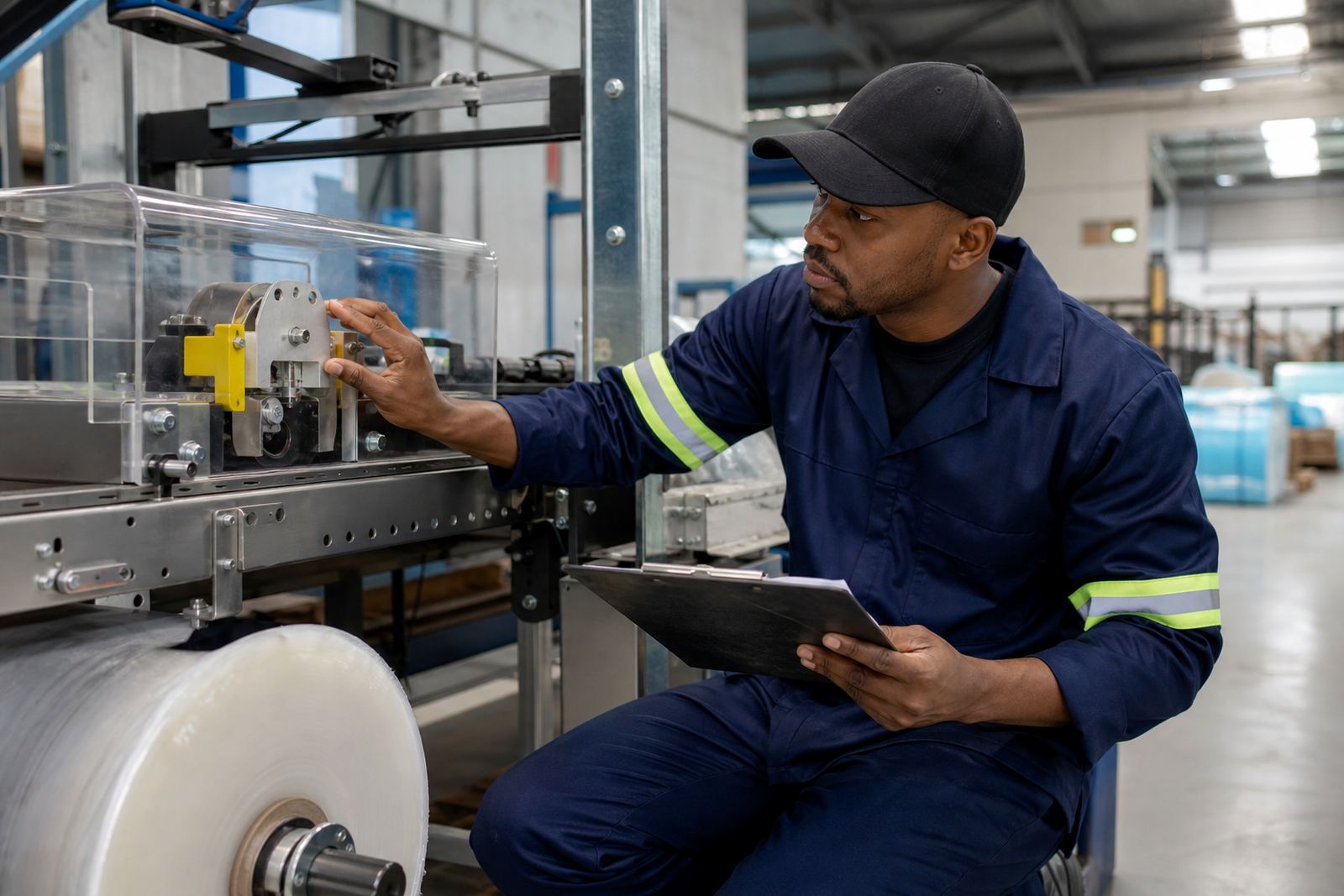
What our safety checks cover on site
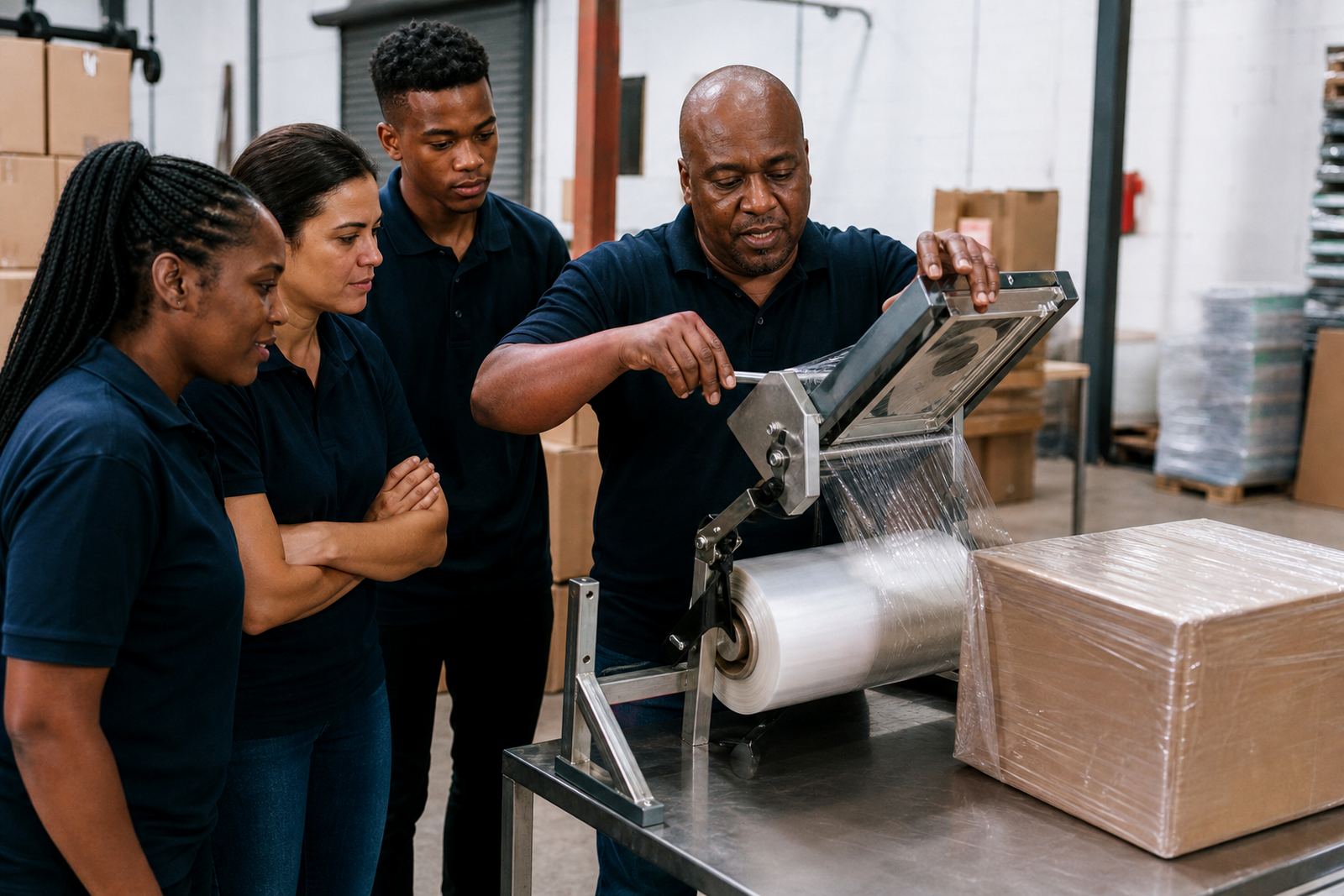
Our safety checks are built for packing lines that run under pressure, with operators changing rolls, clearing snags and working around moving product. We inspect the cutter, dispenser and nearby handling area so you can see where a small fault could turn into a stoppage or a hand injury. The aim is simple: keep the equipment safe to use, easy to handle and properly mounted for the job at hand.
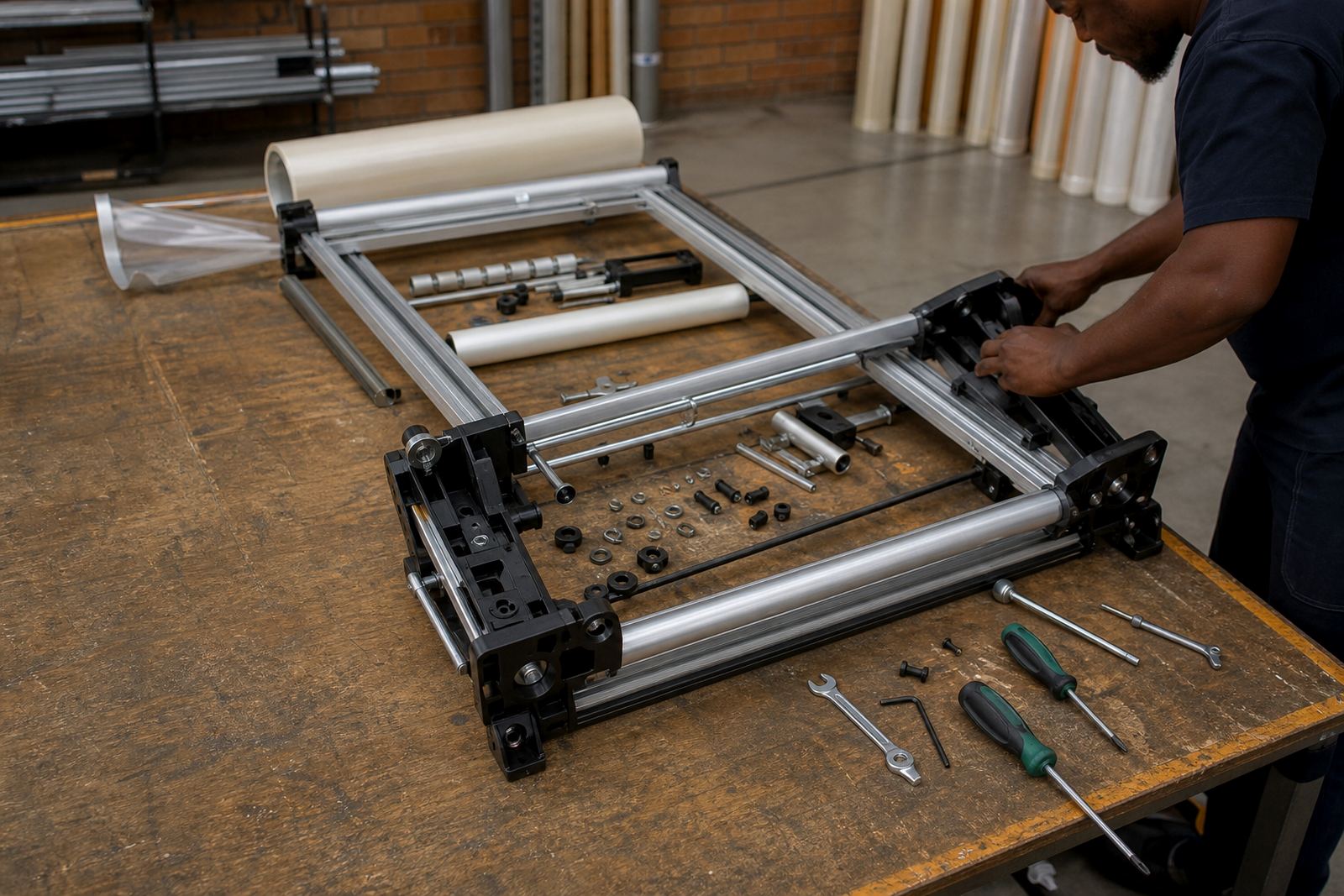
We look at shrink film and stretch film cutters used on manual, semi automatic and assisted packing stations. That includes fixed units, trolley mounted dispensers and handheld setups where the blade path, roll cradle or guard can loosen over time. In Germiston, Johannesburg, Pretoria, Durban, Cape Town and Polokwane we often find issues that come from vibration, rushed changeovers and poor storage between shifts.
- Guard condition and blade cover fitment
- Mounting strength on tables, frames and stands
- Blade exposure and contact risk during film feed
- Roll spindle wear, loose fixings and side play
- Handle position, grip points and operator reach
- Slip, trip and cut hazards around the packing point
Safety faults we look for before they become incidents
Many safety issues are not dramatic at first. A cutter may still work, but the guard no longer closes cleanly or the mounting bolts have worked loose after months of daily use. We also check the handling habits around the station, because the safest equipment can still be used badly if the roll is lifted awkwardly or the blade is bypassed by hand. That is where injury risk grows quiet quickly.
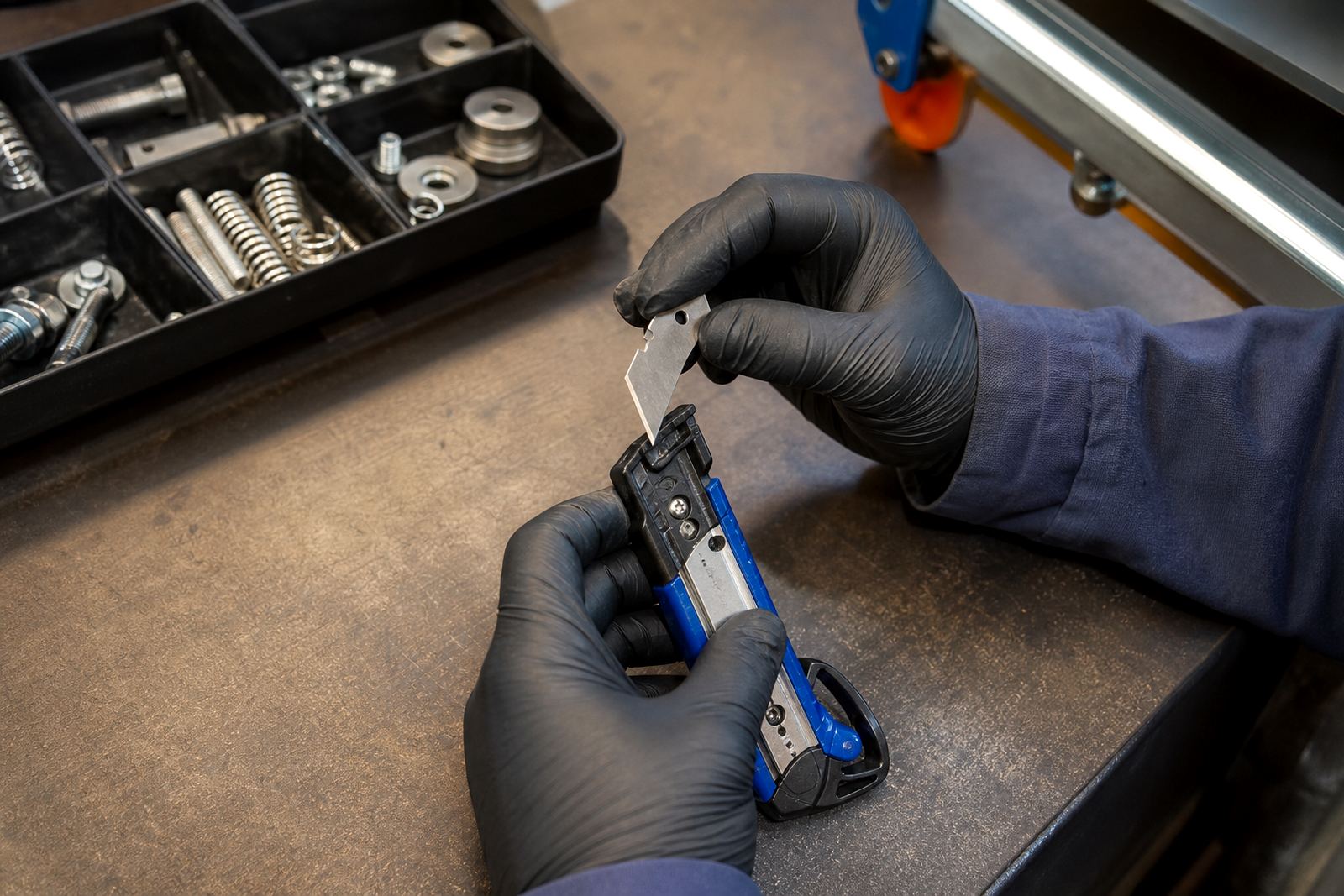
During the inspection we check for cracked housings, bent arms, worn blade carriers, sharp burrs and any point where fingers can slip into the cut zone. On stretch film stations we often assess tension related wear because it can make the operator pull harder than needed, which increases strain on wrists and shoulders. If your site works in damp coastal conditions, we also note corrosion on fasteners, hinges and metal edges.
- Loose bolts, wall fixings or frame clamps
- Cracked plastic parts and worn metal edges
- Damaged guards that no longer close fully
- Blade holders that wobble during use
- Signs of improvised repairs or unsafe modifications
- Corrosion from humidity, washdowns or chemical mist
How the inspection process runs on your line
We keep the process practical so it does not interrupt your shift longer than needed. First we speak to the line supervisor or operator about any near misses, complaints or recurring problems. Then we inspect the cutter in place, test movement and check the mounting against the work surface or frame. If the unit is part of a larger packing station, we look at the surrounding setup too, because safety depends on the full working position, not only the cutter itself.
After the physical check we give you a clear list of findings and practical actions. Where possible, we can carry out minor corrections on site such as tightening fixings, replacing worn parts or adjusting the dispenser position. If a unit needs more work, we advise whether a repair, blade replacement or upgrade is the better option. Our service coordinator then helps plan the next step around your production schedule, so the line does not sit idle for long.
- Step 1: review your packing area and known problem points
- Step 2: inspect the cutter, dispenser and mounting points
- Step 3: test safe operation and operator reach
- Step 4: record faults, risks and corrective actions
- Step 5: complete repairs or set a follow up plan
Typical turnaround and when to book
For Gauteng sites, safety checks can usually be arranged quickly, especially for Germiston, Boksburg, Midrand, Johannesburg and Pretoria. For Durban, Cape Town and Polokwane, timing depends on route planning and how many stations you want assessed in one visit. If the line has an active safety concern, we prioritise it as a breakdown risk or injury prevention visit, not a routine wait-and-see job.
A single station check may take less than an hour, while a full packing line assessment can take longer depending on access, machine spacing and shift interruptions. We recommend booking a check after any equipment move, after repeated blade changes, following an incident or when operators report that the cutter feels loose or awkward. On busy sites, monthly or quarterly checks are common. If your site runs in a harsh environment, shorter intervals are often worth it.
- After installation or line changes
- After a blade replacement or dispenser repair
- After a near miss, cut incident or loose mount report
- When operators change frequently and need a fresh safety review
- For coastal sites, after corrosion or humidity related wear appears
Pricing approach for safety checks
We price safety checks according to the number of stations, the type of cutter or dispenser, travel distance and whether the visit includes corrective work. A straightforward inspection on one or two stations is priced differently from a full site audit with repairs, spare parts and operator training. We do not bundle work you do not need, because many clients only want a clean safety report and a few fixes.
If we find faults, we quote clearly before any extra work begins. That may include spares, labour, travel and follow up visits where required. For sites that want regular cover, we can plan a maintenance interval so the cost is predictable through the year. This helps when you are budgeting around production peaks, municipal shutdowns or load-shedding backlogs that already pressure the plant. No surprises, just a clear scope and a practical price.
- Inspection only, with written findings
- Inspection plus minor on site adjustments
- Inspection plus repairs and spare parts
- Planned service visits at agreed intervals
Maintenance intervals that keep the line safer
Most packing sites benefit from a set safety interval rather than waiting for a fault to show up. If your cutters are used heavily across multiple shifts, a monthly visual check and a quarterly service review are sensible. For lighter use, six monthly inspections may be enough, provided the equipment is not moved around or handled roughly. Where film dust, moisture or constant vibration is present, the interval should be shorter.
As part of a maintenance plan, we can remind your team what to check between visits, such as loose fasteners, worn blades, damaged guards and unusual resistance in the dispenser. That keeps the machine safer between professional inspections and helps your operators spot trouble early. It also supports cleaner handover between shifts, which is useful on sites where teams rotate often and a small issue can get missed. A bit of routine now saves a lot of wasted film later.
- High use lines: monthly checks, quarterly service review
- Medium use lines: quarterly checks, half yearly service review
- Low use lines: half yearly checks with spot inspections after changes
- Coastal or humid sites: shorter intervals where corrosion is active
Why South African packing sites ask for our checks
Our clients want practical safety support that matches local operating conditions. In Germiston and the wider Ekurhuleni area, lines often run hard and fast, with equipment moved between bays and fixed again under time pressure. In Durban and Cape Town, humidity and salt air can affect hardware. In Polokwane, dust and workshop handling can still wear the unit down. We understand those conditions and check for the things that actually cause trouble on site, not just the obvious faults.
Thabo Maseko leads the business with a team that includes technical, service and field support people who work with packing lines every day. That means your safety check is handled by people who know what a good mounting point should look like, how a blade should sit and where a dispenser starts to become unsafe. We keep the advice direct, the findings clear and the follow up easy to action.
- Local support from Germiston, serving sites across South Africa
- Checks suited to packing lines in factory and warehouse settings
- Clear advice for operators, supervisors and maintenance teams
- Support for upgrades when a unit is no longer safe to use
Key facts
| Service type | Onsite safety checks for shrink film and stretch film cutters and dispensers |
|---|---|
| Typical site areas | Packing lines, pallet wrap stations, shrink wrap stations and dispatch areas |
| Inspection focus | Guard condition, mounting, blade exposure, handling posture and nearby hazards |
| Turnaround | Often same week in Gauteng, by arrangement for other regions |
| Pricing basis | Number of stations, travel, corrective work, spares and follow up needs |
| Recommended interval | Monthly to half yearly depending on use, wear and environment |