Start with the film width on your line
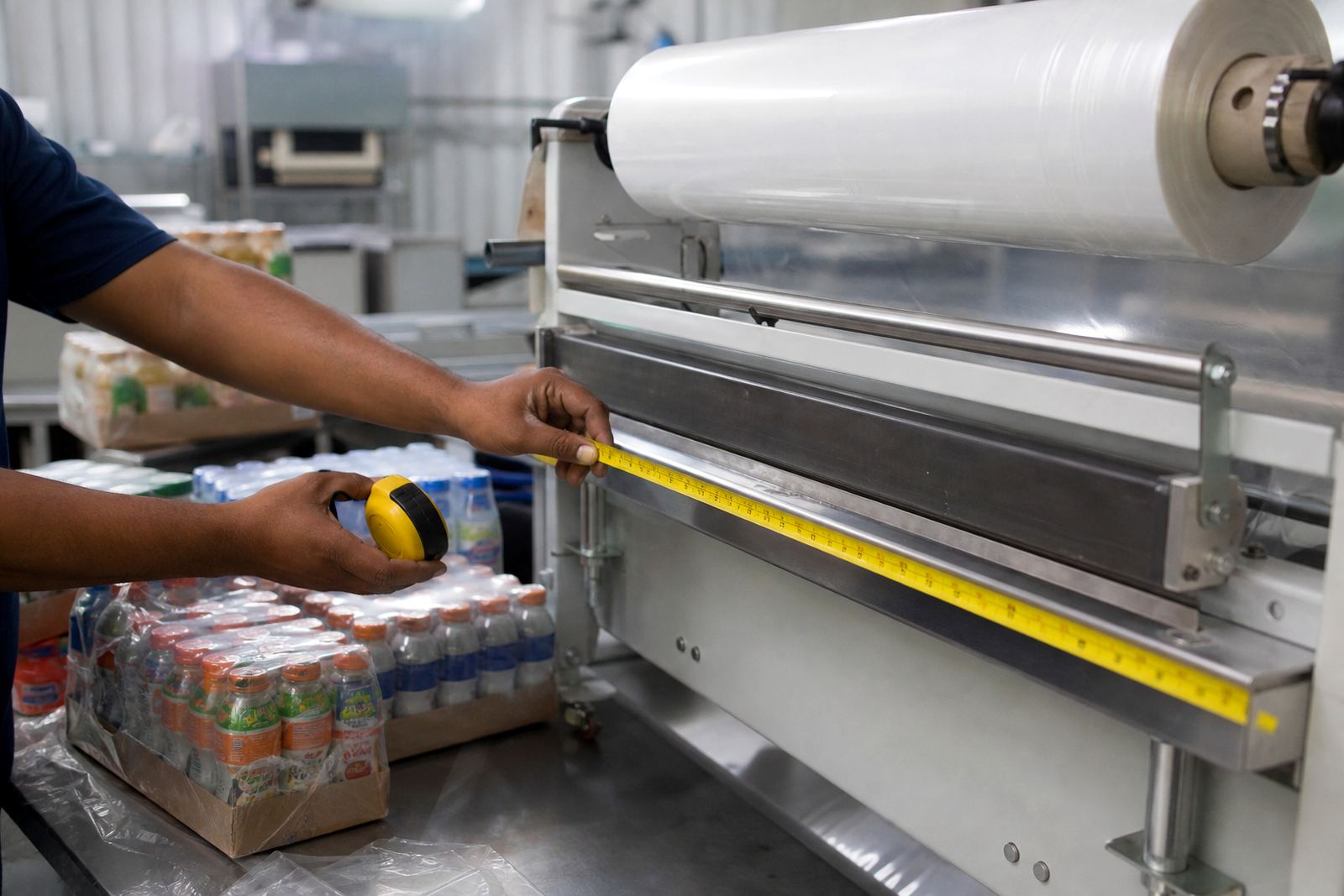
The first measurement to confirm is the width of the shrink film or stretch film you use most often. If the cutter is too narrow, the roll will snag or the film will bunch at the edges. If it is too wide, operators spend extra time adjusting the film and the application becomes less neat.
On many packing lines in Germiston, Boksburg and Midrand, the film width is chosen long before the cutter is specified, so the wrong dispenser gets fitted later. Check the roll width in millimetres, then compare that with the cutter opening and the usable working width. A good match makes roll changes quicker and keeps the film tracking straighter during busy shifts.
- Measure the actual roll width, not only the supplier label.
- Confirm whether the film is shrink or stretch, since handling differs.
- Allow for the widest roll you may use during peak periods.
- Check if the line uses one standard size or several roll sizes.
Working width and why it matters at the station
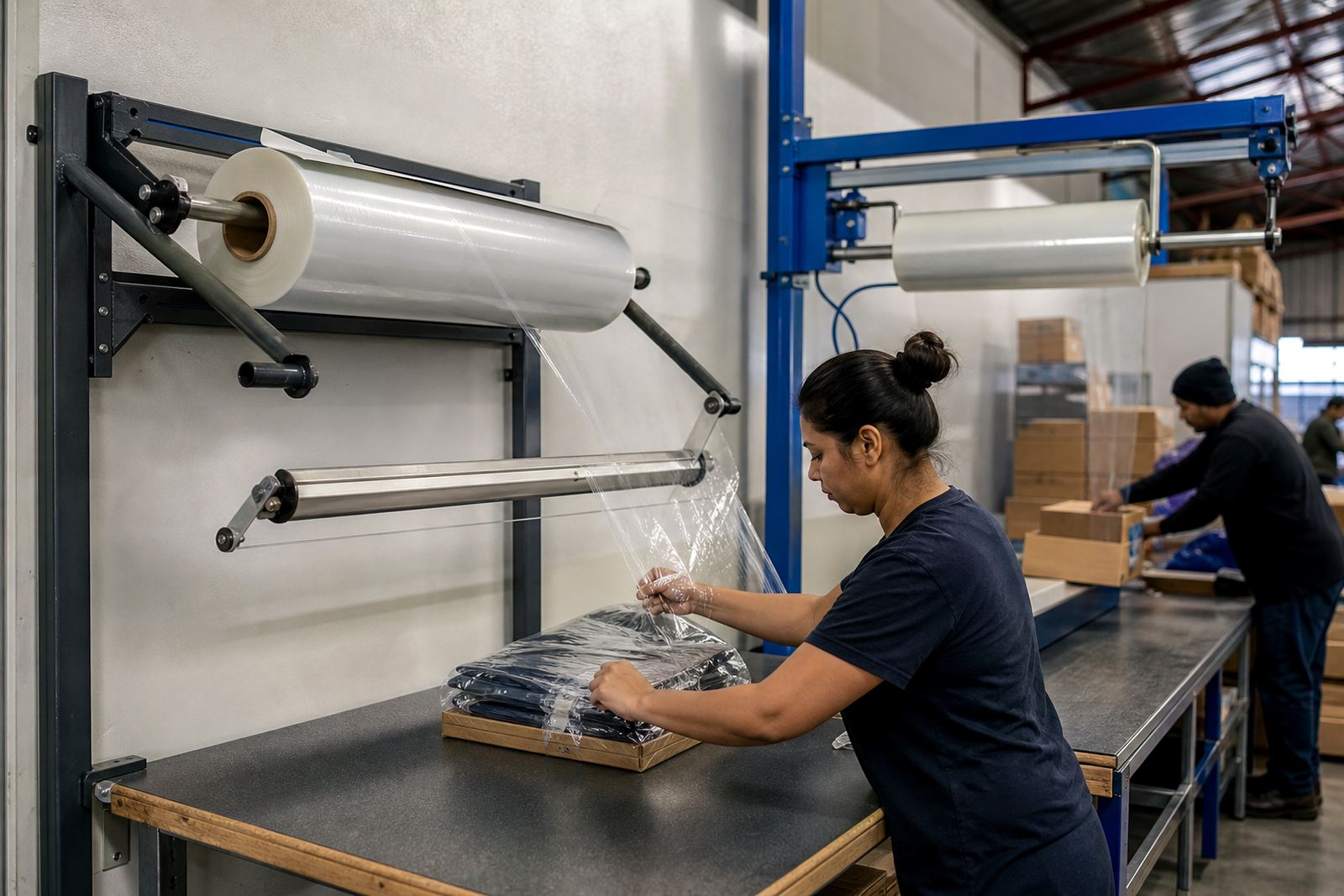
Working width is the usable span where the film feeds cleanly through the cutter and dispenser. It affects how the operator grips the film, how easily the blade reaches the right point, and how much room there is for fast roll changes. On tighter stations, especially where conveyors, sealers and carton flow are close together, a compact cutter can make a big difference.
For larger lines, a wider working opening can improve comfort and reduce awkward reaching. That said, bigger is not always better. If the unit is too large for the line layout, it can create clutter and slow the operator down. The aim is a cutter that suits the product size, the wrapping method and the space available around the machine, not just the biggest option on paper.
As a rule, match the working width to the widest normal roll and leave enough clearance for gloved hands, blade access and film threading. In humid coastal conditions like Durban and Cape Town, that extra clearance also helps when film edges pick up a bit of moisture and stick together.
Match cutter size to your line speed and output
High-output packing lines need cutters and dispensers that help the operator keep pace without forcing rushed movements. If the unit is too small, or if the film path is awkward, operators lose time at every roll change. Over a shift, those seconds add up. On a 2 shift operation that can be a real nuisance and a cost.
Look at how many packs are wrapped per hour, how often rolls are changed, and whether one person or two people work at the station. A smaller line may favour a simpler, lighter cutter, while a faster line may need a unit with easier handling, stronger support and quicker blade access.
- Check average packs per hour.
- Count roll changes per shift.
- Note whether the operator stands, sits or moves along the line.
- Look for any delays caused by stretching, cutting or repositioning the film.
If the process is already tight on time, choose a cutter size that reduces handling steps rather than one that only looks neat on the spec sheet.
Use the packing line space you actually have
In many factories the cutter must sit close to guides, seals, carton rollers or palletising equipment. The available footprint matters just as much as film width. Measure the mounting area, the operator reach and the clearance needed for maintenance. This is especially useful in older facilities where line layouts have changed over the years and the wrap station was not originally planned for today’s film usage.
Also think about access for blade replacement and dispenser repairs. If a technician must remove half the station just to reach a fixing point, the unit is too awkward for practical use. The right size should allow simple cleaning, regular checks and quick servicing without interrupting the rest of the line for long.
For sites in Pretoria, Polokwane and across Ekurhuleni, where teams may be working with mixed shift patterns, keeping the cutter easy to reach means fewer stoppages when the line is under pressure.
A practical sizing checklist before you order
Before choosing a cutter size, run through a proper site check. That way, you avoid ordering a dispenser that cannot cope with the film width or the way your team works. At Film Cutters, sizing is usually confirmed against the line rather than guessed from a brochure or a quick photo.
- Measure the widest and narrowest film rolls used on site.
- Confirm the type of film, shrink or stretch, and the wrap method.
- Measure the mounting space and operator clearance.
- Check the line speed and how often roll changes happen.
- Note any vibration, dust or moisture around the station.
- Confirm whether the cutter must be moved between lines.
When these points are clear, it becomes much easier to choose the correct unit and avoid rework later.
When to choose a smaller or larger cutter
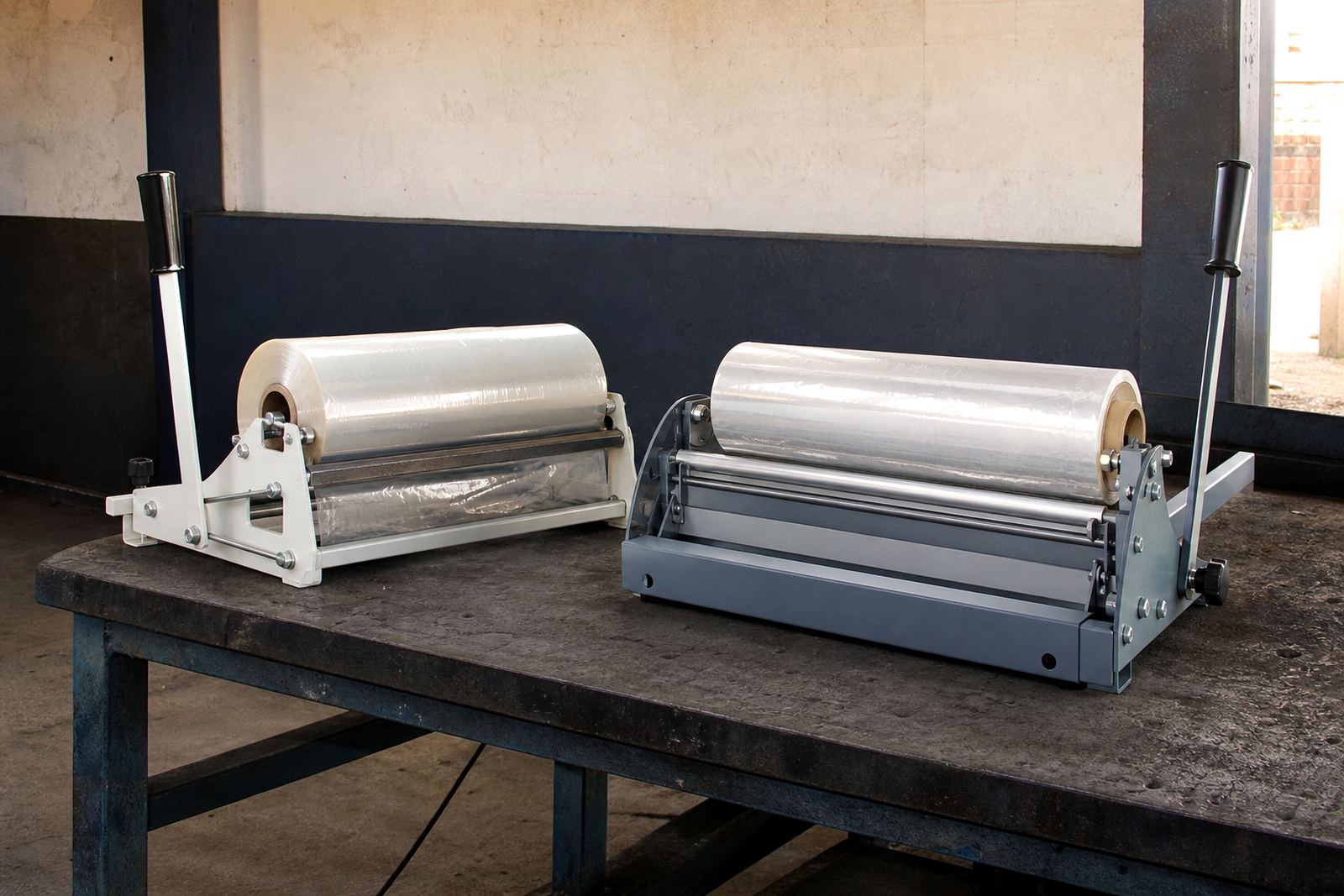
A smaller cutter is usually better where space is tight, the film width is standard and the line team wants quick, simple handling. It also suits sites that need easy movement between stations, or where the operator works close to the product and needs less bulk around the roll.
A larger cutter can suit wider film, heavier duty use and stations where the operator needs more room to work. It is also useful where blade access and roll alignment must be handled with gloves or where several shifts use the same equipment. The key is to balance size with comfort and control. Too small and the operator struggles. Too large and the station becomes clumsy.
If your line is changing product sizes, or if you are adding new packaging equipment, it is worth planning for the next stage now rather than fitting a unit that only suits todays output.
Keep size selection tied to servicing and training
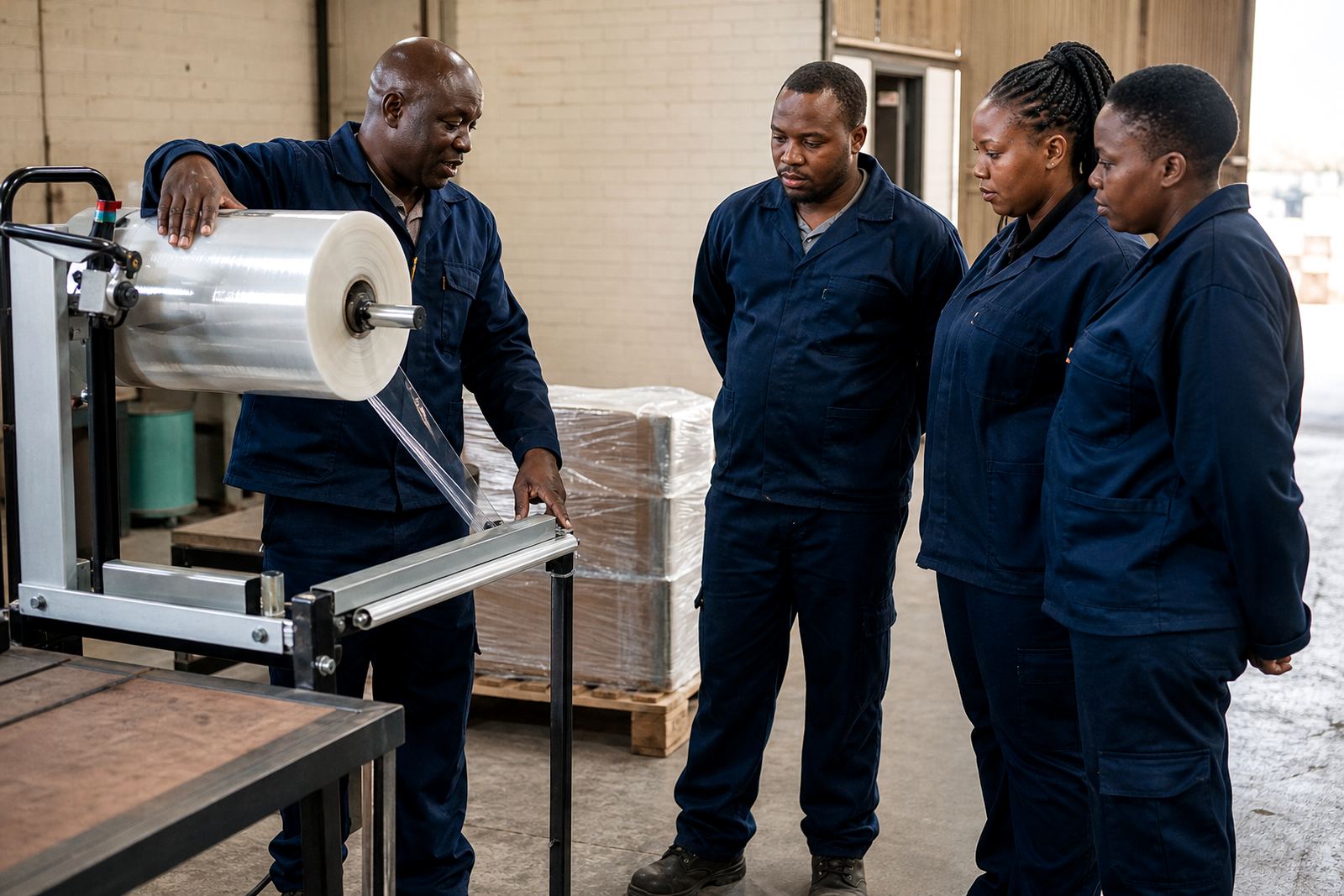
Once the cutter is installed, proper use matters just as much as the dimensions. Operators need to know how to load film, check blade condition and spot wear before it causes waste. Preventive servicing, blade replacement and safety checks all help the cutter stay predictable on the line.
Training should cover the correct film path, how to avoid tearing, and what to do if the roll binds. If the cutter is sized correctly but used badly, the line still suffers. A well matched unit should make the job easier for the operator and safer for the team, with fewer breakdown callouts and less film wastage.
For sites in Germiston, Johannesburg, Durban, Cape Town, Pretoria and beyond, a proper sizing review pays off in smoother roll changes and fewer delays during load shedding recovery or shift handovers.