Start With The Job Your Line Needs To Do
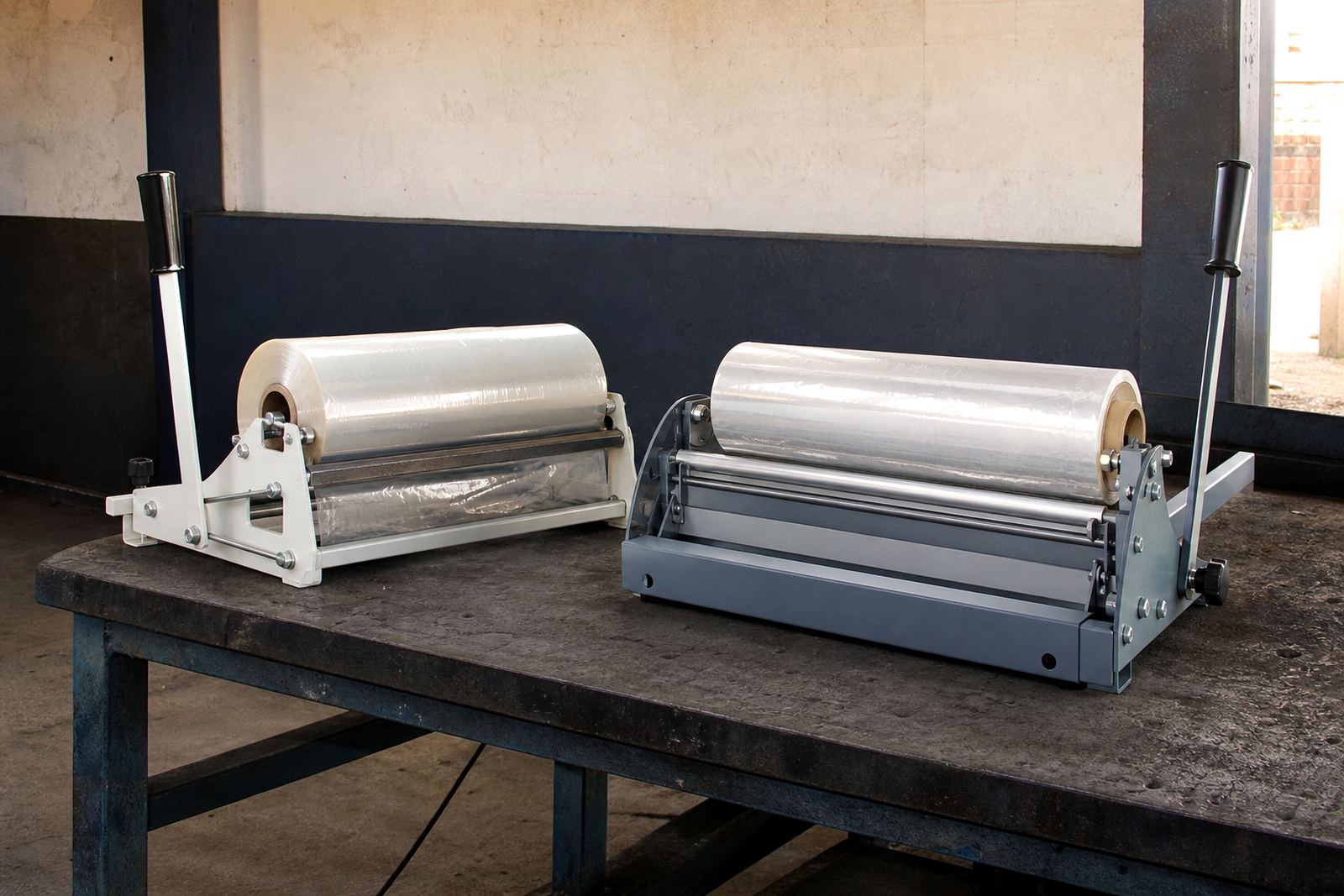
On a light packing line, a basic manual cutter can be the right answer. It suits smaller volumes, short shifts and simple wrap jobs where one operator is handling occasional pallet or carton wrapping. If the film is changed a few times a day and the work area is steady, a simple unit usually does the job without adding cost or complexity.
When the line runs harder, with repeated cuts throughout the shift, a heavier unit becomes worth a closer look. In Germiston, Johannesburg and Boksburg we often see lines where the cutter is used by more than one operator, or where the film is pulled and trimmed hundreds of times a day. That is when wear starts showing up faster than expected.
Use this quick check before choosing:
- How many cuts are made per shift?
- Is the film light, standard or thick gauge?
- Will one person use it or several operators?
- Does the line run in heat, dust or coastal humidity?
- Will the unit stay in one spot or move between pack points?
When A Basic Manual Cutter Makes Sense
A basic manual cutter is usually enough where the packing work is controlled and predictable. It gives you direct control, is easy to train on and can suit businesses that want a simple tool with low running cost. For smaller operations in Pretoria, Polokwane or Midrand, this can be a practical fit if the operator only needs clean film cuts and basic dispensing.
It also works well where the team changes often and the learning curve needs to stay short. A manual unit is straightforward to inspect, clean and store. If your staff already handle routine wrapping carefully, there is often no need to pay for extra capacity you will not use.
Choose a basic unit when:
- Film is cut only a few dozen times a day
- The packing line is single shift or low volume
- Budget is tight and the application is simple
- Operators need a light, easy-to-handle tool
- You want a quick setup with minimal maintenance
Signs Your Line Needs Heavy-Duty Capacity
Heavy-duty cutters and dispensers are built for repeated use, tougher handling and busier pack lines. If your crew works with thicker shrink film or high-stretch pallet film, a stronger unit can reduce jamming, uneven cuts and operator strain. This is especially relevant for bigger distribution sites in Durban, Cape Town and large warehouses around Ekurhuleni where the line does not slow down for long.
Look for these warning signs. If the blade is wearing out too quickly, the handle or frame feels loose, or operators are using extra force to get a clean cut, the unit is probably undersized. A heavier model is also a better choice where roll changes happen often and the team needs consistency across shifts.
Heavy-duty is worth it when:
- The line runs long hours or multiple shifts
- Operators are cutting thicker or tougher film
- There is frequent movement, knocking or rough handling
- The site has dust, heat or coastal corrosion risk
- Breakdowns are costing time on the packign line
A Simple Field Test Before You Buy
The best choice is often clear once you test the cutter in the real working environment. A cutter can feel fine in a sales area but behave very differently next to a fast conveyor, on a mezzanine, or beside a pallet station where the operator is working under pressure. At Film Cutters, site assessments help match the tool to the film grade, the line speed and the way your team actually works.
Run a short trial and check the result against the same job the team does every day. Ask operators to use the cutter for a full shift if possible. Then check whether the cut is neat, whether the film feeds smoothly and whether the hand grip stays comfortable by the end of the day.
Trial checklist:
- Does the cutter slice cleanly without tearing the film?
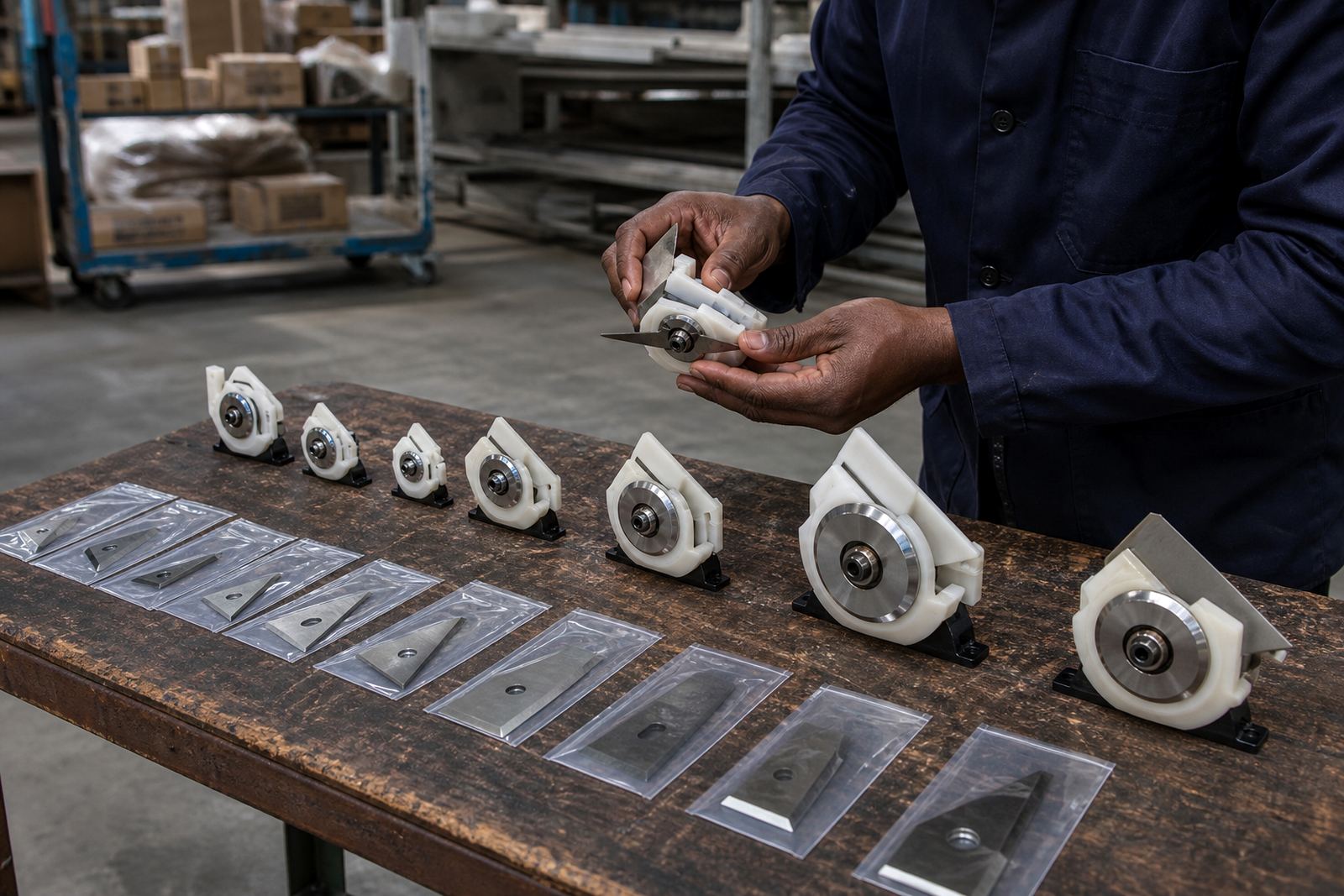
- Is the blade easy to replace and keep safe?
- Can operators work without wrist strain?
- Does the dispenser keep the roll stable during use?
- Can the unit handle the actual roll sizes used on site?
Matching The Cutter To South African Site Conditions
Conditions matter. A line in Durban faces humidity that can affect film handling and metal parts over time. In Cape Town, some sites deal with coastal air and salt exposure. In Gauteng, dust and forklift traffic are often the bigger problem. For this reason, the same cutter may last very differently from one site to another.
Heavier units can be a better long-term choice where the environment is harsher or where maintenance access is limited during production hours. If your site has load-shedding, you may also want equipment that stays simple to use during downtime, because the packing team may need to restart quickly once power returns. A cutter that is easy to inspect and reset can save time when every minute counts.
Ask these practical questions:
- Will the cutter sit in one area or travel with the line?
- How often will blade replacement be needed?
- Is the site exposed to moisture, dust or rough handling?
- Do you need spares on hand for quick recovery?
- Will municipal safety rules or internal audits affect the setup?
How Film Cutters Helps You Decide And Keep The Line Moving
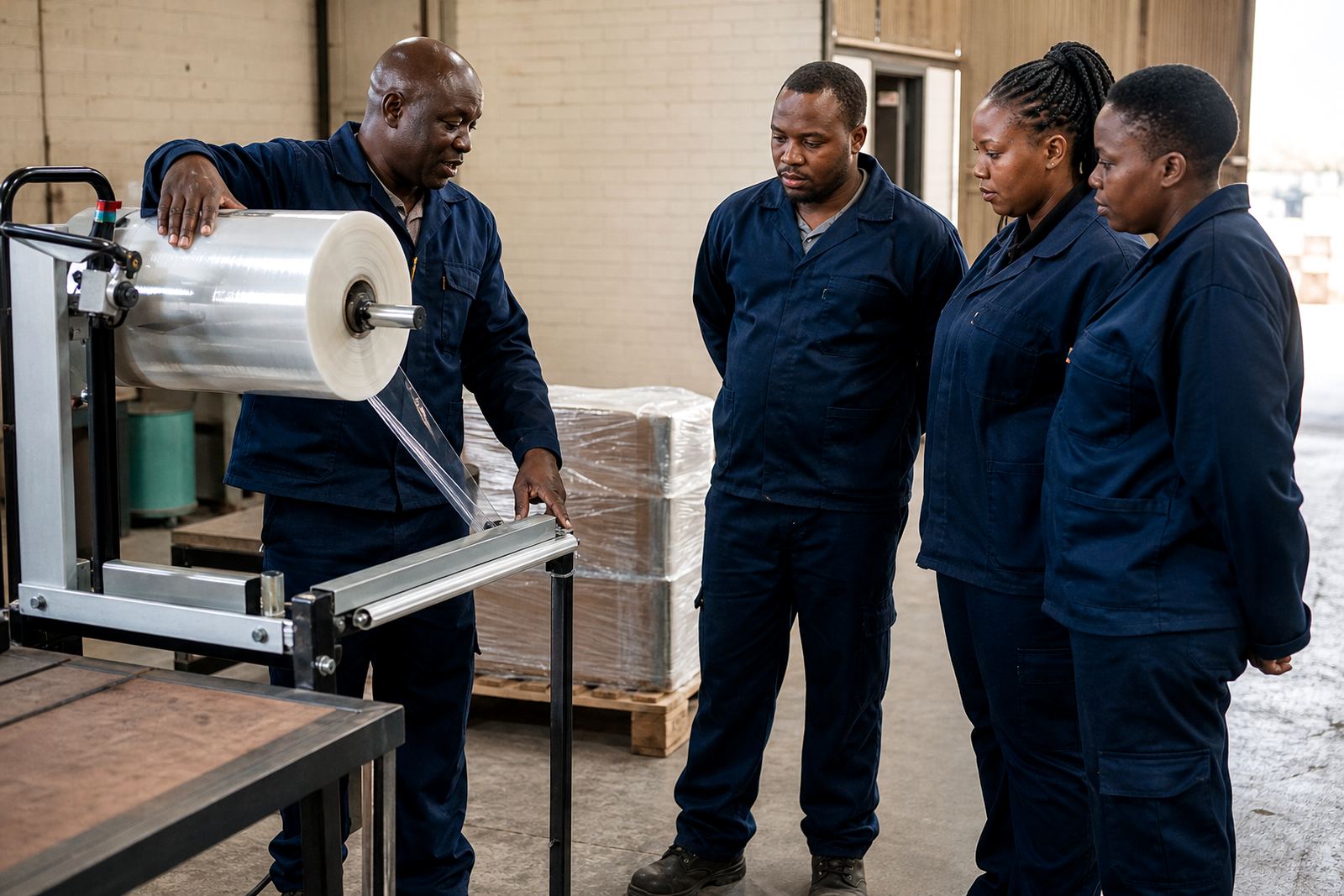
Film Cutters supplies cutters and dispensers for shrink film and stretch film lines across South Africa, with support from Germiston to Johannesburg, Pretoria, Durban, Cape Town, Polokwane and nearby areas like Boksburg and Midrand. The team works with customers on installation, line setup, preventive servicing and operator training so the equipment matches the job from day one.
If you are unsure whether a manual or heavy-duty option is best, the safest approach is to compare the actual film, the actual line speed and the actual operator load. A modest unit can be enough in the right setting, but a stronger one pays for itself when use is constant and reliability matters more than the lowest upfront cost.
Support can include:
- Onsite installation and line setup
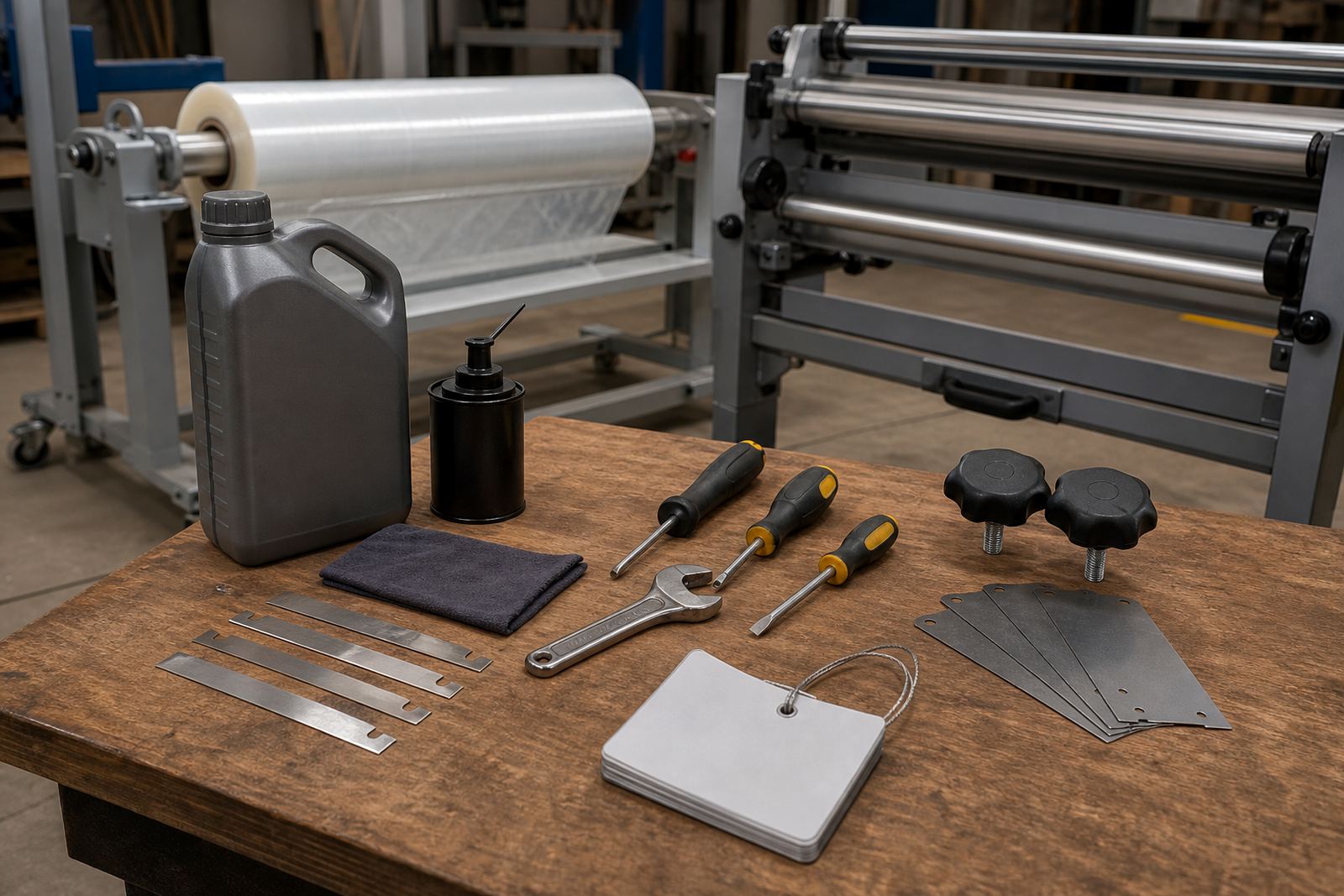
- Blade replacement and dispenser repairs
- Roll change support and safety checks
- Preventive servicing and breakdown callouts
- Equipment upgrades and spares supply