Start with the packing line layout before you choose a mount
The best mounting option depends on how film is loaded, where the operator stands, and how much space is available around the wrapping point. On busy lines in Johannesburg, Pretoria or Boksburg, the wrong position can cause extra reaching, poor blade access and slower roll changes. In coastal sites like Durban and Cape Town, you also need to consider corrosion, humidity and how easy it is to keep the unit clean.
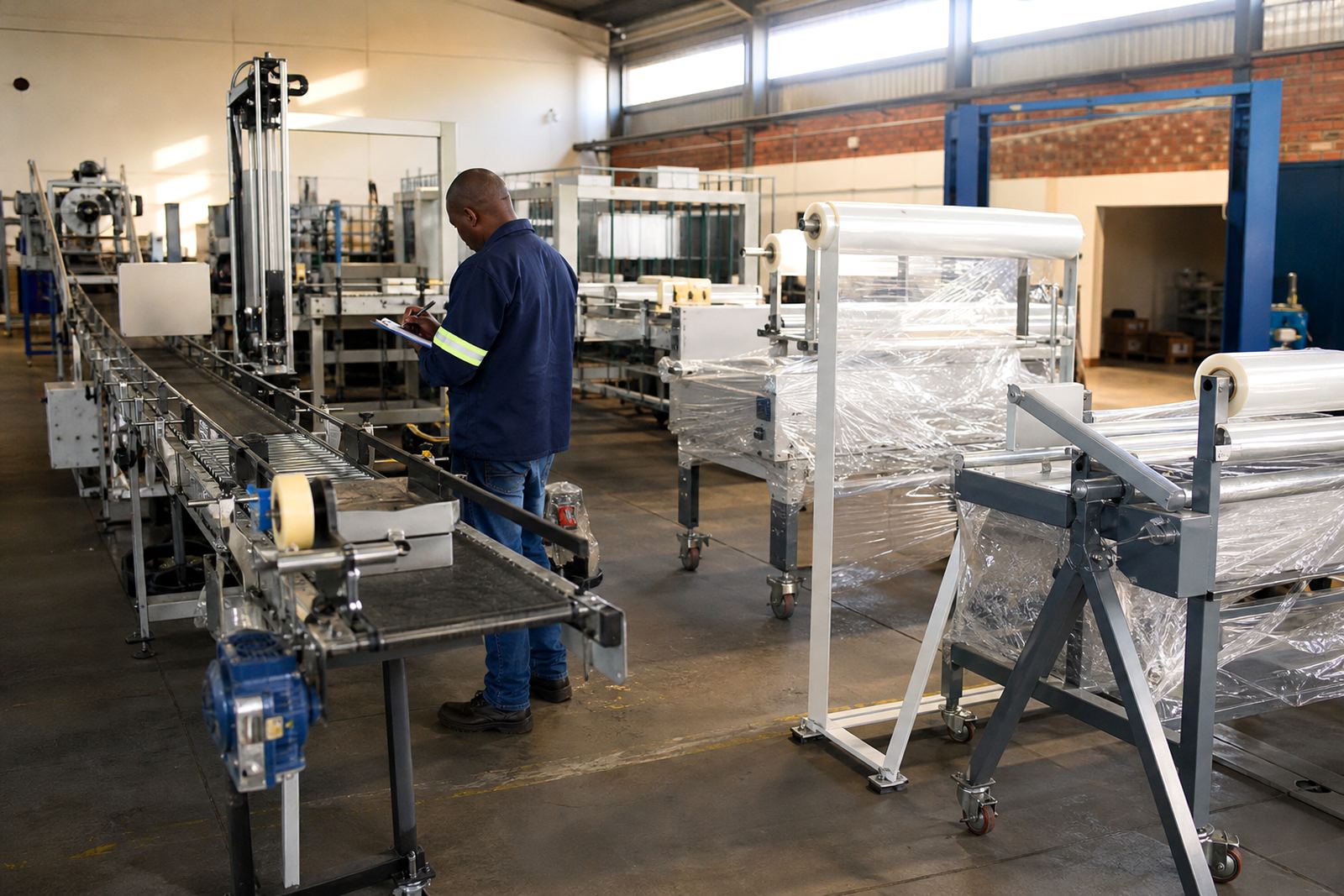
Before you fix anything in place, map the flow from pallet or pack station to the film roll and then to the cutter. Check who handles the roll, who trims the film, and whether the operator works from one side only or moves around the line. A good layout keeps the cutting action close to the film path, but not where it can snag clothing or interfere with cartons.
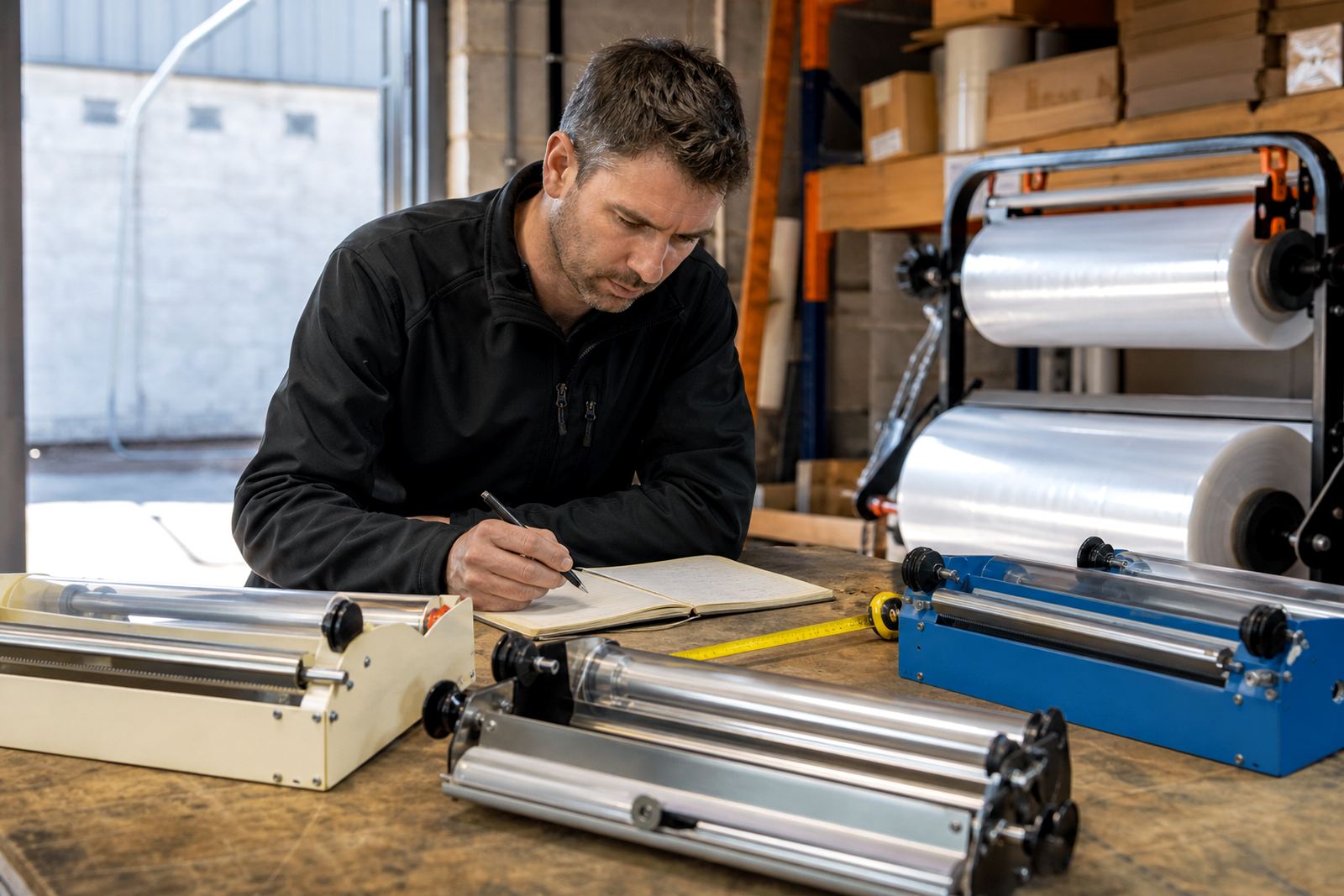
- Measure available floor and wall space in millimetres, not by eye.
- Note operator reach height and whether the line runs seated or standing.
- Check if the cutter must suit manual loading, semi-automatic wrapping or a conveyor line.
- Allow enough clearance for blade replacement and routine servicing.
Bench mounting suits compact stations and short film runs
Bench mounting works well where the cutter needs to sit close to the wrapping point and the operator works from a fixed position. It is common on smaller packing tables, carton prep stations and light-duty wrapping areas. The advantage is simple access. The operator can see the film path clearly and make quick adjustments without walking around the line.
This option suits sites where packers handle smaller volumes or change between products often. It can also help where the line layout changes from shift to shift. A bench mount is usually easiest to install if the surface is solid, level and strong enough to carry the unit without vibration. If the bench moves or flexes, the cutter position can shift slightly and that leads to messy film edges.
- Best for: compact packing rooms, mixed product lines and temporary stations.
- Check: bench height, load rating and operator clearance at the front edge.
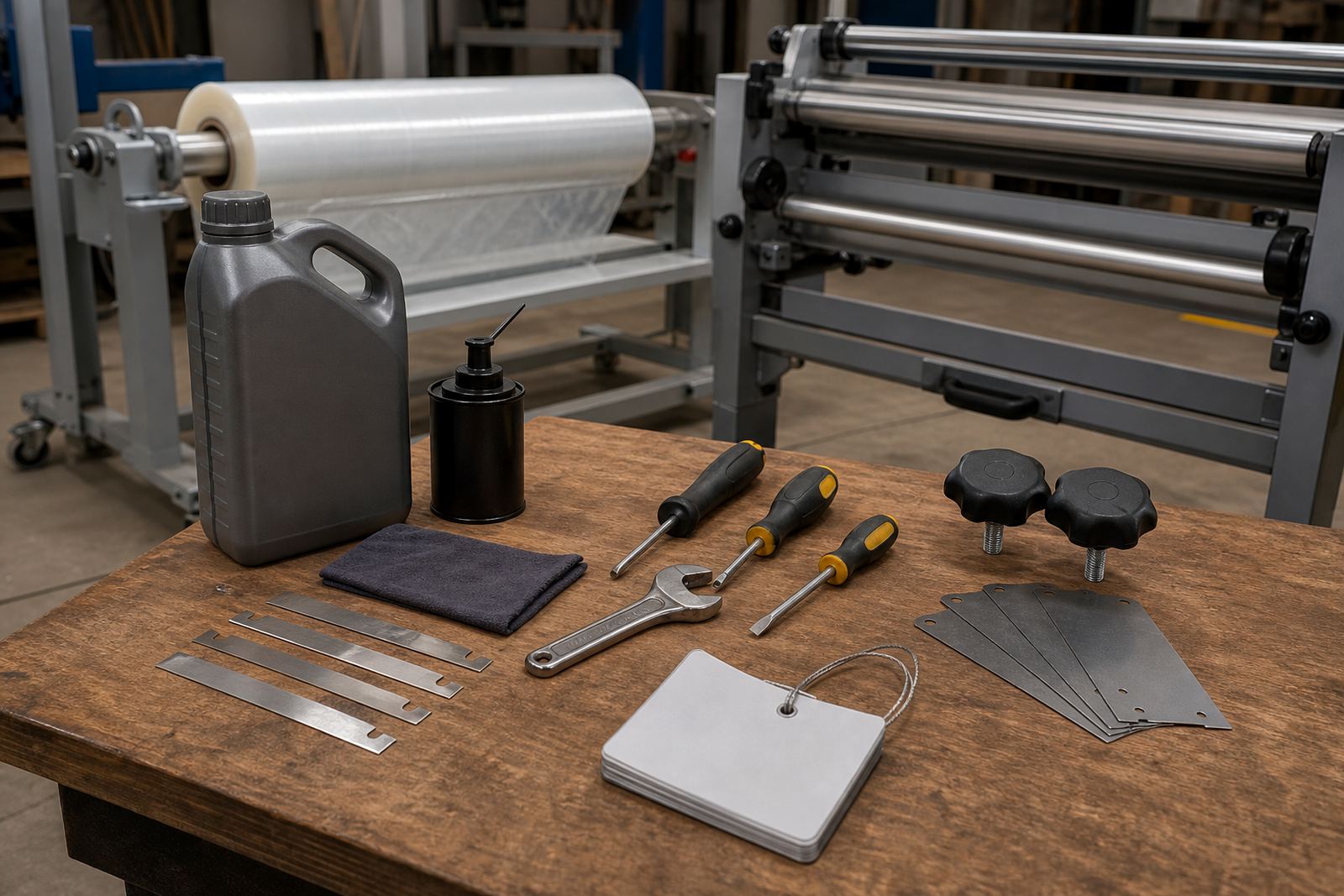
- Good practice: keep spare blades and tools within arm's reach but not loose on the surface.
Side mounting keeps the working area clear
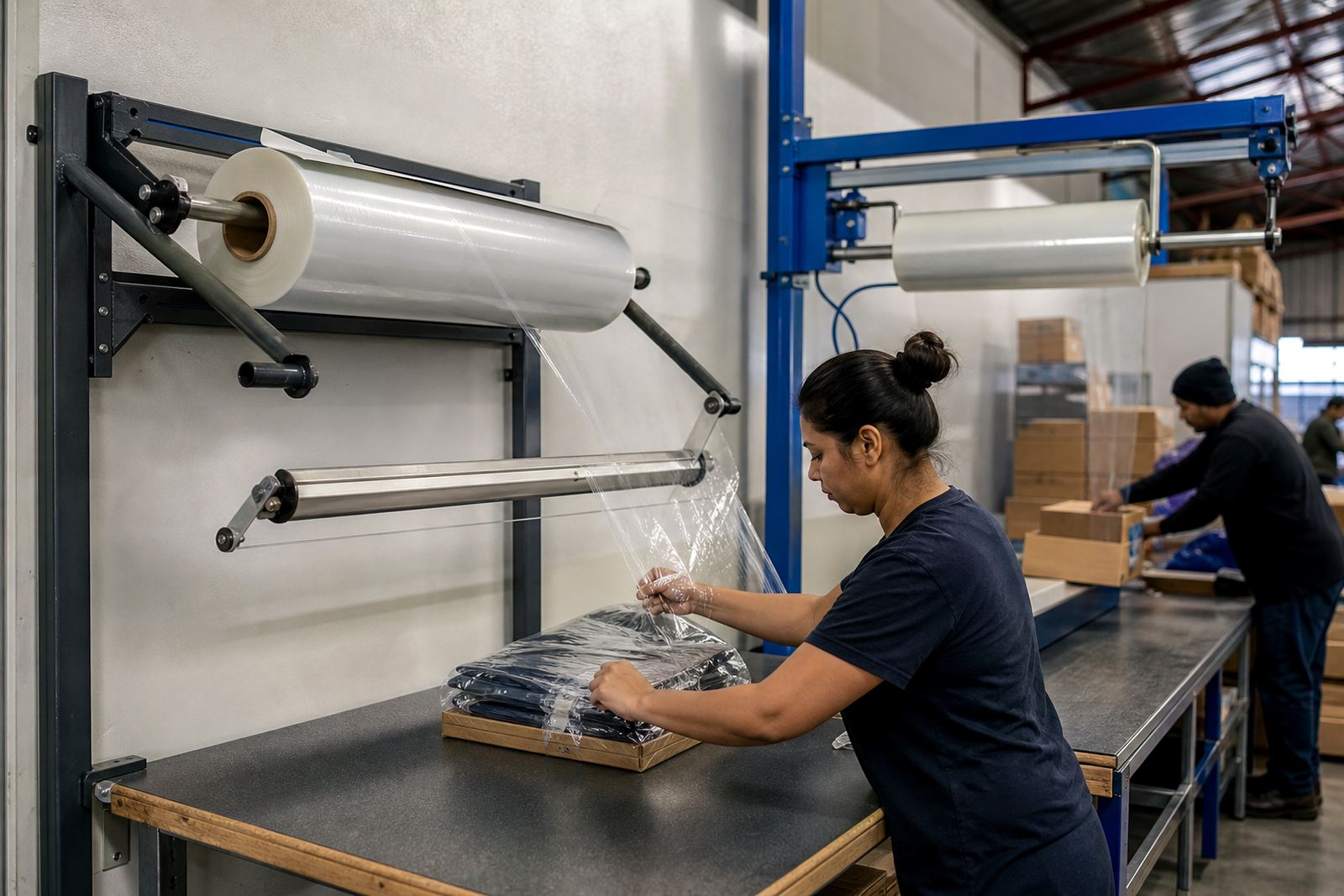
Side mounting is useful when floor space is limited and you want the cutter out of the main working zone. It is often chosen for conveyor-side applications and for sites where pallets, trolleys or roll cages move past the station. The cutter sits off to the side so the operator can feed film in a straight line while the centre of the station stays open.
For busy distribution and production sites in Midrand, Germiston or Polokwane, side mounting can reduce clutter and lower the risk of people bumping into the unit. It also helps if the line has regular handovers between operators because the film path remains visible from one angle. Make sure the mount is fixed firmly to a suitable frame or support, and that there is enough side access for blade checks and roll loading. A loose side bracket will only cause trouble later on.
- Best for: narrow packing lanes, conveyor edges and high traffic work areas.
- Check: support strength, operator hand clearance and line travel past the mount.
- Use if: you need a tidy station with less obstruction underfoot.
Overhead mounting works where floor space is tight
Overhead mounting is a strong option when the packing floor is busy and every square metre matters. The cutter is positioned above the working zone, which keeps the base area open for pallets, trolleys and foot traffic. This can work well in larger depots and packing halls where the film is dispensed from above to a set point on the line.
It is important to get the height right. Too high and the operator strains when pulling the film down. Too low and the unit may interfere with lift equipment or overhead movement. In areas with dust, moisture or salt air, overhead fittings should be checked regularly so brackets, fasteners and moving parts stay in good condition. If the site has load-shedding interruptions, make sure the line can stop safely without the cutter becoming awkward to reset when power returns.
- Best for: open packing halls, narrow walkways and sites with frequent pallet movement.
- Check: ceiling or frame strength, safe reach height and access for servicing.
- Watch for: overhead pipes, cables, sprinklers and other fixed plant.
Floor mounting is practical for larger stations and heavier handling
Floor mounting suits installations where the cutter needs a stable base and a fixed position relative to the packing line. It is often used on heavier-duty wrapping stations or where the film roll is handled by several people during a shift. A floor-mounted unit can give very steady alignment, which is useful when repeat accuracy matters and the film path must stay consistent all day.
This option needs more planning than the others. The base must sit on a level surface and the fixing points should be suitable for the slab or anchor setup at the site. In Germiston, Boksburg and other industrial areas, floor space is often shared with forklifts and delivery traffic, so the unit must be placed where it will not become a trip point or block movement. If the floor has dust, washdown or frequent cleaning, allow for easy access around the base so the area can be maintained properly.
- Best for: fixed packing stations, heavier film handling and repetitive workflows.
- Check: slab condition, anchor points, traffic flow and cleaning access.
- Good practice: mark the operating zone clearly for operators and supervisors.
A simple installation checklist before you sign off the site
Before any mounting option is signed off, do a proper site assessment and confirm that the unit matches the work pattern. A good setup reduces strain on operators, cuts wasted film and makes blade changes safer. It also helps with training, because staff know exactly where to stand, how to load the roll and how to keep hands clear of the cutting point.
Use this final check before handover:
- Confirm the mounting position does not interfere with cartons, conveyors or pallet movement.
- Test the film feed path with the actual roll size used on site.
- Check blade access for replacement and safe cleaning.
- Make sure the operator can reach controls or the cut point without over stretching.
- Inspect all fixings after the first few runs, then again after a week of use.
If the line changes often, keep the layout flexible enough for future upgrades. A small adjustment now can save repeated callouts later on, especially where staff rotate between shifts or the site runs different pack sizes through the same area.
When to ask for installation support
If you are unsure which mounting option suits your site, ask for an onsite assessment before the equipment is fixed in place. That is especially useful when the packing line sits in a tight corner, near a loading bay or beside other machinery. The right mounting choice should make the job easier, not force operators to work around the cutter all day.
Support is also worth arranging when you need line setup, preventive servicing, blade replacement, dispenser repairs or operator training. A well mounted cutter is only part of the answer. The whole station must work together, from roll change support to safety checks and spares supply. With the right setup, your team can keep production moving across Johannesburg, Pretoria, Durban, Cape Town and Polokwane without unnecessary stoppages.
For many sites, the best mount is the one that fits the layout first and the workflow second, not the other way round.