Grouped Packs in Alrode Needed Faster Film Handling
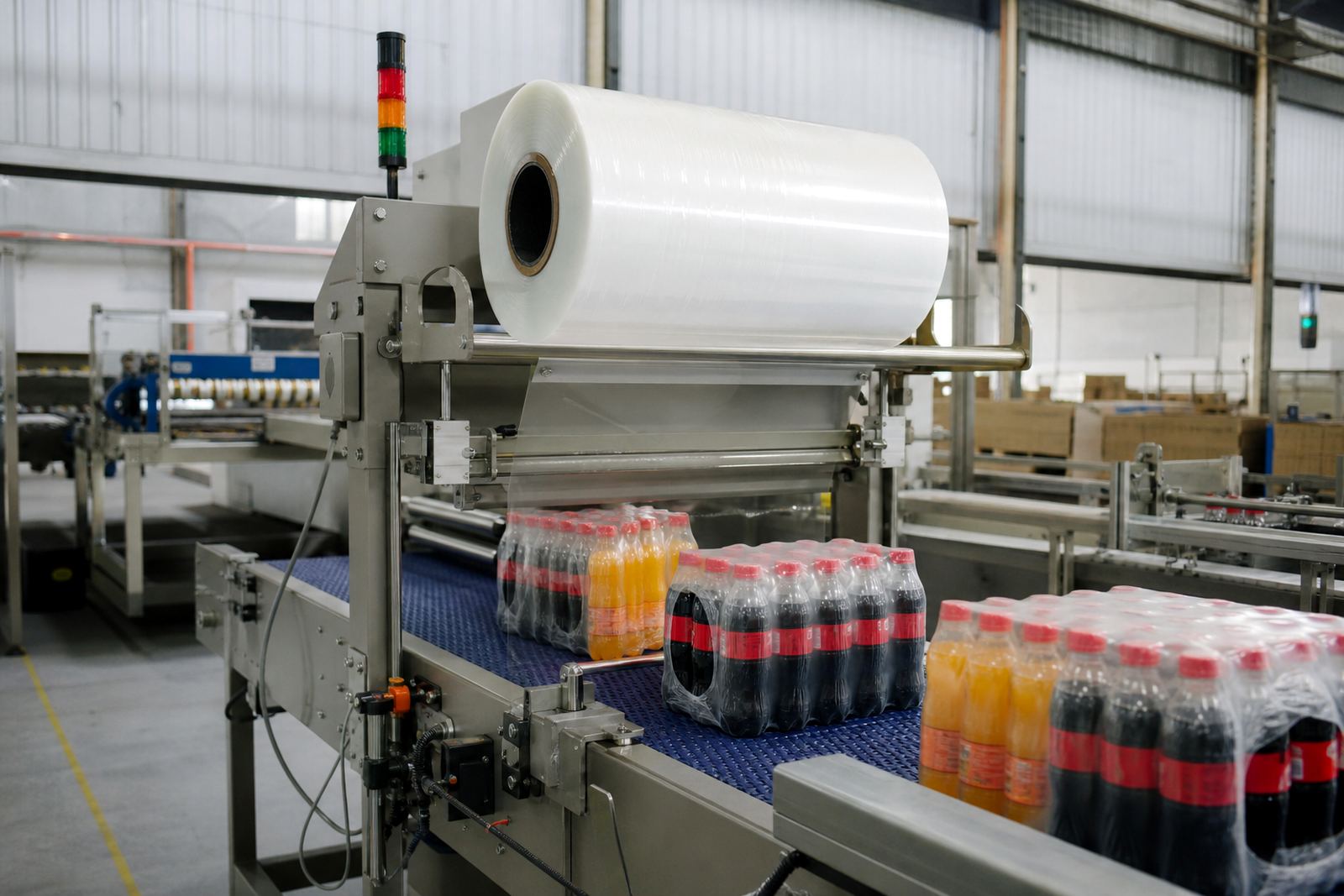
The client was a beverage packing operation in Alrode, Germiston, handling grouped packs that moved from the pack area to palletising in steady volumes. The problem was not the film itself, it was the time lost each shift while operators struggled with uneven cuts, awkward roll changes and film waste around busy packing stations. On a line like this, every small delay stacks up quickly and starts affecting throughput.
The brief was clear: improve film handling on the line so operators could cut and dispense shrink film more quickly, with less strain and better control. The site needed equipment that suited a practical industrial floor, with mixed shift staffing, regular clean-downs and enough dust movement to affect small moving parts if they were not kept in check. They also wanted a setup that would hold up during load-shedding recovery, when the line starts and stops more often than planned.
We worked with the production team to understand where the film was being loaded, where operators stood during wrap prep, and where the line was losing time. That let us match the right cutter and dispenser arrangement to the pack format rather than forcing a one-size-fits-all layout.
What We Supplied for the Packing Line
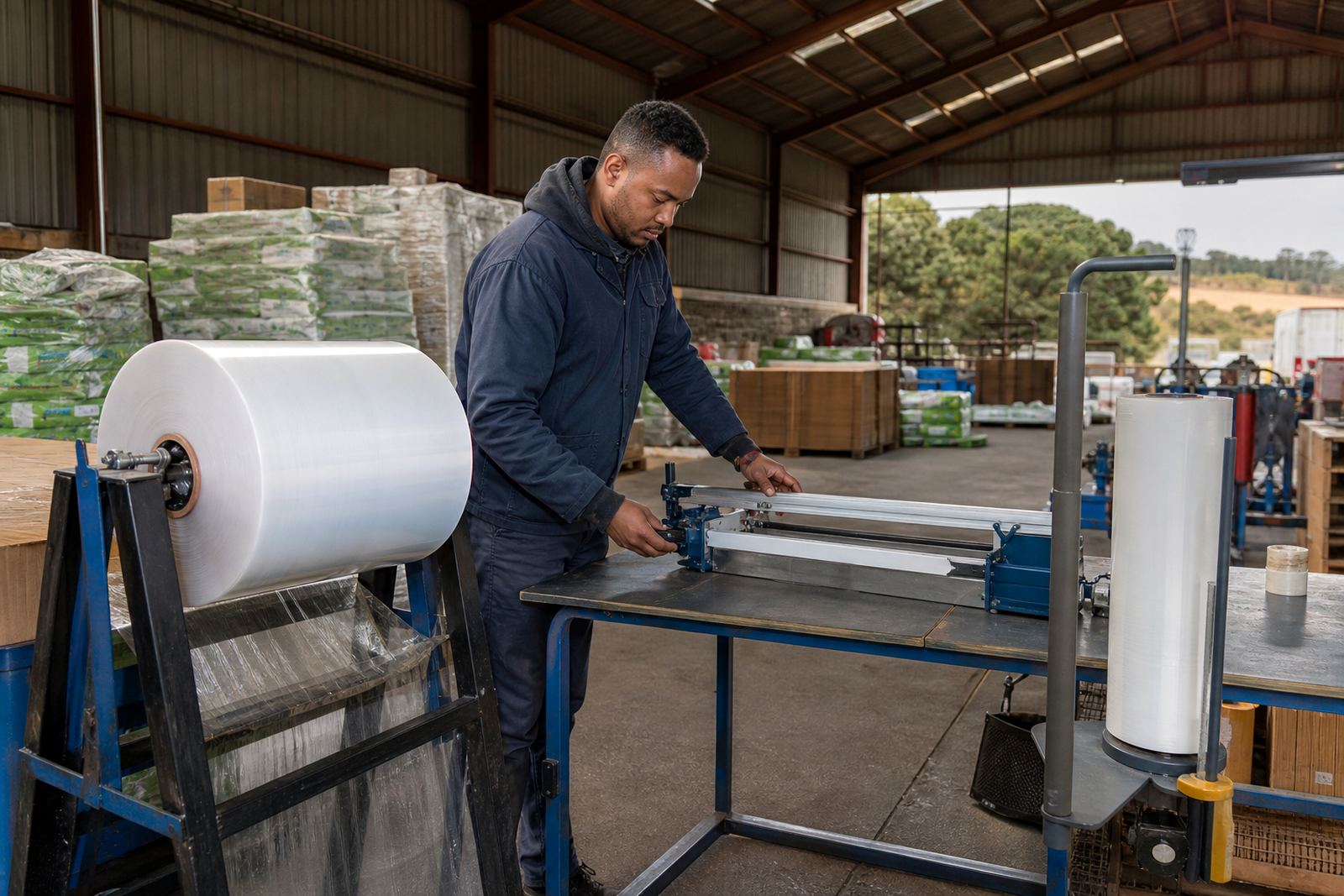
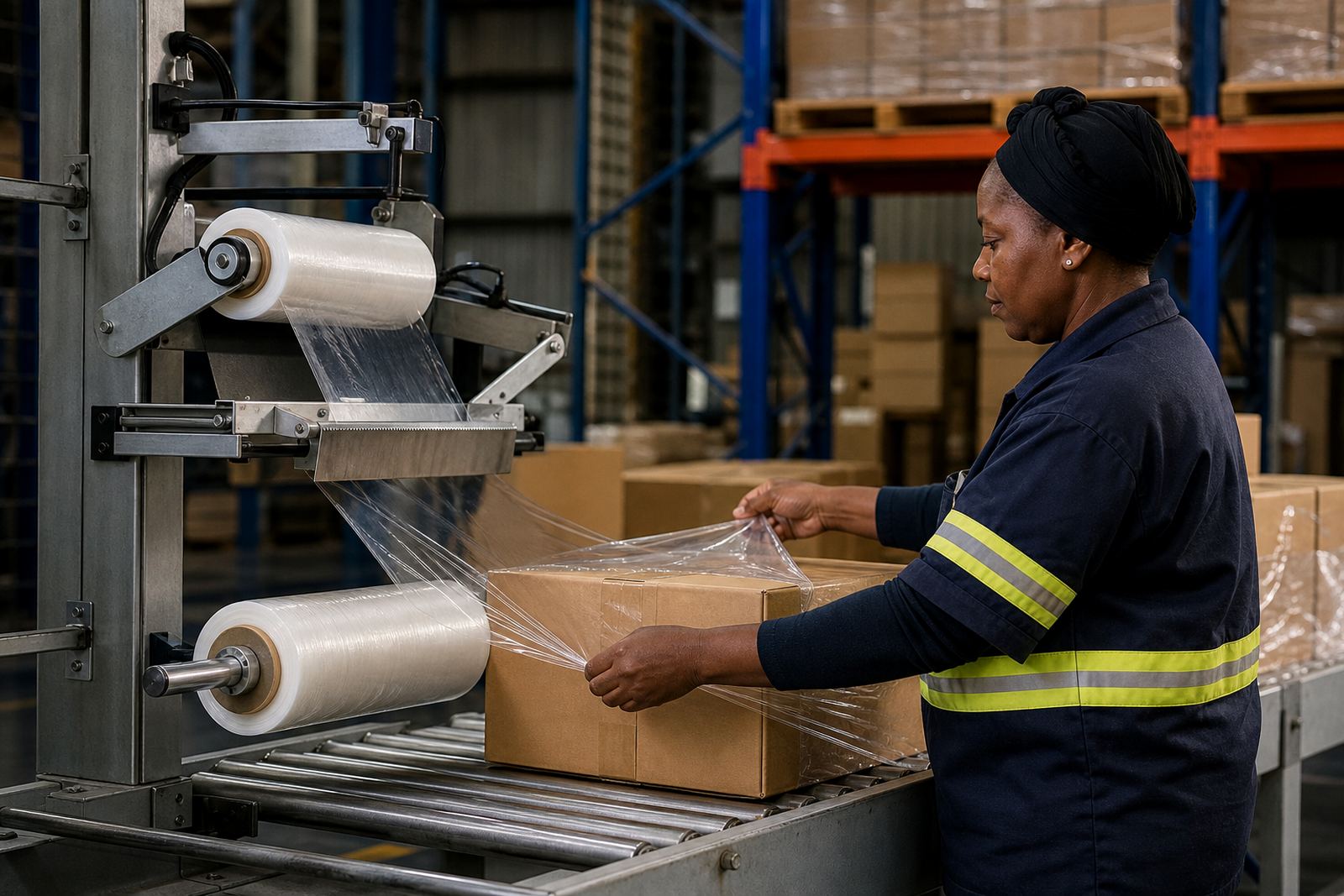
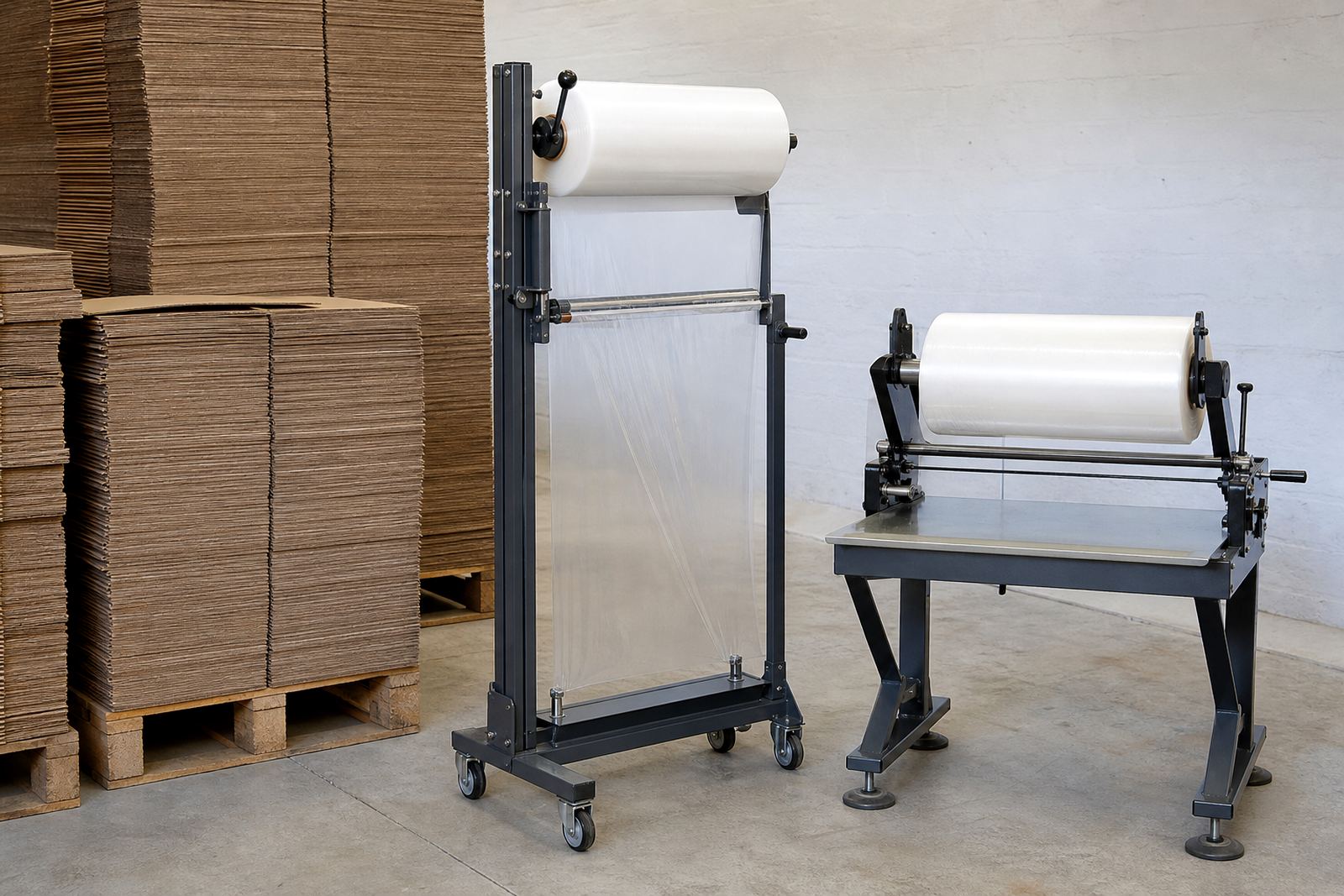
The project centred on shrink film and stretch film cutters and dispensers selected for packing line use. The key was simple, repeatable movement. The operators needed a cleaner cut, a steadier feed and a dispenser that could sit close to the working position without getting in the way of the pack flow. We supplied units suited to regular shift use and set them up so the team could change rolls without wrestling the film or stopping the line for too long.
Where the previous setup caused snagging and uneven hand cuts, the new arrangement gave the operators a more predictable film path. We also made sure the cutting points were easy to reach, because on a beverage line the packers are already dealing with bottle alignment, carton movement and pallet staging. If the film station is awkward, the whole area slows down.
For this site we focused on practical details that matter in South African pack houses: parts that are easy to clean, fittings that do not loosen too quickly, and components that are simple to inspect during a break. That matters even more in Germiston and Johannesburg industrial areas where lines work long hours and maintenance windows are short.
- Film cutters for controlled, repeatable cuts
- Dispensers for faster roll handling at the packing point
- Spare blades and wear parts for site support
- Operator guidance for safer film loading and changeover
Installation, Line Setup and Training Over 2 Weeks
The work was completed over 2 weeks, starting with a site assessment and line walk-through. We checked the packing positions, roll access, changeover rhythm and the main points where operators were losing time. After that we completed the line setup, fitted the units and confirmed the best working height for the team. The aim was to keep the motion natural, not force people into an awkward stance just to make the film behave.
During installation we also carried out safety checks and made small adjustments for the site’s clean-down routine. Beverage plants often wash down around the line more often than other packing areas, and even if the film station is not directly in the wet zone, humidity and regular cleaning still affect tools over time. The fittings were positioned for easy access, and the team was shown how to inspect the blades and check the feed path before a shift started.
We then ran operator training with the line team and shift leads. This covered safe blade handling, roll change support, basic fault spotting and when to call for service instead of trying to force a jam. The goal was to keep the system simple enough for the whole crew to use, not just one experienced person.
- Week 1: assessment, measurements and equipment selection
- Week 1 to 2: installation, setup and initial testing
- Week 2: operator training, safety checks and handover
Constraints We Had to Work Around on Site
This project had the usual pressures of a live production environment, but a few stood out. The first was space. The packing area needed to keep moving while we worked, so we had to complete setup without blocking the path to staging or creating a bottleneck near the pallet area. The second was staffing. With different operators across shifts, the equipment had to work consistently no matter who was on line.
Another factor was the South African power situation. The site wanted a setup that would not become awkward each time power returned after an interruption. That meant keeping the film handling process straightforward, with no unnecessary steps that would slow restart. We also factored in the local industrial conditions in Alrode, where dust and vibration can shorten the life of poorly fitted hardware if it is not checked properly.
There was also the matter of pack variation. The line handled grouped beverage packs, and the film load had to suit slightly different bundle sizes without constant fiddling. We adjusted the setup so the operators could keep the process moving instead of stopping to rework the film every few bundles.
- Live line conditions with limited downtime
- Multiple shifts and varying operator experience
- Dust, vibration and regular clean-down cycles
- Restart pressure after load-shedding events
Results on the Line After Hand-over
Once the new cutters and dispensers were in place, the difference was immediate in the way the operators handled each roll. Film loading became quicker, cut consistency improved and the team spent less time correcting edge tears or trying to square up a bad cut. That meant better rhythm around the packing point and less stop-start handling at the film station.
The client reported cleaner roll changeovers and less waste from miscuts. They also found the training useful because it gave the shift team a common method for loading and checking the equipment. When everyone does it the same way, the line runs more evenly and maintenance calls are easier to manage. The site did not need a major redesign, just proper film handling equipment matched to the job.
For us, the best sign was that the line team could carry on without constant intervention. The solution did not try to overcomplicate a simple task. It just made the packing process faster, safer and more predictable, which is exactly what a beverage packer in Alrode needs when volumes are steady and time is tight.
What We Would Repeat on a Similar Beverage Line
If we were to do this type of project again, we would start with the same practical steps: assess the line in motion, watch the roll change pattern and fit the equipment to the real working height of the operators. That is often where the difference is made. A cutter that looks fine on paper can still be awkward if the loading point sits too high or too far from the packer.
We would also repeat the focus on training and spare support. On a beverage line there is little value in a neat installation if the team cannot keep it going after a blade change or minor wear issue. Preventive servicing, blade replacement and roll change support all play a part in keeping the line moving. This is especially true for sites serving Johannesburg, Pretoria, Durban, Cape Town and Polokwane, where transport lead times and production pressure can stretch if spare parts are not planned properly.
The Alrode job was a straightforward industrial improvement, but it showed how much time can be saved when film handling is treated as part of the line, not an afterthought. That is the kind of work we prefer, practical and measured, with no fuss.
For beverage packers in Ekurhuleni and beyond, the main lesson is simple: if the film station works well, the rest of the packing line usually follows.
Key facts
| Project location | Alrode, Germiston, Ekurhuleni |
|---|---|
| Client type | Beverage packer handling grouped packs |
| Project duration | 2 weeks |
| Supply scope | Shrink film and stretch film cutters and dispensers |
| Key services | Site assessment, installation, line setup, training, safety checks |
| Support coverage | Breakdown callouts, blade replacement, preventive servicing and spares supply |