What skewed film feed looks like on the line
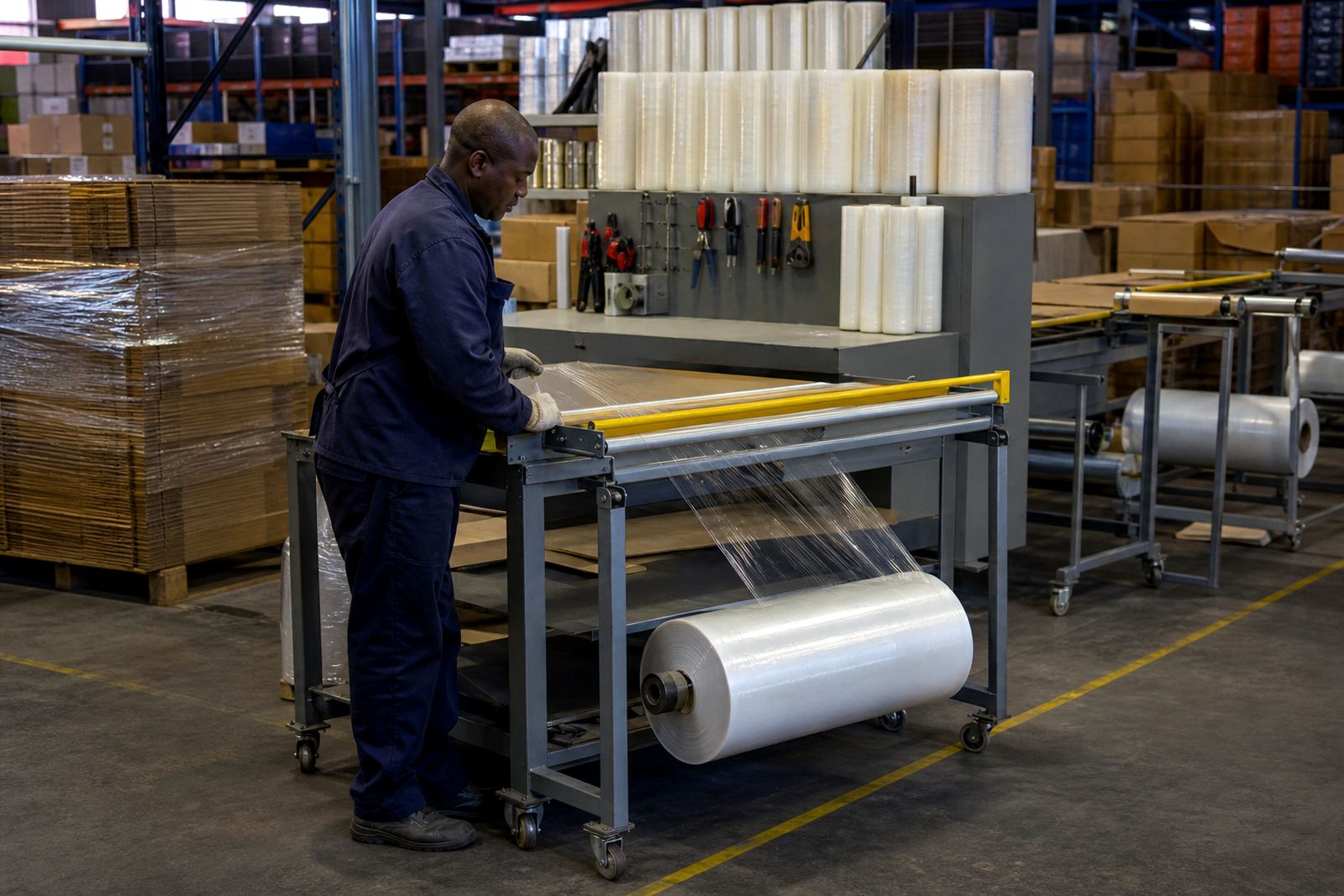
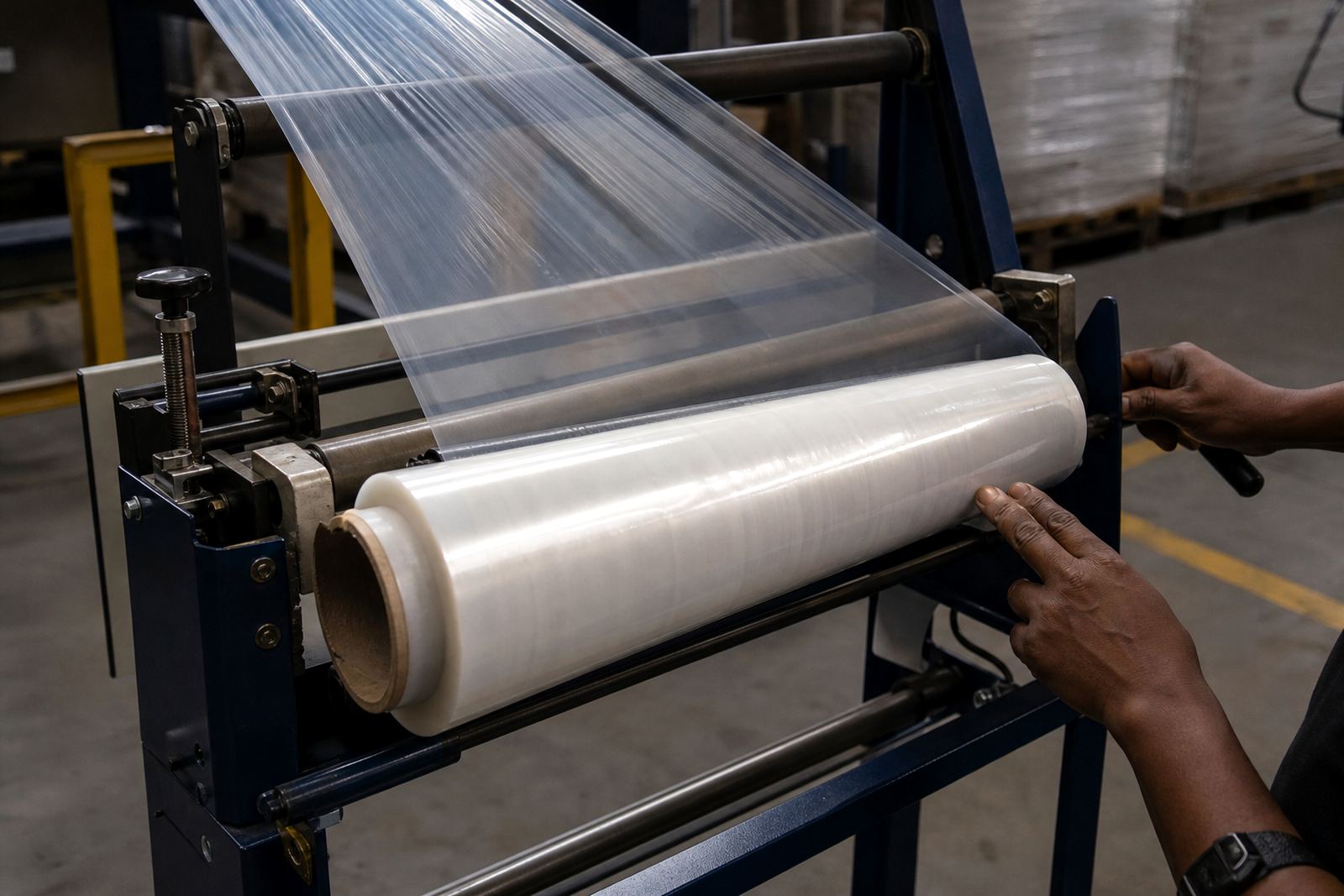
When shrink film or stretch film feeds out of line, the wrap starts drifting to one side instead of tracking straight through the cutter and dispenser. Operators usually notice it first as uneven overlap, a twisted edge, film rubbing on the frame, or a cut that pulls the next sheet off centre. On a busy line in Germiston or Midrand, that drift can build up quickly and lead to more stoppages than people expect.
The trouble is not always the film itself. Skew can start in the roll cradle, continue through the guide path, and show up only at the point where the blade or dispenser is working harder than it should. If the line is running during load-shedding recovery or after a rushed changeover, the risk goes up because small setup errors are easier to miss.
The first checks operators should make before calling for help
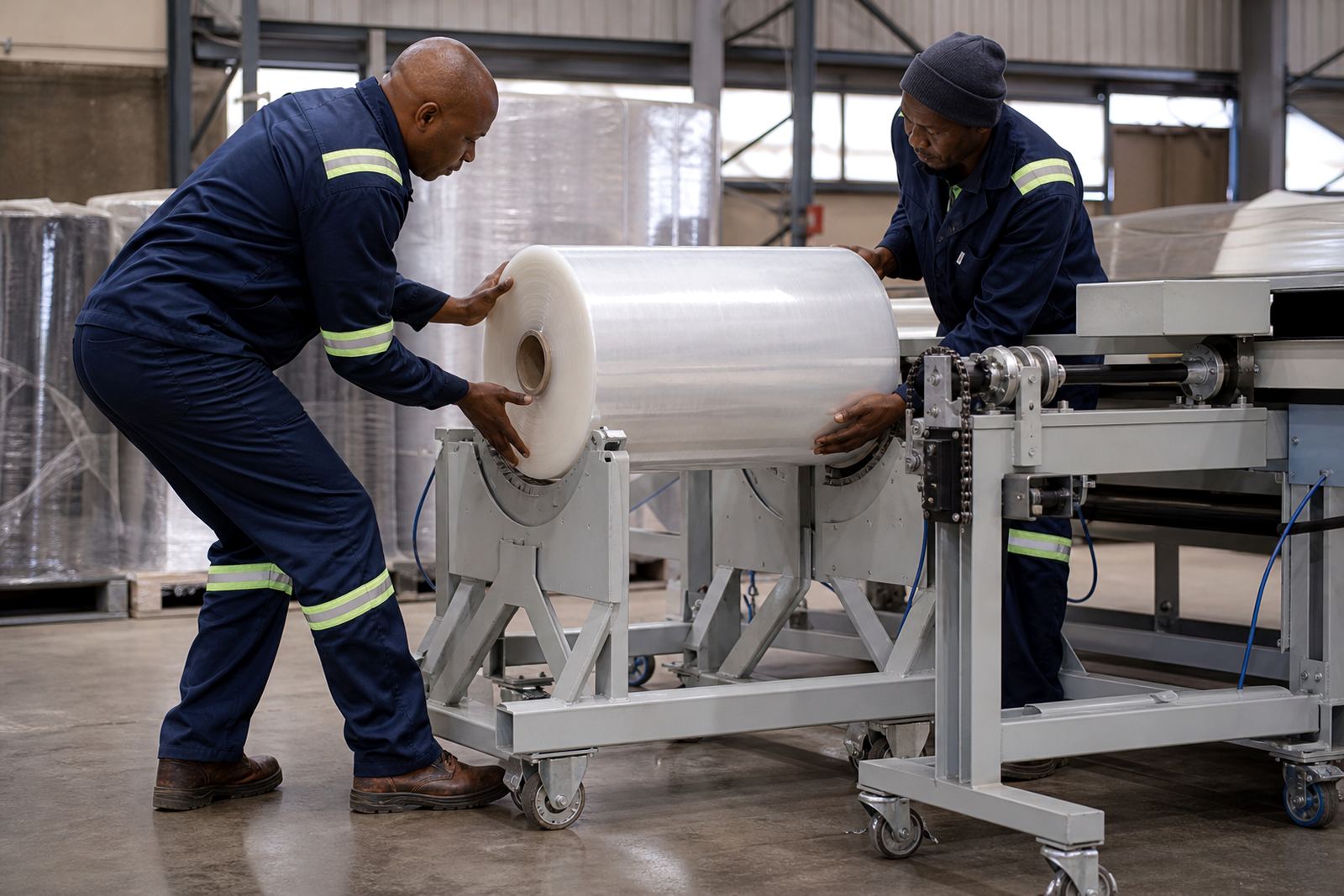
Most skewed feed problems can be narrowed down with a careful visual check. Before the team strips the line down, look at the roll, the path, and the contact points. A roll sitting off centre, damaged core, or uneven unwind can push the film sideways from the start.
- Check that the roll is seated squarely on the spindle and the core is not oval or split.
- Make sure the film is threaded through the guides in the correct order and direction.
- Inspect the edge of the film for nicks, wrinkles, or telescoping on the roll.
- Confirm the tension setting is suitable for the film type and the product weight.
- Look for build-up, dust, or adhesive residue on rollers, guides, and blades.
If the problem appears after a roll change, it is often a setup issue rather than a major fault. A quick rethread and a fresh look at the tracking can fix it, although a line that keeps drifting probably needs a closer inspection.
How worn parts and poor alignment pull film off track
Even a good film roll will feed badly if the hardware is out of line. A bent guide, loose bracket, worn blade holder, or damaged roller can pull the film slightly off centre with every cycle. That small angle is enough to create a skewed wrap by the end of the shift.
In packaging areas where forklifts move close to the line, minor knocks are common. A dispenser can be bumped, a guard can shift, and the machine still appears usable until the wraps start coming out uneven. On older lines, general wear can also show up as play in the moving parts, which makes consistent tracking harder.
- Check for loose mounting bolts and shifted brackets after any maintenance or impact.
- Inspect rollers for flat spots, rough edges, or side-to-side movement.
- Look at the cutter edge for dullness that may drag the film instead of cutting cleanly.
- Test whether the dispenser sits level on the frame and does not twist under load.
Film quality, storage and humidity can change the feed
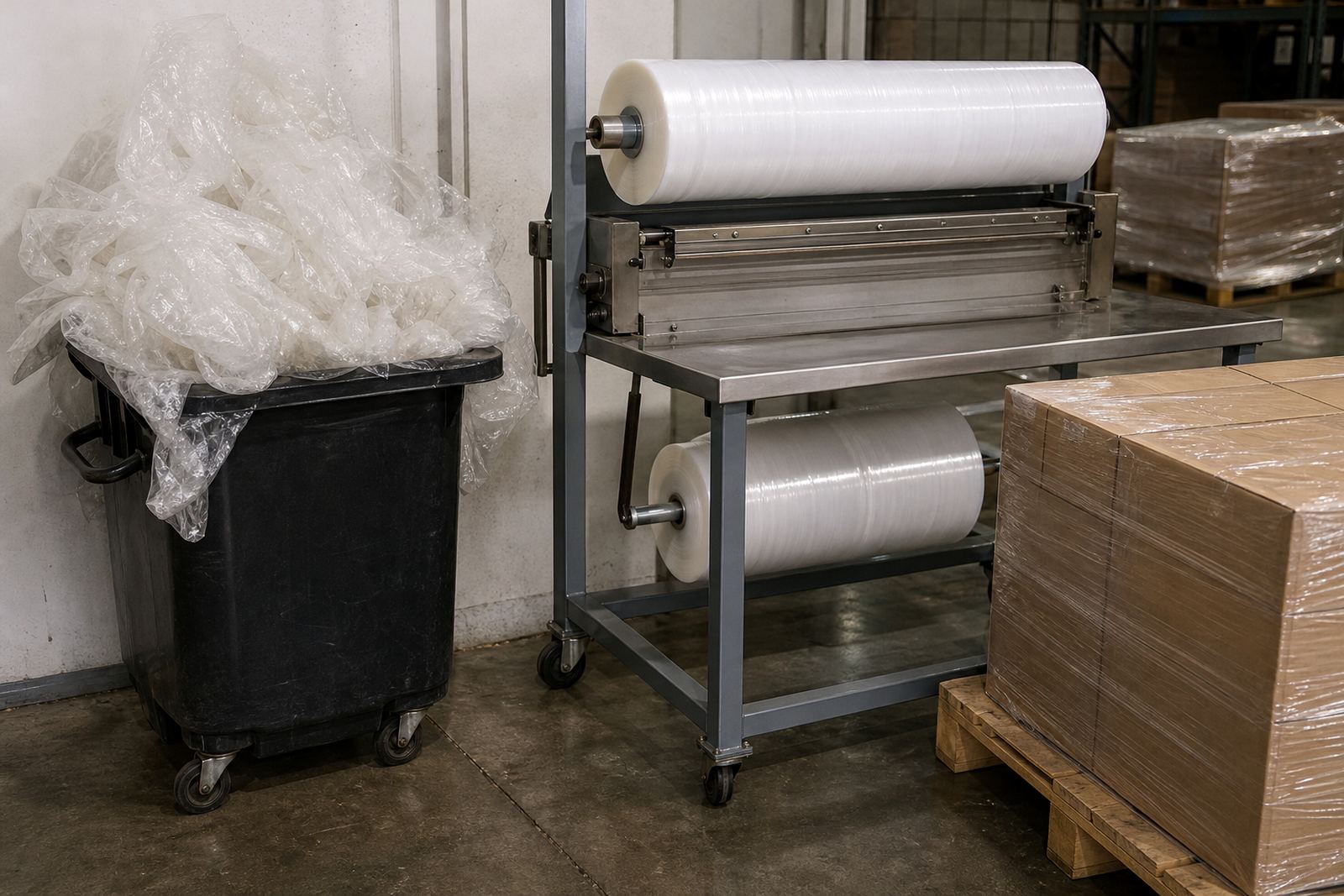
Film that has been stored badly often behaves differently on the line. In coastal areas such as Durban and Cape Town, humidity can affect how film sits on the roll, especially if the packaging area is open to dust or temperature changes. Rolls stored against a wall, in direct sun, or close to a loading bay may pick up distortion before they even reach the machine.
Thin or inconsistent film can also wander more easily. If a supplier changes spec without warning, or if the core is poor, the film may not unwind evenly. Operators sometimes blame the dispenser first, but the roll itself can be the source of the issue. It helps to keep spare rolls in a dry, shaded store and to rotate stock so older stock is used first. That small habit saves time later, ja.
Set up matters more than speed on high-volume lines
Many packing lines in Johannesburg, Pretoria and Polokwane are pushed to move quickly, especially when orders are stacked up before dispatch. When the team rushes a changeover, the film may be loaded with a twist, the guide path may be skipped, or the tension may be set too high in an attempt to keep production moving. The result is often a wrap that drifts more with every cycle.
Good setup takes a few extra minutes but it prevents stoppages later. Train operators to work through the same sequence every time: check the roll, thread correctly, confirm alignment, test the first few wraps, then inspect the cut. If the first three wraps already show drift, stop and correct it before the whole pallet is affected.
- Use the same changeover steps for every shift.
- Mark the correct film path clearly on the frame where possible.
- Keep a record of recurring skew on specific products or lines.
- Do not force a roll that feels tight, uneven, or rough to unwind.
When preventative servicing stops repeat skew problems
If the same line keeps feeding skewed film, there is usually an underlying cause that needs proper servicing. Preventive checks can catch worn parts before they start affecting output, and they are especially useful on lines that run daily in Germiston, Boksburg and Midrand. A site assessment can show whether the problem is coming from the cutter, dispenser, film storage, or the way the line is being used.
Our team works with shrink film and stretch film cutters and dispensers for packing lines across South Africa, and repeat skew is one of the issues we see when a machine has been pushed past simple adjustment. Sometimes the fix is a blade replacement. Sometimes it is a guide realignment, a dispenser repair, or an upgrade to suit the film and the load. What matters is finding the point where the feed starts drifting and correcting it before the waste adds up.
For operations under pressure from municipal restrictions, power interruptions or tight dispatch windows, prevention is worth more than patching the same fault every week. A line that feeds straight gives better wrap quality, fewer rejects, and less operator stress by the end of the shift.