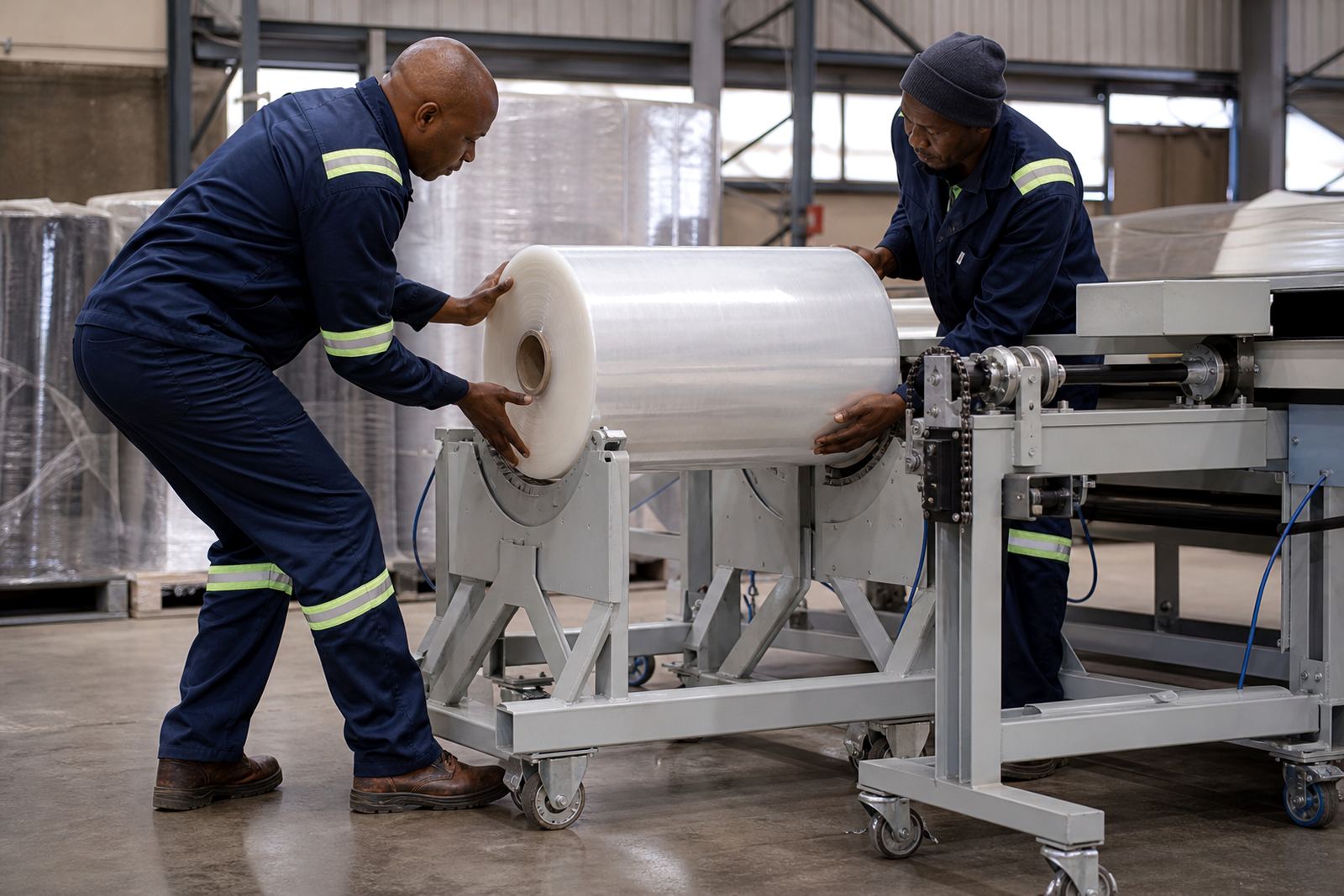
Why heavier rolls need a different handling routine
Once film rolls get heavier, the small mistakes start to matter. A roll that is awkward to lift, hard to align or likely to snag can cause strained backs, damaged cores and uneven film application, which leads to waste and more stop-start work on the line. In Germiston and Boksburg, where many packing areas are tight and shared with forklifts, pallets and drum traffic, handling needs to be planned before the roll even reaches the machine.
Heavier rolls also behave differently in warm warehouses and coastal conditions. In Durban and Cape Town, humidity can affect how tightly film sits on the roll and how smoothly it pays out if storage is poor. On top of that, load-shedding can interrupt a changeover at the worst time, so your team needs a method that still works when the shift is running under pressure.
The aim is not just to move the roll. It is to keep the line safe, keep the wrap consistent and reduce the chance of a damaged dispenser or cutter causing another delay later in the day.
Set up the changeover point before the new roll arrives
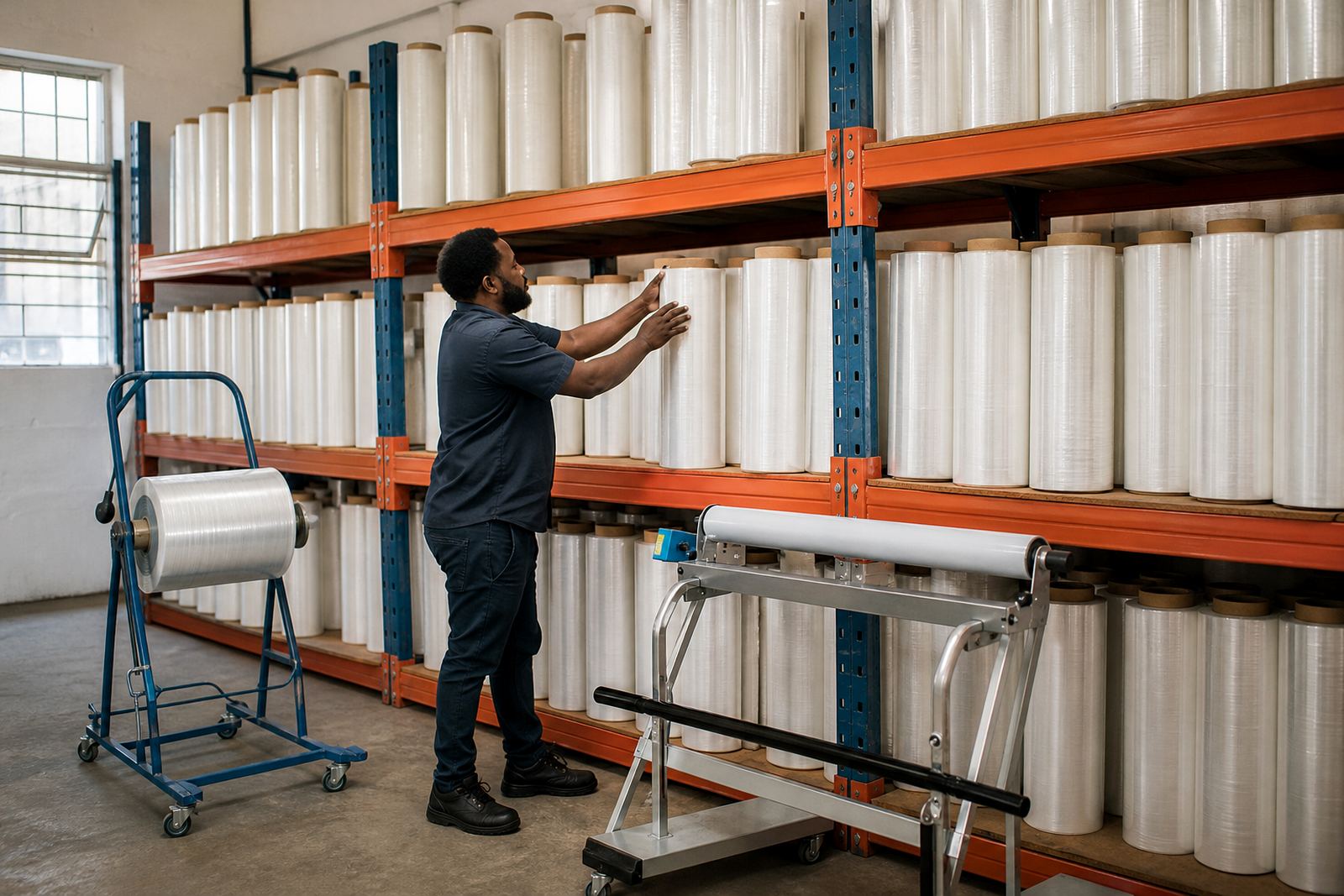
A heavy roll should never arrive at a line with operators still clearing space, finding tools or guessing where the next core will sit. A proper changeover point makes the job quicker and safer. Mark the floor area, keep the path clear and make sure the new roll is staged within easy reach of the operator. If the roll has to be lifted over another pallet or twisted into position, the setup is wrong.
- Keep the replacement roll at the same height as the fitting point where possible.
- Check that the dispenser or cutter frame is stable and free of wear before the shift starts.
- Remove loose straps, film offcuts and broken cores from the area before moving a new roll in.
- Make sure the operator has gloves with good grip and can see both ends of the roll clearly.
For sites in Pretoria, Midrand and Johannesburg where multiple packing lines may be running close together, a clear changeover zone also helps prevent traffic from other departments crossing into the handling area. That matters more than people think when production is busy.
Use the right handling aids, not extra muscle
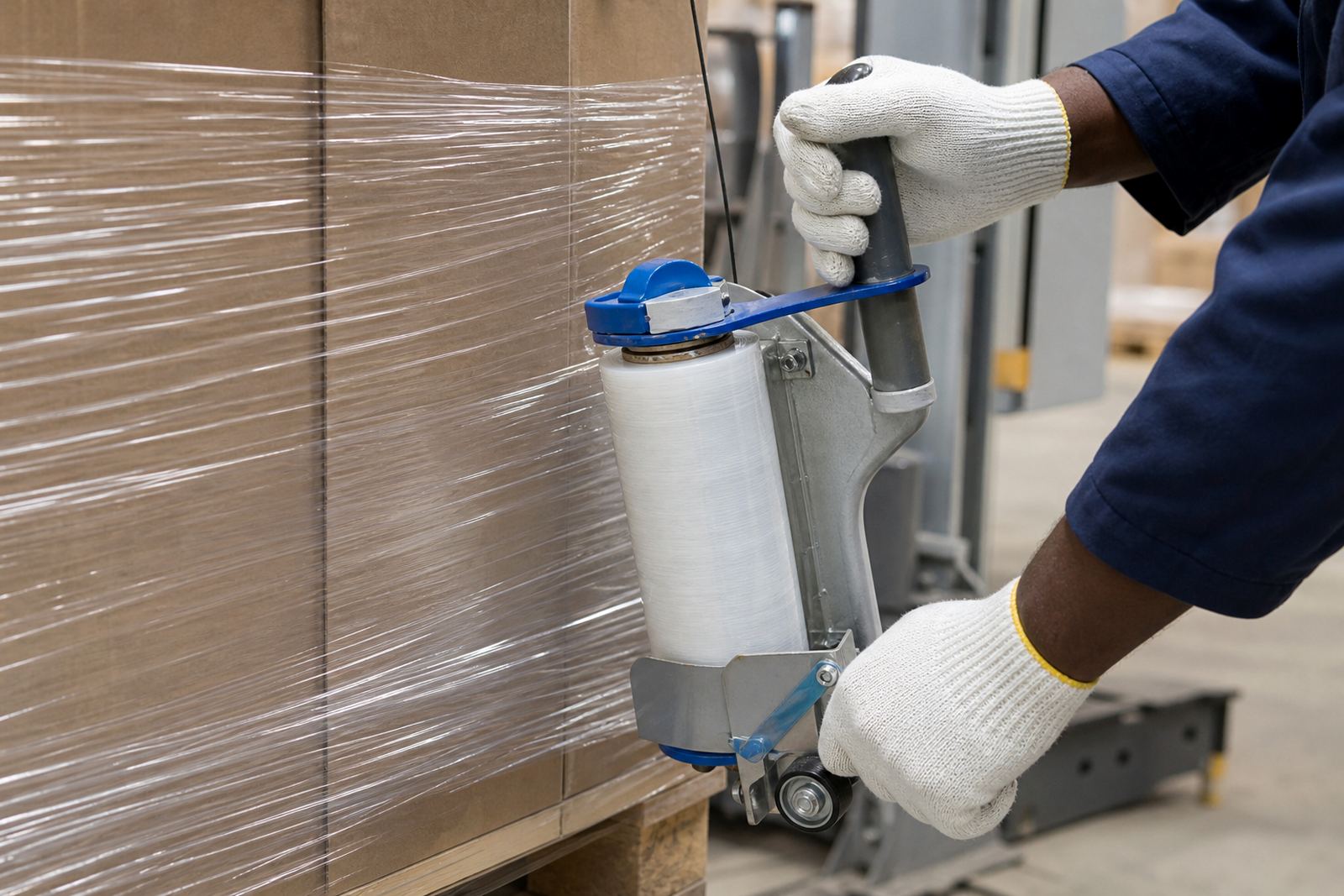
Heavy rolls should be managed with lifting equipment, controlled support and the right dispensers, not with a few people muscling the roll into place. Manual handling has its place for lighter film, but once roll mass increases the risk of injury climbs fast. A good dispenser should hold the roll in line, let it turn smoothly and reduce the chance of the operator fighting the roll during fitment.
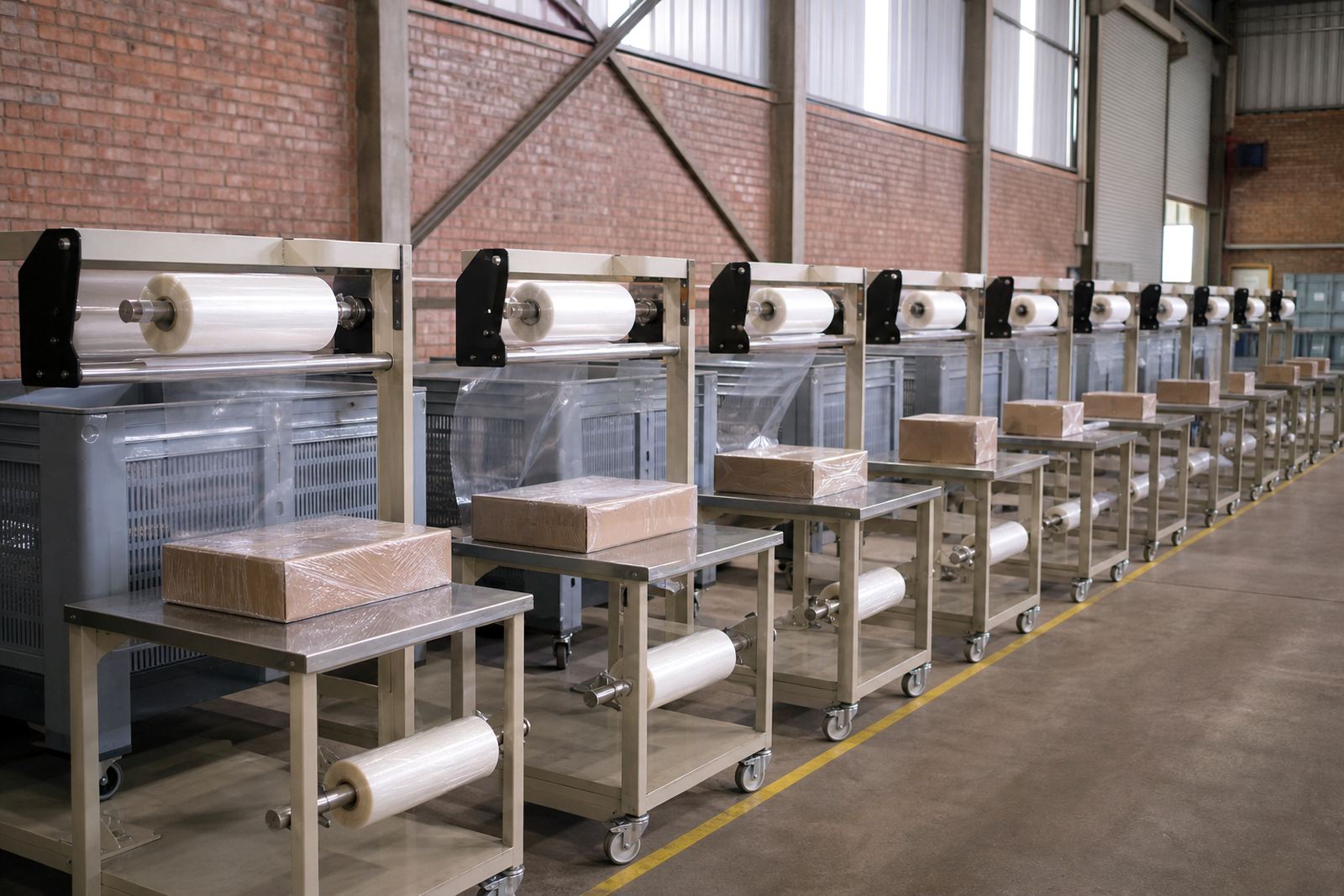
Where the line runs long shifts or has frequent roll changes, simple support aids save time and reduce fatigue. These can include roll trolleys, guided loading points and fitted cutters that keep the operator from wrestling with the film edge. On sites in Polokwane and surrounding industrial areas, where teams often work with smaller maintenance crews, this can make the difference between a smooth changeover and a rushed one.
- Use mechanical aids for any roll that cannot be lifted and held safely by one trained operator.
- Keep the cutter aligned so the operator does not need to overreach or twist the wrist.
- Inspect cores for damage before fitting, as a cracked core can collapse under load.
- Do not let operators improvise with loose bars, pipes or makeshift supports.
Keep film tracking straight to avoid waste and snags
Once a heavy roll is mounted, the next problem is film tracking. If the roll sits even slightly off centre, the film can pull unevenly and create extra drag. That puts strain on the dispenser, can produce rough edges and may cause the wrap to bunch or tear during application. The heavier the roll, the more important the alignment becomes because any wobble is amplified as the roll unwinds.
Operators should check that the roll is seated squarely and that the film edge feeds cleanly through the cutter or dispenser path. If the line is handling different roll widths, the setup should be adjusted properly each time instead of being forced to suit the last job. On a fast-moving packing line in Germiston this may seem like a small detail, but it is often the detail that decides whether the next ten pallets are wrapped cleanly or not.
Good line habits also matter. If the operator notices resistance, a wandering edge or an unusual sound from the roll, the line should be paused and checked before the issue grows. A few seconds spent correcting the setup is cheaper than scrapping film and rewrapping product.
Protect operators with practical safety checks
Safety around heavy rolls is not only about lifting. It also includes the condition of the cutter blades, the stability of the dispenser, the floor surface and the lighting around the work area. A smooth concrete floor with oil or film residue on it can be dangerous when a heavy roll is being moved. Good housekeeping is a basic control, not an extra.
Regular safety checks should cover the parts that carry the load and the parts that the operator touches most often. If handles are loose, edges are sharp or a frame is bent, the risk rises immediately. A machine can still run in that condition for a while but that is exactly when minor faults turn into incidents.
- Check blade condition before each shift and replace worn blades before they start dragging the film.
- Inspect fasteners, pins and brackets on dispensers and cutters for movement.
- Keep floors dry and free of loose film, especially near dock doors and loading bays.
- Confirm that operators know the correct body position for guiding a heavy roll into place.
On coastal sites, especially in Durban and Cape Town, corrosion can creep into fittings faster than expected if the equipment is not wiped down and checked properly. That is worth watching during rainy months when humidity stays high.
Plan servicing before the breakdown callout
Heavy roll handling works best when the equipment gets attention before it starts causing trouble. Preventive servicing keeps the cutter action smooth, reduces friction in the dispenser and helps the team spot wear before a full breakdown. If the rollers, blades or mountings are neglected, the line ends up compensating with extra effort from the operator, and that is not sustainable on a busy site.
A practical service plan should include blade replacement, dispenser repairs, spares supply and operator training at set intervals rather than only after a failure. The most effective sites keep a simple record of which lines are handling the heaviest rolls, which shifts report more roll changes and where repeated snags occur. That tells the technical team where support is needed most.
For businesses across Johannesburg, Pretoria, Durban, Cape Town and Polokwane, this approach is especially useful when a site runs different product lines from the same packing area. One line may handle lighter loads while another deals with heavier film all day, so the maintenance schedule should reflect the real workload not a general average.
A Germiston example from a busy packing line
A packing site in Germiston with a high daily output was dealing with frequent roll change delays and one operator had started avoiding the heaviest rolls because they were difficult to control. The issue was not only the weight of the film. The changeover point was cramped, the dispenser sat slightly out of line, and the team had no consistent method for staging the replacement roll. After the layout was adjusted, the cutter was serviced and the operators were shown the same loading sequence every time, the changeovers became quicker and far less stressful.
That sort of fix is common. Most heavy roll handling problems are not caused by one dramatic fault. They come from a series of small issues that add up over time. When those are corrected together, the line usually becomes easier to run and the film waste drops with it.
For sites that need support with line setup, onsite installation, roll change support or preventive servicing, a proper assessment can show where the handling process is being slowed down. The point is to make each roll change safer and cleaner, while keeping production moving.