
Start With the Load, Not the Roll
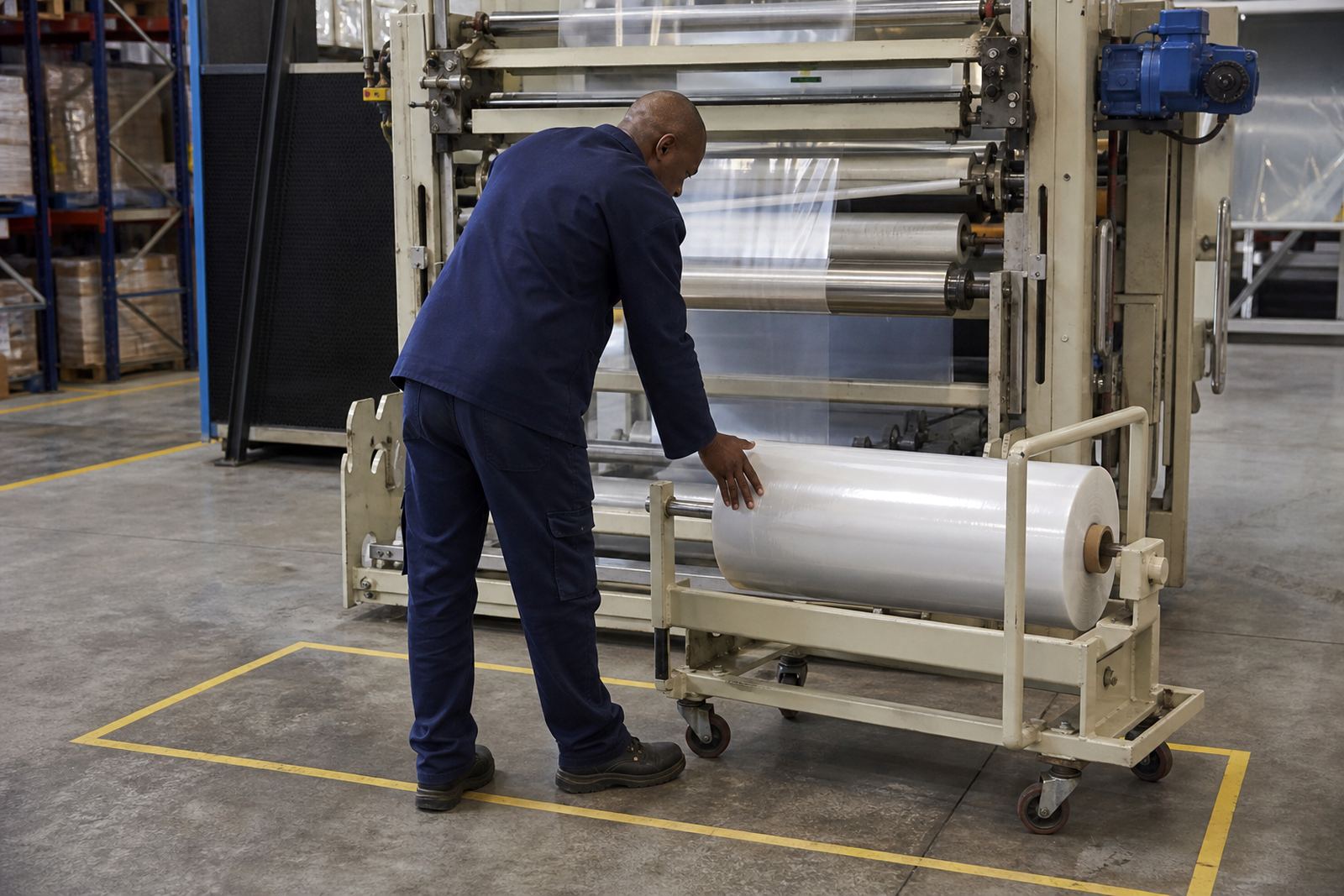
Film waste usually begins before the first wrap is applied. If the roll is loaded off-centre, the film can run unevenly and leave tails, gaps or excessive overlap. That means more film per pallet and more time spent correcting wrap quality. On busy lines in Germiston, where pallets move fast between packing and dispatch, those small losses add up quickly.
Good loading starts with checking the core size, roll width and orientation before the roll goes onto the dispenser. The film should unwind smoothly without dragging or catching on the frame. If operators need to tug the film into place or keep resetting the roll, the line is already losing time and film.
- Confirm the roll matches the dispenser core and width.
- Keep the roll centred so the film tracks evenly.
- Check that the unwind direction suits the line layout.
- Replace worn guides that allow the roll to shift during use.
In plants with mixed packaging sizes, it helps to label roll positions clearly and keep the same loading method across shifts. That reduces errors when staff change over, especially during night shifts or load-shedding periods when the team may be working under pressure.
Tension Control Makes a Bigger Difference Than Most Teams Expect
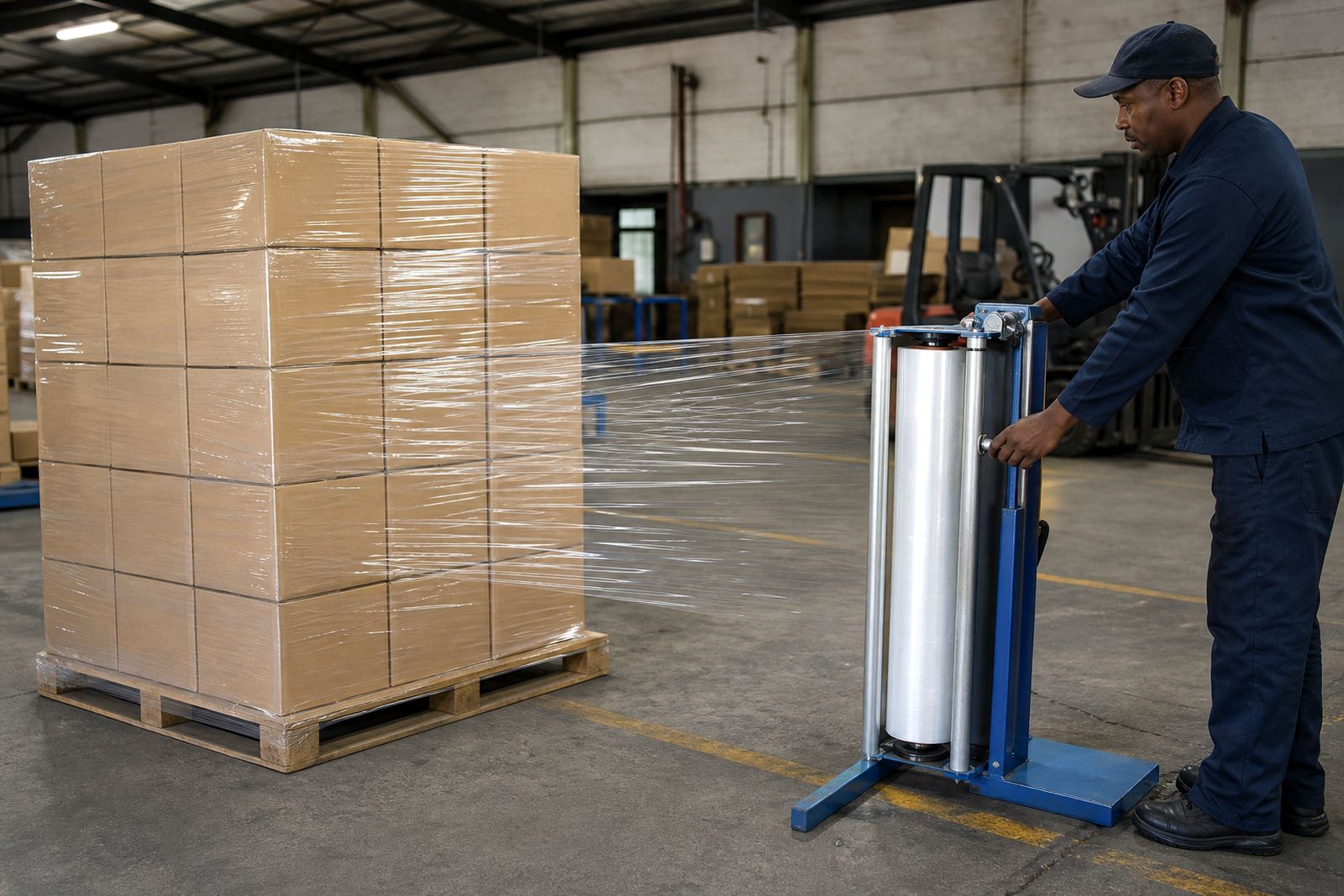
Too much tension can stretch the film beyond what is needed, which may look neat at first but often causes tears, necking and weak corners. Too little tension leaves loose wrap, requiring more layers to hold the load properly. Both cases waste material. The aim is consistent tension that matches the product weight, pallet size and travel speed of the line.
For shrink film and stretch film alike, tension should be checked after any change to roll size, product type or packing speed. A setting that works for cartons of hardware may not suit bottled goods or irregular sacks. This is why a quick adjustment on the day can save more film than a full roll of overuse later on.
- Test tension after every line speed change.
- Watch for film whitening, tears or edge pull.
- Reduce overlap where the load is stable and square.
- Recheck settings after a blade change or repair.
In humid coastal conditions such as Durban, film can behave differently from the same material used in Polokwane. Heat and moisture change how the film grips and settles, so a setting that worked in winter may need a fresh look in summer.
Choose the Right Cutter for the Job, Not Just the Cheapest One
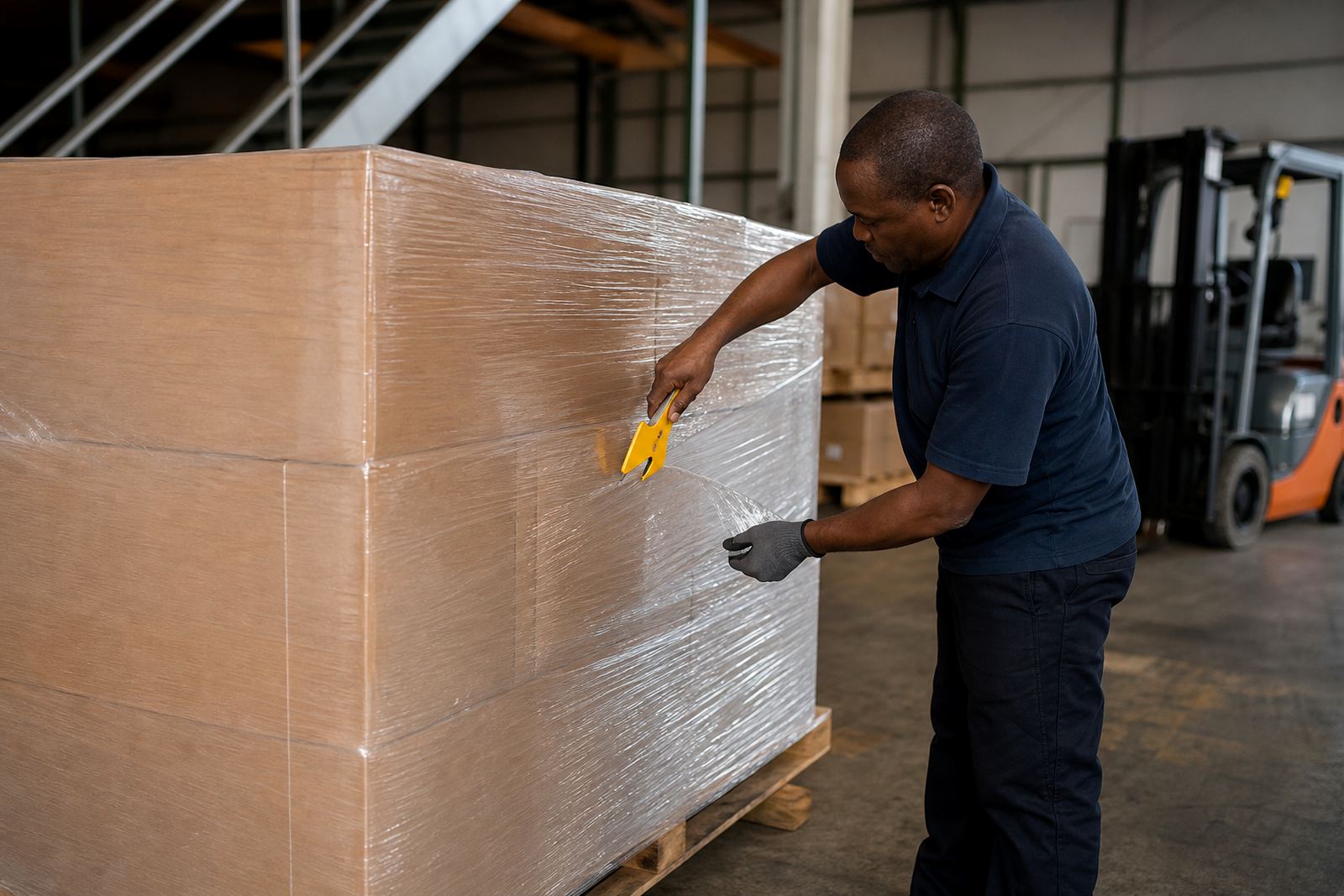
A poor cutter choice can waste film even when the rest of the line is well managed. If the blade struggles to cut cleanly, operators may leave extra tail length, double cut, or pull on the film too hard. That adds waste and creates more downtime. A cutter should match the film type, operator speed and the daily duty of the line.
For high-volume packing lines, a cutter with a clean and repeatable cut helps reduce tail loss at each changeover. For lighter use, a simple dispenser with easy handling may be enough, provided it still holds the roll firmly and keeps the cut straight. The key is consistency, not over-specifying equipment that sits half-used.
- Use cutters suited to the film gauge in use.
- Check whether the blade leaves a clean edge or frays the film.
- Choose a design that supports quick roll changes.
- Keep spare blades and wear parts on site to avoid makeshift repairs.
When a line in Boksburg or Midrand runs through several shifts a day, even a few centimetres saved per cut can make a clear difference over a month. It is not dramatic but it is measurable, and finance teams notice it when roll usage is tracked properly.
Train Operators to Spot Waste Before It Spreads
Operator habits matter just as much as the equipment. A well trained team can catch problems early, such as uneven wrap, damaged blades or film that is not seating correctly on the dispenser. Without that attention, waste becomes normal and the line starts using more film simply because nobody wants to stop and adjust it.
Training should be practical. Operators need to know what good wrap looks like, how to load rolls correctly and when to report a fault. They also need simple rules for when to stop the line instead of working around the problem. That saves more material than trying to push through a damaged setup.
- Show operators how to identify overwrap and underwrap.
- Teach the correct loading sequence for each dispenser.
- Set a clear process for reporting worn blades or loose mounts.
- Keep a short checklist near the line for shift handovers.
At one Germiston packing line, a steady reduction in film use came after the team began logging wrap faults by shift. The issue was not one big breakdown. It was repeated minor misloads, and once the pattern was visible the waste dropped within weeks.
Plan Preventive Servicing Before the Line Starts Losing Film
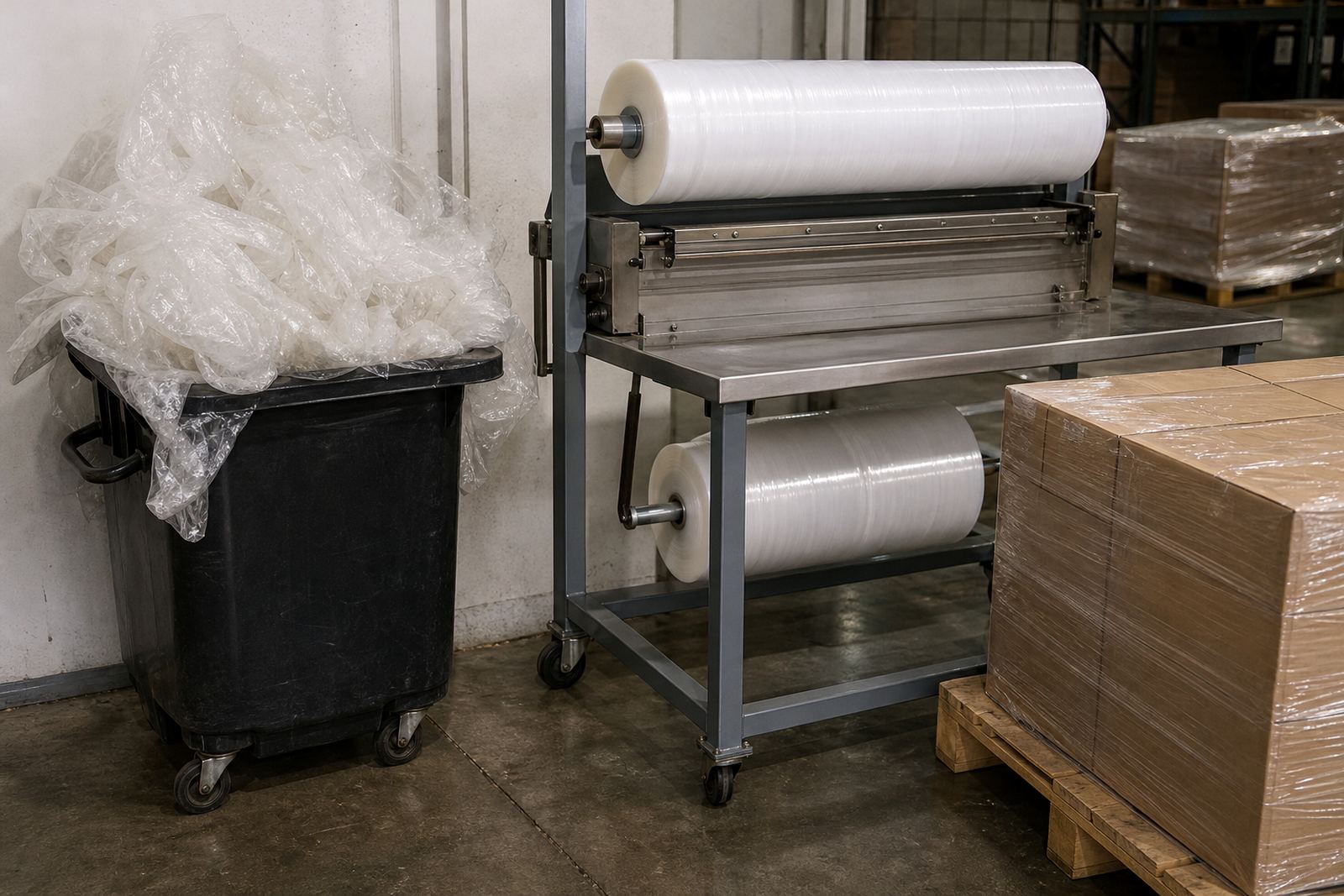
Preventive servicing is one of the simplest ways to cut waste because it stops small faults from becoming ongoing losses. Loose fittings, worn guides and dull blades may not stop production immediately, but they often lead to extra film use, slower wrapping and inconsistent cuts. A short service interval is cheaper than repeated roll waste and callouts.
For South African sites, servicing also helps keep equipment working through dusty warehouse conditions, high summer heat and power interruptions. If a line stops and restarts often, the dispenser and cutter take more strain. That is when alignment drifts and operators begin compensating with more film than needed.
- Inspect blades, guides and mounting points on a set schedule.
- Check for wear after any breakdown callout.
- Replace damaged parts before they affect wrap quality.
- Review line performance after upgrades or layout changes.
A proper service plan supports better film control and fewer interruptions. It also gives supervisors a clearer picture of what is causing waste, rather than guessing from the monthly film bill.
Use Site Assessments to Match Equipment to the Actual Packing Line
Every line behaves differently. A site assessment helps match the cutter, dispenser and handling method to the real conditions on the floor. That includes pallet height, operator reach, line speed, available space and the kind of film being used. A solution that works in Pretoria may need adjusting for a tighter line in Cape Town or a high-throughput warehouse in Johannesburg.
Site checks are especially useful when the business is seeing repeated waste but cannot explain where it is coming from. The issue may be a blade positioned too high, a poor roll angle or a dispenser that is awkward to use during changeover. Once the setup is corrected, the waste often drops without changing the film grade.
For packing teams trying to lower costs, the goal is simple: fewer mistakes, fewer tails and fewer unnecessary layers. That starts with the right loading method, steady tension and a cutter that suits the work instead of fighting it.
In our experience, the best results come from practical changes made on the line, not guesswork from the office. When the equipment is set up properly and the team knows what to look for, film use becomes easier to control and the savings are visible across the month.