What the mounting choice changes on a busy packing line
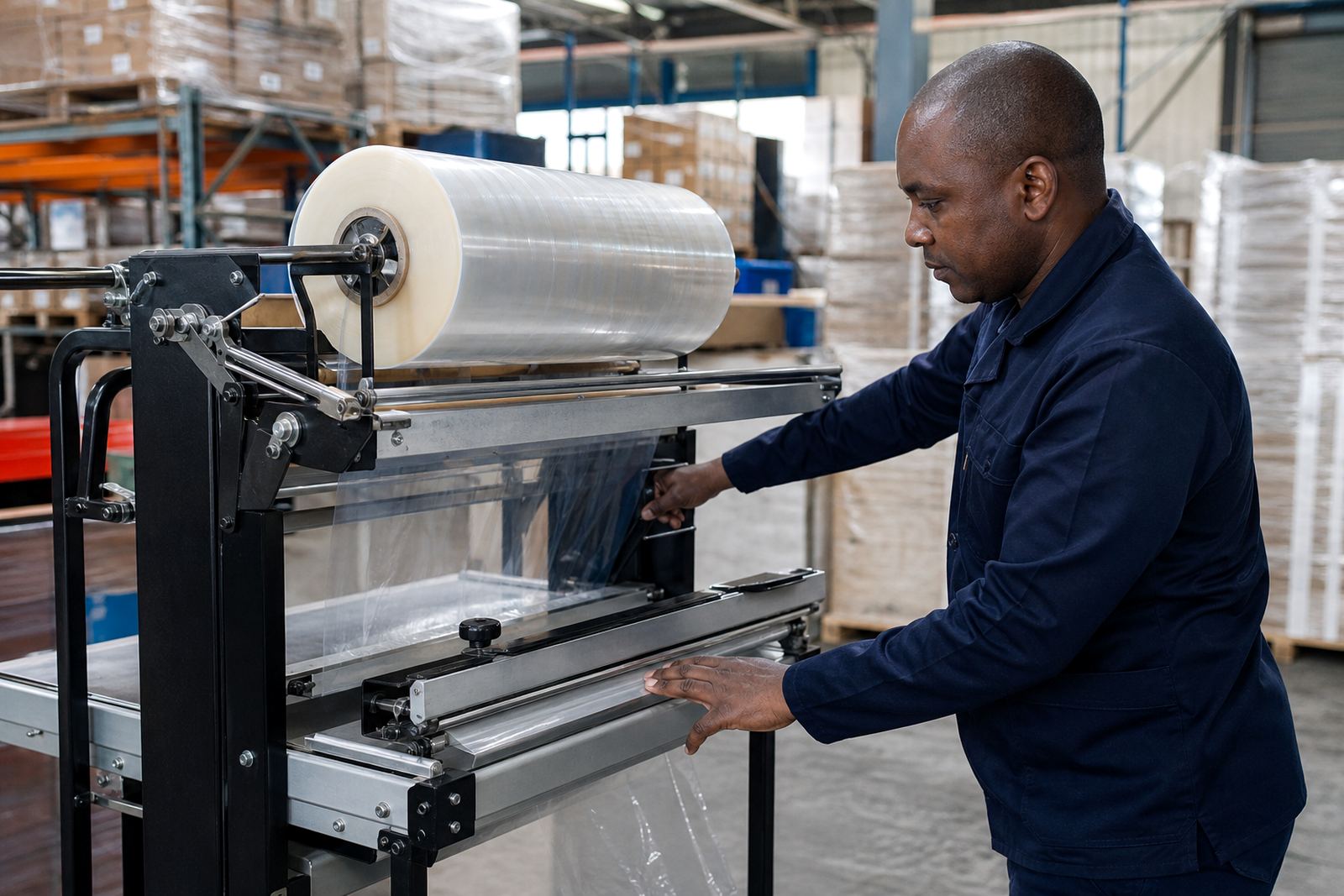
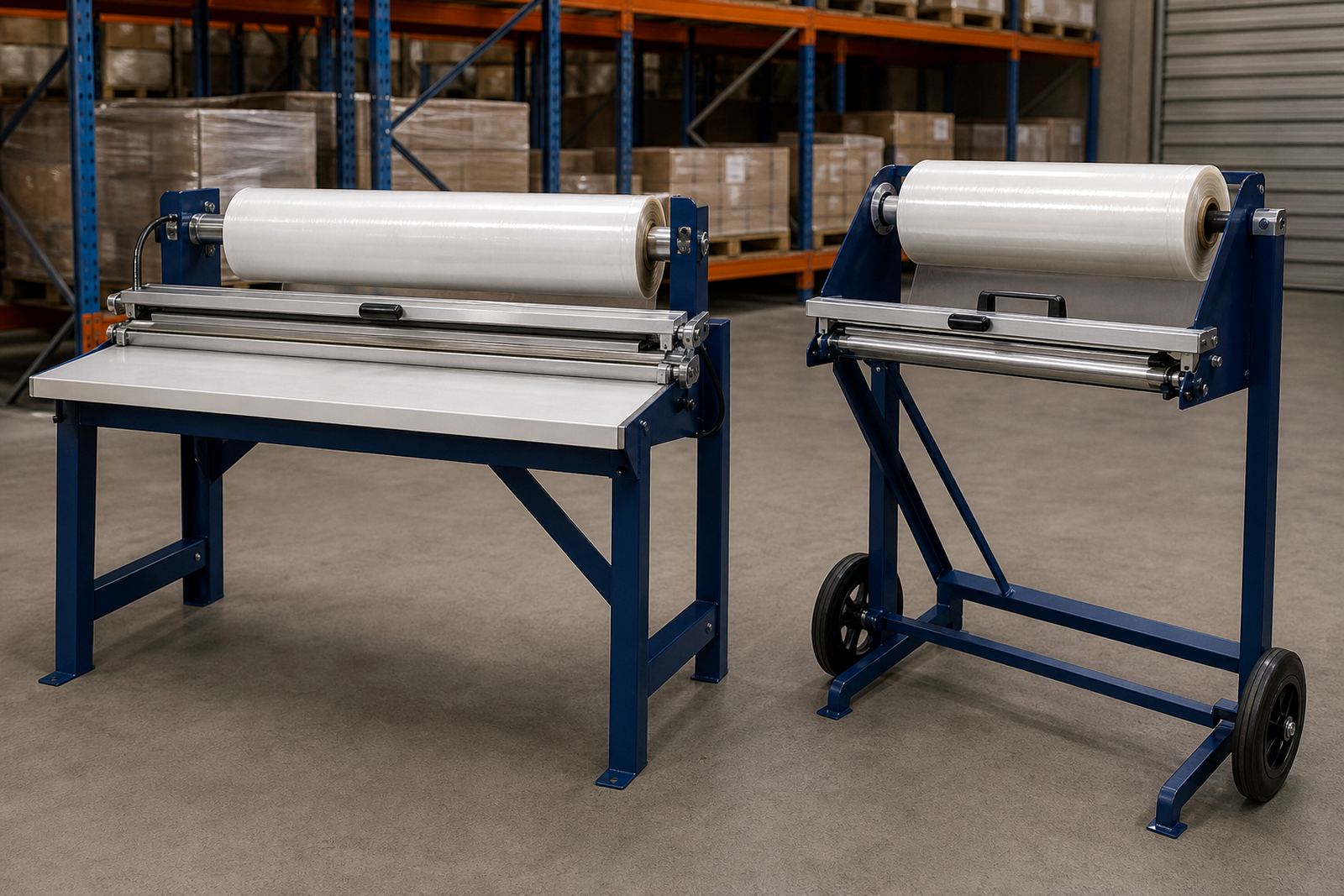
A film cutter is only part of the job. Where it sits on the line affects reach, operator posture, changeover speed and how safely the roll is handled. On some sites a bench mounted unit keeps the film close to the wrap station. On others a floor mounted setup works better because the line runs long, the roll is heavy, or operators need the dispenser lower and easier to access.
For Germiston warehouses, Boksburg distribution floors and Midrand packing areas, the decision often starts with the route between the pallet staging point and the wrapping area. If operators are walking back and forth with rolls all day, the wrong mount adds strain and slows output. If the mount is too low or too high, you also get more awkward cutting angles, more handling wear and a higher chance of snags.
- Bench mount suits fixed stations and compact packing tables
- Floor mount suits larger rolls and open packing bays
- The best option depends on operator reach and line flow
- Mounting should support safe roll loading and clean film breaks
When a bench mounted cutter makes more sense
Bench mounted units work well where the packing process is organised around a fixed surface. That includes box making areas, smaller dispatch stations and wrapping points where one operator handles product, tape and film in one place. A bench mount keeps the cutter within easy reach and can help maintain a consistent cutting position from shift to shift.
This option is often practical for Johannesburg and Pretoria businesses with limited floor space. It helps in rooms where a trolley has to pass through, or where the team needs a tidy layout near a wall. It can also suit sites that run mixed pack sizes, because the operator can adapt quickly without moving around the bay.
- Good for fixed workstations and compact rooms
- Useful when operators stand in one place for most of the shift
- Helps keep the work area clear for trolleys and pallets
- Often easier to inspect and clean during routine servicing
That said, a bench mount is not ideal when the roll is large or the packing line is already crowded with cartons, scales and sealing tools. If the bench is too far from the load, the operator ends up reaching across the product and the job becomes slower and less comfortable. In those cases a different mounting position usually gives a better result.
Where floor mounted dispensers earn their keep
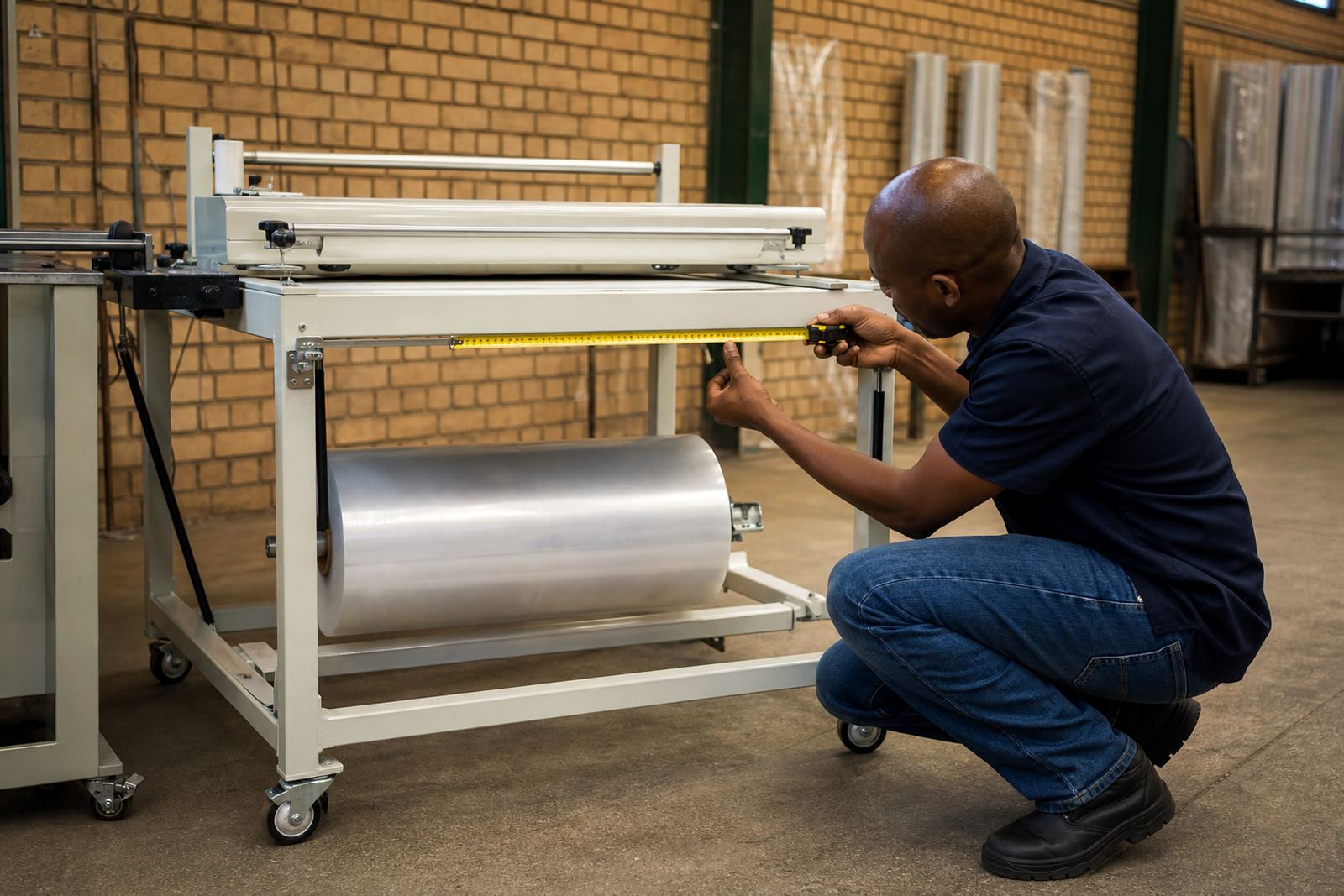
Floor mounted setups are a strong choice for heavier duty packing lines and open bays. They keep the dispenser grounded beside the work area and can make roll changes simpler when the film supply is bulky. In Durban and Cape Town, where humidity and coastal air can affect storage areas, having the roll on a stable floor unit can also help reduce handling damage during frequent movement.
These units are often preferred where the operator works alongside a conveyor, pallet wrapping point or stretch film station with enough open floor space. They can support quicker access for roll changes, which matters on sites that run long shifts or face sudden volume spikes. If your operation has multiple operators sharing one film point, a floor mounted unit can make handover easier and more orderly.
- Better for larger rolls and busier packing floors
- Useful when operators need fast access for roll changes
- Can suit conveyor ends and open pallet wrapping areas
- Helps reduce clutter on the work surface
Floor mounted units do need enough space around them. If the area is cramped, the dispenser can become a trip point or get bumped by pallets and cage trolleys. It also needs to be installed where the line manager can keep the access clear, especially on sites with strict safety rules and regular walkways.
Operator comfort, speed and safety should guide the final call
Most sites focus first on the machine itself, but the operator experience is what determines whether the setup performs well every day. A good mount should let the user load film without twisting, bending too far or lifting in an awkward line. That matters in Polokwane warehouses with long shift schedules and in high throughput plants where the same action is repeated many times.
Safety checks should also cover blade position, film path and how the unit is fixed. If the cutter is mounted too loosely, it can shift during use. If it sits too low, the operator may crouch repeatedly and lose pace by the end of the shift. A properly positioned mount cuts down on small errors that become bigger problems when the line is under pressure.
- Check the operator’s shoulder and waist position at the point of use
- Make sure the blade area is easy to reach but not exposed during loading
- Confirm the mount is fixed to suit the floor surface or bench material
- Leave space for cleaning, inspection and safe roll removal
A Germiston site example: the line that needed a better fit
A recent packing site in Germiston had a mixed flow of cartons, shrink film and stretch film around one dispatch bay. The first setup used a bench mounted unit, but the team found the film roll was being lifted over the edge of the table, which slowed changeovers and caused more wear on the operator’s back. The bench itself was stable, but the reach was wrong for the daily volume.
After a site assessment, the packing area was changed to a floor mounted arrangement beside the main load position. That kept the roll closer to the point of use and made the changeover more natural for the team. The operators did not need to keep stepping around the table, and the supervisor reported fewer interruptions during peak dispatch times. It was a small change, but it made the area more orderly and a bit easier to keep moving.
This kind of decision is rarely about one mount being better in all cases. It is about matching the dispenser to the actual packing pattern, not the plan on paper.
How to choose the right mount for your site
If you are weighing up bench or floor mounted cutters, start with the physical layout of the line, then look at roll size, operator movement and how often film is changed. A site in Johannesburg with a tight packing room may need a bench solution. A larger facility in Durban with open pallet staging may suit a floor unit better. The right answer usually comes from seeing the actual workflow, not guessing from the product sheet.
Before you decide, check the following:
- Available floor space around the packing station
- Height and reach for the main operator group
- Roll weight and how often rolls are replaced
- Whether the line is fixed, mobile or shared between teams
- Safety rules for walkways, loading points and blade access
At Film Cutters, we work with packing lines across South Africa and help clients match the mount to the job. That includes onsite installation, line setup, preventive servicing, blade replacement, dispenser repairs, operator training and breakdown callouts. If your site needs a cleaner setup or a different mounting approach, the best next step is a proper assessment of the line in use.