
Start with the film roll you use every day
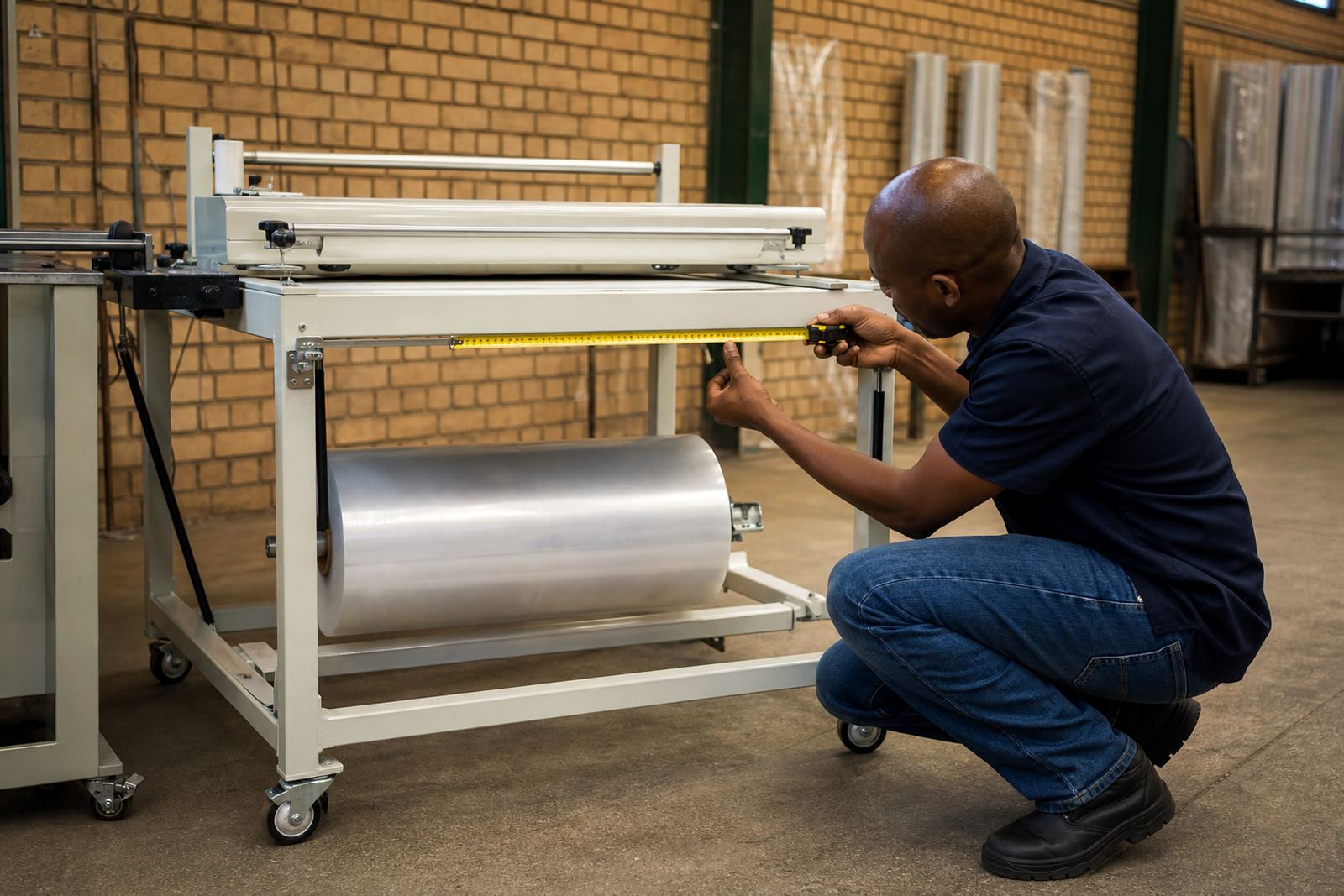
The first measurement is the roll itself. Before anyone looks at a cutter or dispenser, record the film type, roll width, roll outside diameter and core size. If the roll changes between product runs, note the smallest and largest sizes used on site. A dispenser that works for one wrap station may be too narrow or too shallow for another, especially where both shrink film and stretch film are handled on the same line.
In Germiston and other busy industrial areas, packing teams often buy by habit and only discover the mismatch when a heavier roll arrives. That creates drag on the line and more strain on the operator. Measure the roll with the actual packaging spec in hand, not from memory. It saves trouble later.
- Film width in millimetres
- Roll outside diameter
- Core diameter
- Weight of the heaviest roll
- Whether the roll is wound for hand use or machine use
Check the mounting space before you place an order
A cutter or dispenser must fit the real space around the packing point. Measure the bench, wall space, frame or stand where the unit will sit, and allow room for hands, tape guns, cartons and pallet movement. If your line is in a narrow bay in Boksburg or a corner in Midrand, a unit that looks small on paper can still crowd the operator.
Look at the clear opening around the roll path as well. Film needs a straight feed, and the operator must be able to load a new roll without forcing it through a tight gap. If the equipment will be fixed to a wall or post, check the height from the floor and the position of any nearby guards or railings. Small differences matter, especially where more than one person uses the line.
- Mounting width and height
- Clear space for loading and unloading rolls
- Height from the floor to the working point
- Space for walkways and pallet movement
- Access for cleaning and blade changes
Match the line speed to the way your team packs
Some packing lines run steadily all day. Others stop and start with every pallet, crate or carton. That difference affects the cutter or dispenser you need. If your team is working quickly during dispatch peaks, the film must release cleanly and the blade action must stay consistent. Slow, awkward equipment can create extra handling time and uneven wrapping.
Think about who uses the unit. A line with trained packers and rotating staff needs a simple layout that is easy to learn. A unit with too many loose parts slows the job and increases the risk of mistakes. In Durban, where humidity can affect handling and grip, and in coastal Cape Town where corrosion is a concern, the finish and moving parts also matter. Ask for a setup that suits the pace of the line and the site conditions, not only the roll size.
- How many wraps are done per hour
- Whether the line stops often or runs continuously
- Number of operators using the same point
- Exposure to dust, moisture or coastal air
- Need for quick roll changeovers
Measure the operator reach, not just the machine
The best cutter is the one the operator can use without stretching, bending or lifting awkwardly. Measure the reach from the operator position to the film path and check the angle of the wrists and shoulders during a normal wrap. If the unit sits too high, too low, or too far from the pack point, the team will compensate and that leads to poor film placement.
This is also where safety matters. A blade must be easy to access for servicing but not exposed in a way that causes cuts during loading. Where safety checks are part of your site rules, the cutter should allow inspection without taking the line apart. If you have different shifts, test the setup with the shortest and tallest operators. What feels fine to one person may feel strained to another, and that becomes a daily issue.
On a line in Germiston, a simple height adjustment often makes the difference between a neat wrap and a messy one. It sounds small, but over a full week it affects film use, fatigue and product protection.
Allow for power, tools and maintenance access
Not every cutter or dispenser needs power, but the full packing point often does need space for related equipment, charging points or service access. If your site is affected by load-shedding, plan for manual operation and keep the film station usable when power is off. That means clear access, safe storage for spares and no reliance on a layout that only works when everything is on.
Also check whether your site rules require protected walkways, locked cabinets for blades or controlled access to maintenance areas. Industrial sites in Ekurhuleni and Pretoria often have these requirements because of safety audits and contractor control. A good measurement set includes the area behind the station, not just the front face. If a technician cannot reach the unit for blade replacement or dispenser repairs, small faults turn into downtime.
- Access to maintenance points
- Space for tools and spare blades
- Safe storage for spare rolls
- Allowance for power cuts and manual use
- Clear route for service staff and supervisors
Use one site visit to confirm the measurements
Paper measurements are a good start, but a proper site assessment catches the things a tape measure misses. Floor slope, pallet position, nearby guards, damaged frames and limited reach can all affect the final choice. A team in Polokwane may have a very different packing layout from a site in Johannesburg, even when the same film is used. That is why one visit before ordering often prevents two or three avoidable changes later.
Bring the actual roll spec, photos of the line, and the name of the person who works the station every day. That helps with practical advice on installation, roll change support and operator training. If the line already has dispenser repairs or blade replacement needs, deal with those at the same time. It is easier to set up the right equipment once than to keep adjusting it after delivery.
For many businesses, the simple rule is this: measure the film, measure the space, then measure the people using it. When those three line up, the cutter or dispenser works properly from the first shift.