
Start with a clean, dry station
Before the first roll goes in, look at the work area around the cutter and dispenser. Dust, loose off-cuts and pallet wrap scraps can catch on moving parts or get dragged into the line. In Germiston and the rest of Ekurhuleni, fine dust from warehouse yards and truck traffic builds up quickly, so a wipe-down is not just tidy, it is part of keeping the equipment usable.
Check that the floor around the station is dry and clear. A wet patch near a packing line is a slip risk, and moisture can also affect film handling, especially where coastal humidity makes rolls tacky or where loading bays sit open during rain. If the station has been left overnight, make sure no tools, tape or spare blades have been left on the surface.
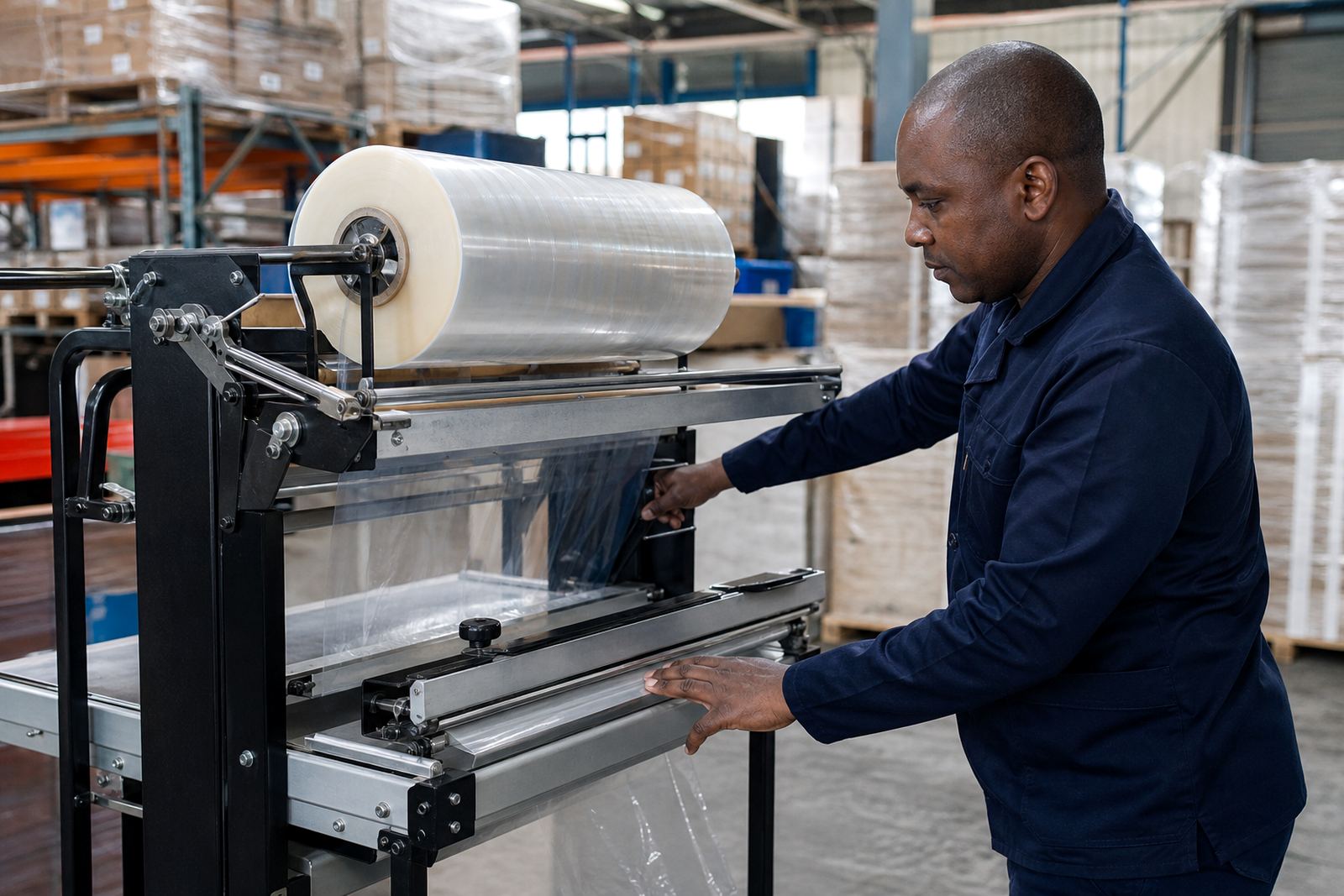
Inspect the cutter edge and blade guard
A blunt blade gives a rough cut and forces operators to use more pressure than they should. That leads to torn film, uneven edges and higher strain on hands and wrists. At shift start, check the blade condition, confirm it sits correctly in the holder and make sure the guard or cover moves as it should.
- Look for nicks, rust spots or bent blade edges.
- Confirm the blade is seated firmly and does not wobble.
- Check that the guard returns to its safe position after use.
- Keep spare blades stored safely, not loose near the line.
If a blade has already started to drag on the film, replace it before production builds up. Waiting until lunch time or end of shift often means wasted wrap and more rework, plus it is a safety issue. A small burr can cause problems all morning.
Check roll fit, tension and direction
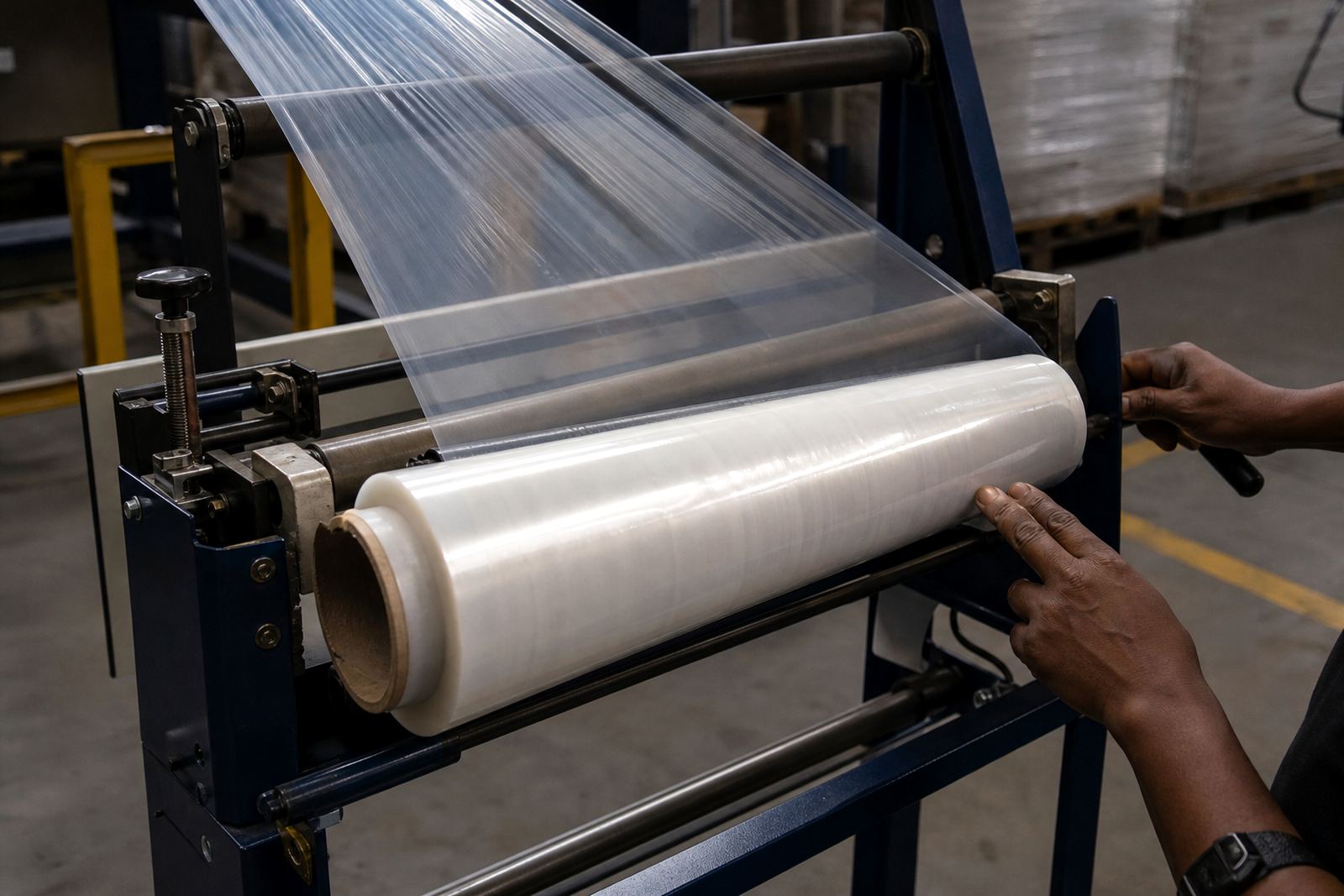
Film needs to unwind smoothly, whether the line is using shrink film or stretch film. At the start of the shift, confirm that the roll size matches the dispenser and that the core fits properly. A roll that is too tight on the spindle can bind, while one that is too loose can slip and give poor control.
Make sure the film is loaded in the correct direction. A reversed roll can twist the wrap and make the operator fight the dispenser on every pass. If the roll has been stored in a cold store or on a cooler floor overnight, give it a few minutes to settle before high speed use. This matters in Pretoria and Johannesburg, where early morning temperatures can vary quite a bit from the afternoon.
- Check that the roll spins freely without jerking.
- Look for crushed cores or damaged side flanges.
- Confirm the film edge feeds square, not at an angle.
- Test the first pull before the line starts properly.
Test movement, handles and fasteners
A dispenser that feels loose at the start of shift will not improve later in the day. Give the handles, mounts, brackets and fasteners a quick physical check. If anything is rattling, slipping or sitting crooked, stop and sort it out before packaging starts. This keeps the operator in control and helps avoid repeated adjustments during production.
Pay attention to the moving parts that get touched every shift. Hinges, rollers and spring-loaded sections should move cleanly without sticking. If the unit has adjustable settings, confirm they are at the correct position for the product being packed. A small shift in the setting can make the difference between neat application and wasted film.
In busy depots around Boksburg and Midrand, this is the kind of check that saves time later. A few seconds now can prevent a callout, and that is often better than stopping a line because a fastener worked loose.
Run a short film test before full production
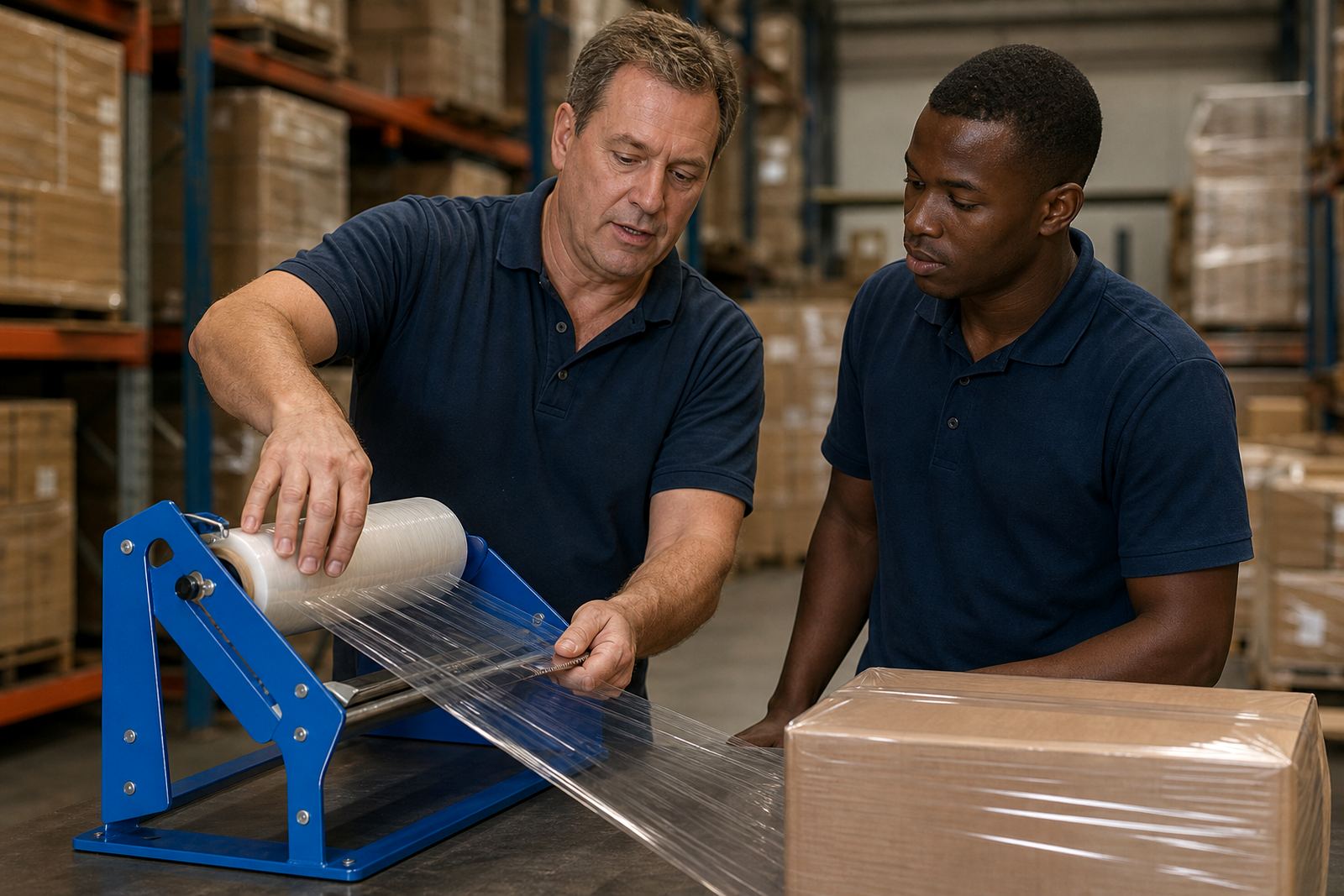
Do not wait for the first pallet or carton batch to show a problem. Run a short test pull at the start of the shift and watch how the film behaves. The cut should be clean, the unwind should be even and the film should sit where the operator expects it to sit.
If the film snakes, bunches or tears, stop and look at the cause immediately. Common reasons include a worn blade, a misaligned roll, dirt on the guide points or a dispenser set too tightly. It is faster to fix a small issue at 6 am than after ten loads have already gone through the packing line.
- Check for even film tension from start to finish.
- Look for sharp edges that catch on the material.
- Confirm the cut line stays straight across the roll.
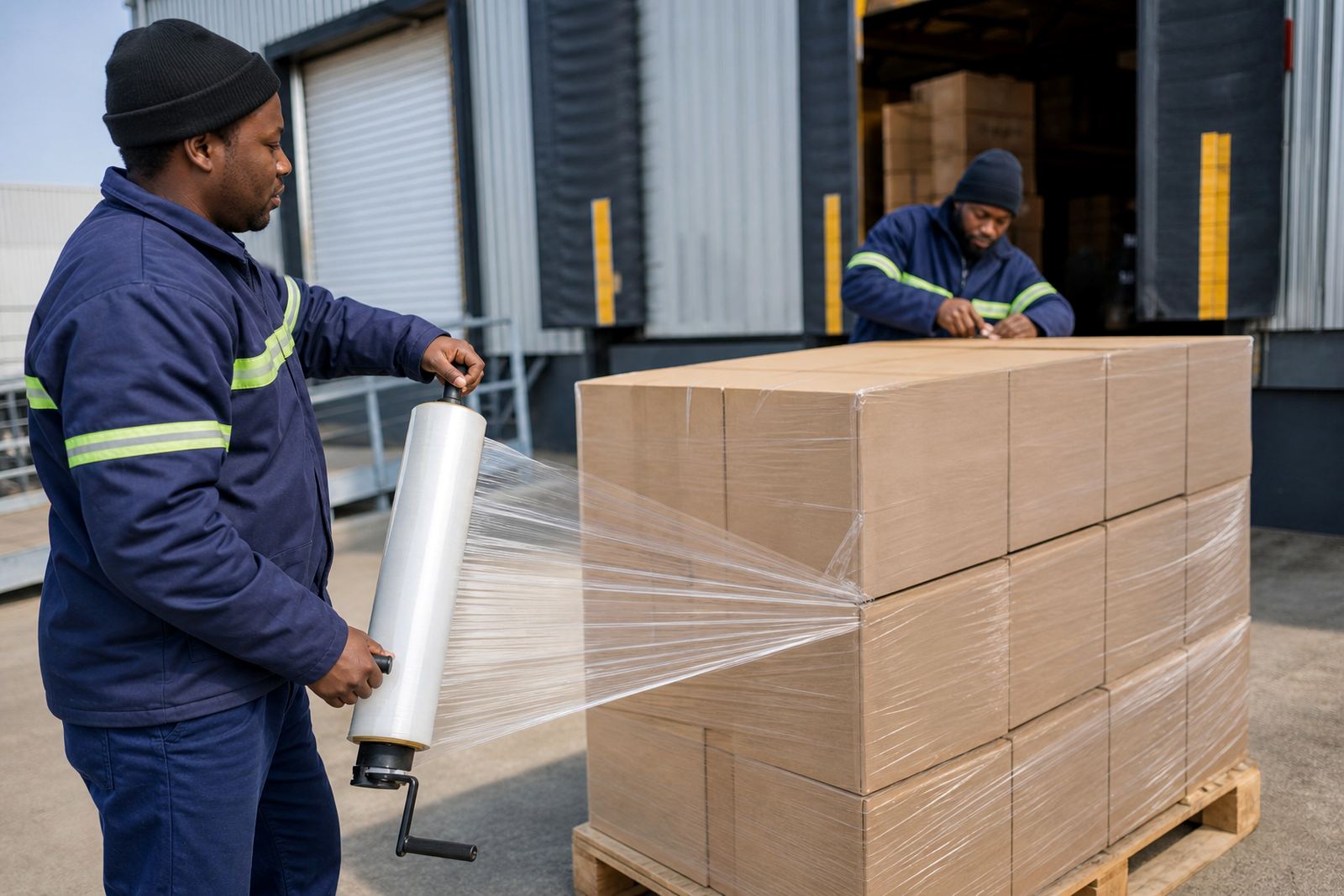
- Watch the first wrapped load for loose ends or overlaps.
Keep the shift handover practical and specific
Good shift start checks depend on what the previous team reports. If the night shift noticed a sticking roller, a noisy dispenser or repeated blade changes, that needs to be written down and acted on before the next run. A spoken handover helps, but a clear note is better because it does not get forgotten when the line gets busy.
Operators should say exactly what they found, not just that there was a problem. For example, note whether the issue happened on the first roll, after a blade change or only on heavier loads. That kind of detail helps the service team or supervisor make the right call, whether it is a simple adjustment, a spare part or an onsite visit. A proper handover also helps with safety checks and training for newer operators.
Know when to stop and call for support
Some faults are too risky or time-consuming to push through. If the blade housing is cracked, the dispenser will not hold tension, or the film keeps snagging even after cleaning and resetting, stop the line and escalate it. Running damaged equipment only increases waste and can put operators at risk.
For packing lines in Germiston, Johannesburg, Pretoria, Durban, Cape Town and Polokwane, the goal is steady output, not just getting through the first hour. Shift start checks should make the equipment ready for work and give the operator confidence. When the checks are done well, the rest of the day usually runs cleaner, safer and with fewer interruptions.