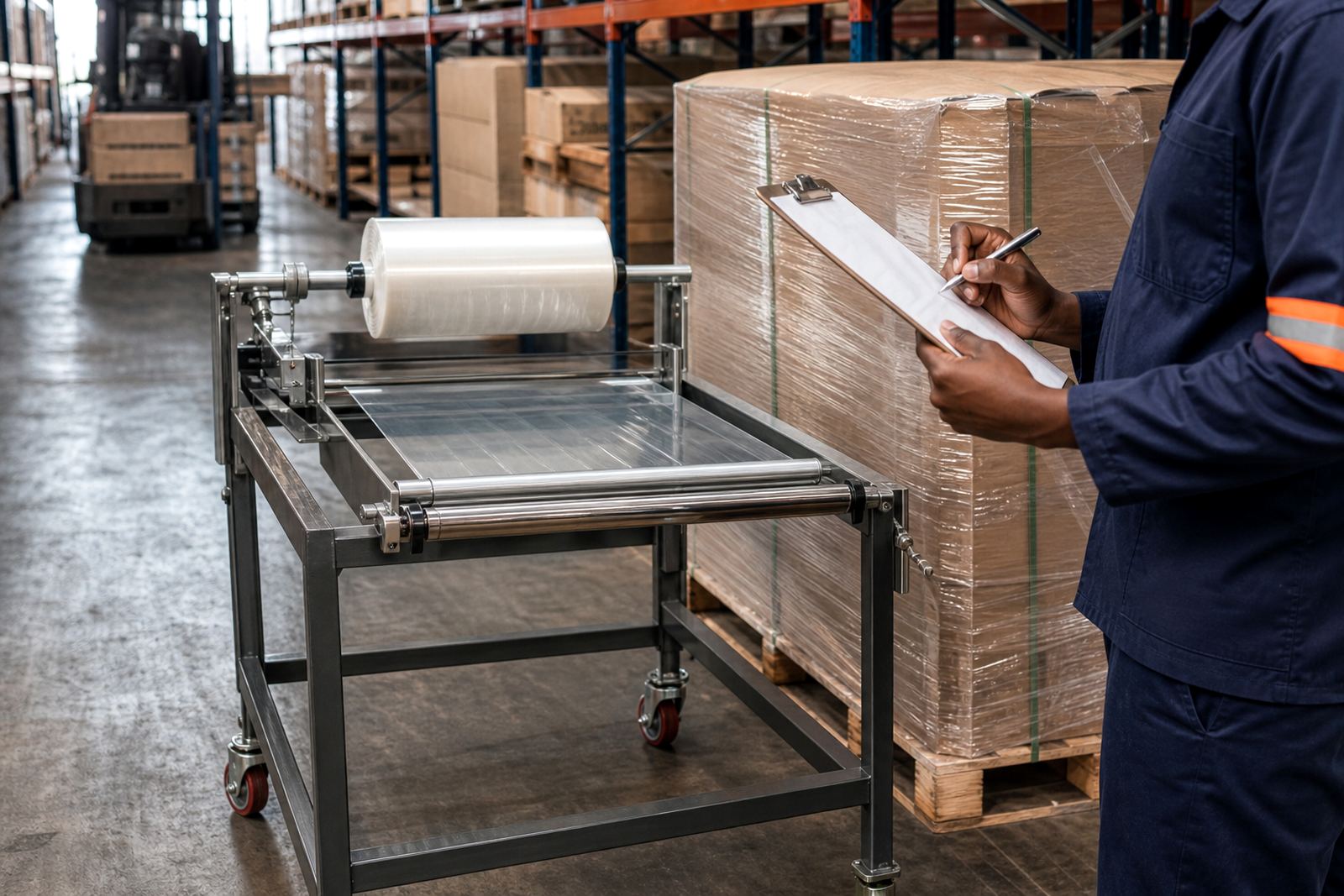
Why guarded cutters matter on busy packing lines
A shrink film or stretch film cutter is used many times in a shift, so small design details quickly affect safety and speed. When the cutting point is exposed, operators often slow down, adjust their grip or use a second hand in ways that are not ideal. A guarded cutter helps remove that hesitation by keeping the blade area more controlled and the cutting action more predictable.
For sites in Germiston, Boksburg and Midrand where packing lines may run through long production hours, that matters. It is not only about preventing injuries. It is also about keeping the line moving when staff change over, when load shedding interrupts rhythm, or when a team is under pressure to clear a dispatch order before the truck leaves.
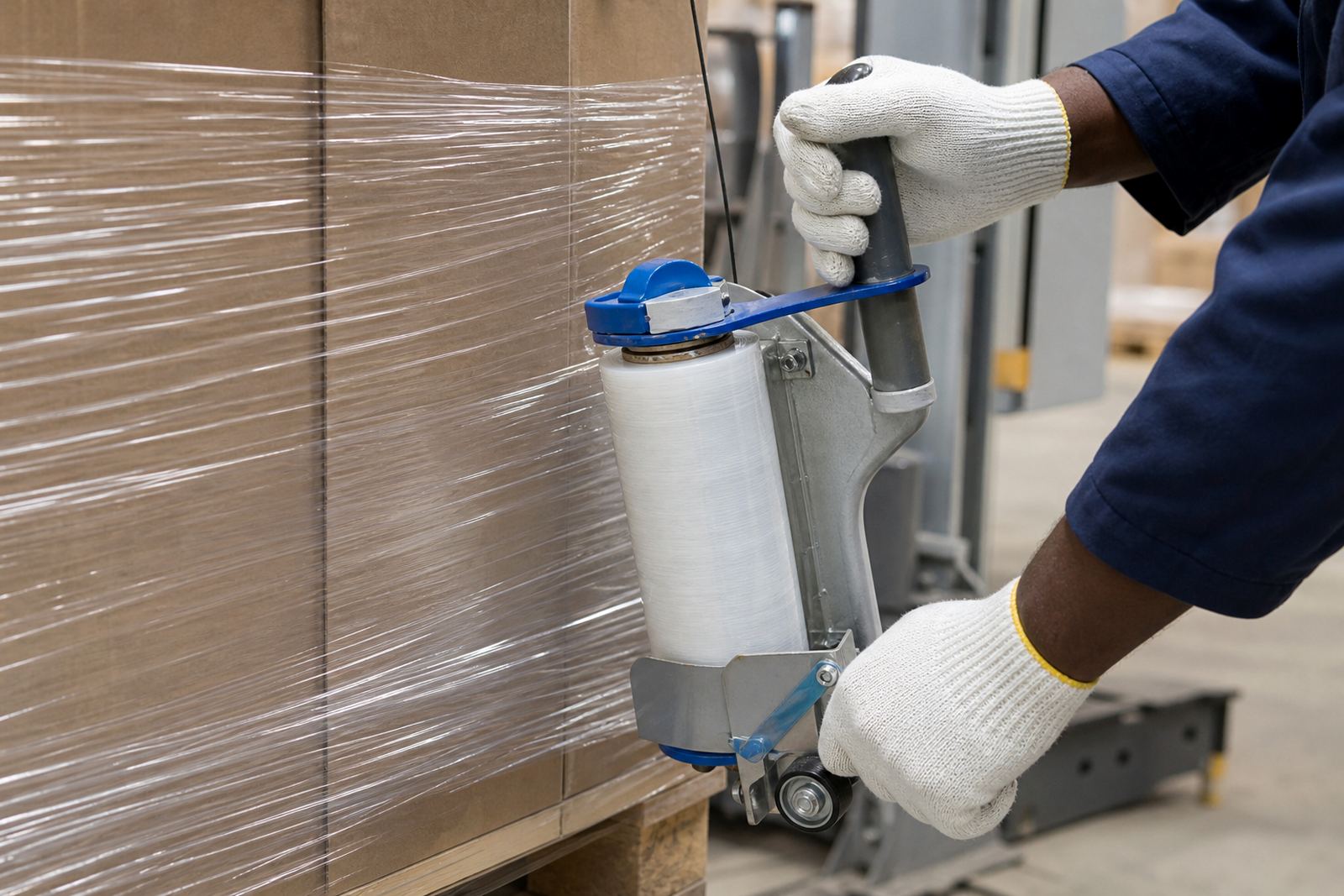
In practical terms, a guarded design supports cleaner handling of film rolls and reduces the chance of accidental contact with the blade during normal use, cleaning and roll changes. That kind of protection is especially useful where new operators are being trained or where several people use the same station across different shifts.
Confidence starts with predictable handling
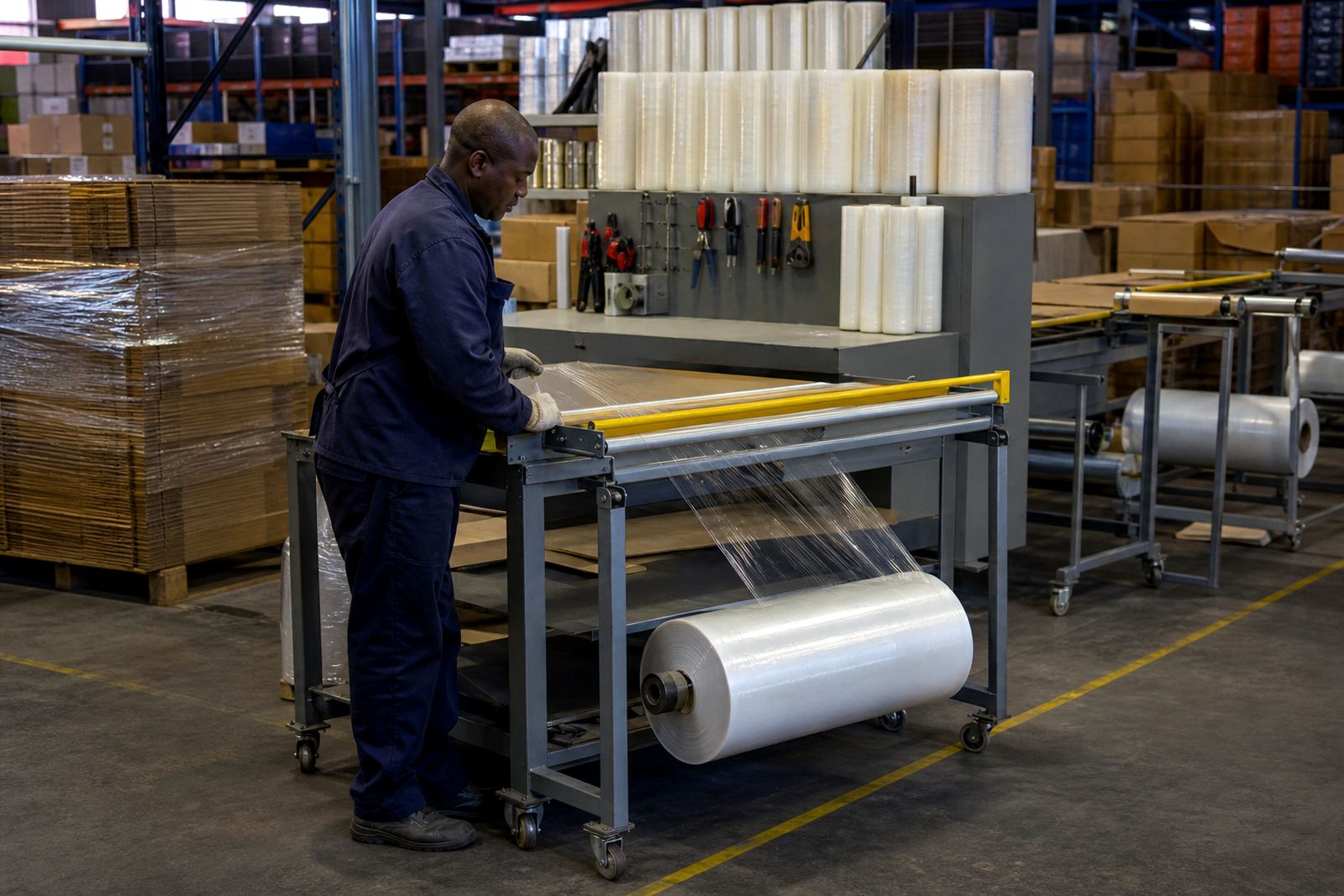
Operators usually trust equipment that behaves the same way every time. A guarded cutter gives a more defined cutting point and makes the film path easier to follow, which helps reduce awkward movements. The result is less guesswork and a smoother routine for the person standing at the line.
This is important in facilities that handle mixed products, from retail bundles to pallet wrap for warehouse movement. If the cutter sits properly at the workstation and the film runs through it neatly, the operator can focus on tension, wrap quality and line pace instead of worrying about the blade.
That confidence also supports better morale. When a device feels safer and easier to control, staff are less likely to improvise. They are more likely to use the same method each time, which improves consistency across the team.
- Less hand movement near the cutting edge
- Clearer film control during roll changes
- More consistent cutting action between operators
- Lower stress for new staff and temporary cover
Safer routines without slowing production
Some managers worry that extra guarding will slow the line. In practice, a well matched cutter often speeds things up because operators spend less time adjusting their grip or restarting a wrap after a poor cut. Safe and quick can work together when the cutter suits the application.
On a site in Johannesburg or Pretoria, where packing may run alongside warehouse dispatch and stock control, speed matters but so does control. If a cutter helps produce a cleaner finish first time, it can cut down on rework and reduce the number of times staff need to stop and re-thread film.
Safety checks still matter. A guarded cutter is not a replacement for good training, but it does reduce exposure to the sharp edge during routine use. That is useful in humid coastal areas such as Durban or Cape Town too, where gloves, condensation and busy handling areas can make grip less reliable than people expect.
What to look for when choosing a guarded cutter
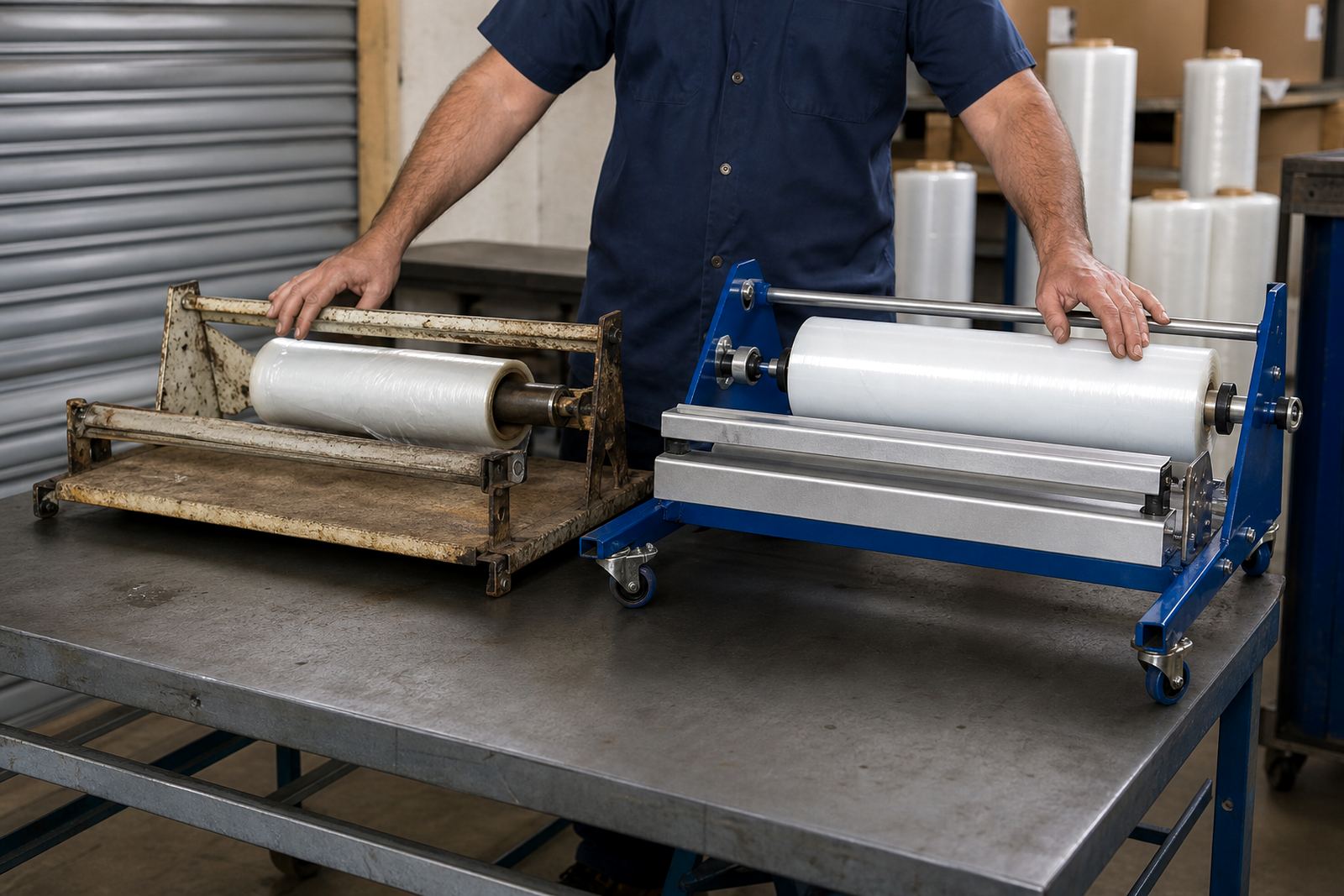
The best guarded cutter is the one that suits the actual packing line, not just the catalogue description. Film thickness, roll size, operator reach and mounting position all affect performance. A unit that works well on light stretch film may not suit a heavier shrink film job, especially if the line handles irregular cartons or wider pallets.
Before choosing a unit, check how the crew works around it. If the station is tight, the guard should not create awkward access. If the line is exposed to dust or constant washdown, the materials and fixings need to hold up over time. On industrial sites around Ekurhuleni, that practical fit is often the difference between a tool that gets used properly and one that ends up ignored.
- Match the cutter to the film type and thickness
- Check whether the guard suits left or right handed use
- Confirm the mounting position works with the line layout
- Ask about spare blades, service support and replacement parts
- Make sure the design is simple enough for quick training
Training, servicing and the human side of safety
Even the safest cutter needs routine care. A blunt blade can encourage extra pressure, which defeats the purpose of guarded equipment. Regular blade replacement, basic inspection and operator training help keep the cutter performing as it should.
For businesses with multiple shifts, a short refresher goes a long way. Staff should know how to load film, when to stop using a worn blade and how to report a damaged guard. If those steps are part of the routine, safety becomes practical rather than theoretical.
Film Cutters supports packing lines with onsite installation, line setup, preventive servicing, blade replacement, dispenser repairs, spares supply, operator training, safety checks, site assessments, roll change support, breakdown callouts and equipment upgrades. That kind of support matters when a plant needs help getting a line back to normal quickly, rather than waiting for a problem to grow.
A local example from a fast-moving dispatch floor
Consider a distribution site in Germiston handling daily outbound loads for Johannesburg, Pretoria and Durban. The team works with wrapped pallets, mixed film sizes and a steady stream of urgent orders. Before changing to a guarded cutter, operators were cautious and often paused during roll changes. The pauses were small, but over a shift they added up.
After the change, the station became easier to use and staff spent less time second-guessing the cut. One supervisor noted that training new people was simpler too because the cutter made the process more obvious. There were fewer rough edges on the film and less fiddling at the station, which helped the line keep moving even on busy mornings.
That type of improvement is not dramatic, but it is valuable. On a real floor, small gains in confidence and control often show up as cleaner work, fewer interruptions and a better routine for the whole team.