Start With Current Output, Not Guesswork
When a packing line is under pressure, people often buy the cheapest cutter that will do the job on day one. That can work for a small batch room, but it usually becomes expensive once volumes climb. A better approach is to match the cutter or dispenser to your actual line speed, roll sizes, shift pattern and the way operators work around the machine.
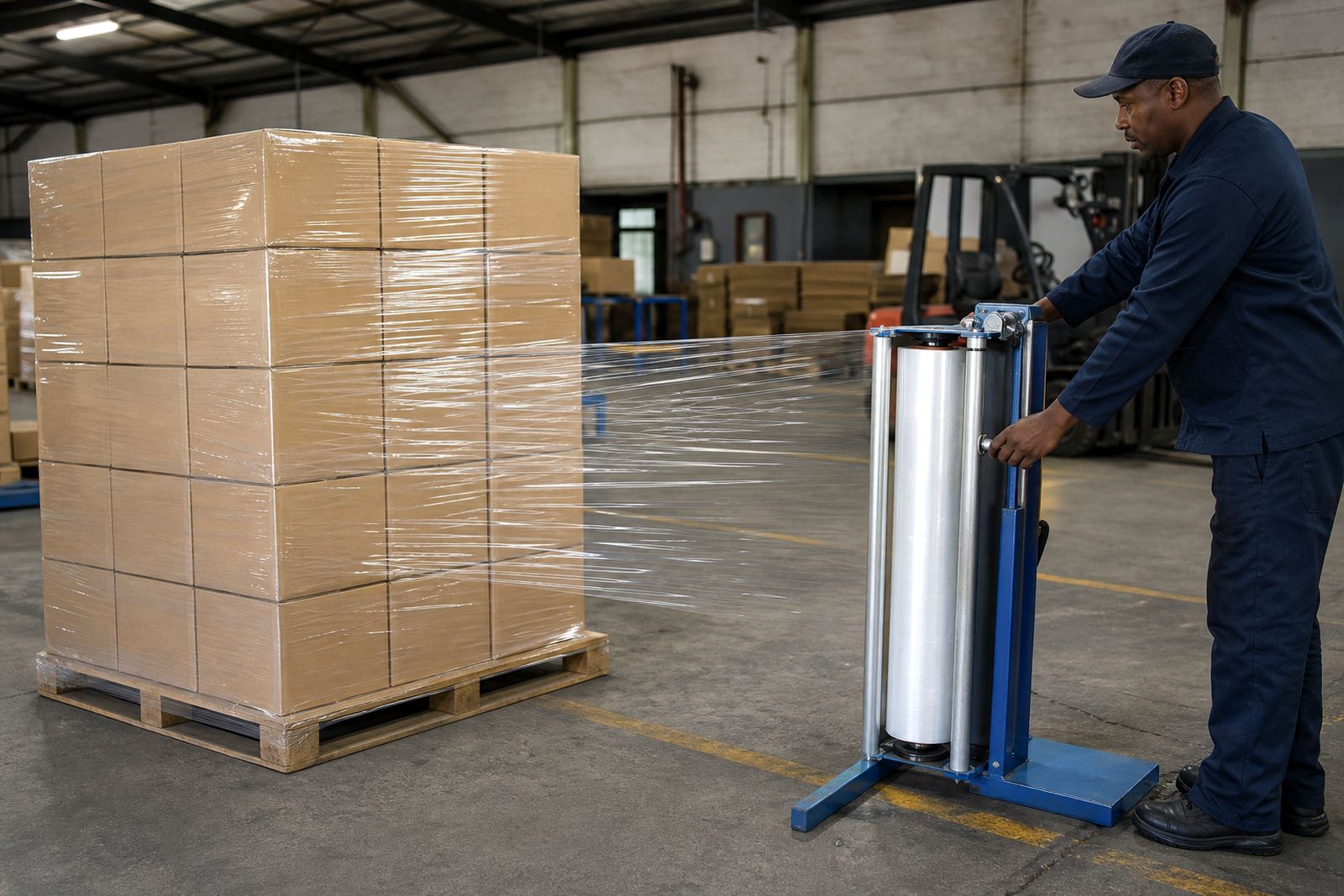
At a Germiston plant supplying retail and industrial customers, the line may be handling mixed pallets in the morning and higher pallet counts after lunch. In that setting, a unit needs to cope with repeated use, quick roll changes and consistent film control. If the equipment slows operators down, production loses time one small pause at a time.
- Check how many rolls are used per shift
- Measure average packing time per pallet
- Note where film waste is happening
- Record how often blades or guides need attention
Choose Equipment That Fits the Film You Use
Shrink film and stretch film do not behave the same way, so the cutter or dispenser has to suit the film type and thickness. A line using lighter stretch film for outbound pallets has different needs from a site handling heavier shrink wrap on bulky cartons. The wrong setup can leave film snagging, uneven cuts or wasted material from torn edges.
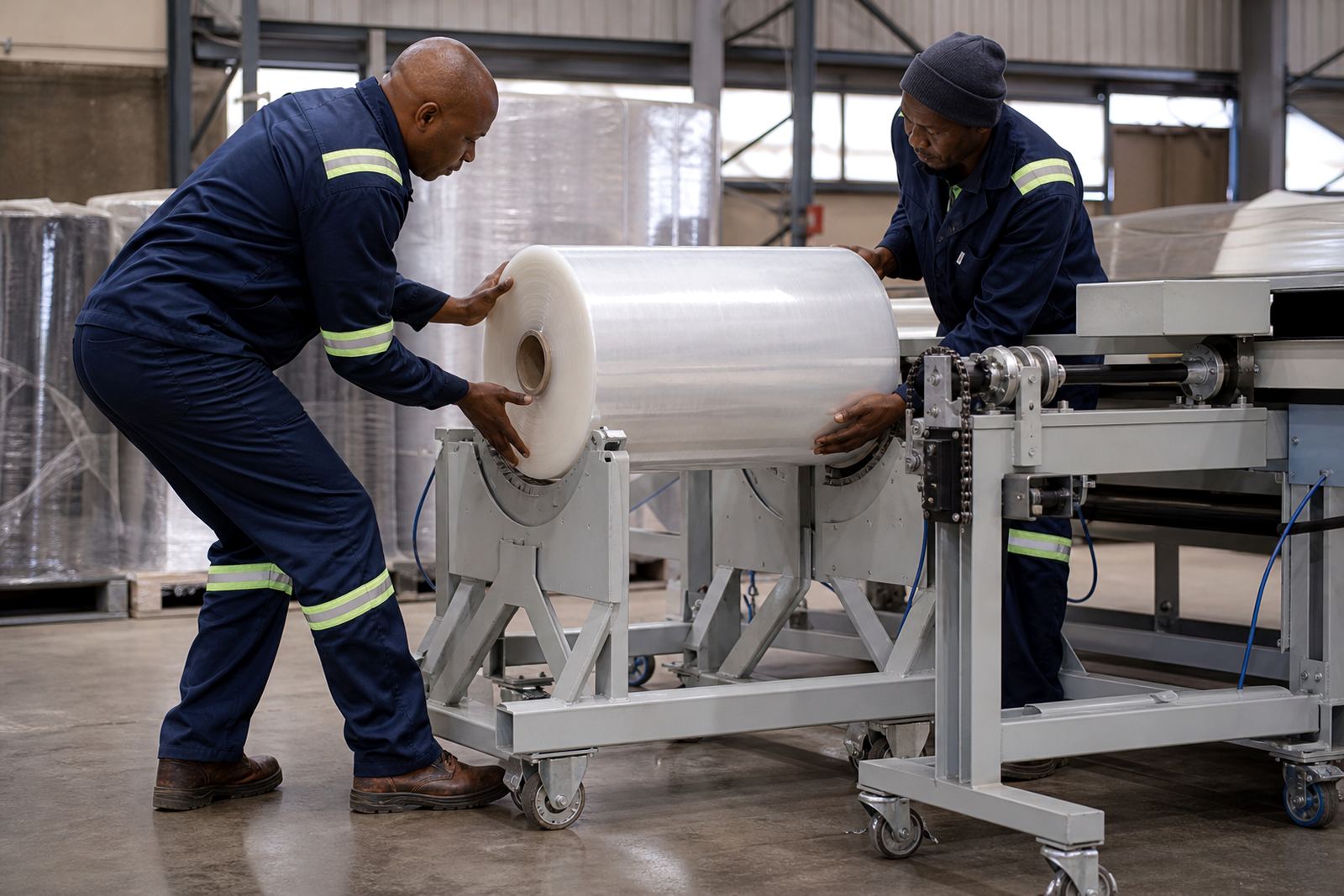
It is also worth checking the roll widths and core sizes you use now and the sizes you may move to later. That small detail matters when you start changing packaging specs for new customers or larger export orders. A dispenser that is easy to adjust gives you more flexibility without replacing the whole unit.
- Confirm film thickness ranges used on site
- Check roll diameter and core compatibility
- Ask whether changeovers can be done quickly
- Make sure the cutter handles your packaging style
Think About Labour, Training and Safety
A good buying decision is not only about the metal frame and blade. It is about how the machine fits the people using it every day. On a busy line in Boksburg or Midrand, a dispenser should be simple enough for new operators to use correctly after a short handover, yet sturdy enough for repeated shifts.
Safety matters too. Sharp edges, loose film tails and awkward roll handling all create avoidable risks. If the equipment supports proper blade control and stable film feeding, the line becomes safer and tidier. That helps with house rules, safety inspections and general day to day discipline on site.
- Keep operator steps as few as possible
- Choose clear blade access and guarded cutting points
- Use training that covers correct loading and handling
- Plan for safe roll movement and storage
Build In Maintenance Before Problems Start
Many businesses only think about servicing after the first breakdown, and that is where costs begin to climb. Preventive servicing keeps cutters and dispensers working smoothly, especially in sites with dust, vibration or high traffic around the packing area. In coastal conditions such as Durban or Cape Town, humidity can also affect moving parts and fixings over time.
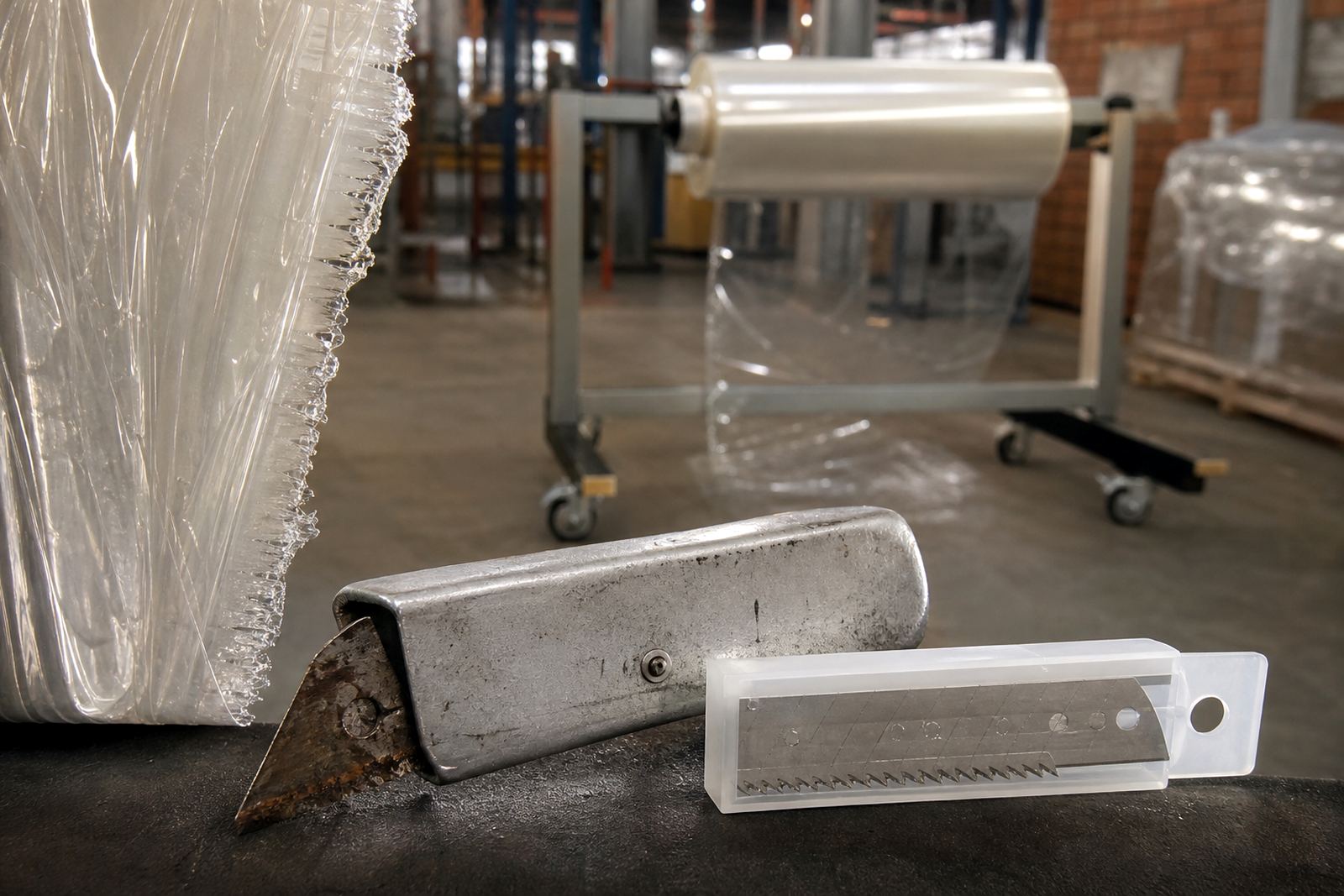
A practical buying decision should include blade replacement access, spare parts support and a plan for quick repairs. If a unit takes too long to service, the line sits waiting. That is a bad trade when production targets are tight and deliveries cannot slip. Regular checks also make it easier to spot wear before it affects cut quality.
- Set a servicing interval based on use, not guesswork
- Keep spare blades and key wear parts on hand
- Check for loose fittings and guide wear
- Inspect after any rough handling or roll jam
Plan For Growth Without Replacing Everything
Buying for growth does not mean overbuying. It means selecting equipment that can support higher output, different film grades and more frequent roll changes as the business expands. A packing line in Pretoria may start with one shift and later add overtime or a second shift. If the cutter can cope with that change, you avoid another round of purchasing too soon.
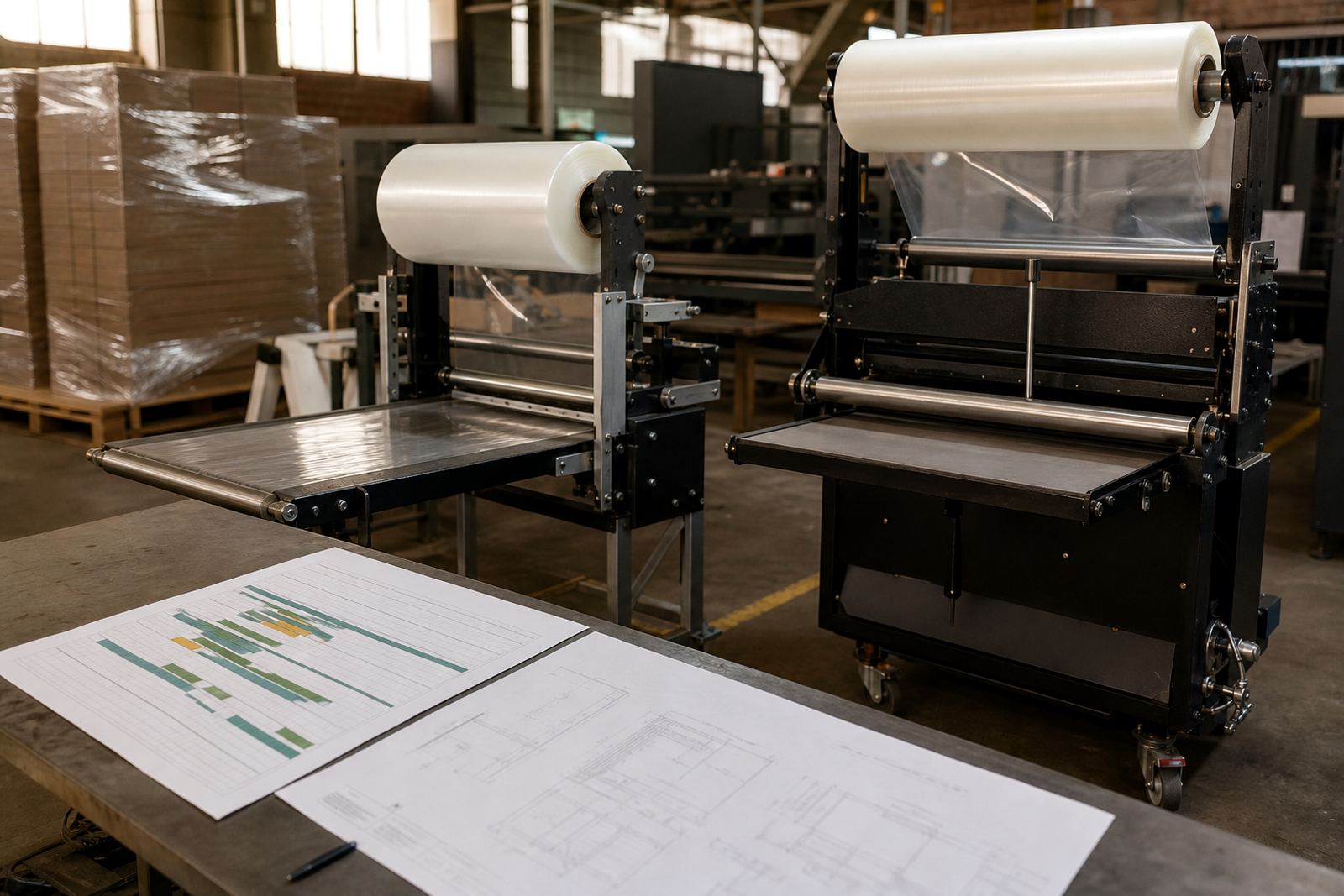
Look for units that allow upgrades, easier servicing and stable operation under heavier use. In practice, this means less downtime, fewer workarounds and better control over material use. It also means the line is ready when a new customer order lands and the team needs to scale fast, without panic.
- Choose equipment with enough capacity for future volume
- Ask how upgrades are handled later on
- Check if spare parts are available locally
- Make sure the setup suits overtime and extra shifts
A Local Example From a Growing Packing Line
A distributor in Germiston handling mixed pallet loads for Johannesburg and Pretoria started with basic manual dispensing. As orders grew, operators were spending too much time adjusting film by hand and replacing worn blades more often. The site then moved to a better suited cutter and dispenser setup, followed by operator training and a simple maintenance routine.
The change did not just improve speed. It reduced wasted film, improved cut consistency and made shift handovers easier. That kind of result is what growth looks like on the floor, not just on a spreadsheet. When the right equipment is in place, the line keeps moving and the team gets on with the job.
For many businesses, the best time to buy is before the line starts struggling. That gives you room to plan, test and train properly instead of reacting to breakdowns and rushed purchases.