
Start with the same wrap conditions on every shift
Consistent wrapping starts before the first pallet leaves the line. If one shift loads the roll tighter, sets the brake differently or uses a worn cutter, the film will behave differently from the previous run. On busy packing lines in Germiston, Boksburg and Midrand, that difference soon shows up as loose corners, necking film or uneven overlap on the back of the load.
The simplest fix is to standardise the setup. Keep the same roll position, film path, cutter angle and operator starting point for each product family. If you have multiple lines, write the basic settings at the machine and keep them visible near the load station. It saves time when teams change over after lunch or between day and night shift.
- Check that the roll sits square on the holder, not skewed to one side.
- Make sure the film unwinds smoothly without jerks or snagging.
- Confirm the cutter or dispenser is mounted at the same height each time.
- Use the same start point on the pack for every repeated load.
That small bit of discipline reduces waste fast. It also helps new operators settle in quicker, which matters where staff rotate often or where a line runs under pressure during month end.
Match tension to the product, not the habit
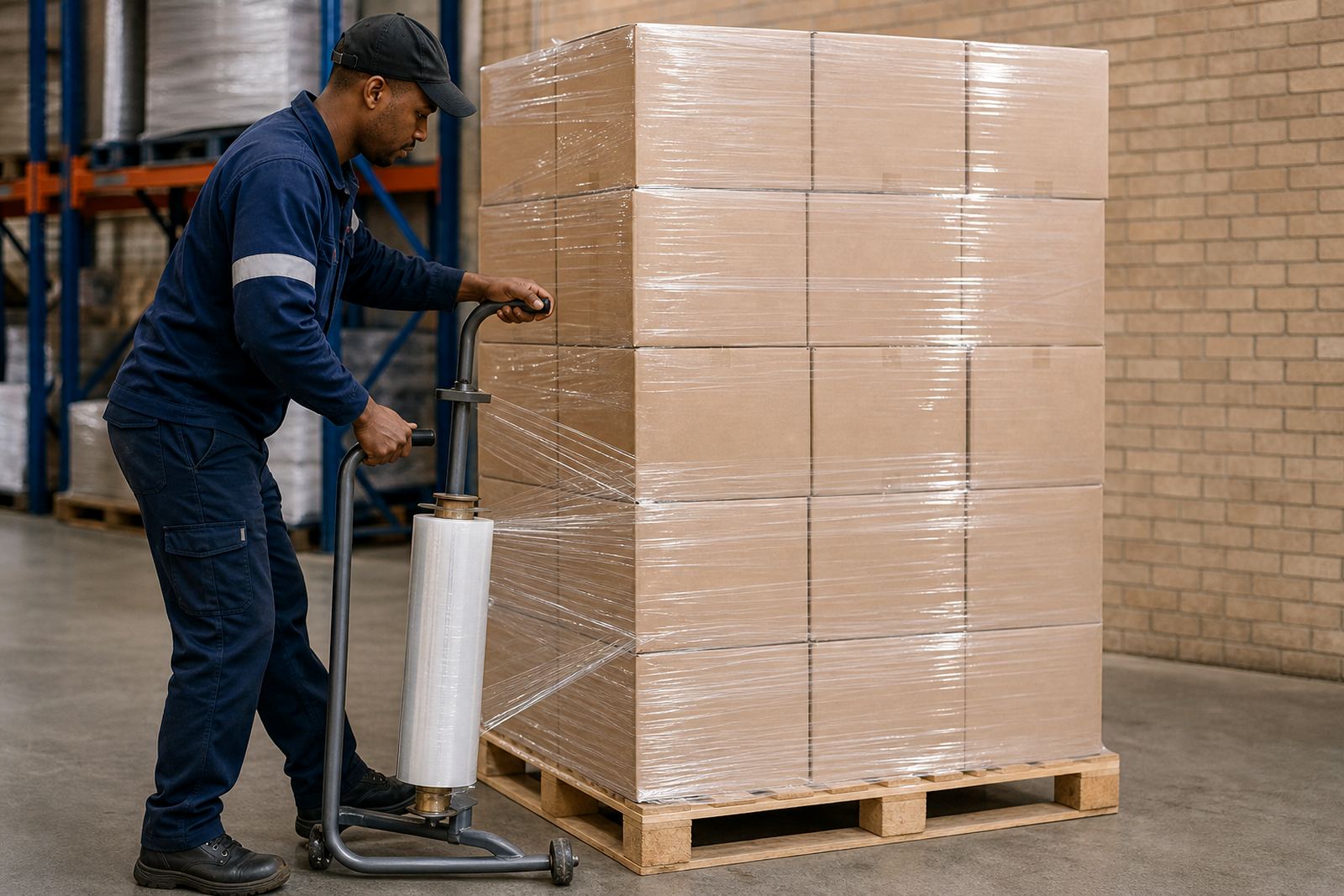
Many wrap problems come from tension that was copied from a previous product and never adjusted. A lighter carton stack, a cold stretch film roll or a load with sharp corners all need different handling. If the tension is too high, the film thins too much and tears at the corners. Too low, and the load looks wrapped but shifts in transit.
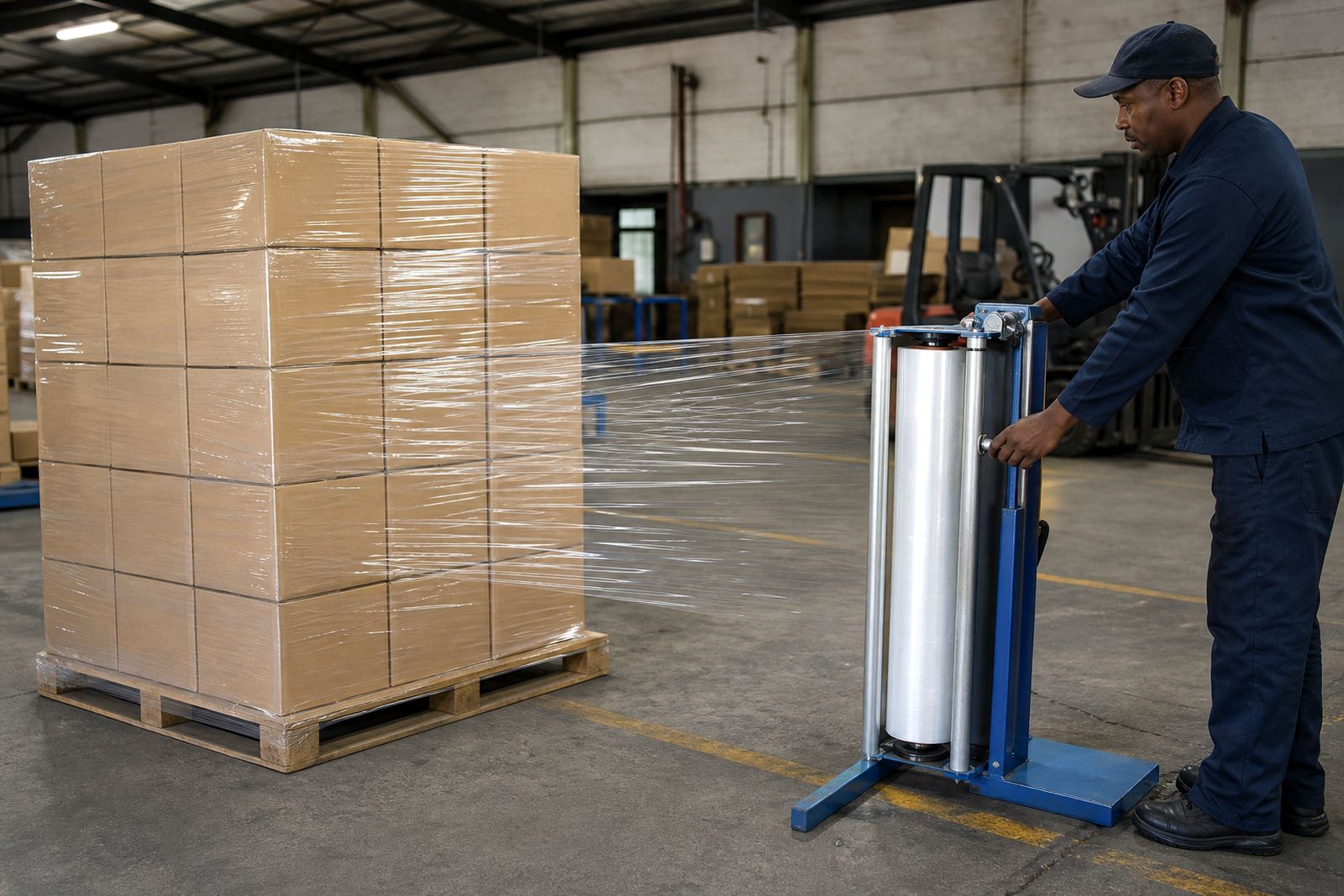
For shrink and stretch film cutters and dispensers, the aim is controlled release. The operator should be able to pull film smoothly, cut cleanly and keep overlap consistent without fighting the tool. On coastal routes to Durban or Cape Town, humidity can also change how the film feels in hand, so what worked in dry Pretoria may need a tweak at the coast.
- Test tension on one pack before a full batch starts.
- Watch corner coverage, neck down and film memory after application.
- Adjust brake pressure in small steps, not big jumps.
- Recheck settings if the roll changes batch or gauge.
Once a team learns to adjust by product type, the line becomes far easier to manage. The film is not being asked to do the same job on every load, because every load is slightly different.
Keep cutters and dispensers in clean working order
A dirty or worn cutter is one of the quickest ways to lose wrap consistency. If the blade is blunt, operators start pulling harder and the film stretches unevenly. If the dispenser drags, the wrap can jump or twist and that leads to uneven coverage. In practice, a small fault becomes a repeat fault because every pack after it carries the same problem.
Regular servicing helps avoid that. Clean away dust, adhesive residue and film scrap before it builds up around the blade housing or guide points. Check fasteners, moving parts and hand grips for wear. In sites where product dust or moisture is common, especially near loading bays and open yards, daily cleaning matters more than most teams think.
- Replace worn blades before they start tearing film instead of cutting it.
- Inspect handles and brackets for looseness.
- Lubricate only where appropriate and keep it off film contact points.
- Log repeat faults so the same issue is not missed twice.
When a cutter is kept sharp and aligned, the operator can work with less force and more control. That gives neater edges and a better repeat finish on each pack.
Train operators to spot the first sign of drift
Wrap consistency is usually lost gradually, not in one dramatic failure. One corner starts lifting, a roll begins tracking off-centre, or the overlap changes by a few centimetres. If the operator notices early, the correction is quick. If not, a whole pallet run may need to be redone.
Good training is practical. Show teams what correct wrap looks like on your actual packs, not on a generic sample. A warehouse in Germiston handling mixed cartons will need different wrap cues from a site in Polokwane packing uniform bags or drums. The important part is that everyone knows the acceptable range and when to stop and adjust.
- Teach operators to check the first three packs in every run.
- Use a simple visual standard for overlap and corner coverage.
- Show the difference between a clean cut and a dragged tear.
- Make reporting easy when a tool starts to drift or jam.
At Film Cutters, operator training is often the difference between a line that needs constant intervention and one that runs with fewer interruptions. The goal is not more skill for its own sake, but fewer mistakes during a busy shift.
Use site checks to catch layout problems early
Sometimes the film issue is not the tool at all. The packer may be standing too far from the load, the dispenser may be mounted at an awkward angle, or the line may be forcing awkward hand movement. Those things create uneven application because the operator cannot repeat the same motion every time. On tighter lines in Johannesburg or Pretoria, even a small layout change can affect consistency across the whole shift.
A site assessment helps identify those practical problems before they become habit. Check the line flow, operator reach, pallet height, film storage position and the space around the wrapping point. Also check whether the area is affected by load-shedding, because some lines run differently when lighting, conveyors or support equipment are interrupted. A setup that looks fine in daylight may behave differently when the area is under backup power and the pace changes.
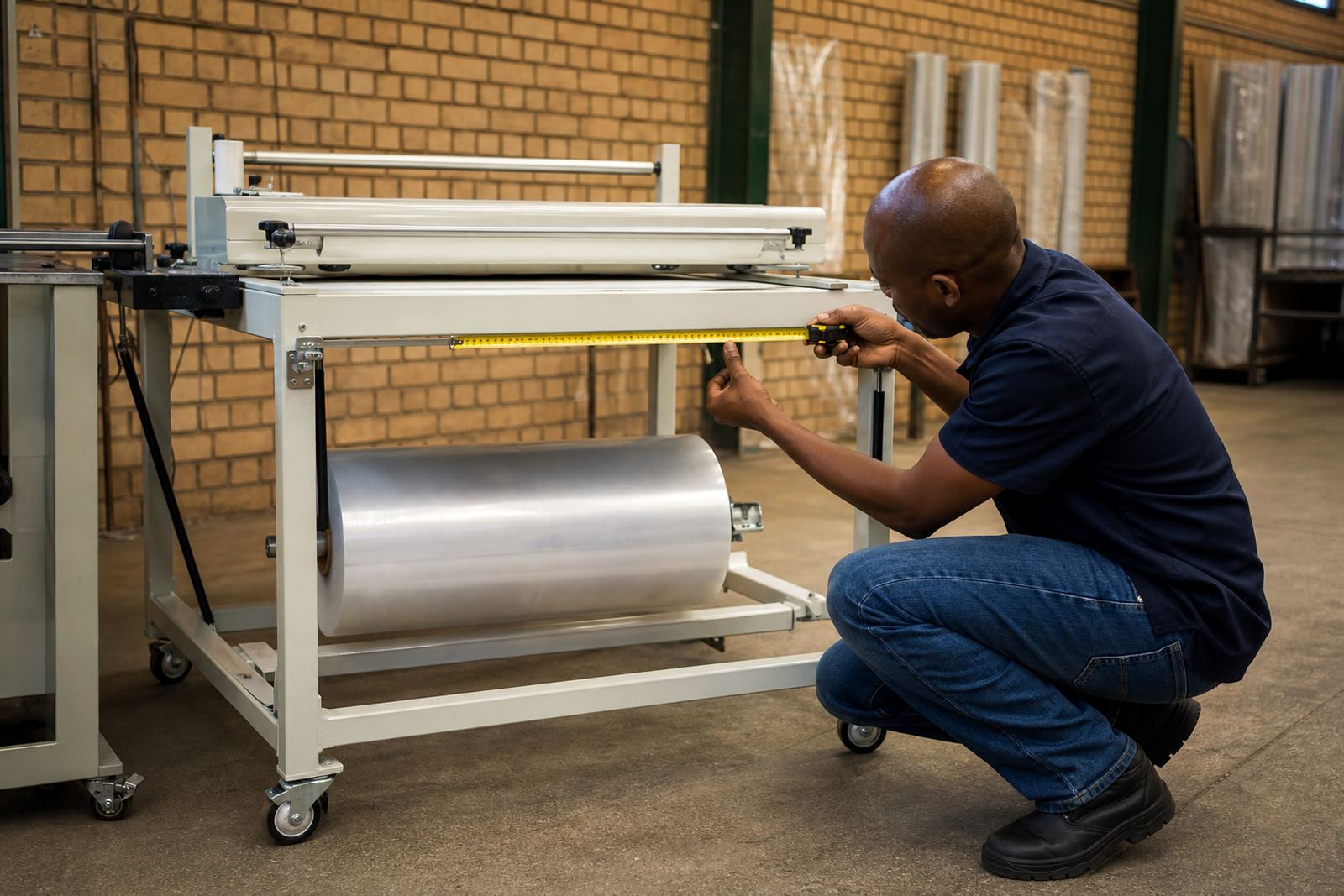
- Measure operator reach and the distance to the pack face.
- Check whether the dispenser is angled to the natural hand path.
- Make sure spare rolls are stored close enough for quick changeover.
- Review whether floor space allows safe movement around the station.
Once the physical layout is sorted, operators can repeat the same movement with less effort. That usually shows up in better wrap control within a day or two.
Keep spare parts and support close to the line
Wrap consistency depends on response time as much as on setup. If a blade holder cracks, a brake slips or a dispenser starts binding, the line needs a fix without delay. Waiting until the next day to sort it out usually means wasted film, poor packs and extra labour. For sites working across Johannesburg, Boksburg, Midrand and Germiston, quick breakdown support matters because a small stoppage can affect dispatch the same afternoon.
It also helps to hold the right spares on site. Not every item needs to be stocked in bulk, but the parts that fail often should be easy to replace. That includes blades, wear parts, fixings and any small components that affect film path or cut quality.
- Keep a short list of the parts that fail most often.
- Schedule preventive servicing before peak production periods.
- Use roll change support when the line runs at speed or under pressure.
- Ask for equipment upgrades when the current tool no longer matches the pack size.
That approach keeps the line steady, and it cuts down on last minute problem solving. In packaging, consistency is often just good maintenance done on time.
A Germiston example: steadier wrap on mixed runs
A good example is a Germiston packing line running mixed carton sizes for distribution into Gauteng and beyond. The team was getting uneven overlap on some loads, especially when shifts changed and the roll setting was reset by feel rather than by measurement. The film was not the main issue. The problem was that each operator was starting from a slightly different point and compensating for worn blade parts in their own way.
After a line assessment, the setup was standardised, the dispenser was repaired, the blade was replaced and the team was retrained on the first three packs of each run. The difference was immediate. Less waste, cleaner cuts and fewer calls to the supervisor during changeover. It was a practical fix, not a major overhaul.
That is usually what improves wrap consistency in the real world. Not a single dramatic change, but a set of small adjustments made in the right order.