When the film starts feeding unevenly
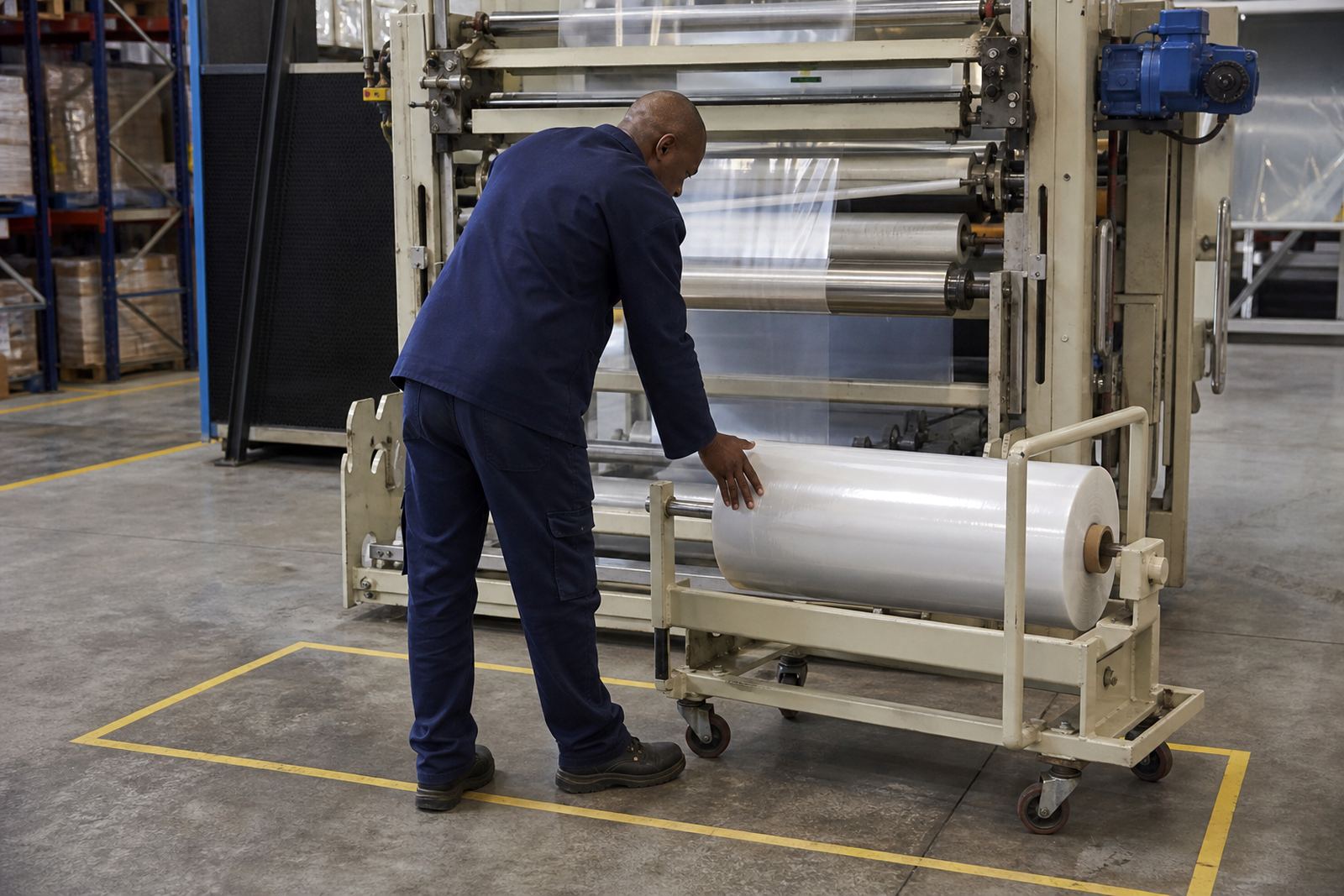
Uneven film feed is one of the first signs that a dispenser needs attention. You may see the roll pulling harder on one side, film wandering off-centre, or operators having to keep correcting the wrap by hand. In many cases the cause is simple: dirty rollers, bent guide parts, worn bearings or a roll that was loaded slightly out of line.
In busy plants around Germiston, Boksburg and Midrand, this often shows up after a rushed roll change. If the core is not seated properly, the film will drag and create tension changes from one cycle to the next. On stretch film lines, that can lead to weak holding power. On shrink film, it can cause wrinkles and poor application around product edges.
- Check that the roll sits square on the spindle.
- Look for sticky buildup on rollers and guides.
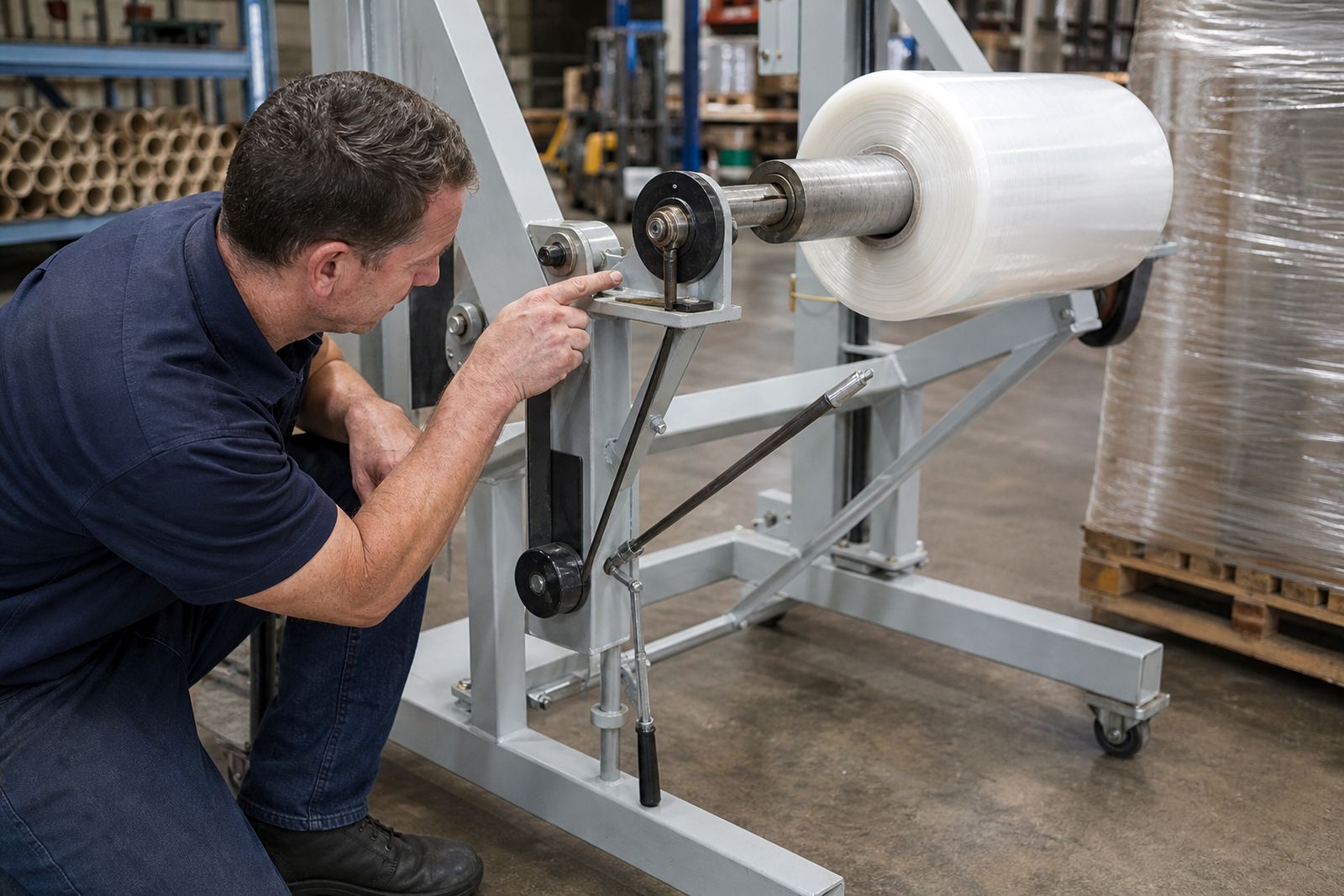
- Inspect bearings for rough movement or noise.
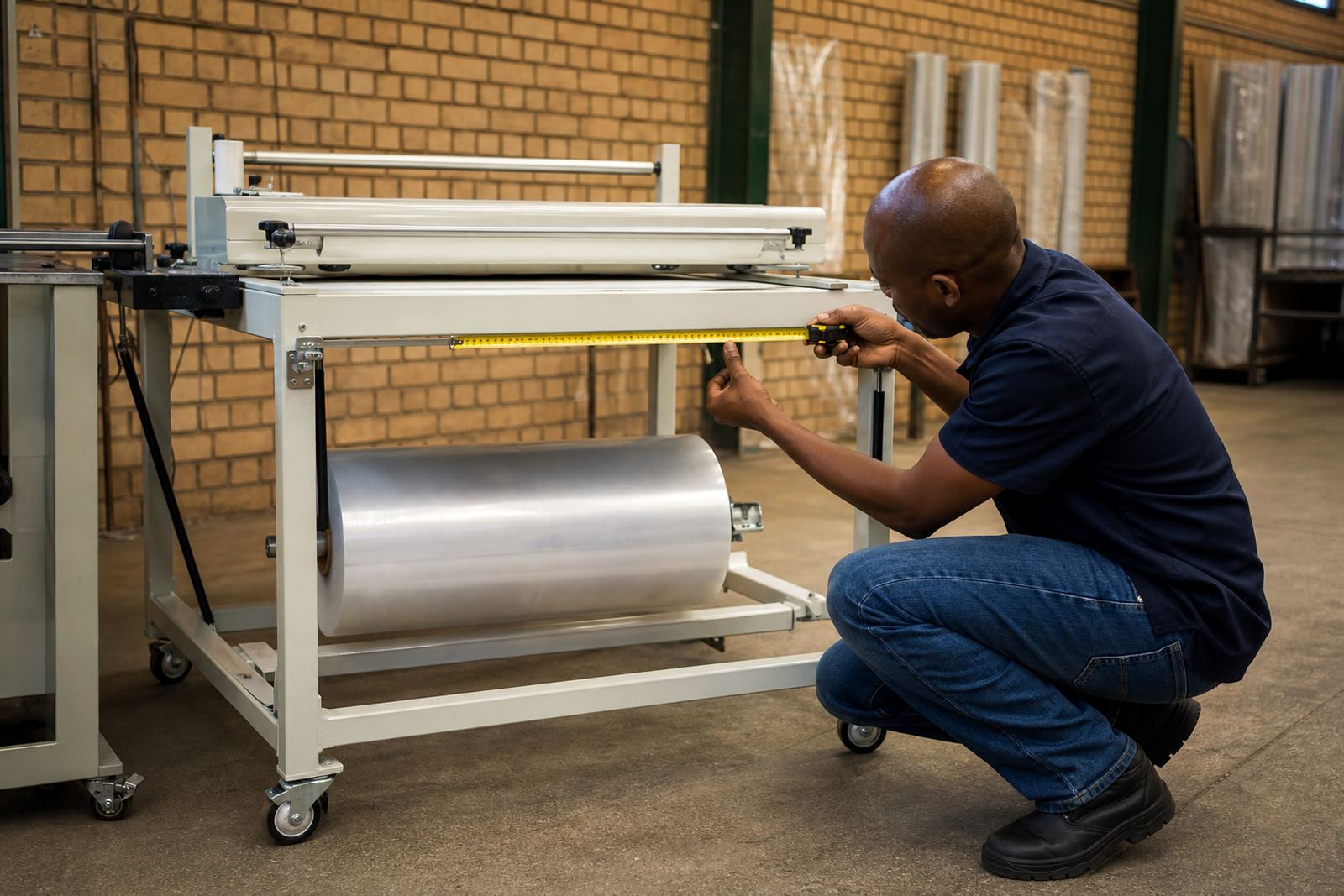
- Confirm the film width matches the dispenser setting.
Blade wear and rough cutting edges
If the cut becomes jagged, the blade snags the film, or operators need extra force to finish a cut, the blade is probably worn or damaged. Blades on packing lines take daily abuse, especially where dust, cardboard fibres and adhesive residue build up. In coastal sites like Cape Town or Durban, humidity can also speed up corrosion if the equipment is not cleaned and stored properly.
Blunt blades create more than a neatness problem. They slow operators down, increase the risk of hand strain and can leave film tails that stick to the next pack. That extra drag often gets mistaken for a problem with the film itself, when it is really a cutting issue. A proper blade replacement schedule usually saves time and reduces waste.
- Replace blades before they become visibly chipped.
- Clean residue from the blade housing regularly.
- Do not force a cut through thicker film than the unit is rated for.
- Check guards and safety parts after every blade change.
Dispenser repairs after rough handling on the line
Most dispensers are simple tools, but they still get knocked, dropped and over-tightened on fast-moving lines. A bent frame, cracked handle or loose fastener can throw the whole unit out of alignment. Once that happens, film tension changes and the operator starts fighting the equipment instead of moving steadily through the packiging task.
At sites with high output, the damage often comes from repeated roll swaps and quick line resets. A dispenser that was fine in the morning can start misbehaving by the afternoon if it has taken a knock on a trolley, pallet or rack edge. In those cases, a repair is usually better than trying to keep it running with makeshift fixes.
- Look for bends around the spindle mount and handle points.
- Test whether moving parts still lock correctly.
- Check for missing clips, spacers or retaining parts.
- Remove damaged units from service before they affect the line.
Why roll change problems keep coming back
Roll change problems usually point to process rather than one bad part. If operators struggle to load film, the dispenser may be too awkward for the line height, the spindle may be the wrong size, or the procedure may not be consistent across shifts. That becomes a bigger issue where the line runs long hours and different teams share the same equipment.
In Gauteng factories, especially in Johannesburg and Pretoria, we often see the same issue repeated because the same bad habit carries through the shift change. A quick fix may get the line moving, but unless the loading sequence is corrected the problem returns. Good training and a clear roll change method make a big difference.
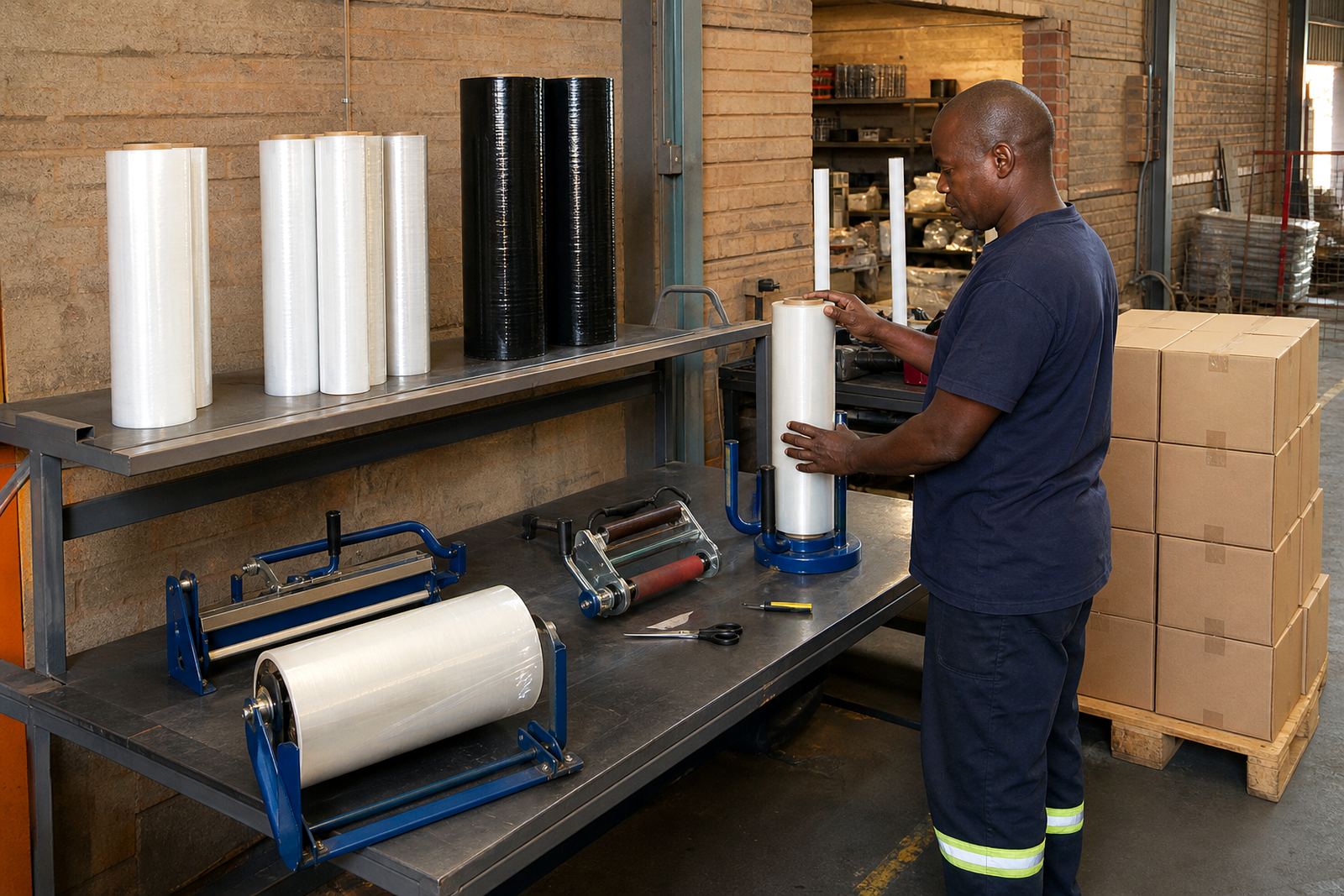
- Make sure the dispenser matches the roll core and width.
- Keep the loading steps the same for all operators.
- Use training notes at the line so new staff follow the same method.
- Check whether the roll is too heavy for one person to handle safely.
Tension faults that affect pack quality
Wrong tension can be hard to spot until the packs start looking uneven. Too much tension and the film stretches badly, leaving thin spots or broken wraps. Too little tension and the film sits loose, making the pack unstable. This is common when the dispenser settings have drifted, or when the wrong film specification has been loaded for the product size and weight.
For warehouses and production sites that send stock across South Africa, the pack has to hold together through transport, stacking and handling. A poor wrap in Germiston may still get through the line, but it can fail later in Polokwane or Durban once the pallets are moved again. That is why tension and setup should be checked as part of routine line control, not only when there is a complaint.
- Confirm the film grade and width before loading.
- Check whether the brake or resistance setting has changed.
- Review the wrap pattern if packs are slipping or tearing.
- Test a few packs after each adjustment, not just one.
Keeping dispensers running in hot, dusty and humid conditions
South African packing lines face different conditions depending on the site. In inland plants, dust and dry air can clog moving parts. In coastal areas, moisture can lead to rust and sticky build-up. During load-shedding, stop-start running can also expose weak parts because equipment is cycled harder than normal. Over time, that adds up to more breakdowns and more downtime.
The best way to avoid repeat dispenser problems is to keep a short maintenance routine and stick to it. That means cleaning, checking wear points, replacing blades before they fail and making sure operators know what normal operation should feel like. A small issue caught early is usually far cheaper than a full line stoppage.
- Schedule preventive servicing instead of waiting for failure.
- Keep spares for common wear items on site.
- Carry out safety checks after maintenance or repairs.
- Book site assessments if the same fault keeps returning.
What to do before the fault stops the line
If a dispenser is slowing the line, the first step is not to guess. Check the roll, the blade, the mountings and the tension points in order. That simple process often shows whether the fault is operator handling, wear, or a setup issue. If the problem keeps coming back, the line may need a proper assessment and a change in the equipment setup.
Film Cutters supports packing lines across Germiston, Johannesburg, Pretoria, Durban, Cape Town, Polokwane, Boksburg and Midrand with onsite installation, preventive servicing, blade replacement, dispenser repairs, spares supply and operator training. For plants that need steady output and fewer roll-change delays, that support can make day-to-day packing far easier.
When a dispenser is maintained properly, it should do one job well: keep the film moving cleanly from roll to pack, without slowing the line down.