Start with a roll change method that everyone follows
The quickest roll change is usually the one that follows the same steps every time. On busy packing lines, confusion comes when one operator unwinds film a little differently, another cuts too close to the load, and the next person has to fix the wrap by hand. That is where minutes disappear.
A simple written method helps. Keep it short, practical and visible at the line. The goal is not paperwork for the sake of it, but a clear sequence that works on a Monday morning in Germiston just as well as it does on a night shift in Cape Town.
- Keep the replacement roll within easy reach of the line
- Assign one person to announce the changeover
- Confirm the cutter position before the old roll runs out
- Check the film path before the new roll is loaded
- Test the first wrap before the line speeds up again
Use cutters and dispensers that reduce fiddling
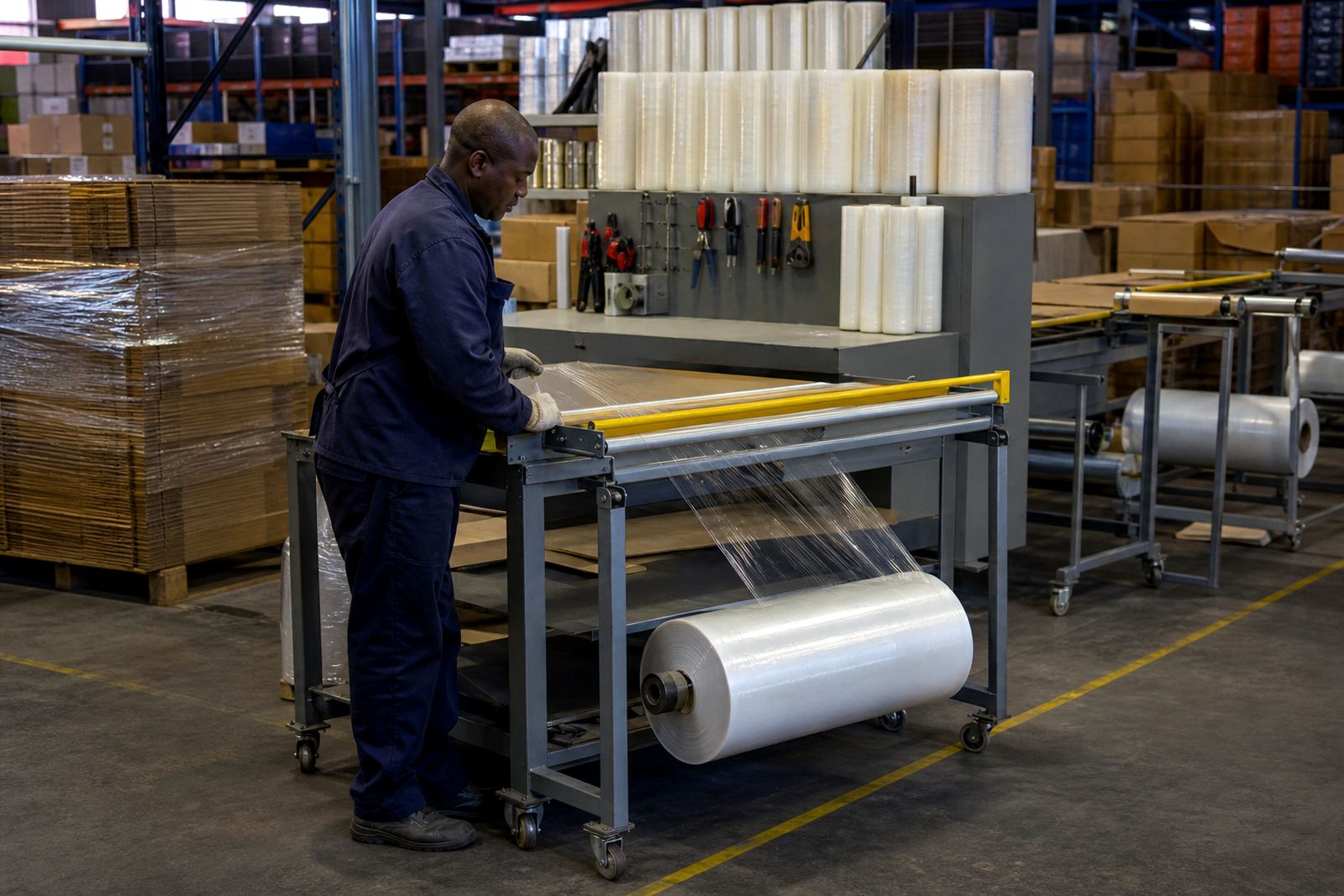
A good cutter or dispenser should remove small delays, not add more handling. If the blade drags, the holder shifts, or the operator has to steady the film with two hands for too long, changeovers take longer and the risk of a bad cut goes up. In a packing line that runs all day, even a few seconds per change can add up fast.
Practical equipment choices matter, especially where production conditions vary. In Durban and other coastal areas, humidity can make film handling less predictable. In hotter inland plants, dusty floors and load-shedding interruptions can interrupt routine. A properly set dispenser gives the operator a consistent grip and a clean release, which keeps the changeover moving.
- Choose a dispenser that matches the film width and roll weight
- Make sure the blade position is easy to reach without leaning over moving parts
- Keep spare blades and wear parts close to the line
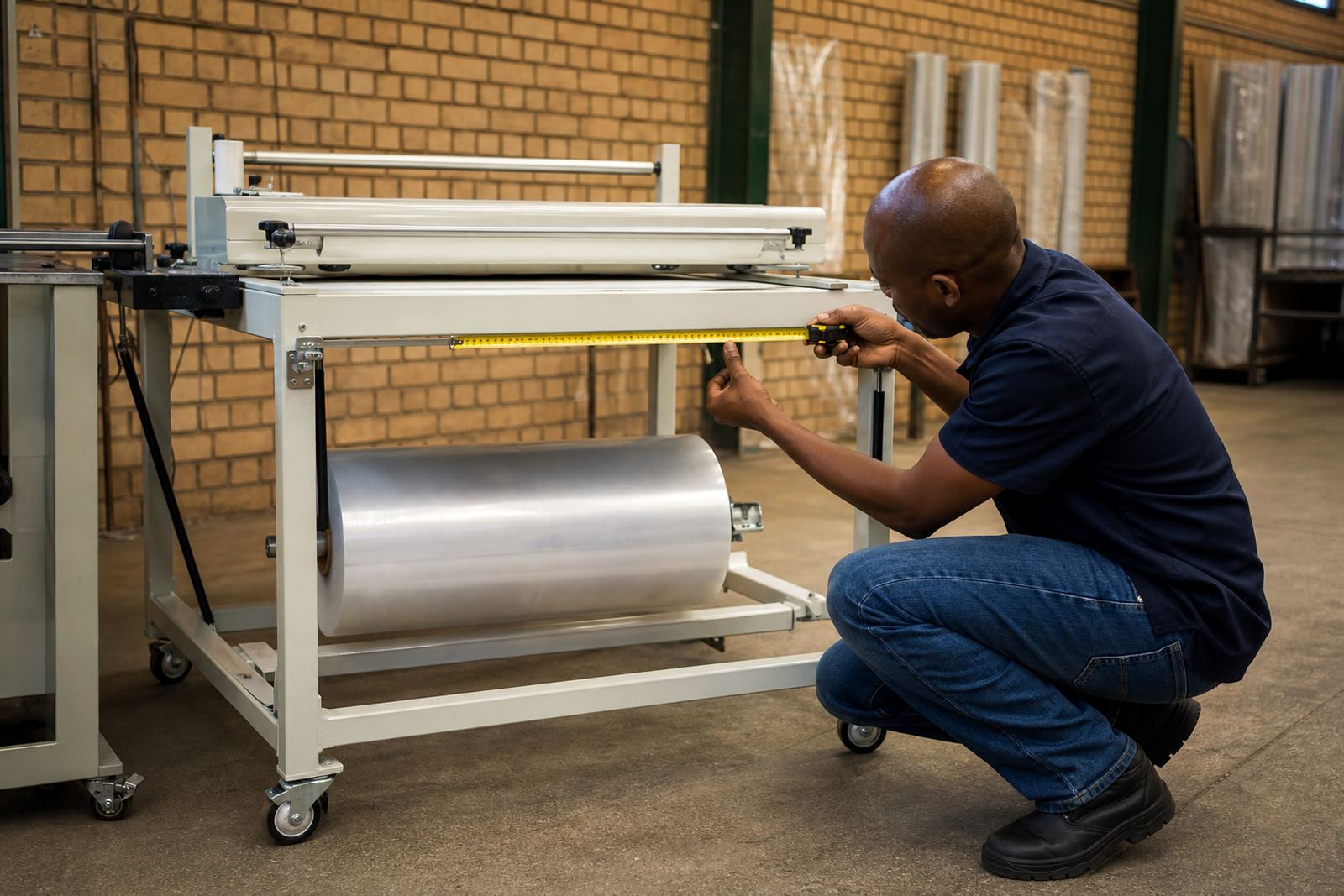
- Check for wobble, loose fittings or uneven tension during servicing
Reduce roll swaps by planning film use better
Many slow changeovers start before the roll even reaches the line. If the packing team waits until the film is nearly finished, they are already under pressure. Better planning means the next roll is staged early, the old roll is used down to a safe point, and the change happens before there is a stoppage. That small habit makes a big difference.
It also helps to standardise roll sizes where possible. When different line operators use different widths or lengths for the same job, there is more checking, more rework and more confusion. A cleaner stock system means fewer urgent surprises and less time spent searching for the right consumable. It sounds simple, but it works.
For plants with multiple shifts, especially around Johannesburg and Pretoria, it helps to keep a changeover log. Not a long report, just enough to see which lines are changing rolls too often and why. Sometimes the issue is film usage, sometimes it is a dispenser that needs attention.
Train operators to change rolls the same way every time
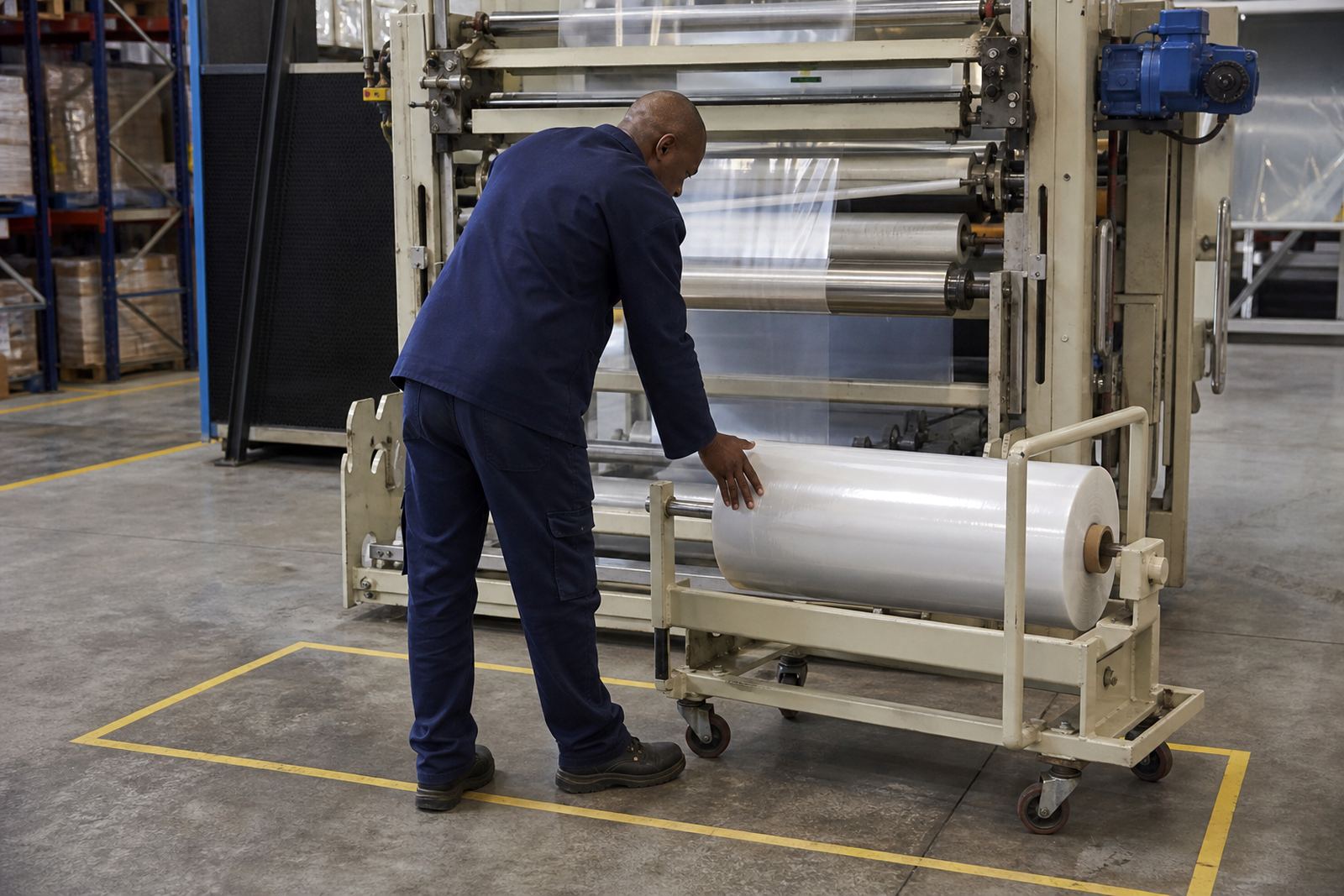
Training is one of the quickest ways to shorten roll changes without creating chaos on the floor. When operators know exactly how to remove the used roll, load the new one, check the cut point and restart the wrap, they move with confidence. Confidence matters because hesitation creates mistakes, and mistakes create rework.
Good training should be hands-on. Operators need to see the correct hand position, the safe way to work near the blade, and how to spot a worn part before it causes trouble. If the team changes frequently or works across shifts, repeat the training often. A five-minute refresher can save a lot more than five minutes later.
- Show the changeover step by step on the actual line
- Teach operators what a normal film pull should feel like
- Explain when to call for help instead of forcing the change
- Include safe blade handling and disposal
Keep preventative servicing ahead of breakdown callouts
Roll changes become slower when cutters and dispensers are only looked at after something fails. A blade that is starting to dull, a hinge that sticks, or a guide that is slightly bent can all slow the process down. Preventive servicing keeps the equipment working the way it should, which is cheaper than waiting for a breakdown in the middle of a busy run.
At Film Cutters, servicing usually focuses on the small things that affect changeover time: blade condition, fasteners, wear points, alignment and operator handling. When those details are right, the line runs better and the changeover feels cleaner. It is a simple fix in many cases, not a big interruption.
- Inspect cutters and dispensers on a fixed schedule
- Replace worn blades before they tear or snag film
- Check mounts and brackets for movement or fatigue
- Keep a small spares list for the most used lines
A Germiston plant case shows where the minutes go
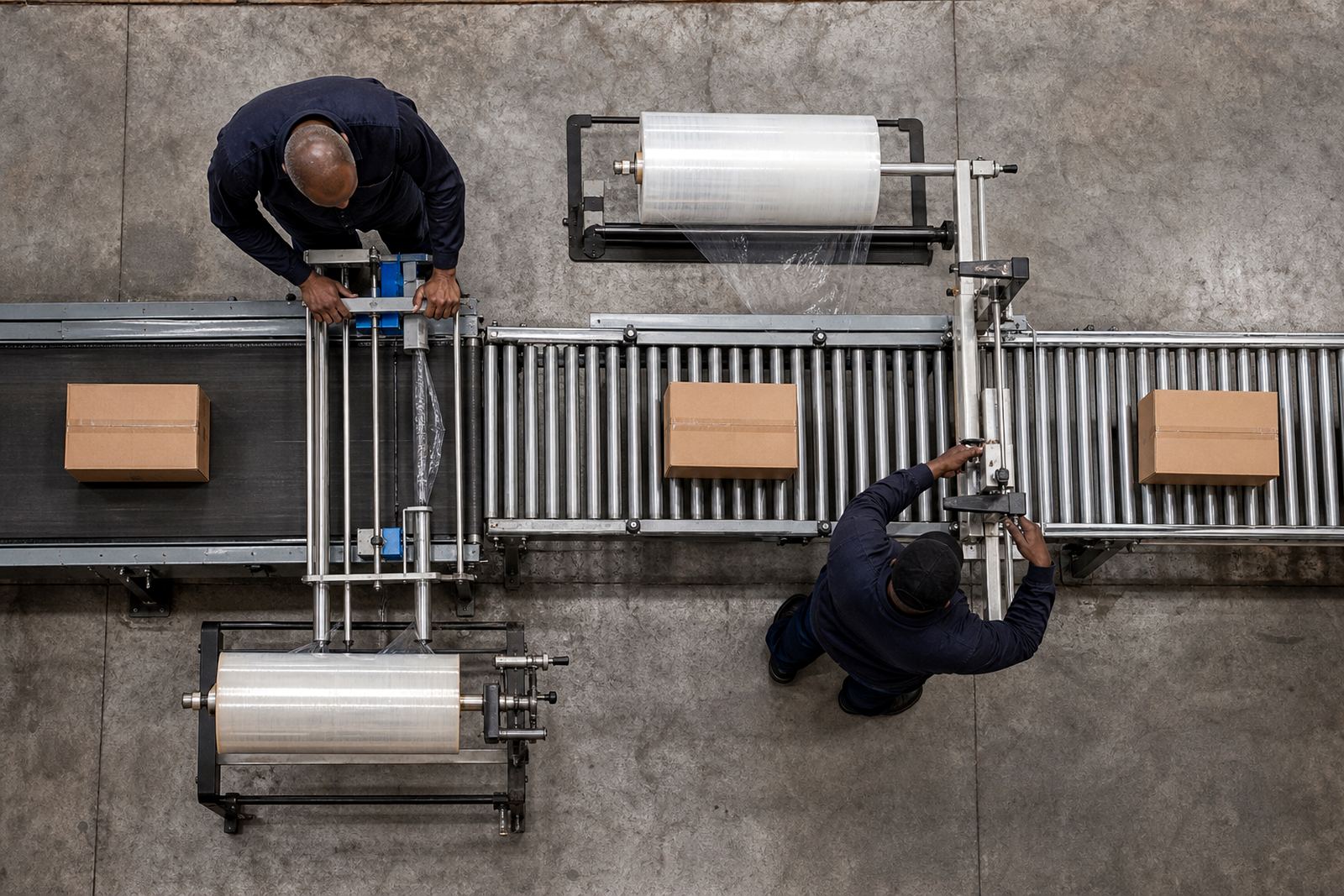
A packaging site in Germiston that runs multiple daily line changes was losing time because each operator handled the film swap differently. One person stretched the film too far, another cut too close to the load, and the next shift spent time correcting the wrap. The issue was not the pace of the team, it was the lack of a clear and repeatable method.
After a site assessment, the team introduced a fixed changeover routine, adjusted the dispenser position and set a simple spares plan for blades and wear parts. The changeovers became quicker and calmer, with less back-and-forth on the floor. That is the main point: speed comes from fewer decisions at the wrong moment, not from rushing.
For businesses in Boksburg, Midrand and the wider Ekurhuleni area, the same principle applies. Keep the process simple, keep the equipment in good order, and make sure every operator knows the sequence before the next roll is due. The line does not need drama, it needs a routine that holds up under pressure.
The safest fast changeover is the one that stays in control
A fast roll change should never create a risky one. If operators are leaning into moving parts, cutting blind, or forcing the film because the dispenser is awkward, the line is not really running faster. It is only getting more fragile. Good equipment, proper setup and regular checks are what keep the changeover quick and controlled.
If your line is losing time on roll swaps, start by looking at the steps, the condition of the cutter and the way the team is trained. Small improvements often make the biggest difference. That is especially true when production targets are tight and every minute counts.
Practical support, onsite setup and a steady service plan can make roll changes more predictable across sites in Johannesburg, Pretoria, Durban, Cape Town and Polokwane. Once the method is clear and the equipment is right, the floor settles down and the work gets done.