Why cleaner cuts matter on a busy packing line
A neat cut is not only about appearance. It affects wrap quality, seal area, product protection and how quickly the next roll can be loaded. On a line running in Germiston or Midrand, one rough edge can slow the packer, leave tails on the load, or cause operators to stop and trim film by hand.
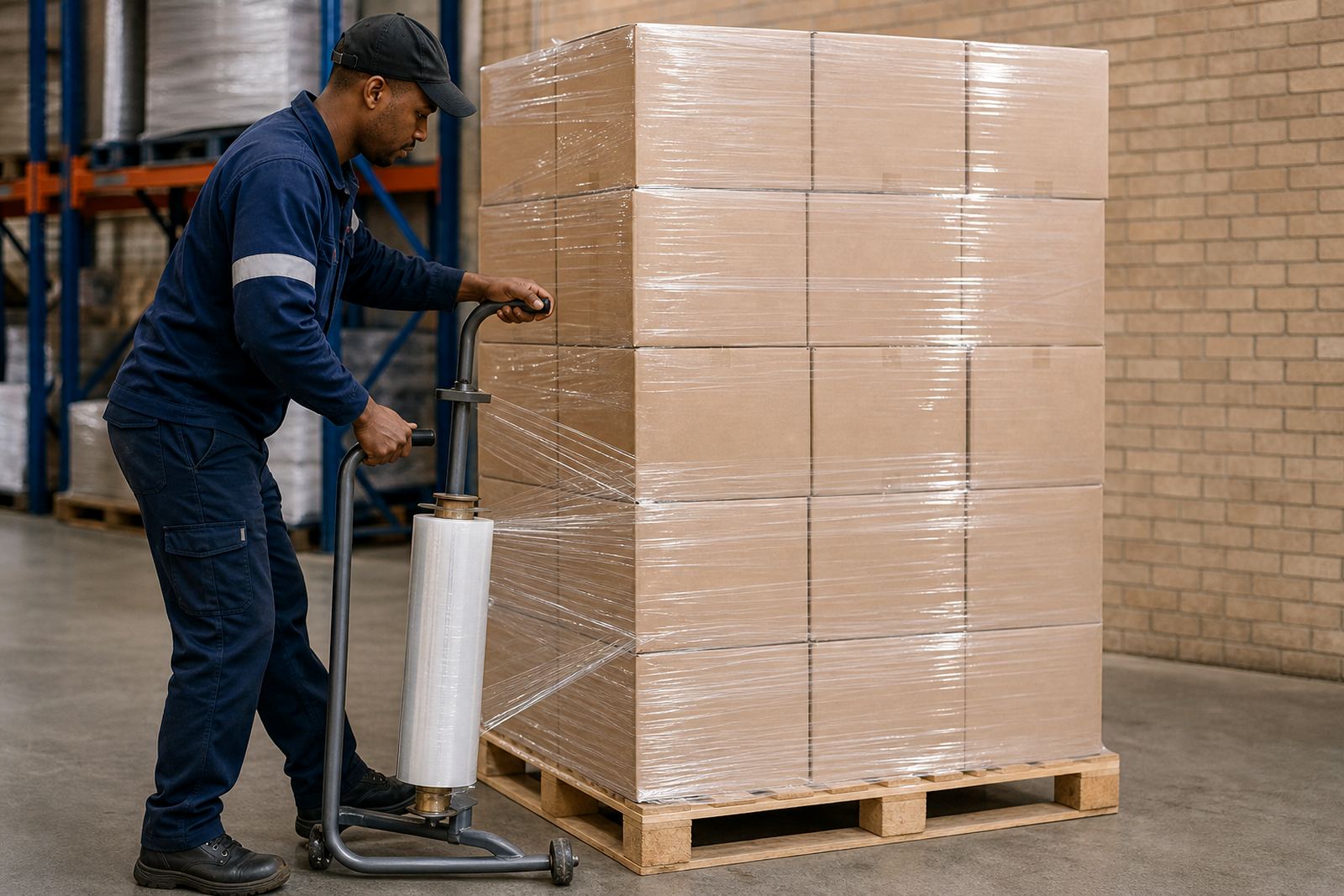
That extra handling costs time. It also creates uneven tension, which can lead to loose corners on pallets or film bunching near the top of cartons. In hot summer conditions and in coastal humidity around Durban or Cape Town, film can behave differently from one shift to the next, so a cutter that is well set and well kept matters even more.
The goal is simple: keep the cut consistent enough that the operator can focus on pace and safety, not on fixing the same small problem every few pallets.
Start with the roll before you touch the cutter
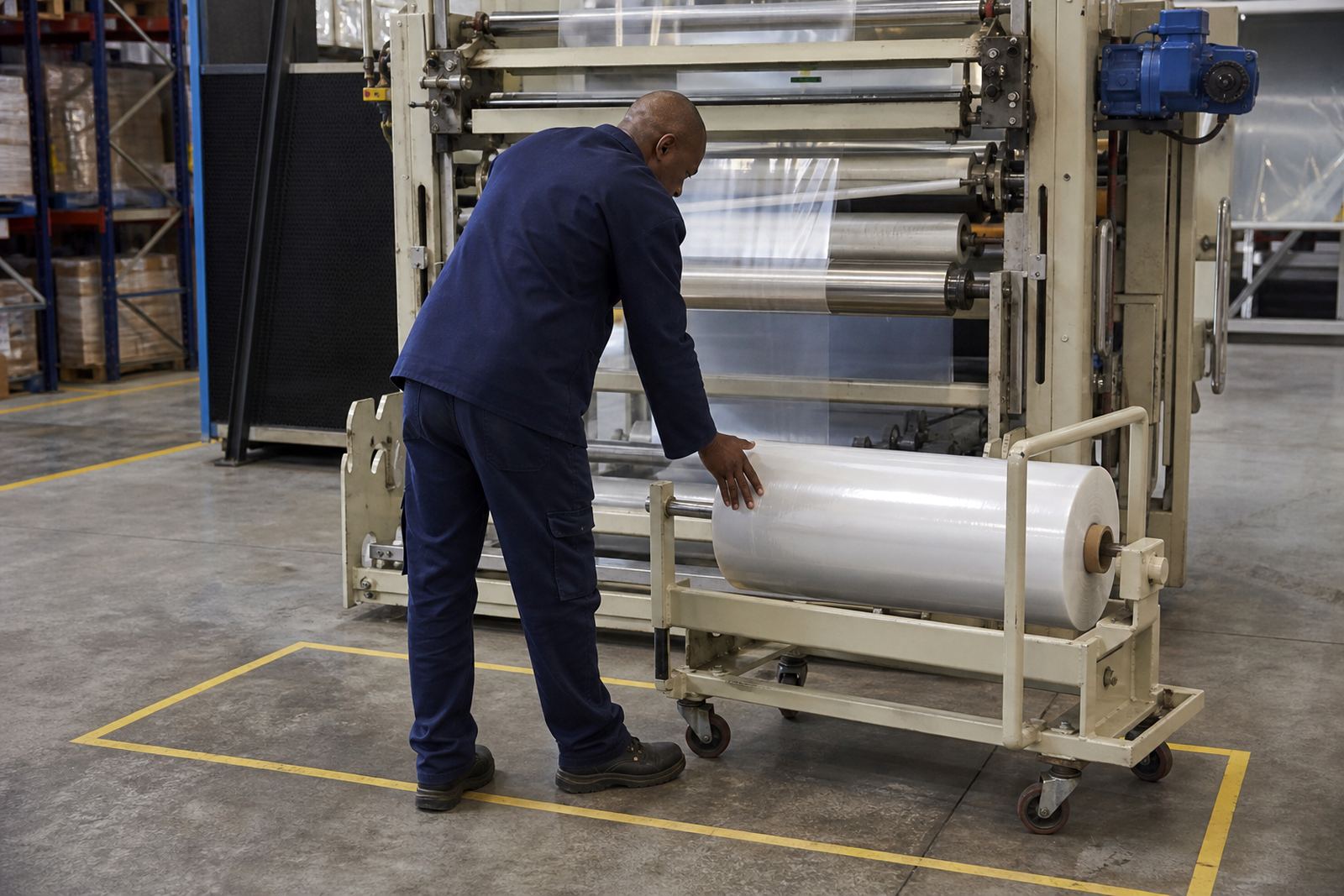
Many cutting issues begin at roll change, not at the blade. If the roll is damaged, unevenly loaded or out of line, the film will pull against the cutter in the wrong way. That is when operators see tearing, jagged edges, or film that curls back instead of separating cleanly.
Before the shift gets busy, check the basics:
- The roll sits square on the holder and turns freely
- The film edge is not crushed, dented or nicked from storage
- The core is seated properly and not wobbling
- The film path is straight, with no rubbing on guards or frames
- The operator has enough space to change rolls without forcing the material
In warehouses around Boksburg and Johannesburg, where pallets move fast and space is often tight, a rushed roll load is a common cause of bad cuts. A short pause at the start of the run can save a lot of waste later.
Keep the blade sharp and the dispenser aligned
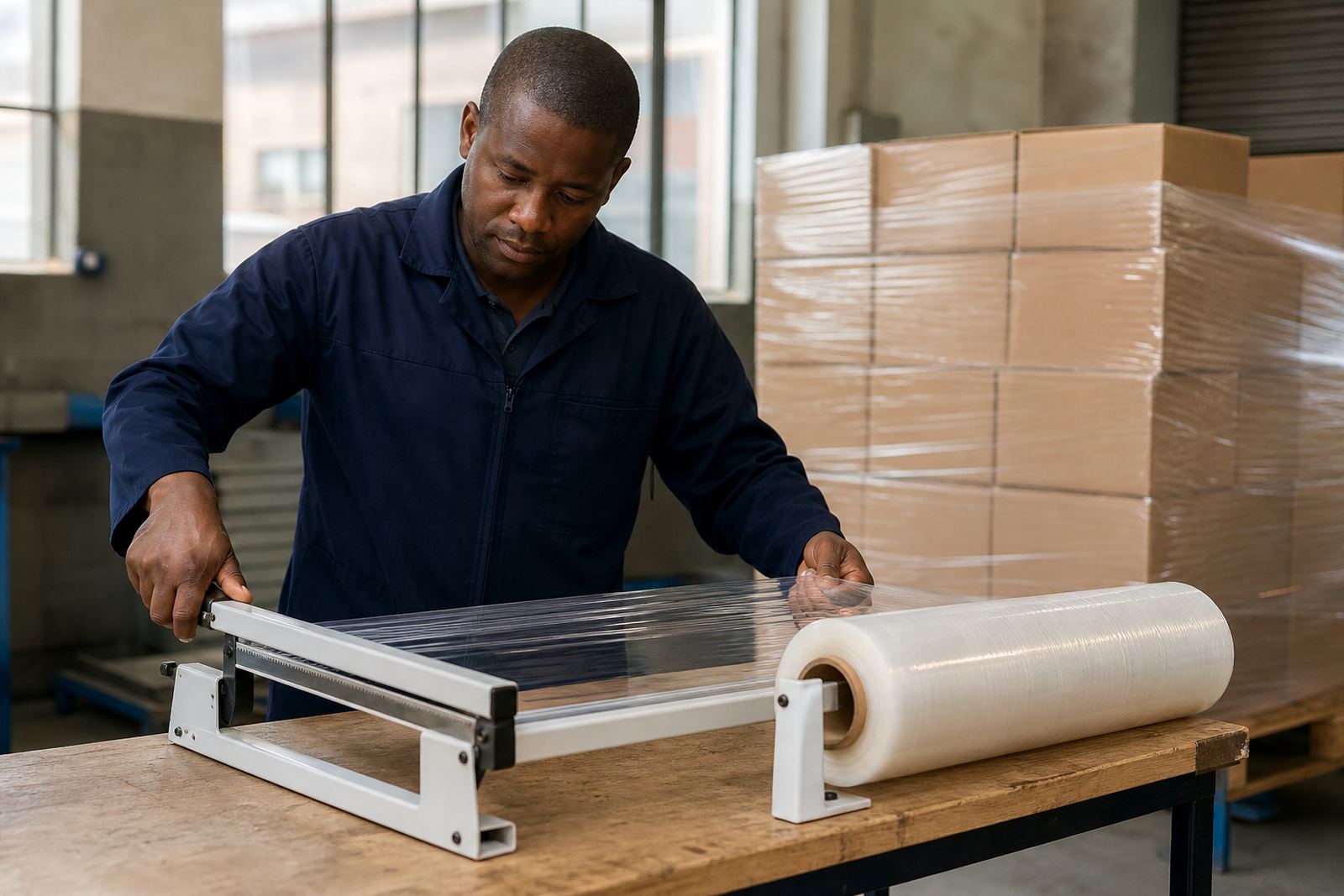
Sharp blades cut film cleanly. Dull blades drag, snag and leave rough edges that can catch on cartons, corners or the operator’s glove. On stretch film especially, a tired blade can make the operator pull harder, which increases strain and often makes the cut less accurate.
Alignment is just as important. Even a good blade will struggle if the dispenser is sitting at the wrong angle or if the guide points are worn. The film must meet the blade consistently every time, otherwise one cut will look fine and the next will tear off at an angle.
Watch for these signs during normal production:
- The cut edge looks fuzzy instead of neat
- The operator needs repeated pulls to separate the film
- Small plastic shavings collect near the cutter
- There is more noise or resistance than usual
If the blade is replaceable, do not wait until it is fully blunt. A planned blade change is quicker than an emergency stop during a rush order, and it helps keep the line calm and predictable.
Use one repeatable cutting motion every time
Good cuts depend on consistency from the person using the tool. When operators use different angles, different pressure or different hand positions, the result changes from pallet to pallet. A short training session can fix that. It does not need to be complicated, only clear and practical.
Teach the same method each time:
- Hold the film under steady tension, not over-tight
- Cut in one smooth motion instead of a sawing action
- Keep hands clear of the blade path
- Do not twist the wrist at the end of the cut
- Reset the film path before starting the next wrap
This matters on mixed shift teams where experienced operators and new staff may work side by side. A common method reduces variation and helps the line run the same way on Monday morning and Friday afternoon, which is important when load-shedding has already changed the shift plan twice.
Look after the cutter between shifts, not only when it fails
Preventive servicing is often the difference between a tidy line and one that keeps stopping for small faults. Dust, film scraps and adhesive build-up can collect around the moving parts and guides. If that is left too long, the cutter starts to drag and the operator compensates with more force.
A practical end-of-shift routine works well:
- Remove loose film pieces and offcuts
- Wipe down the contact points and guides
- Check fasteners, springs and mounts for movement
- Inspect the blade for wear or chips
- Confirm the dispenser returns to its normal position
In warmer inland areas like Pretoria and Polokwane, dust is often the main issue. Near the coast, humidity can make residue stick more quickly. Either way, a short service routine keeps the cutter ready for the next run and helps the team avoid breakdown callouts that could have been prevented.
Make safety part of the cut, not an extra task
A cleaner cut is also a safer cut. Operators working too fast can end up reaching across sharp edges or holding the film in a way that puts fingers too close to the blade. Safety checks should be part of normal production, not only during formal audits or after an incident.
Good practice includes clear access around the packing point, proper training for new staff, and a blade condition check before the start of a shift. If the cutter guard is loose or the mounting points have shifted, stop and fix it before the line carries on. A small fault can become a hand injury very quickly.
For sites dealing with municipal or customer safety requirements, this is also a useful recordkeeping point. A simple inspection log shows that the team is checking the equipment regularly, which helps during internal reviews and site assessments.
When to call for support before waste starts climbing
Some problems need more than a quick blade change. If the same cutter keeps tearing film, if the roll holder will not track properly, or if the dispenser has a loose or bent part, the fault will usually return unless it is properly repaired. That is where onsite support saves time.
At a Germiston base serving Johannesburg, Pretoria, Durban, Cape Town and Polokwane, the most useful support is often practical and direct: installation help, line setup, preventive servicing, blade replacement, dispenser repairs, spares supply, operator training and breakdown callouts. The aim is to get the line back to steady output without guesswork.
Simple habits keep the cuts clean. But when the same issue keeps coming back, it is worth having the equipment checked properly so the team can get back to normal production without constant stopping and starting.