
Start With The Load, Not The Film
The best wrap practice begins before the first turn of film. Check the pallet or unit load for sharp corners, uneven layers, loose cartons and overhang. If the load is not square, the film has to do too much work and that usually shows up later as leaning packs, torn film or crushed cartons. In Germiston and Boksburg, where many dispatch areas work fast and tight, a quick load check can save a lot of rework.
For mixed loads, heavier items should sit low and light cartons should not carry the weight of the stack above them. If product edges are sharp, add corner protection or top sheet protection before wrapping. This is especially useful for export goods moving through Durban, where moisture and long transit times can expose weak wrap points.
- Square the load before wrapping begins.
- Keep weight low and evenly spread across the pallet.
- Remove damaged cartons rather than trying to hide them with extra film.
- Use top protection where dust, rain or stacking pressure is likely.
Match The Wrap Pattern To The Product
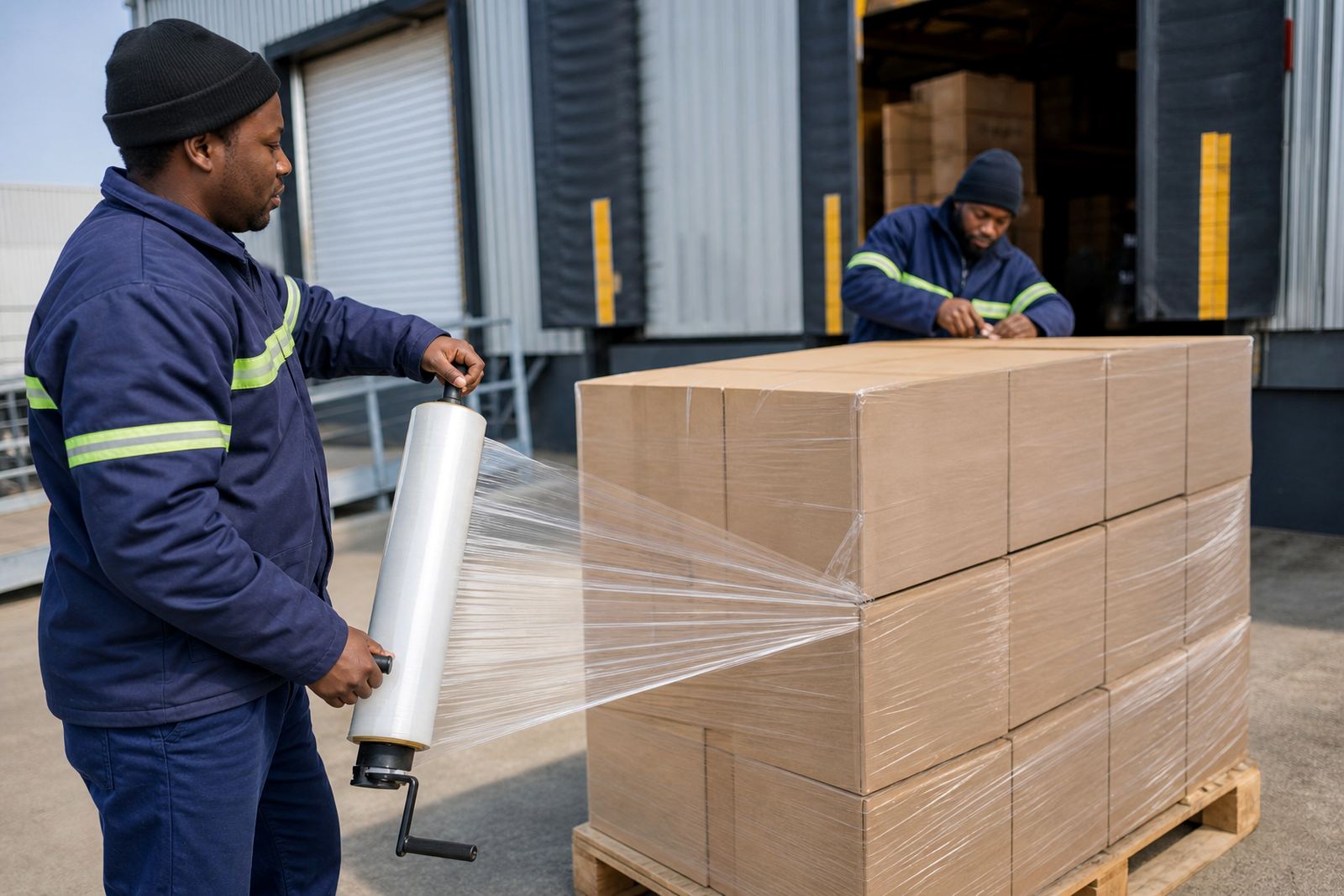
There is no single wrap pattern that suits every product. A case-packed load of bottles needs different support from bagged goods, boxed hardware or irregular shapes. Good operators know when to increase the wrap count at the base, when to add a tighter middle band, and when to give the top section a little extra hold. The goal is to stop movement without over-stretching the film.
For short local trips around Johannesburg or Pretoria, some businesses think lighter wrap is enough. But stop-start driving, speed bumps and sudden braking still shift loads. For longer routes to Cape Town or Polokwane, the same load may need firmer anchoring and more consistency from layer to layer. If the pack line is rushed, it often helps to standardise the wrap pattern by product type so the team does not guess at each pallet.
- Use extra turns near the base to lock the load to the pallet.
- Keep film tension consistent from one side to the other.
- Adjust the pattern for tall, light or irregular loads.
- Record the best wrap count for each common product line.
Keep Tension Controlled And Film Applied Cleanly
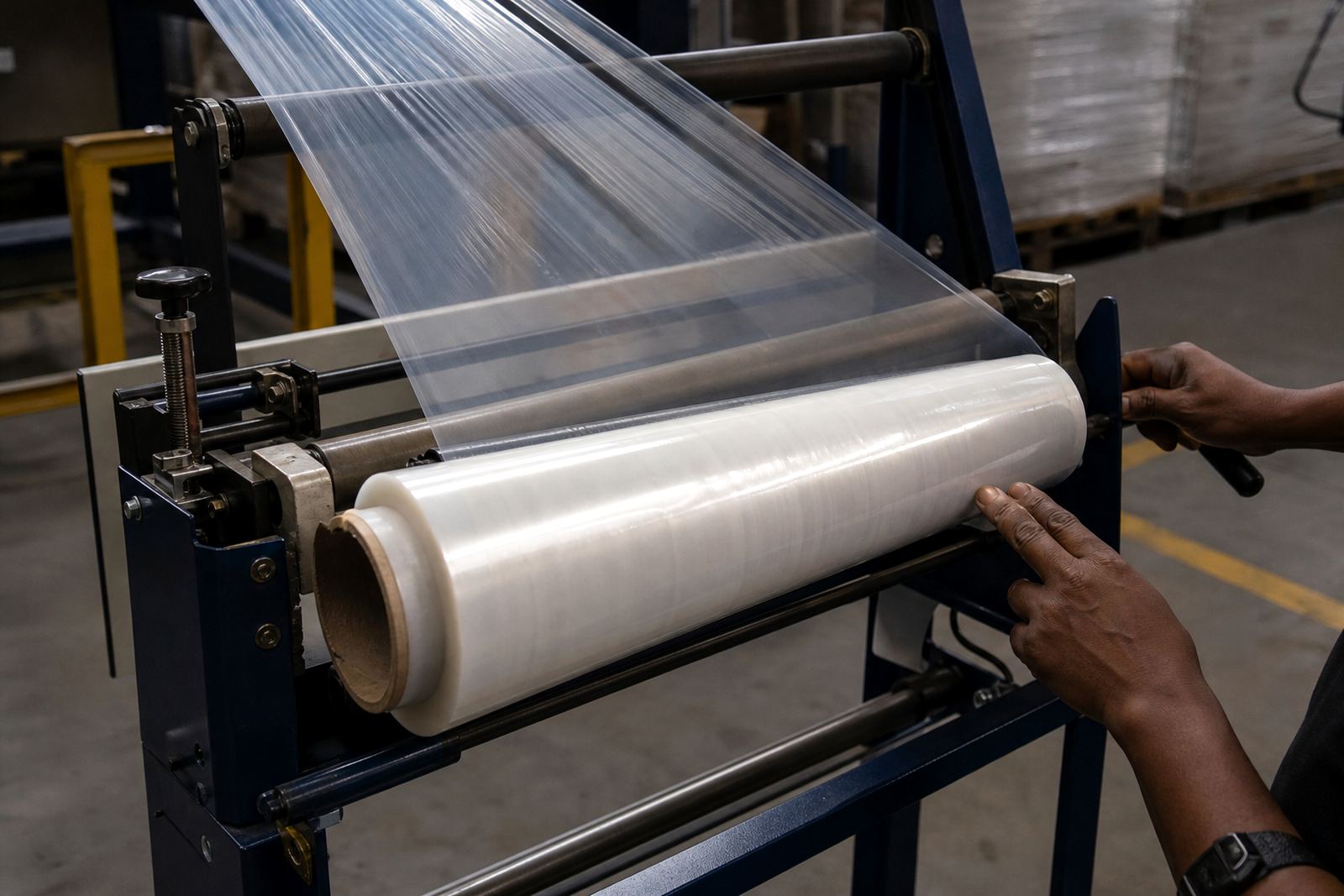
Too little tension and the film goes slack. Too much tension and the film necks down, tears or pulls the load out of shape. On a busy packing line, that balance matters more than people think. Correctly guided cutters and dispensers help the operator make clean passes, maintain control and avoid wasted film at the end of the roll. That matters when the line is running through load-shedding windows and every minute counts.
A clean application also reduces film bridges, which happen when film skips across corners or hangs loose between wraps. These gaps let dust in and make the pallet less stable in transit. In coastal conditions, such as Cape Town, sloppy wrap can also trap moisture against the load. If the dispenser feels stiff, the blade drags, or the film keeps snagging, the wrapping process slows down and the end result usually suffers.
Protect Workers And Product At The Same Time
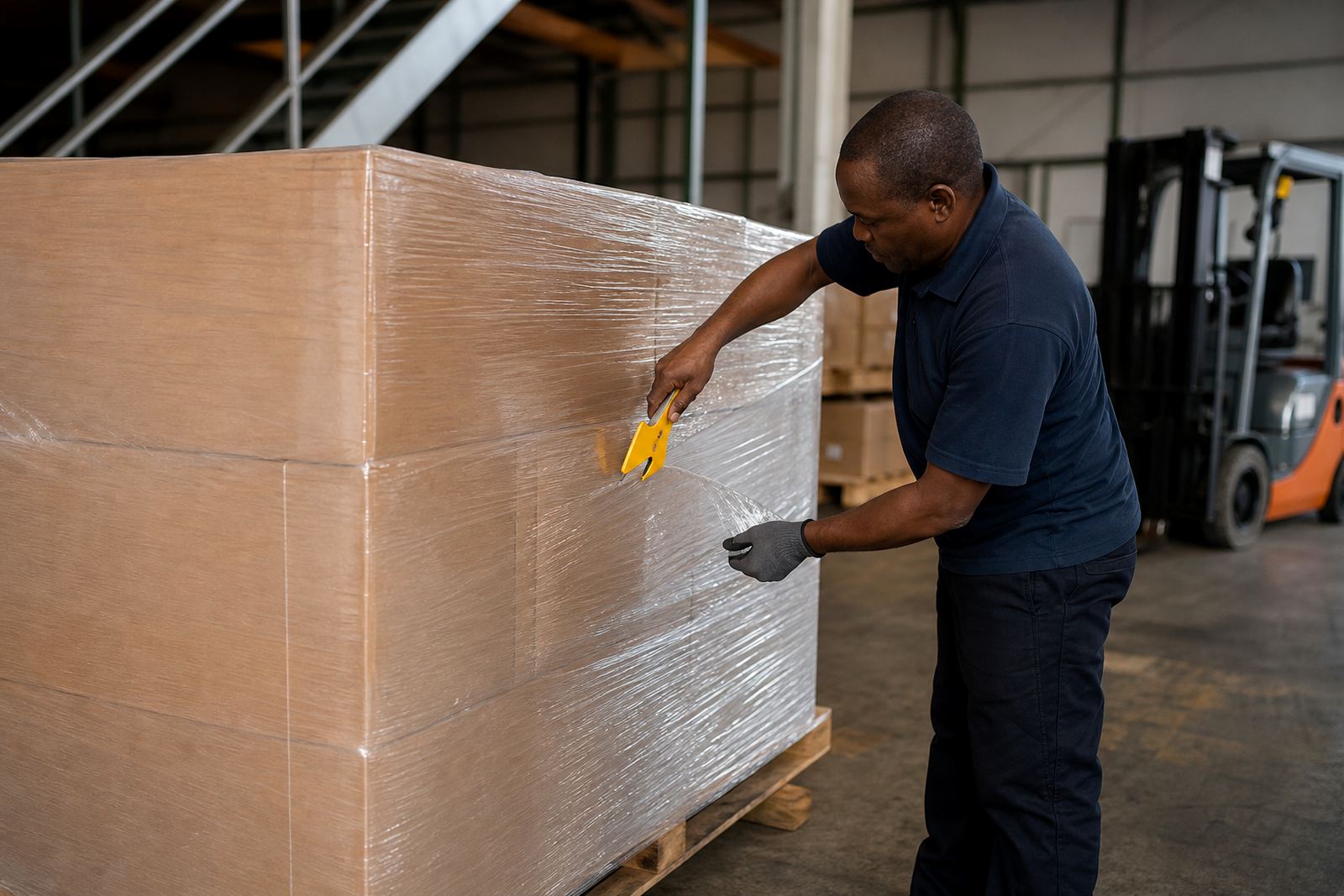
Dispatch wrapping is not only about transport safety. It is also about operator safety and keeping the product presentable when it reaches the customer. Loose ends, broken blades and awkward reach positions can all lead to strain or cuts. Training should cover the safe handling of cutters and dispensers, where to keep hands during roll changes, and how to spot a damaged blade before it becomes a problem.
At the same time, product presentation matters. A pallet that arrives with torn film, crushed corners or visible dirt can create a bad impression even if the stock inside is fine. That is why practical safety checks and simple wrap discipline belong on the same checklist.
- Keep blades sharp and replace worn units before they drag or snag.
- Train operators to cut away from the body and keep clear hand positions.
- Check the wrap for holes, folds and loose tails before dispatch.
- Stop and rewrap any load that looks unstable or uneven.
Plan For Real South African Conditions
Dispatch conditions in South Africa vary more than many packers expect. A load leaving Midrand in the morning may sit in hot sun, then be handled again at a warehouse gate, then travel on a bumpy road into the next province. Add humidity in Durban, wind in Cape Town, and dusty yards in parts of Gauteng, and the wrap has to do serious work. That means the film application needs to suit the route, the weather and the handling points.
Where pallets are stored outside before collection, use enough wrap to keep dust and rain out, but do not rely on film alone to fix weak stacking. If the product is sensitive, add a top sheet or cover before wrapping. If the load will be repalletised later, label the wrap clearly so the receiving team can handle it without tearing through the film too early.
Use Equipment That Makes Good Practice Easier
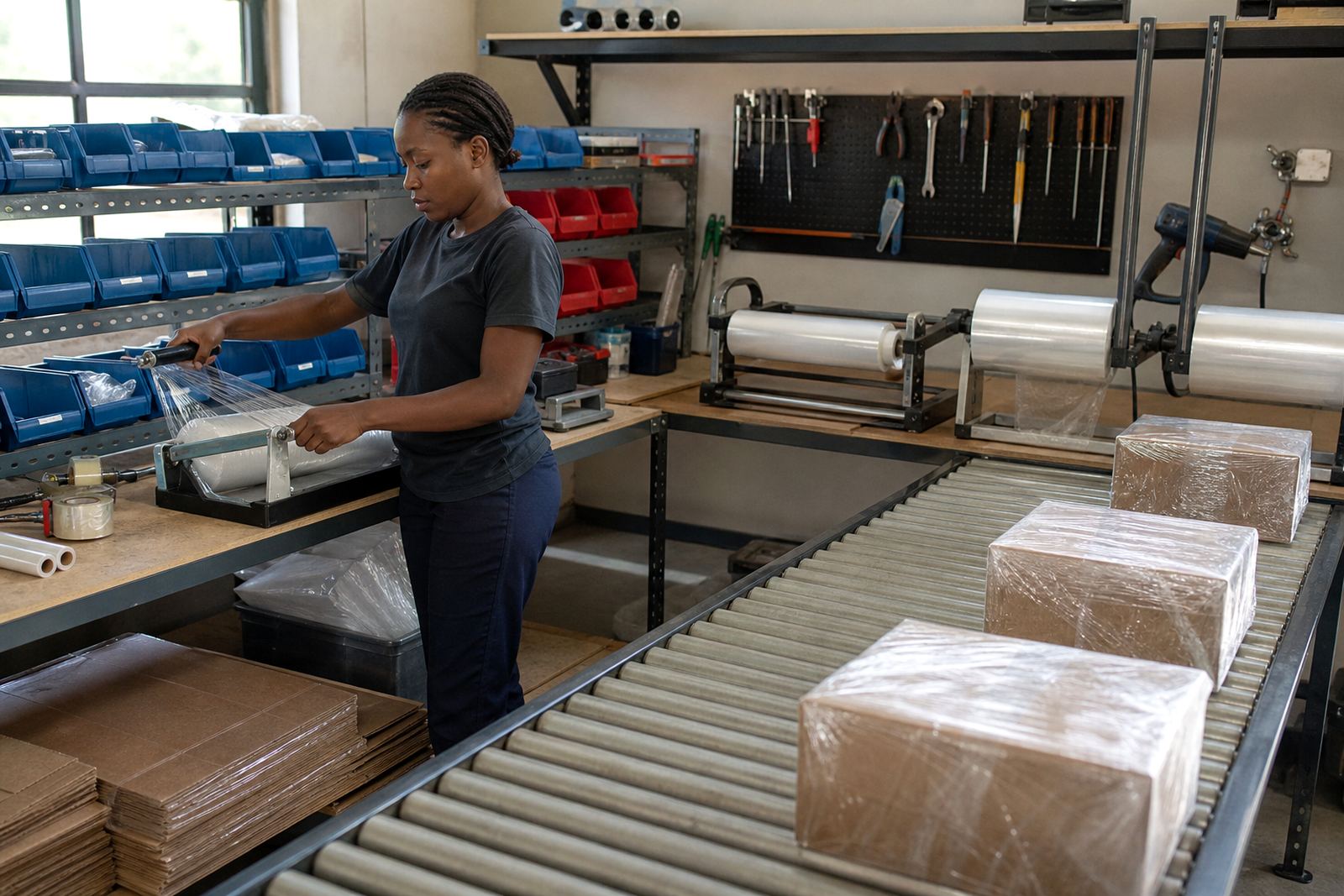
Good dispatch practice becomes easier when the tools on the line are reliable and simple to use. A well-set cutter or dispenser helps the team keep a steady pace, reduce waste and avoid the little faults that build into bigger delays. On many sites, the difference between a clean shift and a frustrating one comes down to whether the film feeds properly, the blade cuts cleanly and the operator can keep moving without unnecessary pauses.
Film Cutters works with packing lines across Germiston, Johannesburg, Pretoria, Durban, Cape Town and Polokwane to keep cutters, dispensers and related equipment in proper working order. That includes onsite installation, line setup, preventive servicing, blade replacement, dispenser repairs, spares supply, operator training, safety checks, site assessments, roll change support, breakdown callouts and equipment upgrades. For busy dispatch teams, those basics help keep the line moving and the wrap consistent.
- Check cutters and dispensers during routine servicing, not only after a fault.
- Keep spare blades and key parts on site for quick turnaround.
- Review wrap quality after any major change in product, pallet size or route.
- Use site assessments to find small issues before they turn into repeat stoppages.