Where manual lines lose time without anyone noticing
On a hand run packing line, the biggest delays are often the small ones. A roll that snags, a cutter that drags, a film tail that is hard to find, or an operator walking a few extra metres for spares can add up to real lost production by the end of a shift. In Germiston and the wider Ekurhuleni area, many sites are still running mixed manual and semi-manual lines, so the pressure is on to keep each movement simple.
It helps to look at the line in blocks: film handling, changeovers, cuts, operator movement and fault recovery. If each block is shaved by only a few seconds, the line becomes steadier. That matters during busy dispatch periods, during load-shedding when changeovers are rushed, and on warmer days when shrink film can behave differently in storage and handling.
- Track where stoppages happen for one full shift before changing anything.
- Note which stops are operator-related and which are equipment-related.
- Check whether the cutter, dispenser and roll storage are placed for easy reach.
Film cutting that follows the operator, not the other way round
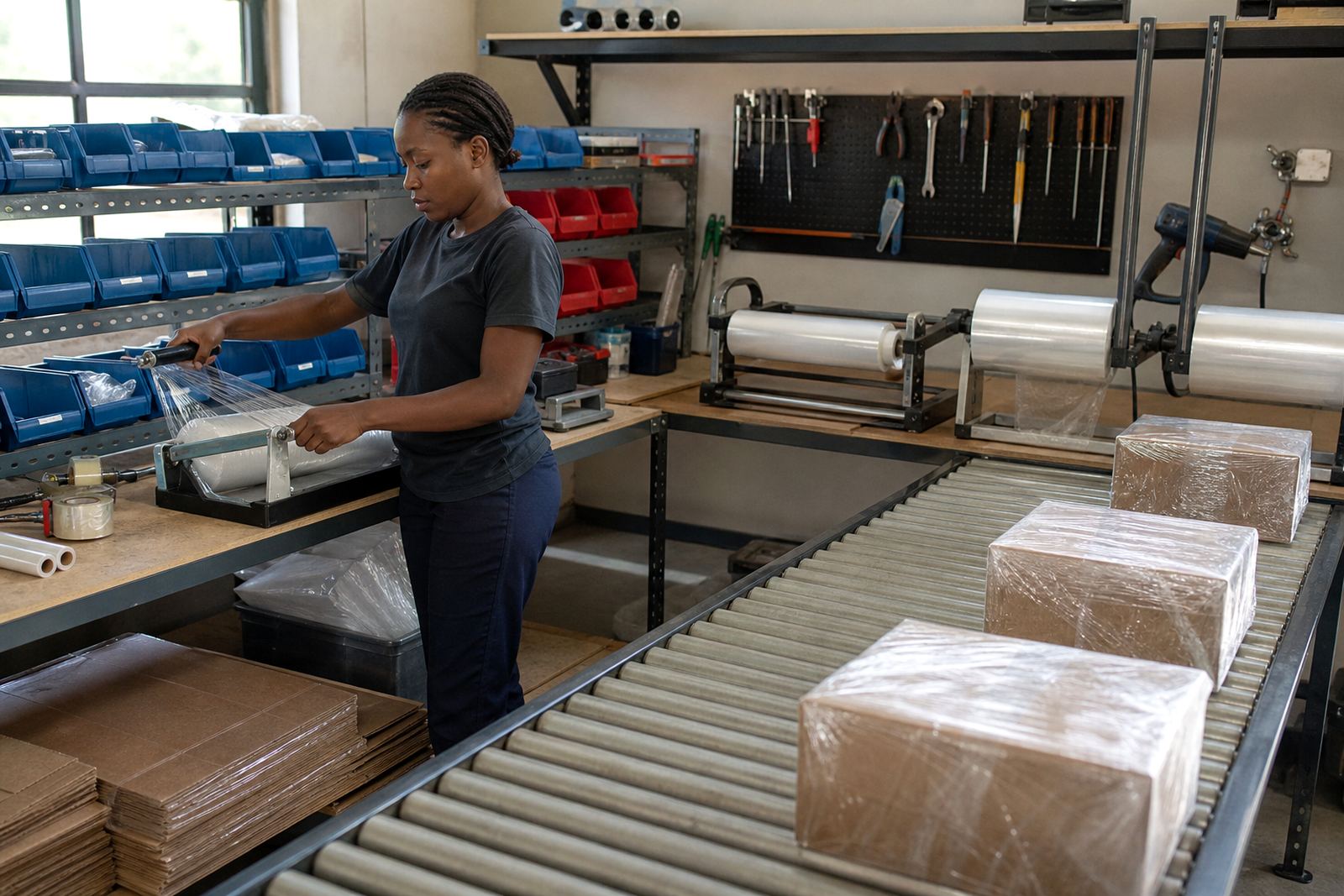
Manual lines work best when the cutter is ready at the point of use. If an operator has to stretch, turn awkwardly or hold film in one hand while trying to cut with the other, the process slows down and film waste usually rises. A simple, well-positioned film cutter or dispenser can remove that extra motion and give a cleaner cut every time.
For shrink film and stretch film, a good cut matters more than many businesses expect. A rough edge can lead to tears, uneven wrapping and more rework. If the operator has to trim a badly cut end with a second tool, you have already lost time. In a busy packing room, that is a small problem that repeats all day.
- Keep cutters at the same height across the line where possible.
- Match the dispenser to the roll size and film type in use.
- Use equipment that can be handled safely with gloved hands.
Roll changeovers are a hidden productivity lever
Most managers focus on output speed, but roll changeover time can be just as important. A line that stops for two or three minutes at a time may not seem dramatic, yet over a shift it can cost several extra cycles. In plants around Boksburg, Midrand and Johannesburg, we often see operators making do with awkward roll handling because the change process was never set up properly.
The answer is not usually more people. It is a better sequence, clearer training and reliable support equipment. When the roll is easy to lift, align and lock into place, the operator gets back to packing faster and with less fatigue. That also reduces strain injuries, which are a real concern on manual lines where the same motion is repeated all day.
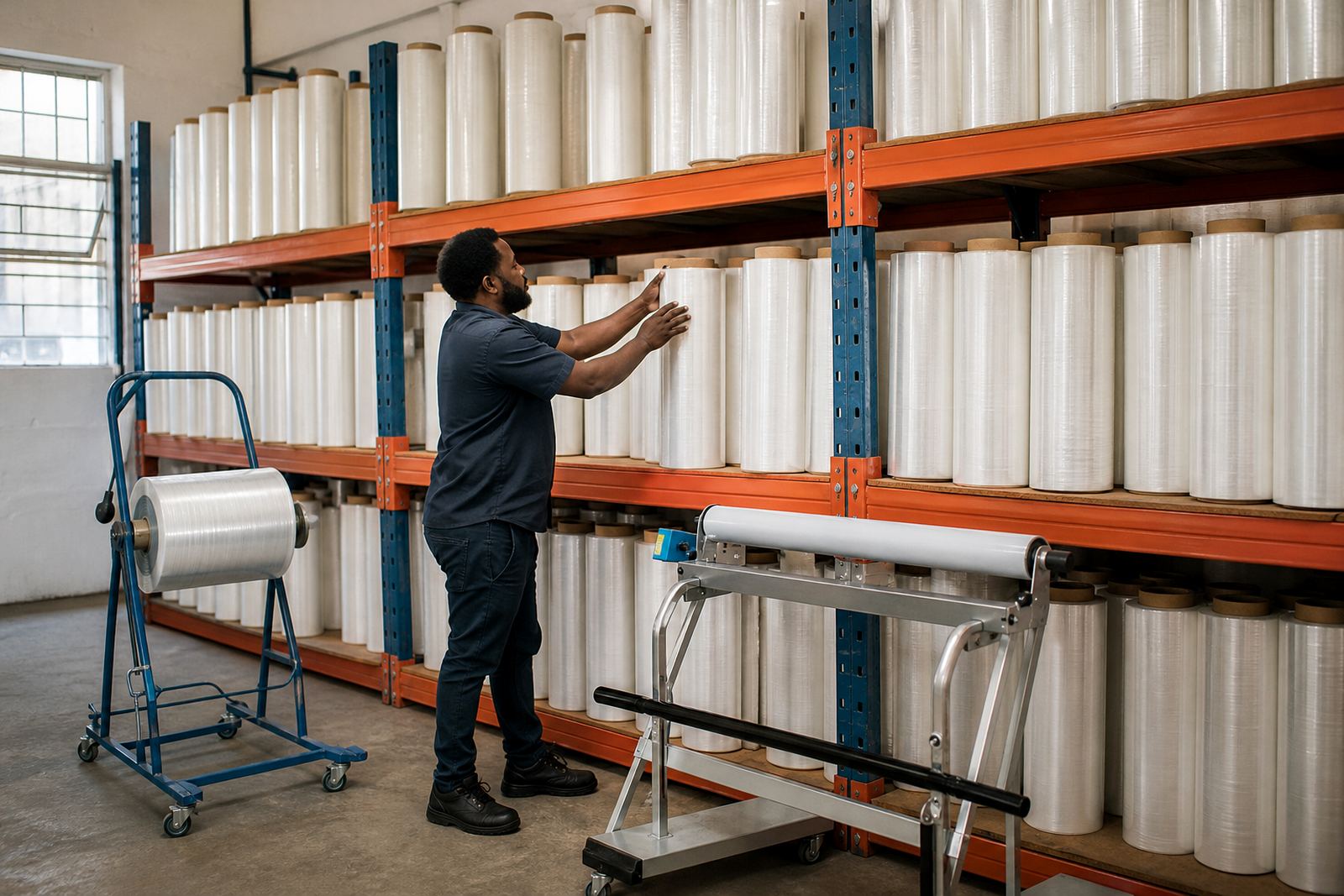
- Store spare rolls close to the point of use but clear of walkways.
- Standardise the changeover steps so every operator does it the same way.
- Keep a small spare parts kit nearby for quick recovery after a fault.
Clean cuts, less waste and more consistent packs
Productivity is not only about speed. If packaging is neat and consistent, there is less rework and fewer damaged packs to sort out later. That is especially important for sites supplying retail, wholesale and distribution customers who expect the load to arrive tidy and intact. A better cut can mean fewer loose film tails, less tape used as a patch and fewer packs that need to be reopened.
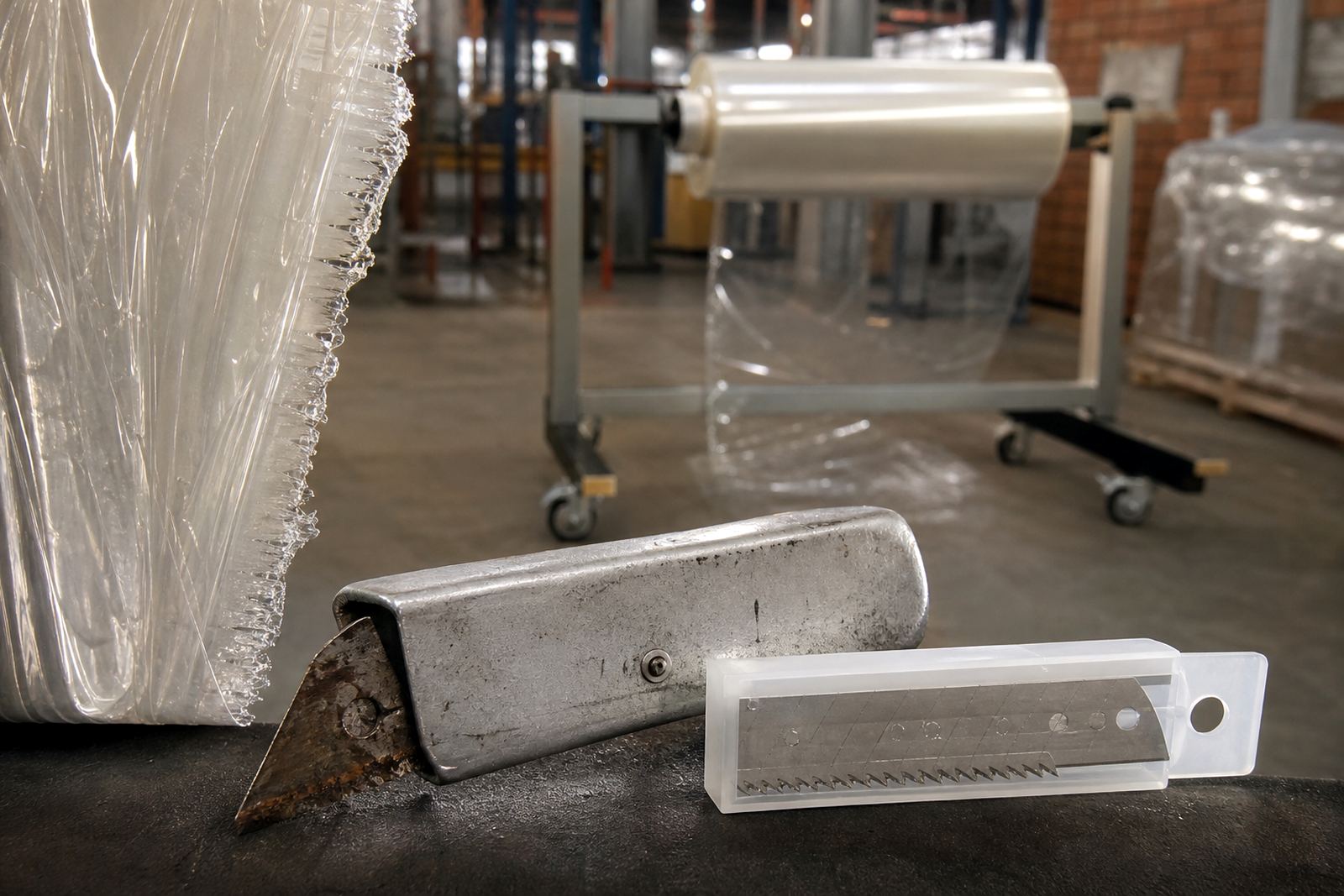
Operators notice the difference when the film feeds properly and the blade stays sharp. A blunt blade may still cut, but it will drag and pull the film, which slows the line and gives inconsistent results. Preventive servicing is worth doing before the problem shows itself. A short check once a month can save a longer stop later on.
Where humidity is high, as it can be in Durban and coastal parts of Cape Town, film storage and handling should be reviewed too. Moisture can affect grip and handling, so a clean, dry storage area helps keep the line steady.
The right training turns a good tool into a faster line
Even the best cutter will not improve throughput if the team is not comfortable using it. Operator training should be practical and based on the actual packing flow, not just a quick demonstration. People need to know where to stand, how to feed the film, when to replace blades and what to do when a roll starts to run unevenly.
Training also improves consistency between shifts. One operator may be quick but rough, while another is careful but slow. The aim is to get both speed and control. Once the team understands the correct method, performance becomes more predictable and supervisors can plan production better. It sounds simple, but this is where many lines lose time because no one has written the process down clearly.
- Train every shift, not only the day crew.
- Show the correct blade replacement method and the safe way to dispose of used blades.
- Include a basic fault check so operators know when to call for support.
A Germiston example: small fixes, visible gains
A packaging site in Germiston handling mixed cartons and pallet wraps had a common problem. The operators were stopping too often to sort out film tails and change rolls, especially after power interruptions. The line was not badly run, but the film cutter and dispenser setup was awkward and the spare blades were kept too far from the station. Once the equipment layout was adjusted, blade replacement was standardised and the team was shown a quicker changeover routine, the line became much steadier.
Nothing dramatic changed. There was no major plant upgrade, just practical adjustments that made the manual process easier. The supervisor could see the difference by the end of the week: fewer interruptions, less film waste and less friction between shifts. That kind of gain is exactly what manual line productivity should be about, especially in busy plants that need to keep moving without adding complexity.
If you are running packing lines in Germiston, Pretoria, Durban, Cape Town, Polokwane or elsewhere in South Africa, start with the parts of the job that operators repeat most often. That is where the fastest improvement usually sits.
What to review before you upgrade equipment
Before buying more equipment, review the practical points on the floor. Is the line layout forcing extra steps? Are cutters mounted too low or too high? Are there enough spares on hand? Is the team spending time dealing with worn blades, damaged dispensers or awkward roll handling? These questions often show that a small upgrade will do more than a large purchase.
A site assessment helps separate a real bottleneck from a habit that has become normal. Once the main issue is clear, the fix is usually straightforward: a better cutter, a repaired dispenser, a safer blade routine or a tighter roll change process. That is where line productivity improves without making the operation harder to manage.
For businesses in Johannesburg, Boksburg, Midrand and across the country, the goal is the same, keep the manual line moving with less waste and fewer stops. Practical equipment support, preventive servicing and operator training all play a part, and when they work together the gains show up quickly.