Why reach and stance matter at the wrap point
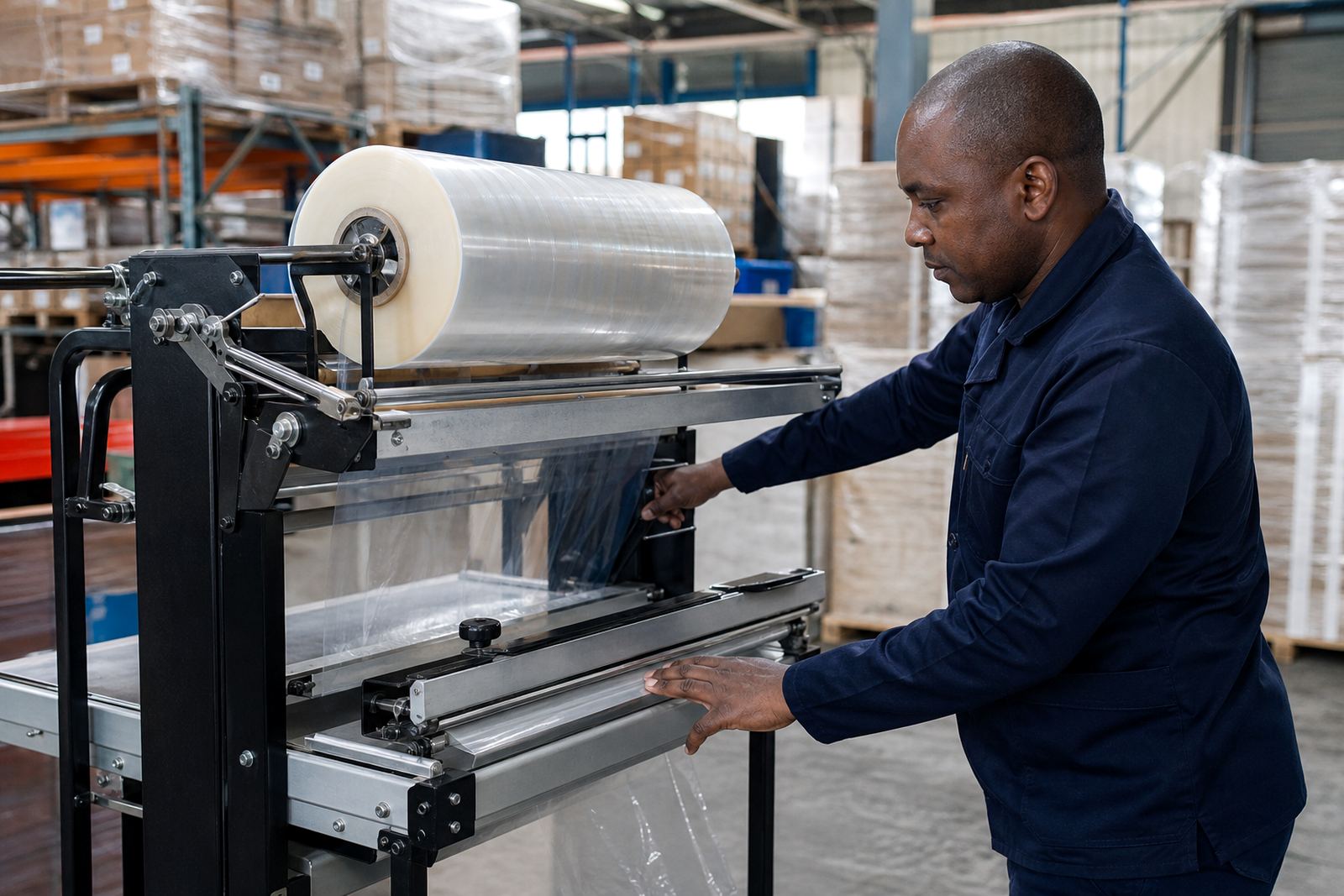
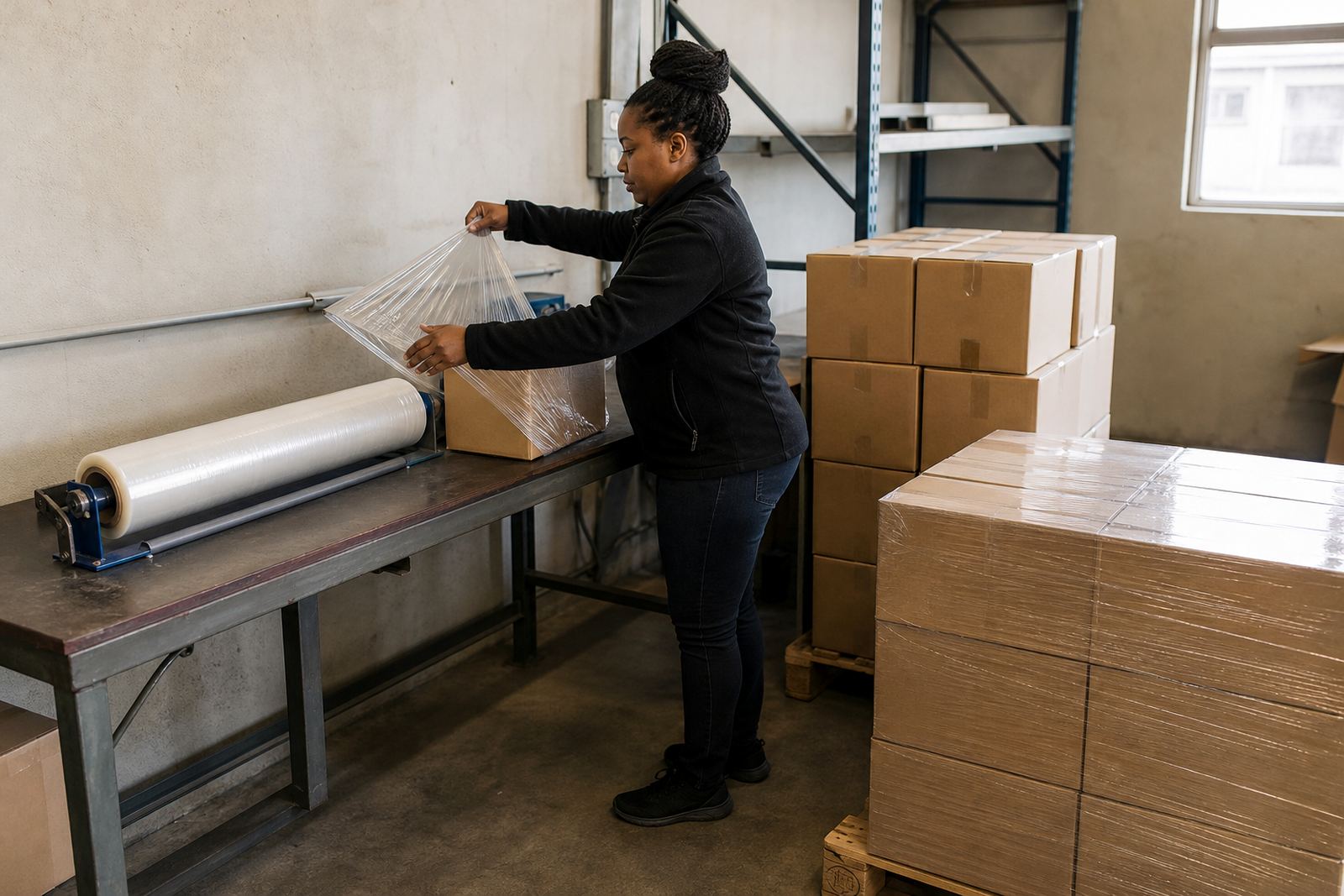
When a shrink film or stretch film cutter sits too far from the pallet or pack point, the operator has to lean, twist or take extra steps. That sounds small, but on a busy line it slows every cycle and increases the chance of uneven film placement. A good layout keeps the cutter and dispenser where the operator can work with a natural stance, usually square to the load and within easy arm reach.
In Germiston warehouses, where space is often shared between receiving, packing and dispatch, line layout has to respect the floor plan as much as the machinery. If the operator has to cross a walkway or turn away from the load, the line starts losing rhythm. On longer shifts, that extra movement also adds fatigue, and tired hands are less steady when threading film or changing a roll.
Short travel between film, pallet and operator
Line speed is not only about how fast the machine runs. It is also about how quickly the operator can get to the next action. A cutter and dispenser placed at the wrong height or angle can add seconds to every wrap, and those seconds become real money over a full day. In a facility running multiple shifts, even a minor misplacement can throw off the packing schedule.
Good placement means the operator does not need to walk around the pallet stack, reach over sharp edges or bend too low near the floor. It also helps when the dispenser is positioned so the film path stays clean and controlled. That matters for both stretch film and shrink film, because poor feed angles can cause snags, waste and uneven tension.
- Keep the cutter close to the point of use
- Match mounting height to the operator’s shoulder and waist range
- Avoid placing dispensers where forklifts or cages pass too close
- Allow space for safe roll changes without blocking the lane
What poor placement does to packing speed
When layout is wrong, the line usually shows it in small ways first. Operators pause to reposition film, the roll runs out faster than expected, and the cut edge ends up ragged. Over time, these small delays build into missed truck cut-offs, more rework and more strain on staff. In many plants, the issue is not the cutter itself, it is where it was installed.
A badly placed unit can also create a false picture of line capacity. Managers may think the team needs more labour, when the real problem is movement waste. Before changing headcount, it is worth checking whether the operator can reach the cutter without stretching and whether the film can feed in a straight, predictable path. A proper site assessment usually finds quick gains without major capital spend.
- More awkward movement means slower cycles
- More reach means less control of film tension
- More bending increases fatigue and error risk
- More stopping points mean lower throughput
Local conditions change the right setup
South African sites are not all the same. A pack line in Durban has to deal with coastal humidity, which can affect storage conditions, film handling and corrosion around fittings. In Pretoria, dry air and dust may call for different maintenance habits. In Polokwane, heat and long internal transport routes can make roll change support and operator training especially important.
In Ekurhuleni industrial areas, loadshedding is still a planning factor for many packing rooms. If power cuts interrupt the line, equipment placement should make restart easier and safer. Clear access to the dispenser, good lighting and a tidy floor around the wrap zone all help the team get back to work without confusion. Municipal safety expectations also matter, especially where walkways and exits must stay open and unobstructed.
For sites in Johannesburg, Boksburg and Midrand, where throughput can be high, the layout should allow quick access for servicing too. If a technician has to stop other work just to reach the cutter body or mounting point, routine maintenance becomes harder to keep up.
A Germiston example from a busy packing bay
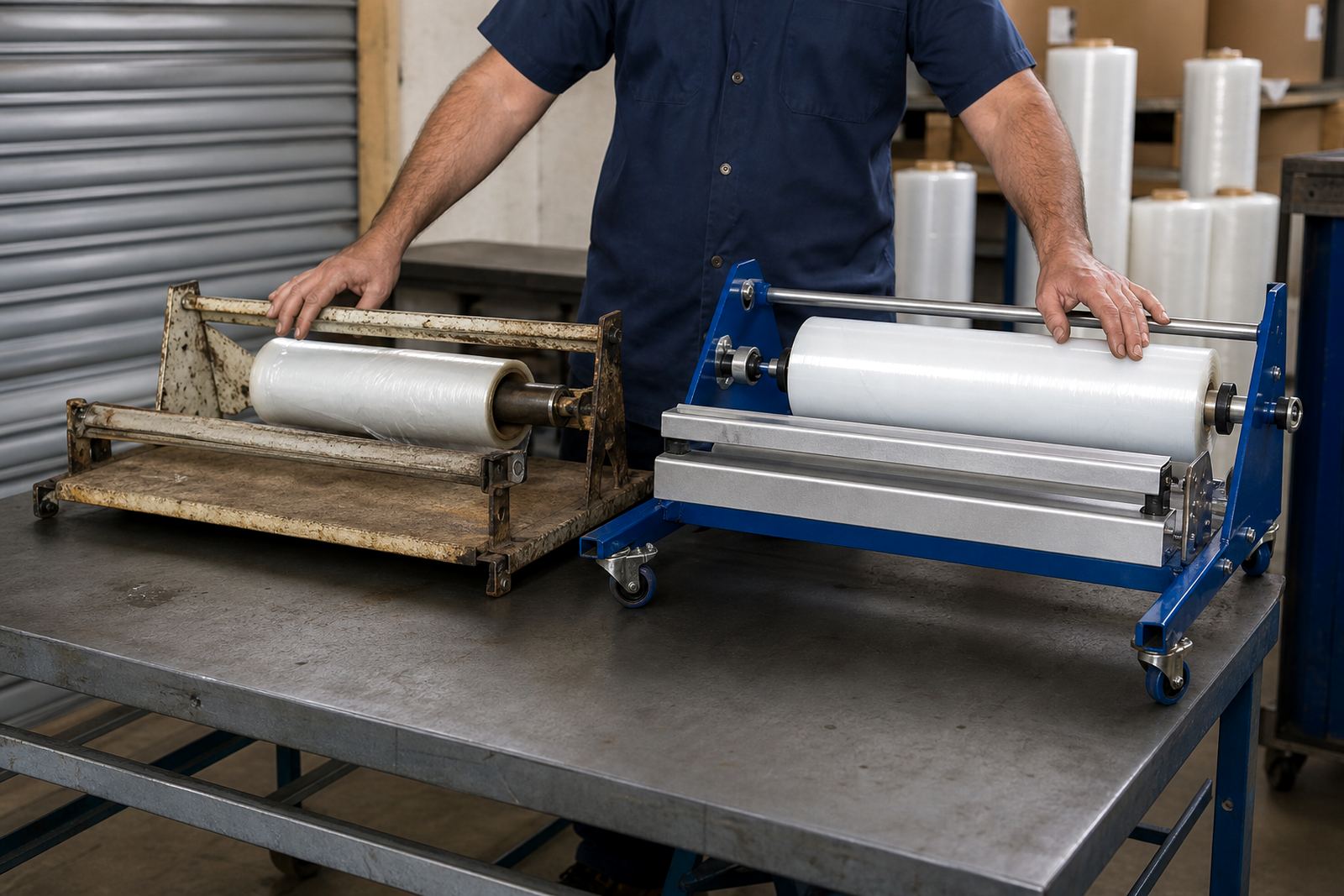
A typical case in Germiston starts with a packing bay that looks efficient on paper, but the operator is standing half a metre too far from the pallet edge. The cutter is mounted low, the film roll sits awkwardly off to one side, and every changeover takes a few extra moves. Nobody notices at first because the line still runs. By midweek the team is behind and the floor around the bay is cluttered with offcuts.
After a layout review, the dispenser was shifted closer to the packing position, the mounting height was adjusted, and the operator was shown a cleaner way to handle roll changes. The result was not dramatic in a flashy way, but it was practical: fewer pauses, less waste and steadier output. That is usually how layout improvements pay off, through small gains repeated across the shift.
For businesses that ship across Gauteng and into coastal or inland sites, this kind of setup consistency matters because the same line often handles different pack sizes and staffing levels. A line that is easy to use on Monday morning should still work when the afternoon team takes over.
What to check before moving a cutter or dispenser
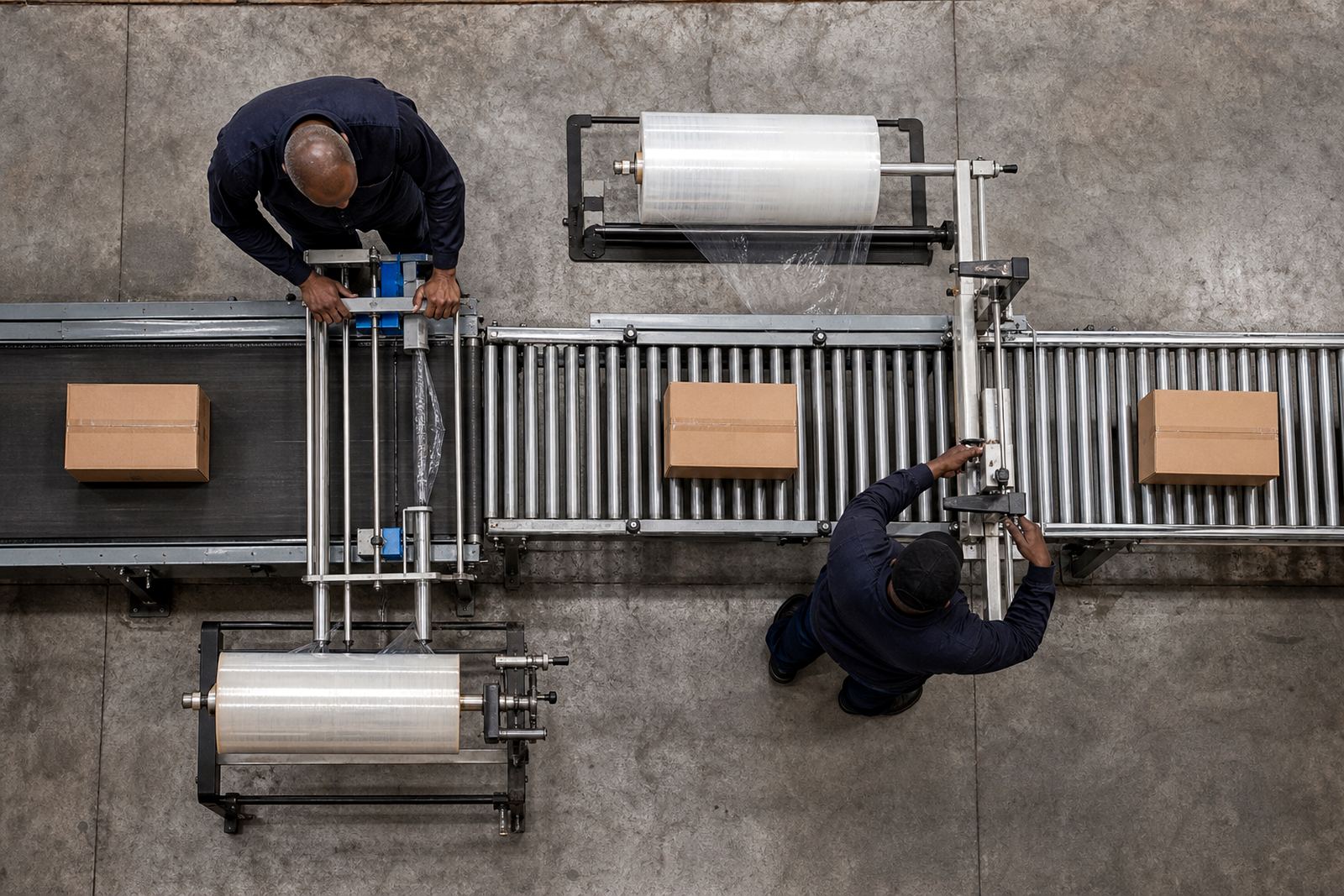
Before changing position, it helps to look at the whole pack zone, not just the machine. Check operator posture, the path of the pallet or carton, the space needed for a fresh roll, and any safety zones around moving equipment. If the team has to work around cages, pallets or conveyors, there must still be a clear route for hands and feet.
It is also worth checking whether the current placement supports servicing. If blades are difficult to access, preventive servicing gets delayed. If the dispenser is mounted where staff cannot reach it safely, breakdown callouts become slower and more disruptive. Good layout supports both production and maintenance, which is why it should be reviewed whenever a line is upgraded or moved.
- Measure reach from the normal working stance
- Check clearance for roll replacement and blade access
- Keep walkways and fire exits free of film waste
- Review lighting, floor condition and loading bay movement
Why better layout supports every shift
A packing line works best when the operator can move naturally, the film feeds cleanly and the equipment is easy to trust. That is what line layout really comes down to. The right placement makes training simpler, supports safer handling and keeps production steady when volumes rise or staffing changes.
For businesses across South Africa, from Durban to Cape Town and up to Polokwane, the same principle applies. If the cutter and dispenser are placed with care, the line runs with less strain and fewer stoppages. The work becomes more consistent, and that consistency is what protects packing speed day after day.