
Why the cutter matters in a food packing area
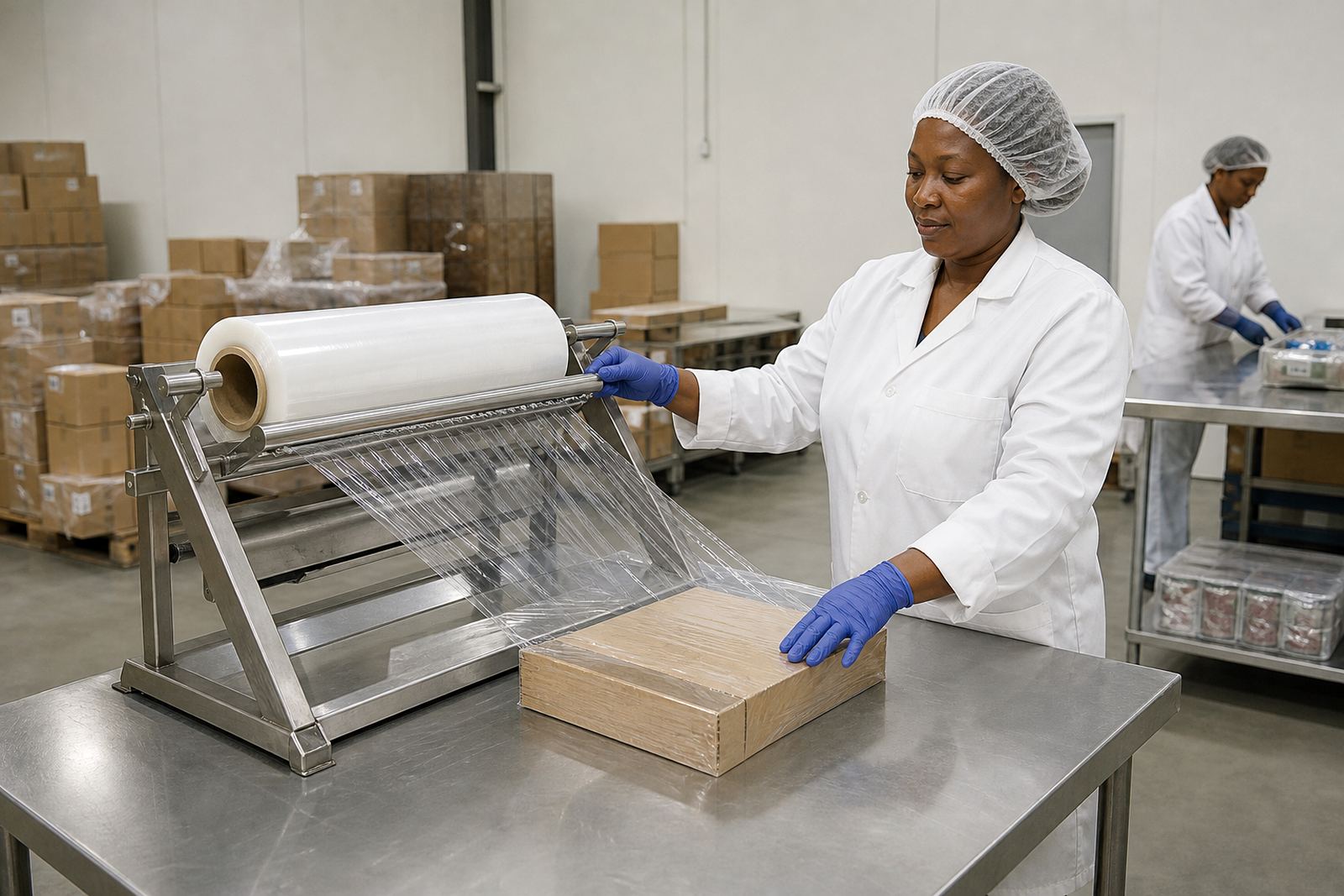
In food packing, the film itself is only part of the story. The cutter and dispenser sit close to product, cartons, trays and wrapped packs, so any sharp edges, loose parts or sticky residue can become a hygiene issue fast. A good unit should help operators cut film cleanly, keep the roll steady and avoid unnecessary contact with the wrapping surface.
That matters whether you are packing baked goods in Germiston, chilled products in Midrand or fresh produce moving through a depot in Durban. In a cleaner food environment, the aim is simple: less handling, less mess and fewer chances for contamination. You want a tool that supports a tidy line, not one that collects dust, grease and film offcuts.
- Choose a unit that cuts cleanly in one pass, without ragged film edges.
- Look for smooth surfaces that are easy to wipe down during changeovers.
- Avoid parts that trap crumbs, condensation or packaging dust.
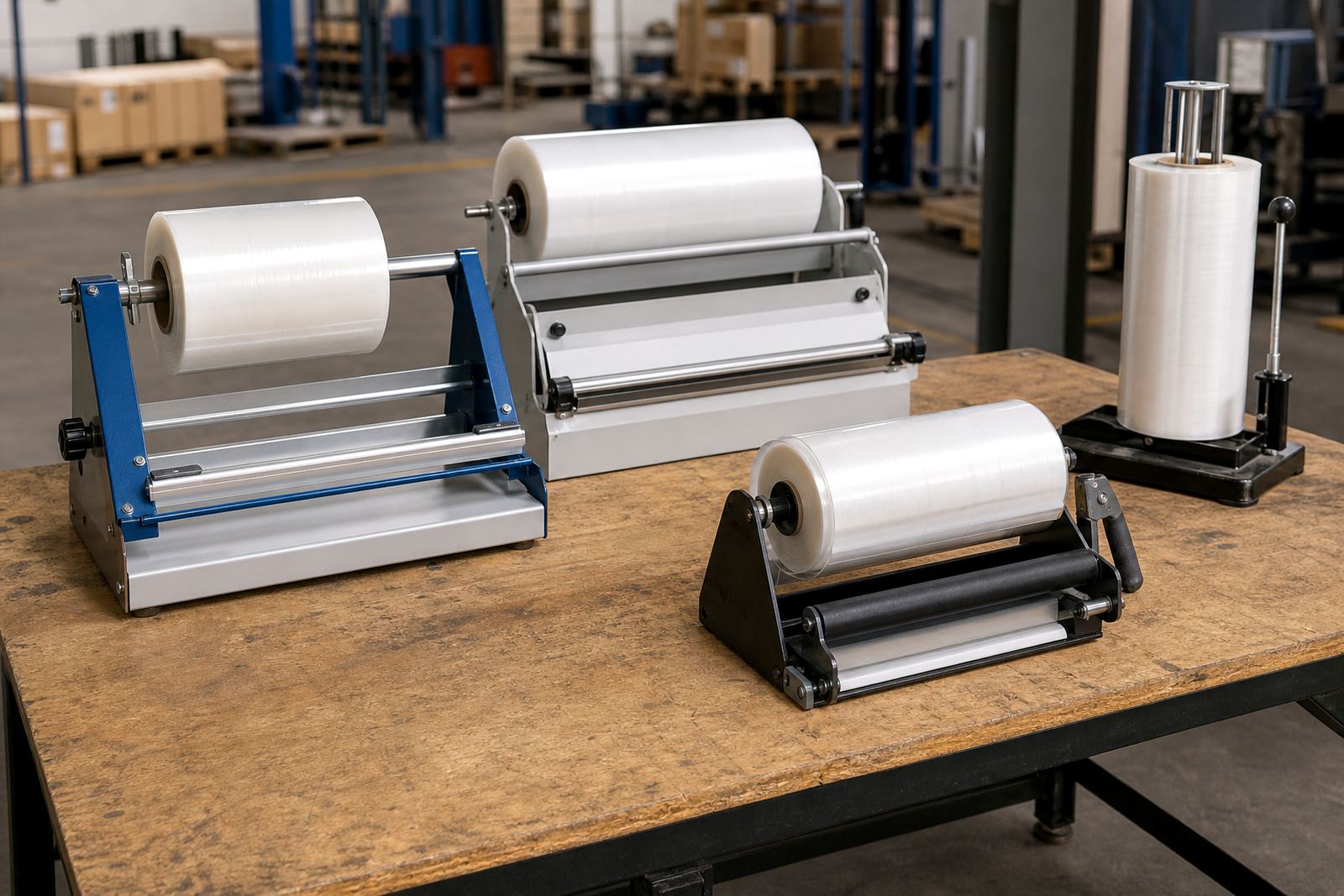
- Make sure the dispenser suits the width and thickness of the film used on site.
Materials and finish for washdown friendly work
Food sites often deal with water, sanitiser, flour dust, cold room moisture and general washdown routines. In coastal areas like Cape Town or Durban, humidity can speed up corrosion if the equipment finish is poor. A cutter made with suitable corrosion-resistant materials and a hard wearing finish will hold up better in these conditions.
It is also worth checking whether the design leaves hidden cavities or exposed fasteners where residue can build up. If your hygiene team needs to clean around the line every shift, the tool should be simple to access and quick to dry. In some plants, the difference between a practical setup and a frustrating one is just a few millimetres of design detail.
- Prefer corrosion-resistant components for damp rooms and coastal sites.
- Check that handles and brackets can be wiped clean easily.
- Look for fewer joints, gaps and rough edges where dirt can lodge.
- Ask how the unit performs where cold rooms meet warmer packing areas.
Choosing the right cutter for the film type on your line
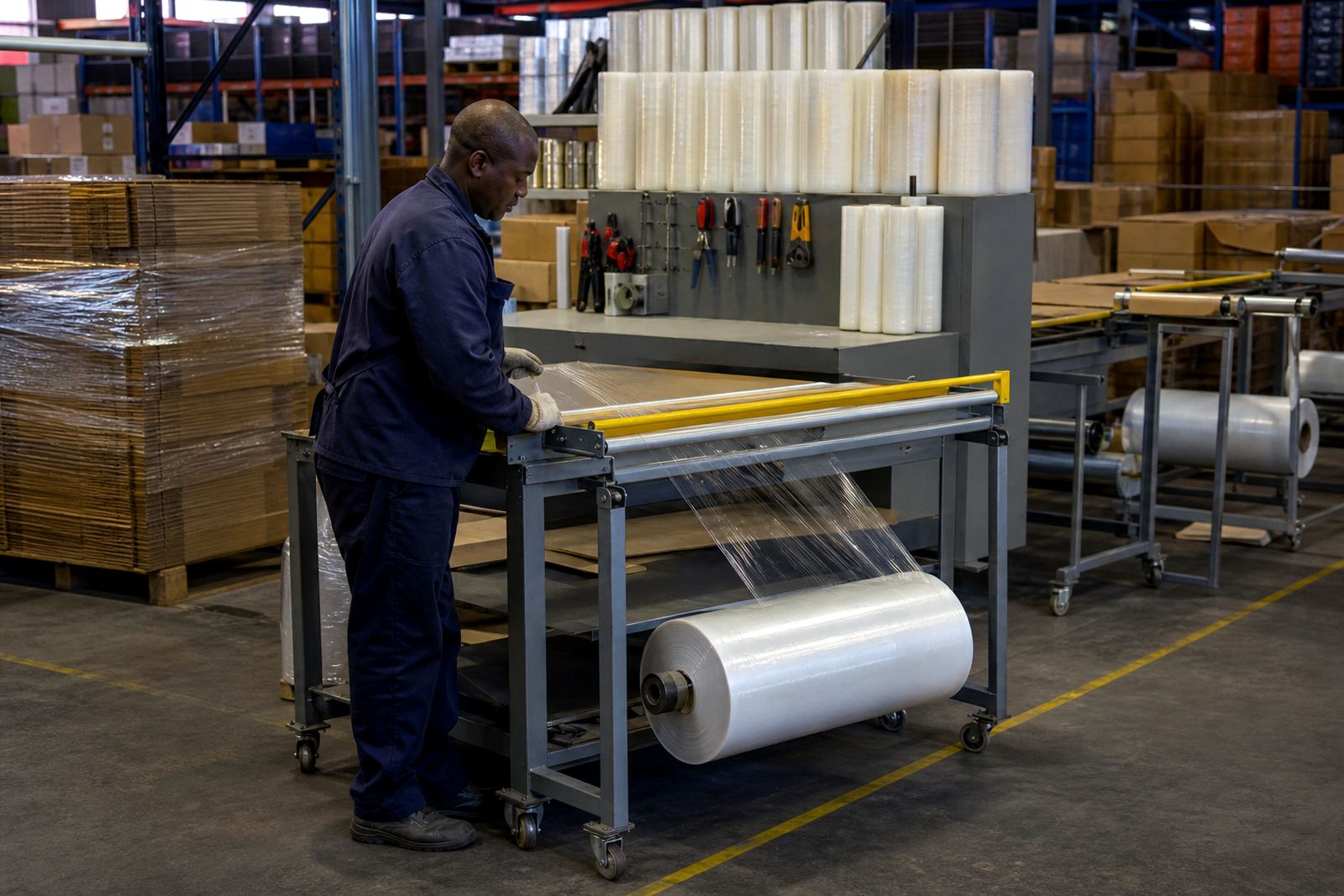
Not every food line uses film the same way. Some sites wrap trays, others pack cartons or palletise finished product for dispatch. Stretch film and shrink film each place different demands on a cutter and dispenser. If the unit is not matched to the film weight and roll size, operators tend to force the cut, which can leave fragments, uneven edges or waste.
For food packing operations, consistency is what you want. The tool should let the operator work at a steady pace without pulling too hard or overhandling the roll. That helps with presentation and reduces the chance of film touching surfaces it should not. It also keeps the line moving when volumes rise at peak times, which is common before weekends and public holidays.
- Match the dispenser to the roll width and film thickness in use.
- Check the cut quality on both lighter and heavier film grades.
- Ask whether the unit helps reduce waste at start-up and roll changes.
- Make sure operators can load the roll quickly during busy shifts.
Operator safety and cleaner working habits
Food hygiene is not only about surfaces, it is also about habits. If the cutter is awkward to use, operators may hold film in one hand and the blade area in the other, which is not ideal around food packs. A safer design encourages proper use, especially where new staff or temporary workers are on line.
At a site in Boksburg packing dry groceries, for example, a tidy setup can make a real difference during shift handover. If the film loads neatly and the cut point is obvious, the operator is less likely to fumble or create scraps that end up on the floor. That means less cleaning, fewer stoppages and a lower chance of contamination spreading from one area to another.
- Choose a cutter with clear handling points and a stable mount.
- Check that blade access is controlled and easy to manage during changeovers.
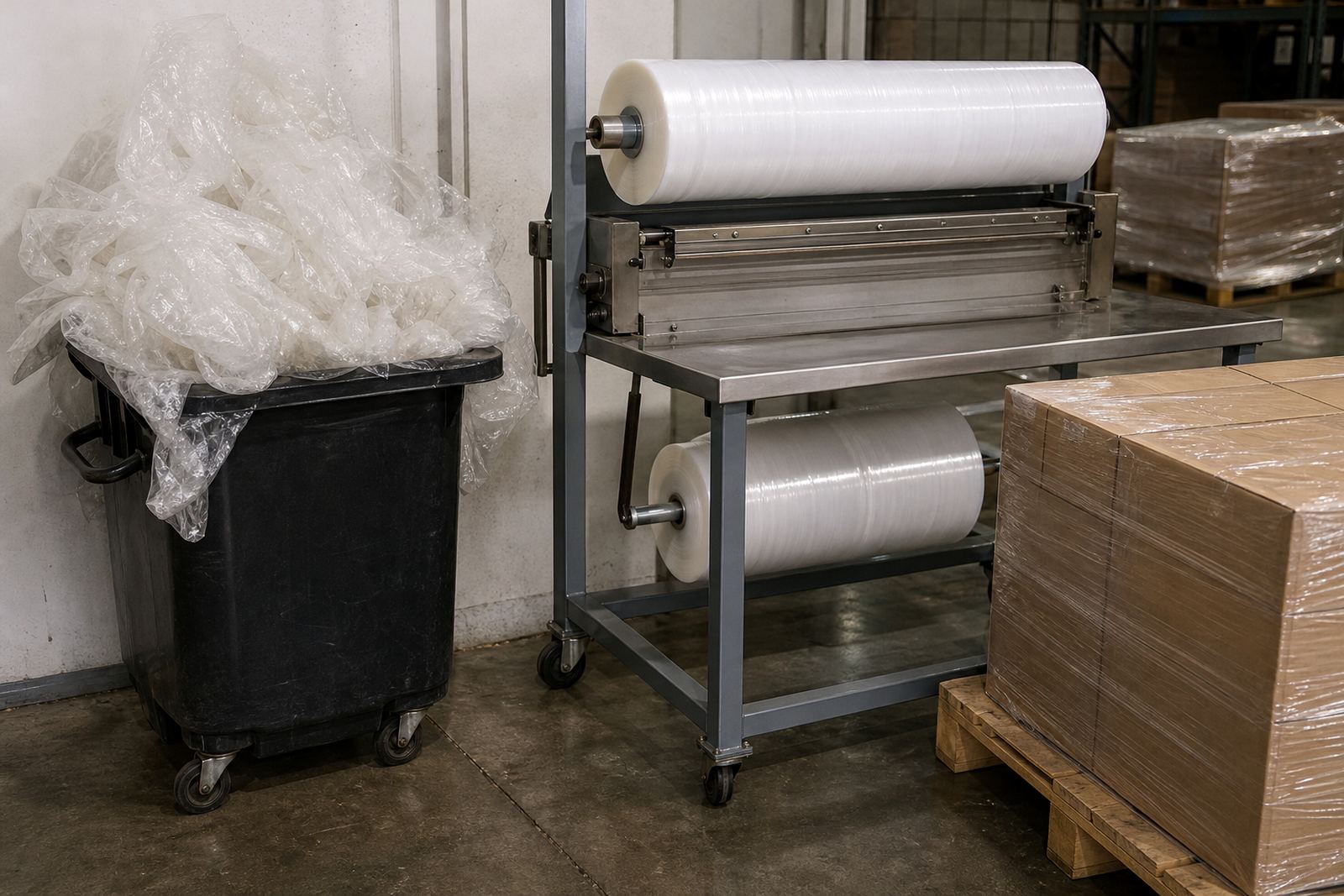
- Train operators on correct roll loading, cutting and disposal of offcuts.
- Keep spare blades and basic parts controlled, not loose in the packing area.
Maintenance that supports hygiene, not just uptime
Preventive servicing should be part of the hygiene plan, not something separate from it. A cutter that is left unserviced can start to drag on film, leave uneven cuts or develop loose fittings that are difficult to clean. Regular checks also help spot worn blades, damaged guides and small faults before they become a hygiene concern or a breakdown.
For food manufacturers and packhouses, especially those running long shifts, simple maintenance can prevent a lot of grief. A clean line with properly set equipment is easier to inspect after sanitation and easier to keep compliant with site rules. If the cutter is part of a wider packing setup, make sure the service schedule includes the dispenser as well, not only the wrapping machine.
- Set a routine for blade replacement before performance drops.
- Inspect fasteners, guards and moving parts during planned shutdowns.
- Clean residue after every shift, not only when it becomes visible.
- Keep a record of breakdowns and recurring wear points for the site.
What South African food sites should ask before buying
Before you choose a cutter or dispenser, think about how the line actually runs in your plant. A site in Pretoria with morning rush orders will need something different from a cold store in Polokwane or a high-volume distribution line in Johannesburg. The right choice depends on the product, the space available, the staff using it and the cleaning routine in place.
It also helps to consider local conditions. Load-shedding can disrupt production timing, and when power returns the line often needs to get moving quickly. Equipment that is simple to set up, easy to inspect and reliable under pressure is worth far more than something that looks fine on paper but slows down the team. If you are working under food safety rules, the cleaner option is usually the one that reduces handling and keeps the wrapping area orderly.
- Does the unit fit the film, the line speed and the available packing space?
- Can it be cleaned quickly between shifts or product changeovers?
- Will operators use it safely without slowing the pack line?
- Is support available for installation, servicing and spare parts when needed?
A practical approach for food pack lines in Germiston and beyond
At Film Cutters in Germiston, we see the same problem across food sites from Cape Town to Durban and up to Polokwane: a line can be technically sound but still lose time because the film handling is untidy. A properly selected cutter or dispenser helps keep the wrapping area cleaner, reduces waste and makes day to day hygiene easier to manage.
Our team works with packing lines in Johannesburg, Pretoria, Durban, Cape Town, Polokwane, Boksburg and Midrand, with support that includes onsite installation, line setup, preventive servicing, blade replacement, dispenser repairs, spares supply, operator training, safety checks, site assessments, roll change support, breakdown callouts and equipment upgrades. For food environments, that practical support matters because the best results come from good equipment and proper setup working together, not from quick fixes.
If your site is reviewing hygiene controls, start with the cutting point. Small changes there can improve the whole packing area.