Why small differences create big delays on the line
In many packing rooms, one station has the cutter mounted too high, another has the roll sitting off-centre, and a third uses a different blade angle altogether. None of those issues looks serious on its own, but over a full shift they add up to wasted film, slower roll changes and more stoppages than most managers expect.
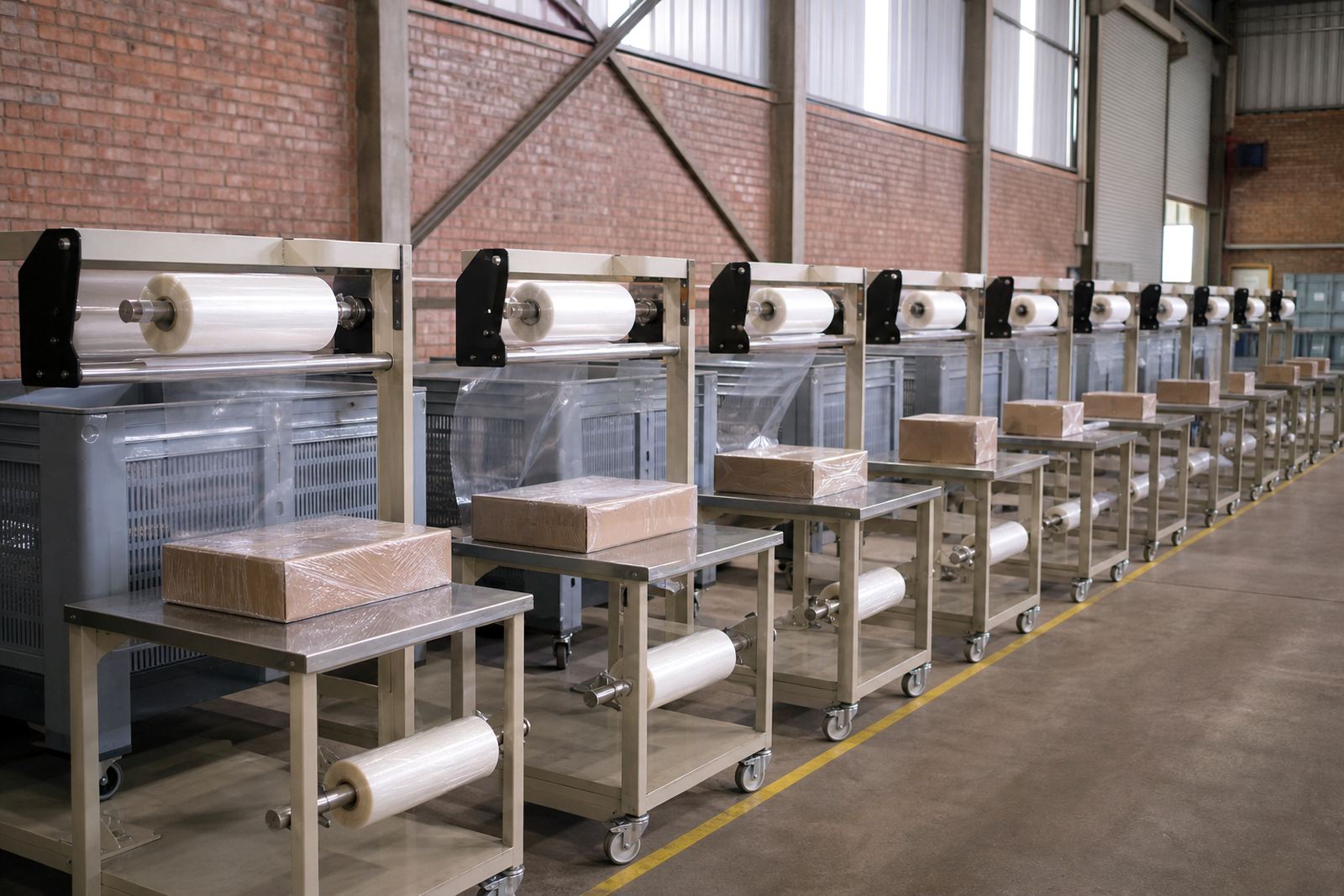
Standardisation is not about making every station fancy. It is about giving operators the same starting point at every packing cell so they can work with less hesitation. That matters in Germiston, Boksburg and Midrand where mixed product runs, tight dispatch times and labour changes can put pressure on the line. If the station is arranged the same way each time, supervisors can spot problems faster and new staff settle in sooner.
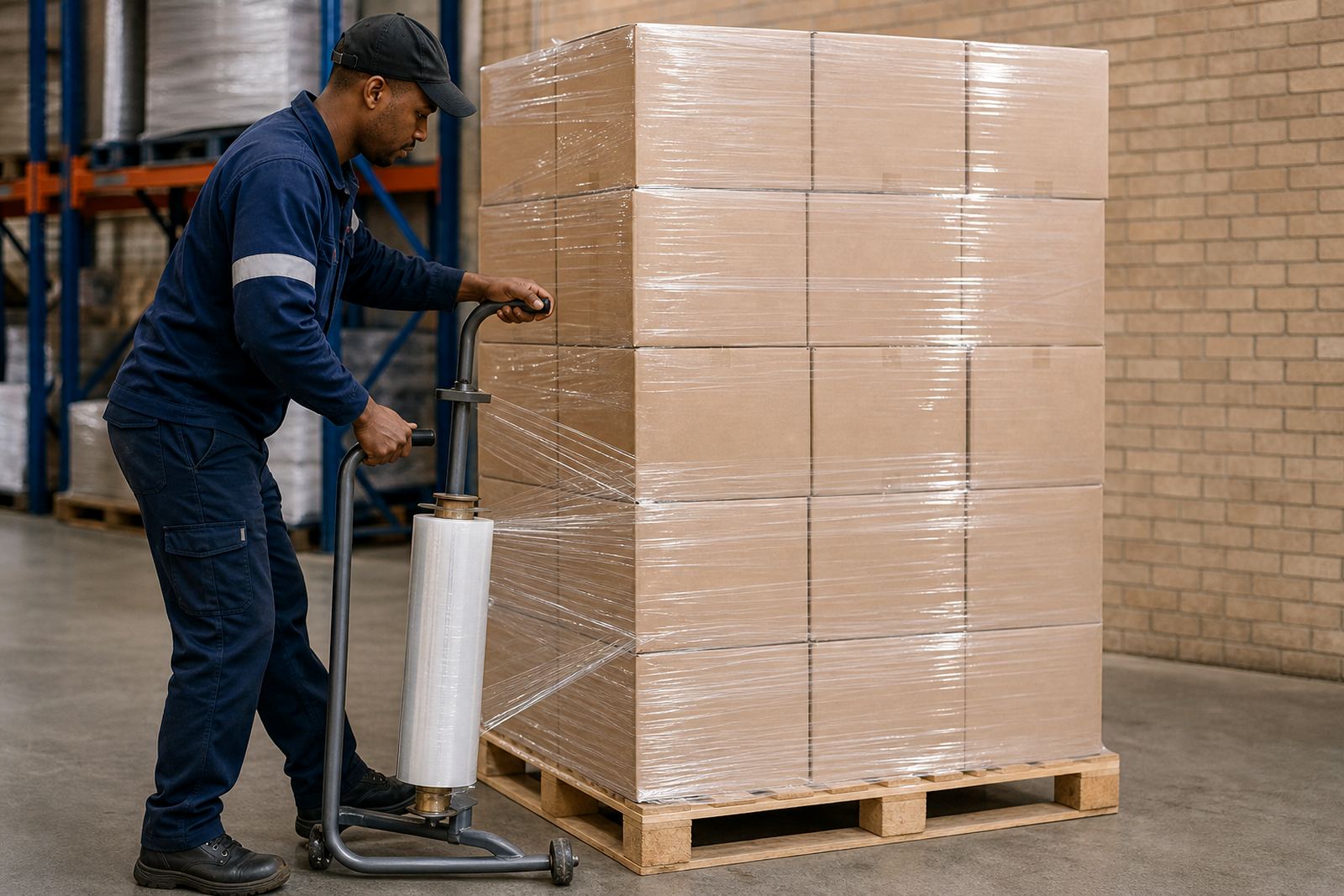
For shrink film and stretch film handling, the main goal is simple: keep the film path predictable, the cutter within easy reach and the dispenser positioned for safe, repeatable use. That saves time and cuts down on unnecessary strain.
What a standard packing cell should include
A standard packing cell does not need a big capital spend. It needs clear placement, consistent tools and a layout that suits the way the team actually works. The best setup is usually the one that reduces bending, twisting and reaching across the load.
At minimum, every cell should have:
- A fixed dispenser position with the roll at the correct working height
- A cutter mounted where the operator can reach it without crossing the load
- Clear space for film changeovers and blade access
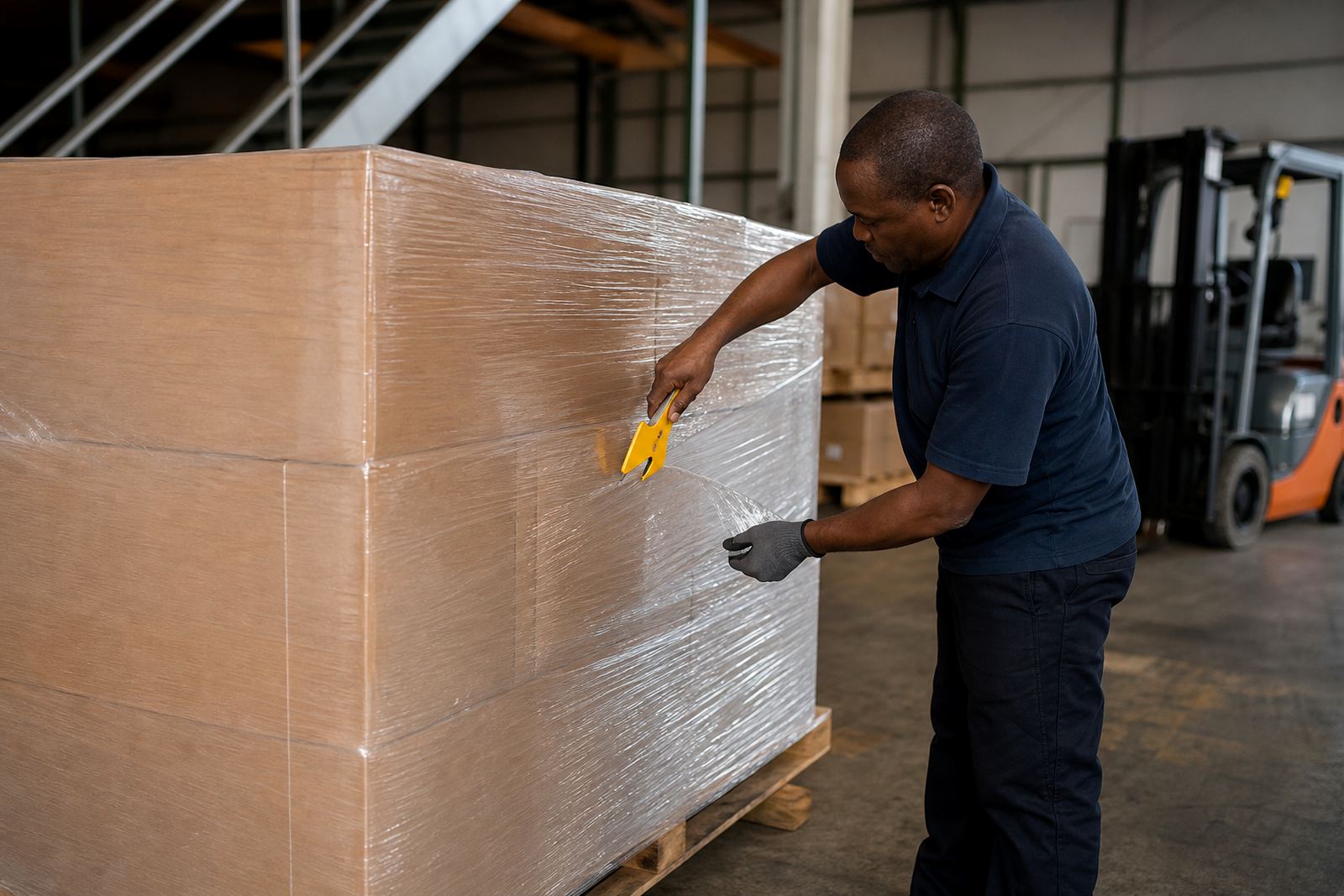
- Safe blade storage and a known replacement routine
- Basic signage showing the right film path and operating sequence
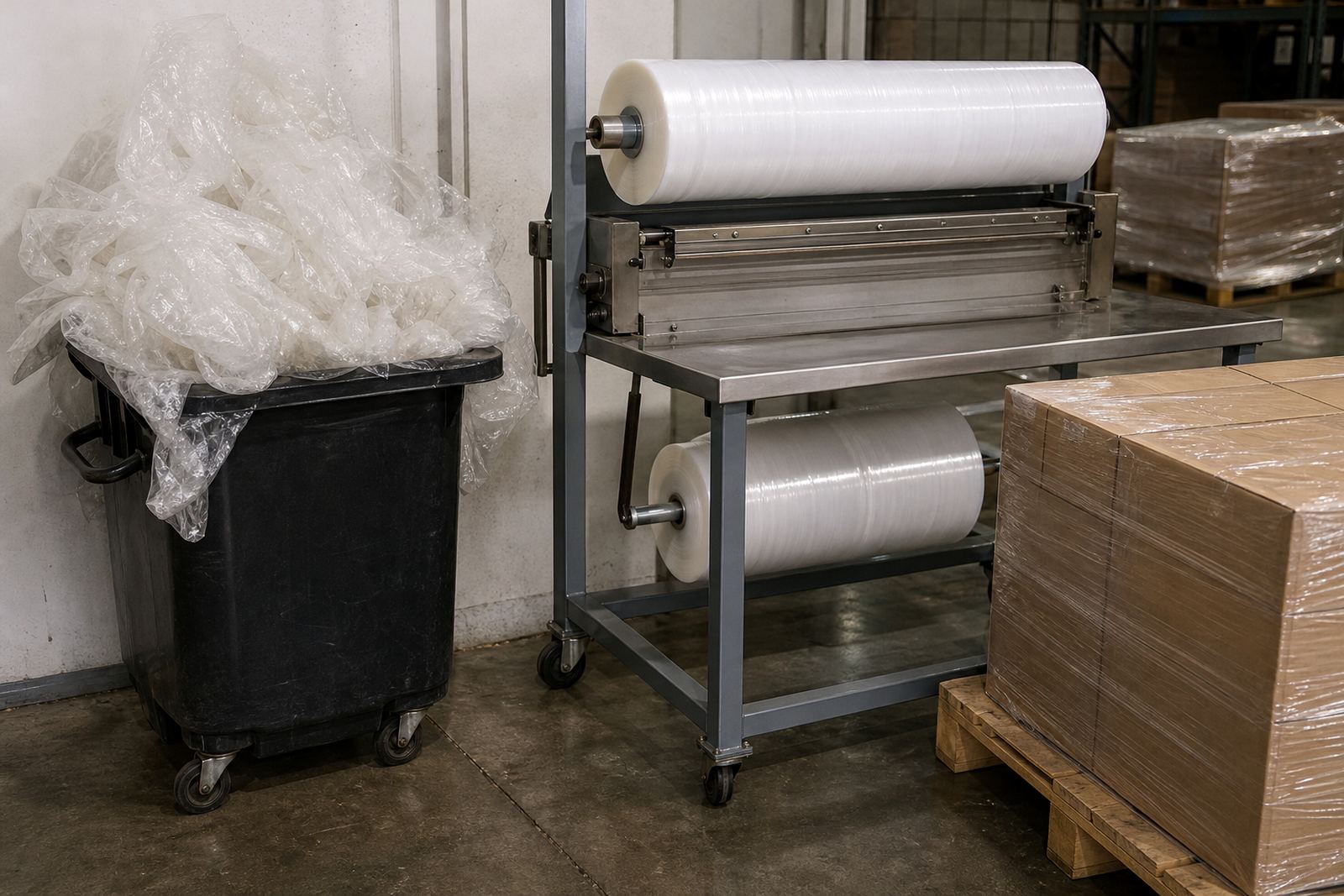
- A defined spot for spare cores, offcuts and tools
Once these details are set, the station becomes easier to teach and easier to check. It also reduces the chance of people improvising when the packing room gets busy.
How standardisation improves training across shifts
Training goes faster when every packing cell looks and works the same. A new operator should not have to learn three different ways to change a roll depending on which bay they are assigned to that day. Consistency helps supervisors explain the process once, then reinforce the same method across all shifts.
In practical terms, standardised stations help with:
- Shorter induction times for new staff
- Fewer mistakes during the first few weeks on the job
- More consistent blade handling and safer cut-offs
- Better supervision because the same checklist applies to every bay
- Easier handover between day shift and night shift
That becomes even more important during load-shedding or when production is running on a tighter timetable. If the team can get back on line quickly after a stoppage, the whole shift keeps moving. A clear station layout removes one more source of delay.
The role of film cutters and dispensers in repeatable output
Film quality matters, but the cutter and dispenser setup is what turns good film into a controlled packing result. If the cutter drags, the dispenser binds or the blade is awkward to reach, operators compensate in different ways. That is where wrapping consistency starts to drift.
With a proper setup, the film feeds cleanly, the cut is neat and the operator can repeat the same motion all day. It also helps prevent overuse of film, especially on lines where people are tempted to add extra wraps just to be safe. Over time, that can reduce waste without making the pack weaker.
For sites in Durban and Cape Town, where humidity can affect handling and storage conditions, a tidy and stable station helps reduce slipping, sticking and general wear on components. The same applies in busy inland sites where dust and constant use can work into moving parts. A standard arrangement makes it easier to keep each station in the same condition.
A local example from a mixed-volume packing room in Ekurhuleni
A typical packing room in Ekurhuleni might run a mix of palletised goods and smaller packed loads, with different operators covering several shifts. If one station has a dispenser that sits too low and another has a cutter mounted with a different reach, the team will naturally develop habits around each bay. That creates uneven output and makes coaching harder.
By setting one standard for the roll height, blade position and changeover steps, the supervisor can move staff between stations without re-explaining the whole process. The result is usually fewer complaints about awkward handling, less film damage and a more predictable pace during busy dispatch periods. It is not dramatic, but it is the kind of change that pays back quietly week after week.
In our experience, the best improvements come from small practical changes rather than major line disruptions. A quick site assessment can show where the biggest time losses are happening and which packing cells need the same correction first.
A simple standardisation checklist for packing managers
Before changing a whole line, it helps to walk each packing station and compare it against one agreed standard. The goal is not perfection, just a layout that the team can follow without confusion.
- Measure the working height of each dispenser and compare it with the preferred standard
- Check whether the cutter sits in the same position at every station
- Confirm that blade replacement can be done safely and quickly
- Look for worn spares, loose fittings or damaged mounts
- Review whether the film feed path is the same on every bay
- Test changeover time across different operators
- Record which stations need repairs, upgrades or operator retraining
Once that baseline is in place, it becomes easier to plan preventive servicing and keep the packing room consistent. It also gives supervisors a proper reference instead of relying on memory or personal preference.
When to bring in support for line setup and servicing
If your stations have drifted over time, or if each bay has been set up by a different person, standardisation usually starts with a proper line review. That is where the practical issues show up: mounting height, blade access, roll stability, worn parts and repeated operator workarounds.
Film Cutters supports packing lines across South Africa with onsite installation, line setup, preventive servicing, blade replacement, dispenser repairs, spares supply, operator training, safety checks, site assessments, roll change support, breakdown callouts and equipment upgrades. From Germiston to Pretoria, Johannesburg, Polokwane, Durban and Cape Town, the aim is the same: give the team a cleaner, safer and more repeatable station to work from. When the layout is consistent, output tends to follow.
For managers trying to improve packing performance without unnecessary downtime, standardisation is often the best first step. It is practical, measurable and much easier to maintain than a patchwork of different fixes.