
Start with the lane, not the machine
In a small packing room, the first mistake is trying to fit too much equipment into the space and then hoping people will work around it. Start by mapping the path of the product, from the incoming pallet to the finished wrapped load, and keep that path as straight as possible.
Every extra turn adds walking, handling and time. In Germiston and other busy industrial areas, many sites are working in older buildings with narrow passages, low doorways, or columns that break the floor plan. The fix is usually not more floor area, it is better sequencing. Put the film stock close to the wrapping point, keep blades and dispensers within arm’s reach, and remove anything that does not support the wrap process.
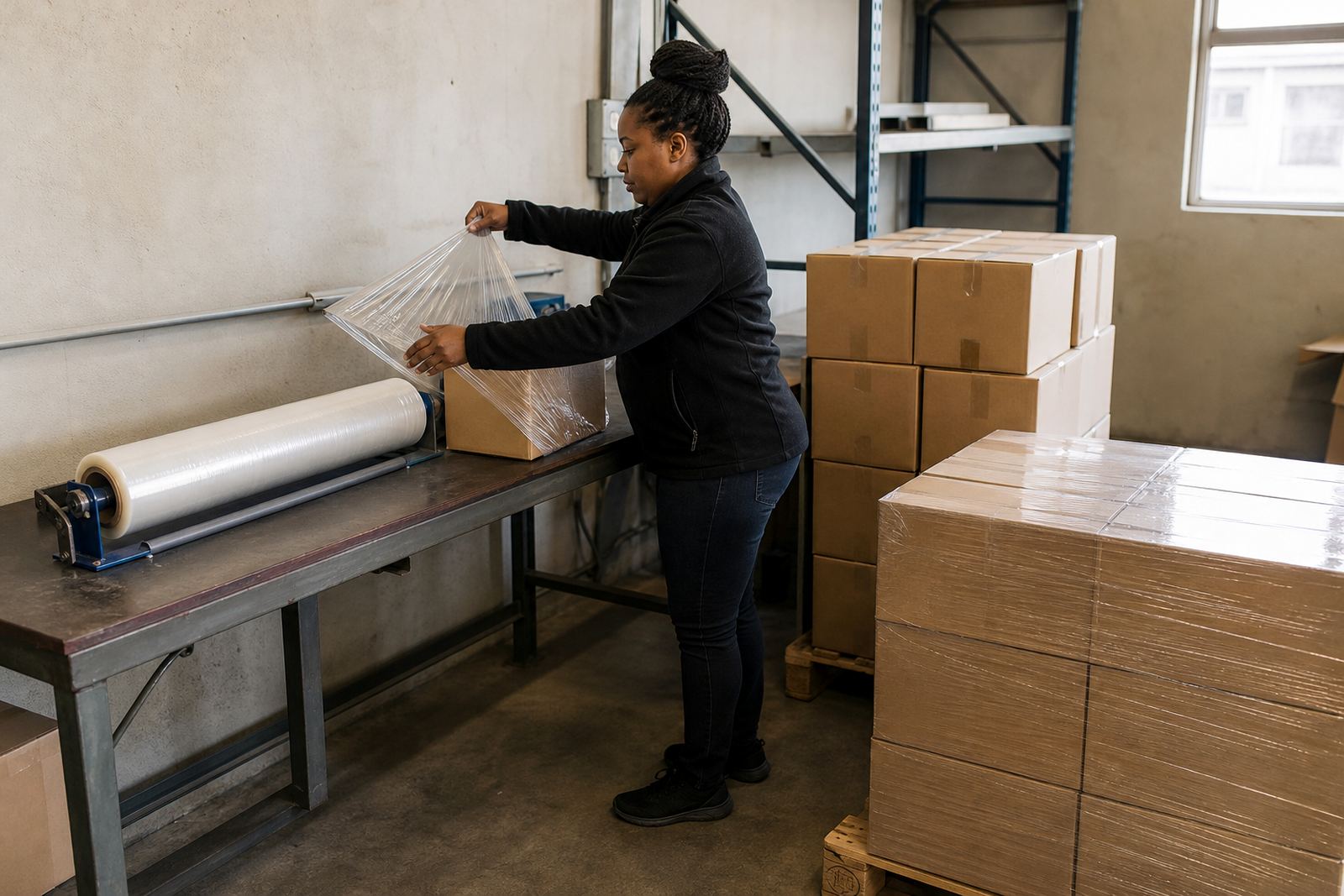
A compact line often works best when the operator can stand in one position and do most of the film work without stretching or stepping away. That reduces strain and helps keep the wrap consistent, especially during end of shift rushes when the pressure is on.
Choose cutters and dispensers that match the film you use
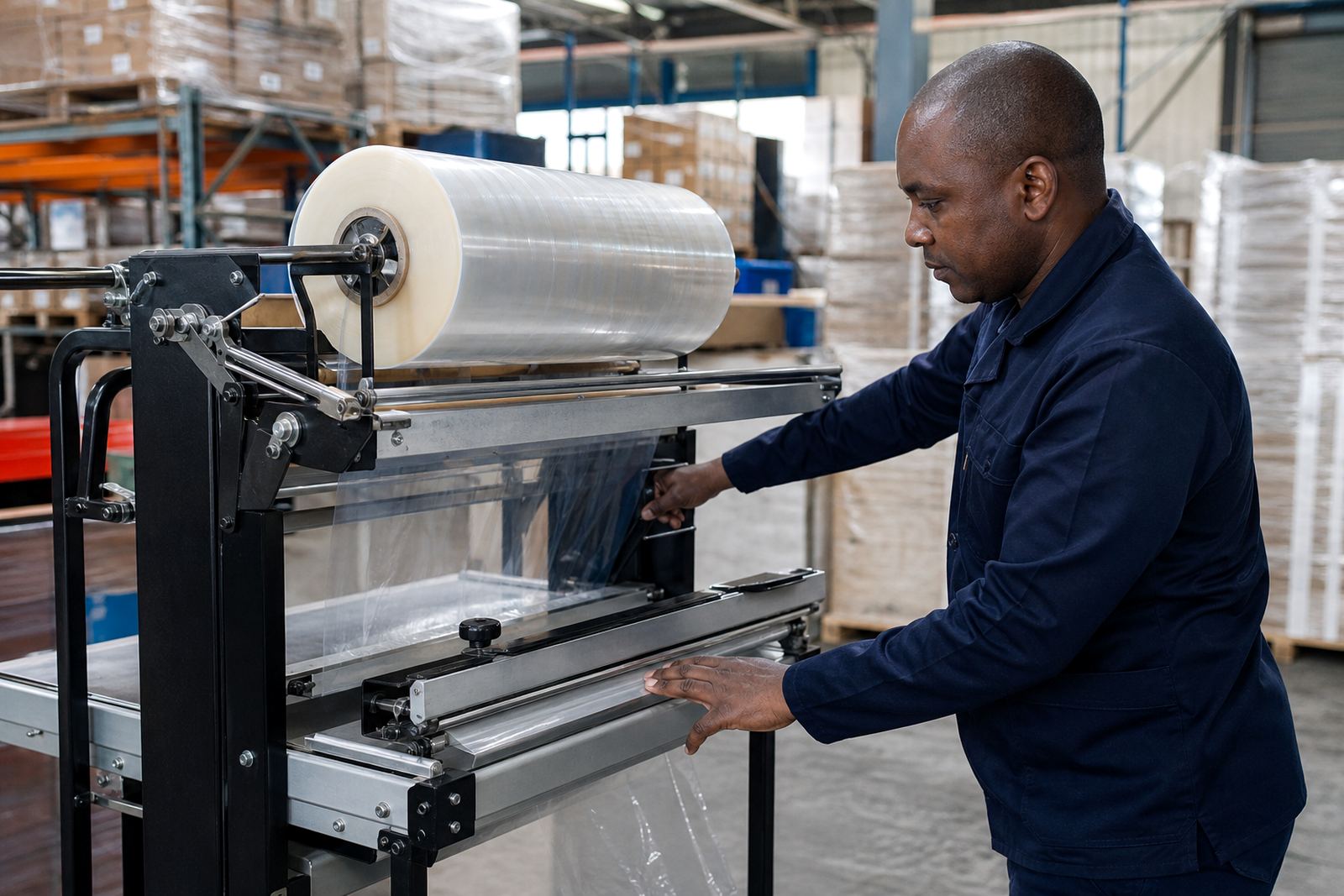
Small spaces need equipment that is easy to handle and simple to store when not in use. A cutter that is too bulky can become a nuisance on a tight line, while a dispenser that is awkward to load will slow every roll change. The right unit should let the operator cut shrink film or stretch film cleanly with one or two quick actions, without fighting the roll.
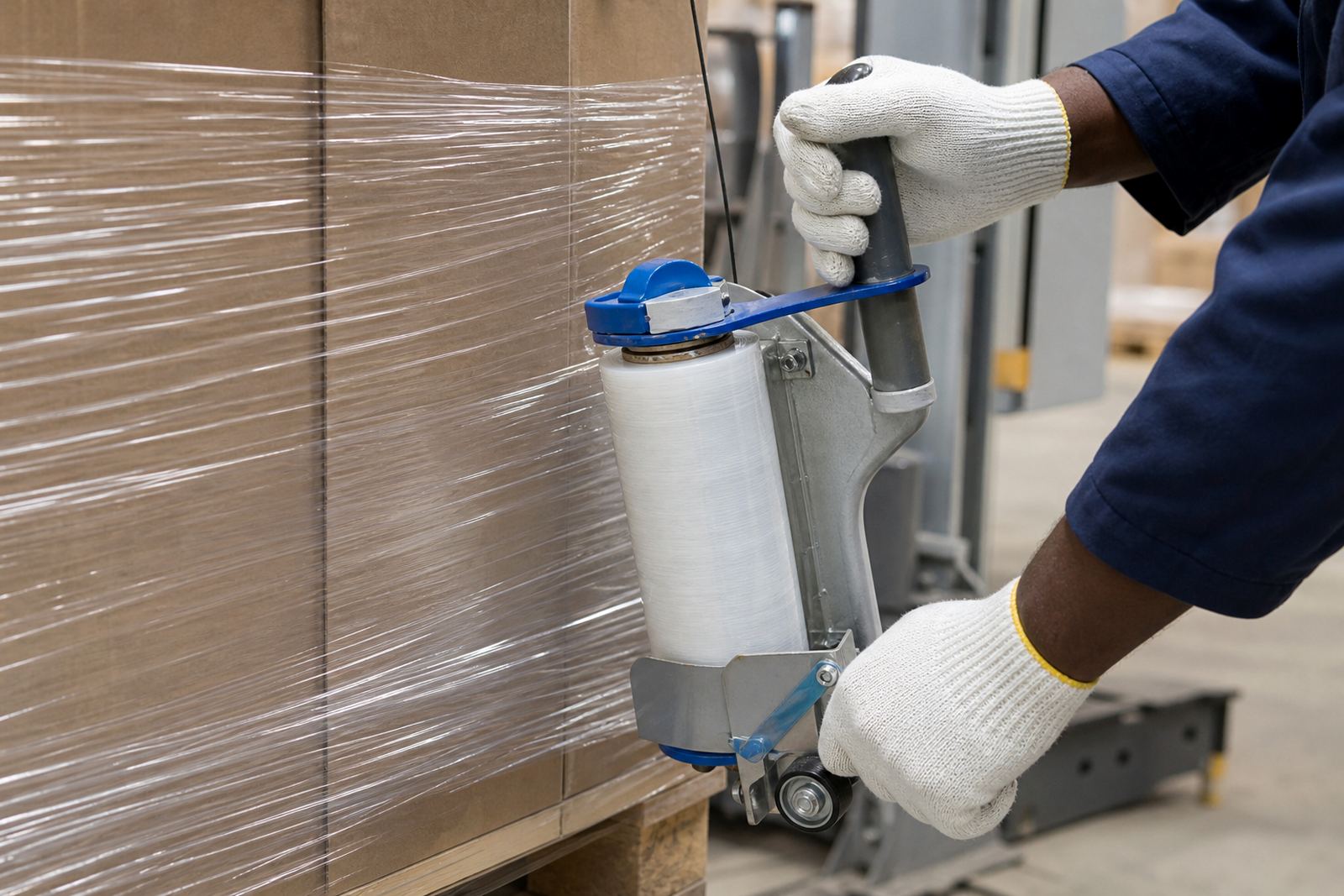
When a packing line is short on space, film control matters even more. Film that snags, tears unevenly or rolls off badly can waste metres and cause a mess around the work area. That is why user friendly dispensers matter. They help maintain tension, support cleaner application and reduce the chances of film wrapping around hands or snagging on pallets.
- Use cutters sized for the film widths actually being used on site
- Keep spares for high wear parts close to the line
- Make sure the dispenser can be loaded quickly during changeovers
- Check that the grip, blade position and tension setup suit the operator’s reach
Build the line around short movements and clear reach
In a restricted area, the best layout is usually the one with the fewest steps. If an operator has to walk around a table, fetch the cutter from a shelf, then cross back to the pallet again, productivity drops fast. A better plan is to place the film, tools and output zone in a tight triangle, with nothing blocking access to the load.
Keep the most used items at waist height if possible. This helps during long shifts and is particularly useful where the floor is uneven or space is tight around old racking. If the line includes manual wrap points, allow enough room for the film to travel freely but not so much room that the operator has to over reach. The point is not to create a large workstation, it is to create a tidy one.
It also helps to mark the floor with clear zones for stock, finished loads and service access. Even in a small room, this makes the line easier to manage and keeps forklifts or pallet jacks from cutting across the packing route.
Keep servicing easy, because small sites feel every stoppage
On a compact packing line, a small fault can stop the whole process. A loose blade, worn guide, damaged handle or sticky dispenser will be noticed quickly because there is no spare space to work around it. For that reason preventive servicing should be treated as part of daily production, not as a separate task when time allows.
Many sites in Johannesburg, Pretoria and Durban are operating on tight schedules, with load-shedding, shift changes and delivery cut offs all affecting the day. If the cutter or dispenser fails, the whole line can start backing up. A simple servicing routine helps reduce that risk and keeps operators confident in the tools they use.
- Check blades for wear before the start of shift
- Inspect moving parts for dirt, film build-up and loose fittings
- Keep spare blades and common wear parts on hand
- Test the dispenser after any roll change or adjustment
- Book periodic safety checks to catch problems early
Use safety rules that suit tight packing areas
Safety becomes more important when people are working closer together. In a small packing room, a careless cut, a badly placed roll, or a blade left exposed can cause injury quickly. Good safety practice does not need a lot of floor space, only a clear routine and the right equipment.
Operators should be trained on how to load film, where to cut it and how to store the cutter when it is not in use. If the site runs stretch film and shrink film on the same floor, it is worth separating the tools by task so the wrong cutter is not picked up in a rush. Clear storage also helps when municipal inspections or internal audits ask for orderly work areas.
For sites near the coast, especially in Durban and Cape Town, humidity can affect storage conditions and make certain parts feel tacky or harder to handle. Keep equipment dry and clean, and check that the film is stored away from dust, water and direct sun.
A Germiston example: tighter room, cleaner output
A packing operation in Germiston handling mixed cartons and palletised stock had a simple problem: the packing room was too small for the pace of work. Operators were walking back and forth for cutters, and film waste was building up around the wrap point. The room had enough volume for output, but not enough order.
By moving to a shorter wrap lane, keeping the film supply closer to the loading point and setting up better tool storage, the team reduced unnecessary movement and made changeovers smoother. The site also added routine blade replacement and operator training so the line stayed consistent during busy periods. Nothing dramatic changed, but the room became easier to manage and the work flowed better.
That kind of result is common in smaller plants across Ekurhuleni, Boksburg and Midrand. The answer is usually practical: better layout, simpler tools, regular servicing and a clean process that suits the actual size of the room.
What to ask before you upgrade a small packing line
If your line is tight on space, do not choose equipment only by price. Ask how it will fit into the room, how quickly operators can load it and whether spare parts are easy to keep on hand. The best setup is the one that saves time every day, not just the one that looks good on paper.
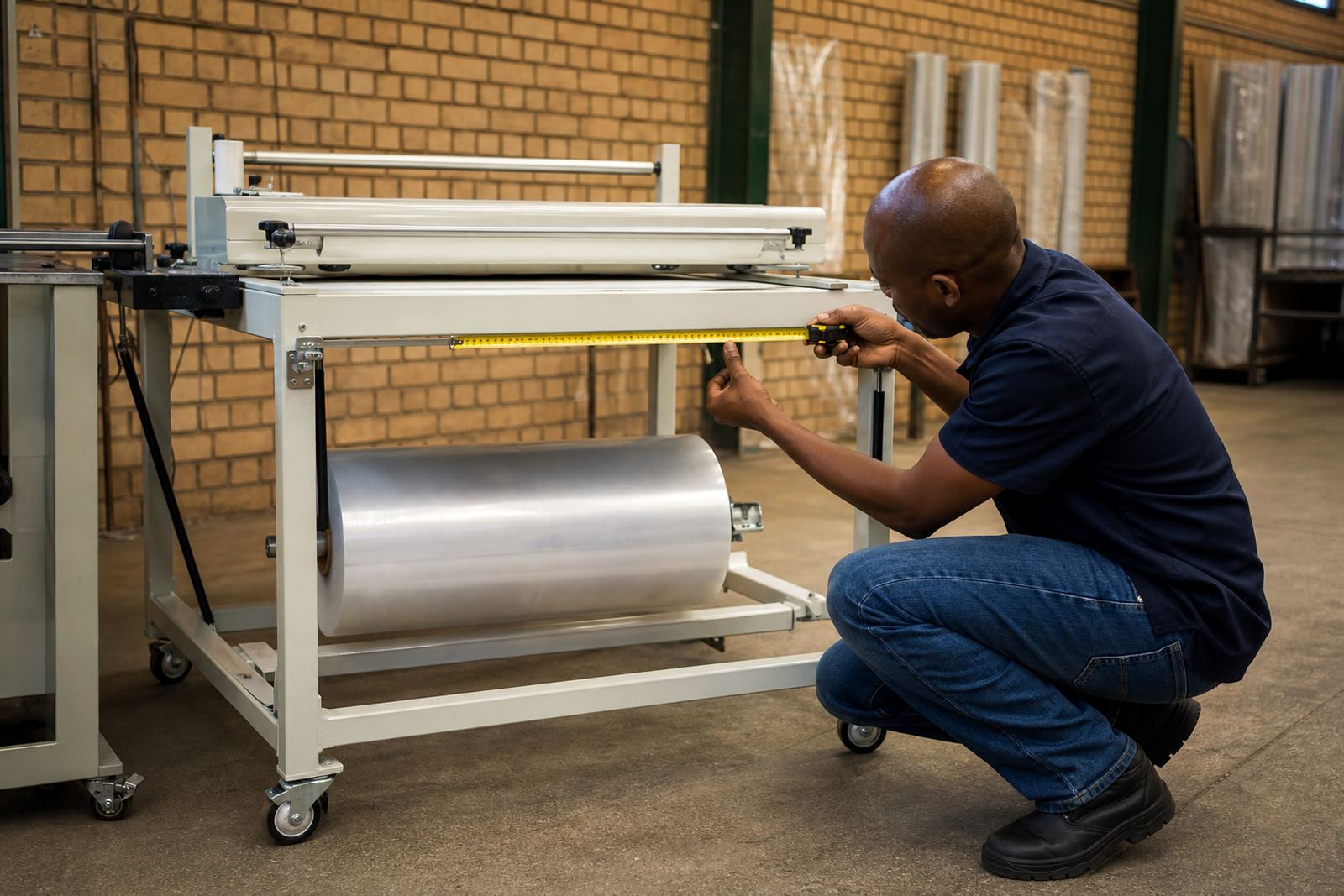
Before any upgrade, it helps to review the line in real conditions. Measure the working area, check the reach distance, confirm the film widths in use and look at where the finished loads are going. A short site assessment can reveal problems such as blind corners, poor access to the wrap point, or storage that is stealing valuable floor area.
- How much room is needed for safe loading and blade use
- Whether the dispenser suits the team’s current film widths
- How often spares and blades will be needed
- What support is required for installation, training and breakdowns
For packing teams in Polokwane, Pretoria, Cape Town and beyond, the goal is the same: keep the line compact, keep the film under control and keep production moving without crowding the floor.