Why roll handling becomes a strain on packing lines
On many packing lines the hard part is not applying film, it is lifting it, positioning it and keeping it steady while the line keeps moving. A heavy stretch film roll, awkward core height or a cutter with a poor grip can turn a routine job into repeated shoulder, back and wrist strain. Over time, that slows the team down and increases the chance of drops, torn film and missed wraps.
This is common in busy warehouses in Germiston, Boksburg and Midrand where operators are expected to keep up with dispatch cut-offs, shift changes and load-shedding pressure. When the line stops for a small handling issue, everyone feels it. Making the task lighter starts with the way film is stored, loaded and cut, not only with how strong the operator is.
Choose cutter and dispenser setups that do the lifting with you
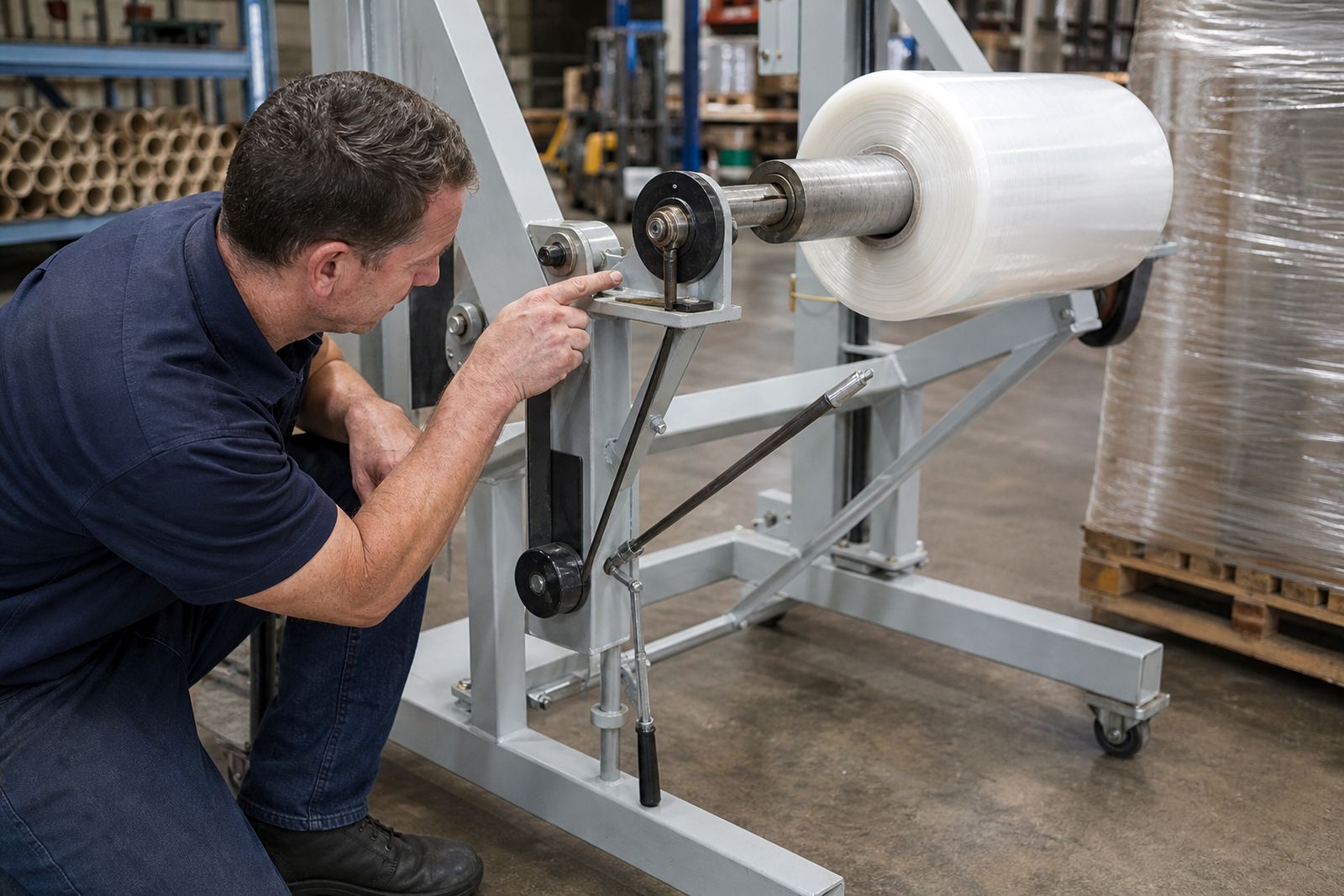
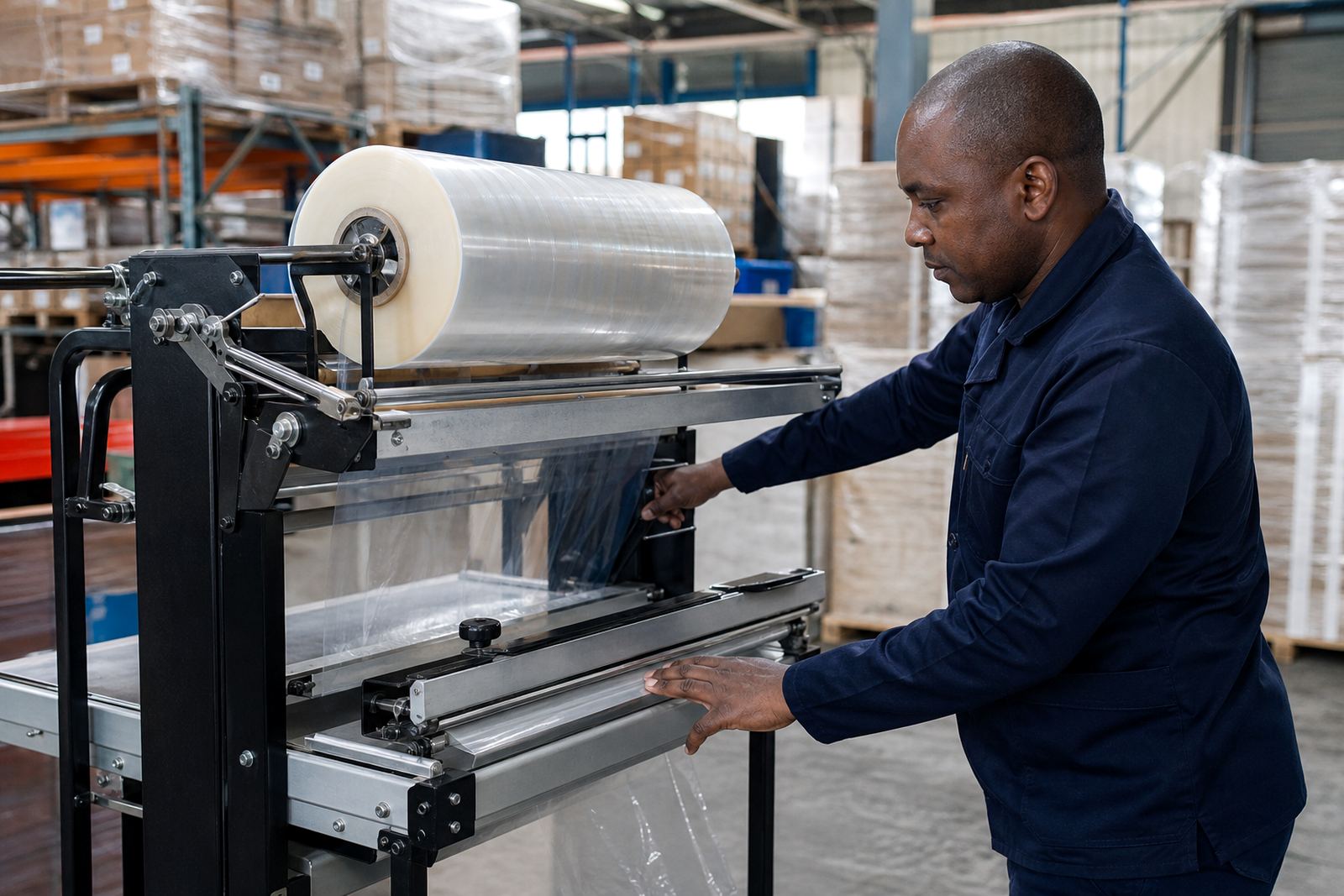
A proper cutter or dispenser should guide the roll, support the weight and let the operator keep both hands in a natural position. If the handle is too narrow, the roll sits off-centre or the blade sits awkwardly, the user ends up compensating with the wrists and lower back. That is where strain builds up fast. A better setup keeps the roll aligned and lets the film release cleanly with less force.
For shrink film and stretch film on packing lines, the goal is a controlled, repeatable motion. The right dispenser reduces twisting, helps the operator keep a steady pace and gives better edge control, especially when packs are tall or uneven. It also helps when staff rotate between stations, because a user-friendly design is easier to learn and easier to use consistently.
- Use a dispenser that matches the core size and roll width on the line.
- Check that the grip position suits the average operator height.
- Keep the cutting edge protected and easy to reach without overextending.
- Replace worn parts before the tool starts to pull, snag or slip.
Set roll height and staging points to reduce bending and lifting
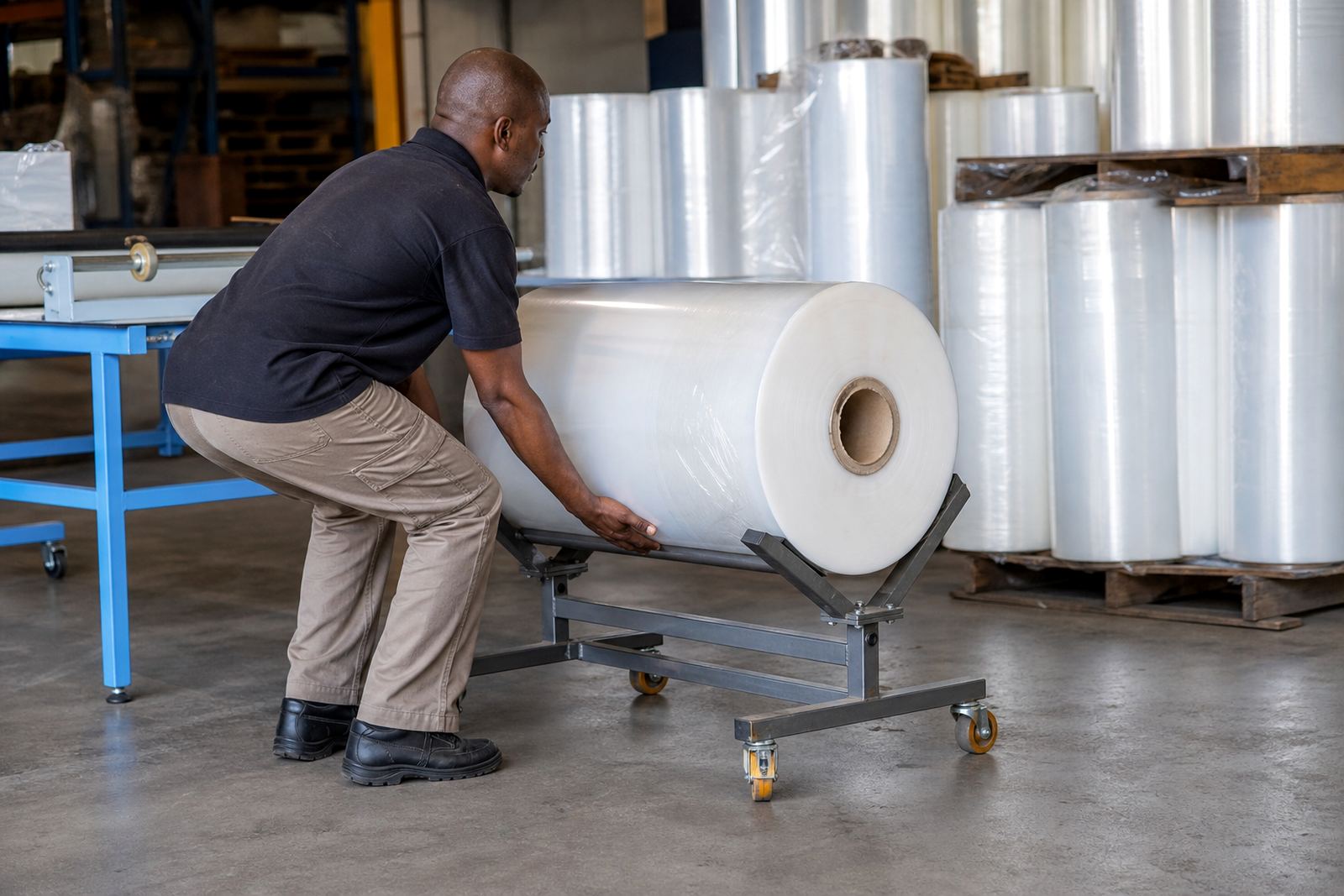
One of the simplest ways to reduce handling strain is to stop asking operators to lift rolls from floor level or from a poorly placed pallet. If the staging point is too low, every roll load becomes a squat-and-lift job. If it is too high, the operator has to shoulder the weight and twist while fitting the roll. Both are avoidable.
In practice, the best loading position is one where the roll can be moved a short distance, with minimal bending and no sudden turns. A waist-height staging table or a fixed loading point near the line can make a big difference. In Durban and Cape Town, where humidity can affect grip and make floors a little more slippery, a stable loading surface also helps keep the job safer. Keep the path clear, too many strained backs start with a cluttered walkway.
- Store spare rolls close to the point of use.
- Keep pallets, boxes and strapping off the loading path.
- Use two-person lifts for larger rolls where needed.
- Mark a clean loading zone so operators know where to stand.
Make film application less physical with better line setup
Film application should feel controlled, not forced. If the line is too low, too fast or set up at the wrong angle, the operator will lean in, reach across or keep one arm under tension for long periods. That is where fatigue starts. A good line setup reduces the number of awkward movements and keeps the body in a more neutral position.
During onsite installation and line setup, small changes can have a major impact. Adjust the working height where possible, check the clearance around the wrap point and make sure the operator can see the load without stepping into an awkward stance. On plants running in Johannesburg or Pretoria, where shifts can be long and throughput is tight, even a 10 cm change in position can reduce repeated reaching. It is not glamorous, but it works.
When the line is planned properly, the operator applies the film with less push-pull effort, the wrap is more even and the risk of wrist and shoulder pain drops. That matters on busy days when the team is already dealing with reduced staff or start-up delays after a power cut.
Keep blades, rollers and guides in good order
Worn parts make handling harder. A blade that drags, a roller that does not turn freely or a guide that catches the film all add resistance. Operators then use extra force to finish the wrap or cut, which is exactly what you want to avoid. Preventive servicing is often the difference between a line that feels light to use and one that leaves people tired by tea break.
Regular blade replacement, dispenser repairs and safety checks should be part of the maintenance plan, not a last-minute fix after a breakdown. If the cutting action is clean, the operator does not need to pull, jerk or re-cut the same section. That also helps reduce waste. For sites in coastal areas like Durban and Cape Town, regular checks matter even more because moisture can affect moving parts and make corrosion more likely. Small service jobs now can prevent bigger trouble later.
Train operators on safe film handling habits
Good equipment helps, but habits matter too. Operator training should cover how to grip the tool, how to stand during roll change, and when to ask for help instead of forcing a lift. A few simple rules can protect the team and keep the packing line steady. This is especially useful where staff changes are frequent or where new workers need to get up to speed quickly.
Training should also explain what to look for before a shift starts: damaged cores, loose parts, worn blades, sticking rollers and unsafe loading areas. If a problem is picked up early, it can be fixed before it causes strain or a stoppage. The best teams build these checks into the normal routine so they become part of the shift, not an extra task.
- Show the correct posture for roll loading and unloading.
- Demonstrate how to cut film without overreaching.
- Teach staff to report discomfort early, before it becomes an injury.
- Include safety checks in daily start-up routines.
Local support for safer packing lines across South Africa
Film Cutters works from Germiston, Ekurhuleni and supports packing lines across Johannesburg, Pretoria, Durban, Cape Town and Polokwane. The aim is straightforward: make shrink film and stretch film handling easier, safer and more consistent. That can include onsite installation, preventive servicing, roll change support, spare parts supply, equipment upgrades and breakdown callouts when a line needs attention fast.
For plants in Boksburg, Midrand and beyond, handling strain is not just an HR issue, it affects output, quality and staff turnover. A line that is easier to use is easier to keep running. If your operators are working too hard to load rolls or apply film, it may be time to review the dispenser, the height of the station and the condition of the cutting system. A small change in setup can save a lot of effort over a shift.
To arrange an assessment or ask about support for your packing line, use the enquiry form on our contact page.